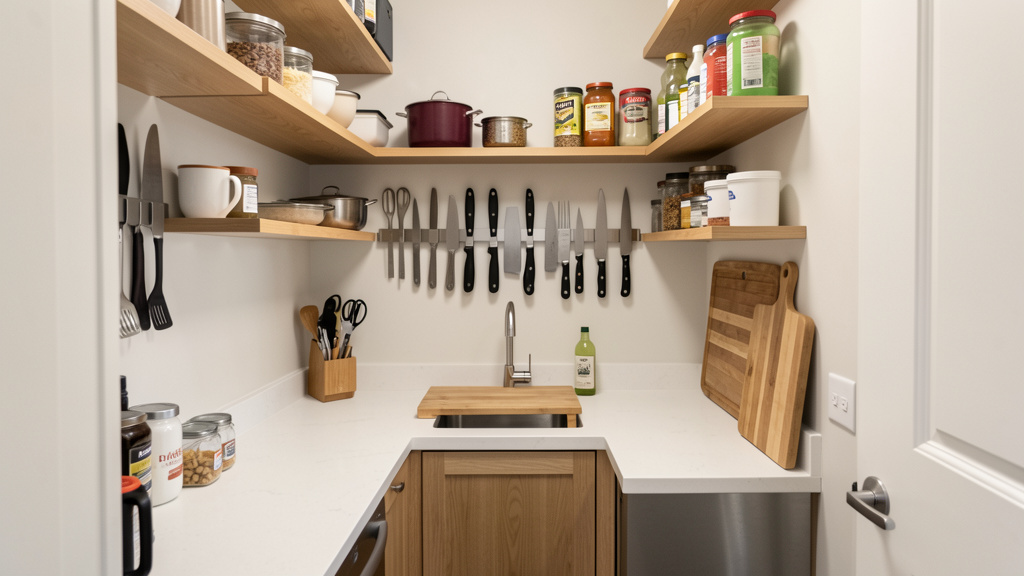
Stop Compromising. A Step-by-Step System to Transform Cramped Cooking Spaces into Smart, Streamlined Havens—With Solutions for Every Constraint.
If your kitchen feels like a puzzle where the pieces never quite fit, you’ve landed in the right place. This guide moves beyond fleeting “hacks” to introduce a holistic framework—grounded in ergonomic principles, spatial psychology, and adaptable design thinking—to help you reclaim every inch. Whether you’re navigating a galley kitchen under 50 square feet, a compact apartment layout, or temporary living quarters, you’ll discover intentional strategies to enhance workflow, amplify storage intelligently, and cultivate a space that feels expansive, efficient, and uniquely supportive of your daily life.
Introduction: Beyond the “Hack” Mentality
The frustration of a small kitchen is deeply familiar. You’ve likely encountered endless pins promising “genius storage tricks,” only to find solutions that feel temporary, impractical, or misaligned with your actual habits. Why does this gap persist? Because effective spatial design addresses root causes—not just symptoms. True efficiency emerges when your kitchen aligns with how you move, cook, and live—not with an idealized template.
Guidelines from organizations like the National Kitchen and Bath Association emphasize foundational workflow principles, such as the relationship between sink, stove, and refrigerator. Yet in compact spaces, rigid adherence to traditional dimensions often proves impossible. Research in environmental psychology reveals a more accessible truth: perceived spaciousness correlates strongly with unobstructed pathways, intuitive item placement, and visual calm—not merely square footage. This insight shifts our focus from “How do I fit everything?” to “How do I make everything work with me?”
This article introduces the Spatial Efficiency Framework, a three-pillar system designed to transform constraint into catalyst. We move beyond surface-level tips to explore how flow, function, and flexibility intertwine. By the end, you’ll hold a personalized, adaptable roadmap—not just for storing more, but for cooking with greater ease, reducing daily friction, and rediscovering quiet satisfaction in your kitchen.
The Spatial Efficiency Framework: Flow, Function, Flexibility
Imagine your kitchen not as a static room, but as a dynamic ecosystem. Every movement, stored item, and design choice either supports or hinders your daily rituals. The Spatial Efficiency Framework offers a lens to evaluate and optimize this ecosystem through three interconnected pillars:
- Flow: Optimizing movement and workflow to eliminate friction and cultivate intuitive motion.
- Function: Maximizing the utility of every surface, volume, and tool through intentional selection and placement.
- Flexibility: Designing for adaptability across changing needs, seasons, and life circumstances.
These pillars are not sequential steps but overlapping perspectives. A choice about cabinet hardware (Function) influences how smoothly you move between zones (Flow) and how easily you can reconfigure later (Flexibility). Let’s explore each pillar with actionable strategies, contextual examples, and mindful considerations.
Pillar 1: Mastering Flow—The Invisible Architecture of Movement
Flow is the silent conductor of your kitchen experience. Poor flow creates friction: bumping into counters, retracing steps, or feeling confined during meal prep. Exceptional flow feels effortless. In compact spaces, where margins are narrow, optimizing flow becomes foundational—not optional.
Why Flow Matters More in Small Spaces
In larger kitchens, minor inefficiencies may go unnoticed. In compact layouts, a misplaced appliance or narrow pathway amplifies daily strain. Human factors research indicates that reducing unnecessary movement can significantly decrease perceived workload and support greater satisfaction. Consider two approaches to morning coffee: In one kitchen, the routine requires crossing the room repeatedly; in another, everything needed sits within a calm, logical sequence. Over time, these micro-moments accumulate into meaningful differences in energy and ease.
Step 1: Map Your Current Workflow
Before adjusting anything, observe with curiosity. For two to three typical days, gently note:
– The sequence of actions during common tasks (e.g., making coffee, preparing dinner).
– Points of friction: Where do you pause, pivot awkwardly, or set items down unexpectedly?
– Traffic patterns: How do others move through the space while you cook?
Illustrative Example: Someone living in a narrow galley kitchen noticed they walked seven steps between fridge and sink each morning. By relocating their coffee setup to a small cart beside the sink—a change requiring no renovation—they eliminated repetitive motion. They used removable painter’s tape to outline high-traffic zones, creating a visual guide before rearranging.
Common Pitfall: Assuming your habits match a “standard” layout. A frequent baker needs flour accessible near mixing; a tea enthusiast prioritizes kettle placement; a parent packing lunches requires quick access to containers. Generic advice fails without personal context.
Actionable Tip: Record a brief, silent video of yourself preparing a simple meal. Review it later. Notice hesitations, backtracking, or moments of awkward adjustment. These micro-frictions are your most valuable optimization targets.
Step 2: Adapt Workflow Principles to Your Layout
Traditional workflow models assume distinct zones. In compact kitchens, zones often overlap or compress. Adapt thoughtfully:
– Galley Kitchens (two parallel walls): Position sink and stove on opposite walls, fridge at one end. Maintain at least 36 inches of clear pathway (42+ inches is ideal for comfort). If space is tighter, offset appliances slightly to avoid door-swing conflicts.
– L-Shaped Kitchens: Place two key points (e.g., sink and stove) along the longer wall, fridge on the shorter wall. Ensure corner accessibility with solutions like pull-out shelves. Avoid positioning the fridge deep in a corner where the door blocks movement.
– One-Wall Kitchens: Arrange appliances in logical sequence: fridge → prep sink → cooking zone. Use vertical space above each zone for immediate-use items. A narrow shelf above the sink holds soap; a magnetic strip beside the stove keeps knives within reach.
Adaptable Strategy: If your layout prevents an ideal workflow triangle, create a “mini-zone” within your primary work area. Keep frequently used ingredients in a slim, mobile cart. Roll it into position during cooking; tuck it away afterward. This flexible solution honors your rhythm without permanent changes.
Inclusive Consideration: In households with multiple cooks, design for parallel movement. Ensure the sink area allows clearance on both sides. Position the trash/recycling bin where it’s accessible from prep and cleanup zones without crossing paths. Small adjustments prevent “kitchen traffic jams.”
Step 3: Create Intentional Micro-Zones
Divide your kitchen into purpose-driven zones based on your habits:
– Prep Zone: Near sink and waste, with cutting boards, knives, and bowls within arm’s reach. Store produce in a shallow, accessible bin.
– Cooking Zone: Around the stove, with daily spices, oils, and utensils stored nearby. A narrow pull-out drawer beside the stove holds pot holders and thermometers.
– Cleaning Zone: Sink area optimized for soap, sponges, and a fold-down drying rack.
– Beverage Zone: A dedicated spot for coffee/tea setup, away from main traffic—perhaps a 12-inch-deep wall-mounted shelf.
– Command Center: A small clipboard, magnetic board, or designated spot near the entrance for grocery lists or meal notes.
Why This Works: Defined zones reduce cross-kitchen trips. Studies in design psychology suggest that organized, purpose-driven spaces support efficiency and reduce cognitive load. Zones create mental clarity—your brain knows exactly where to find what it needs.
Budget-Friendly Adaptation: Use color-coded baskets, removable chalkboard labels, or mobile carts to designate zones without permanent changes. Renters can relocate carts as needs shift. Labeling creates intention without commitment.
Thoughtful Counterpoint: Storing all spices in a high cabinet above the stove may seem logical but interrupts cooking flow. Instead, keep daily-use spices in a drawer beside the stove. Reserve higher storage for infrequently used items.
Step 4: Optimize Pathways and Clearances
- Clear Floor Space: Aim for at least 36 inches of unobstructed space in front of work areas. For shared cooking, 42–48 inches supports comfortable movement. Measure with a tape measure—don’t estimate. Use painter’s tape to visualize pathways before rearranging.
- Door Swings: Note cabinet and appliance door arcs. A fridge door swinging into the pathway wastes space and creates hazard. Solutions:
- Choose appliances with reversible doors (position hinges away from traffic).
- Install soft-close hinges to control swing and prevent slamming.
- For tight corners, consider bi-fold cabinet doors that open in half the space.
- Traffic Flow: If your kitchen is a thoroughfare, use subtle visual cues—a change in flooring texture, a narrow runner rug—to define the kitchen boundary and gently discourage through-traffic during active use.
Safety Note: Keep pathways clear of cords, unstable rugs, or protruding handles. In homes with children, elderly residents, or mobility considerations, rounded cabinet edges and non-slip flooring become essential flow enhancers.
The Fundamental Principle: Flow is not about the absence of obstacles, but the presence of intention. Every inch of pathway should serve a purpose, and every movement should feel deliberate, not dictated by clutter or poor layout.
Pillar 2: Elevating Function—Smart Storage and Strategic Selection
Function transforms overlooked space into active assets. It’s the art of selecting tools, storage solutions, and surfaces that multiply utility without multiplying visual noise. In small kitchens, “more storage” is a trap; “smarter storage” is the goal. Function must serve flow—storage that disrupts movement defeats its purpose.
Step 1: Audit with the “Four-Category Filter”
Empty one cabinet or drawer at a time. Sort items into four categories:
1. Daily Essentials: Used multiple times per week (e.g., favorite mug, primary knife, cooking oil).
2. Weekly Utilities: Used 1–3 times per week (e.g., blender, baking sheet).
3. Occasional Tools: Used monthly or seasonally (e.g., holiday platter, specialty appliance).
4. Sentimental/Redundant: Items kept for emotion or duplicates (e.g., unused gifted mug, multiple peelers).
Action Guidance:
– Daily Essentials: Store within the “golden zone” (between waist and shoulder height, near relevant zones). Minimizes bending and stretching.
– Weekly Utilities: Place in secondary storage (lower cabinets, higher shelves). Use clear bins for visibility.
– Occasional Tools: Relocate to non-kitchen storage if possible. If space is limited, use high, deep cabinets with labeled bins. Schedule seasonal rotations.
– Sentimental/Redundant: Thoughtfully release duplicates or unused items. Keep only what serves genuine purpose or brings consistent joy.
Illustrative Example: Someone in a studio apartment significantly reduced kitchen clutter using this filter. The freed space allowed installation of a pull-out spice organizer where a rarely used appliance had lived. Donating duplicates created physical and mental relief.
Common Pitfall: Holding onto “just in case” items. That single-use gadget occupying prime space may not justify its footprint. Consider: If unused for 6–12 months (shorter for seasonal items), could it serve someone else? Digital alternatives exist for many tools—a phone timer replaces a standalone timer; a notes app organizes recipes.
Step 2: Exploit Vertical Real Estate—Walls, Doors, and Thoughtful Heights
Walls are often underutilized. Prioritize accessibility and safety:
– Within Arm’s Reach (Waist to Shoulder Height): Install open shelves or rails for daily essentials. Avoid placing heavy items above head height. Shelves no deeper than 10 inches prevent items from disappearing into the back.
– Door Storage: Over-the-door organizers for spices, wraps, or cleaning supplies. Test door swing radius before installing to avoid interference.
– Higher Zones: Reserve upper areas for lightweight, infrequently used items. If ceiling height allows and mounting is secure, a pot rack may work—but only if clearance prevents head bumps.
Material and Installation Notes:
– Floating Shelves: Use sturdy materials (hardwood, thick engineered wood). Mount securely into wall studs or with heavy-duty anchors rated for the load. Finish to complement your space.
– Magnetic Strips: Ideal for knives or metal containers. Mount on cabinet sides, inside doors, or backsplash areas. Ensure strong magnets and test stability before full use.
– Pegboards: Highly customizable and renter-friendly with removable adhesive hooks. Paint to blend with walls. Store frequently used tools here; keep less-used items behind closed doors.
Visual Balance Tip: Limit open storage to 3–5 curated items per zone. Too many visible objects create visual noise. Store the majority behind closed doors to maintain calm. A wall covered in hanging pots may photograph well but can feel chaotic in daily use. Curate with care.
Safety Reminder: Never mount heavy or flammable items above the stove. Keep dish towels and paper goods away from heat sources. Test all mounted items gently after installation.
Step 3: Unlock Hidden Volumes—Inside Cabinets and Drawers
Standard cabinets often waste space in corners, depths, and above shelves. Thoughtful solutions:
– Corner Cabinets: Lazy Susans (full-circle or half-moon) or pull-out carousel systems bring contents forward. Look for non-slip surfaces.
– Deep Cabinets: Pull-out shelves or drawers with full-extension slides ensure access to the very back. Soft-close mechanisms add safety and quiet.
– Under-Shelf Baskets: Clip onto existing shelves to create a second layer for spices or small jars.
– Drawer Organizers: Customizable dividers for utensils and gadgets. Measure your drawer interior first. Bamboo, acrylic, or even repurposed cardboard inserts work well.
– Sink Base: Slide-out caddies for sponges; tension rods to hang spray bottles; a slim, foldable step stool for reaching high shelves.
Adaptable Tiers:
– Ideal: Professionally installed pull-out systems for high-use cabinets.
– Budget: Tension rods as cabinet dividers; adhesive hooks inside doors for measuring cups; uniform bins for grouping like items.
– Temporary/Renter-Friendly: Over-the-door organizers repurposed inside cabinets; binder clips to secure bags of grains; removable adhesive hooks for lightweight tools.
Illustrative Scenario: Someone transformed an awkward corner cabinet with a two-tier lazy Susan—daily spices on top, oils below. Adding a small battery-operated light inside improved visibility without wiring.
Step 4: Choose Multi-Functional Furniture and Tools
Every item should earn its place. Ask: “Does this serve one purpose, or multiple?”
– Tables & Carts: A drop-leaf table folds flush against the wall. A mobile cart with locking wheels serves as prep space, storage, and serving station. Choose carts with durable, food-safe surfaces.
– Appliances: Compact multi-cookers consolidate functions (slow cooking, steaming, etc.). Store appliances vertically in carts if counter space is limited. Appliance garages with roll-up doors hide clutter while keeping items accessible.
– Tools: Nesting bowls save space. Collapsible colanders and silicone lids reduce storage footprint. One high-quality chef’s knife often outperforms a block of mediocre ones.
– Furniture with Storage: Benches with lift-up seats store linens; stools that nest under counters disappear when not needed.
Counter Space Strategy:
– Keep only 1–2 essential appliances visible (e.g., coffee maker, toaster). Store others in easily accessible cabinets.
– If local electrical codes permit and a qualified professional installs them, wall-mounted outlets can free counter space. Always prioritize safety and code compliance.
– A narrow shelf (6–8 inches deep) above the counter holds daily oils or spices—ensure it doesn’t block light or create headroom issues.
Tool Selection Perspective:
| Tool Type | Single-Function Approach | Multi-Functional Alternative | Benefit |
|—————–|————————–|——————————-|—————————–|
| Measuring | Separate cups & spoons | Nested set with secure closure | Saves space, reduces loss |
| Mixing | Multiple bowl sizes | 3 nesting stainless bowls | Streamlines storage & use |
| Cutting | Large knife block | 3 essential knives + sharpener | Focuses on quality, not quantity |
| Food Storage | Mismatched containers | Uniform containers with universal lids | Simplifies organization |
Step 5: Illuminate Strategically—Lighting as a Functional Tool
Poor lighting makes small kitchens feel confined and unsafe. Layer lighting for both safety and ambiance:
– Ambient: Flush-mount LED fixtures avoid visual bulk. Avoid single central lights that cast shadows. Recessed LEDs (where ceiling depth allows) provide even illumination.
– Task: Under-cabinet lighting above countertops. Slim LED tape lights (1/8 inch thick) are energy-efficient. Install along the front edge of cabinets to light the entire work surface.
– Accent: Interior cabinet lighting (motion-sensor puck lights) highlights contents and adds depth.
– Natural Light: Use sheer window coverings. Keep sills clear. A small mirror opposite a window reflects light deeper into the room.
Installation Notes:
– Renters: Battery-operated LED strips with strong adhesive backing require no wiring. Look for models with touch sensors or remotes.
– Homeowners: Hardwired solutions offer seamless integration. Consult a qualified electrician to ensure compliance with local electrical and safety codes. Always use GFCI protection near water sources.
– Color Temperature: Warm white (2700K–3000K) creates a welcoming feel and is flattering to food. Avoid cool white (4000K+) in small spaces—it can feel harsh. Dimmable switches allow adjustment for time of day or task.
The Fundamental Principle: Function follows flow. Storage solutions must support movement, not obstruct it. A beautifully organized cabinet is ineffective if retrieving an item disrupts your cooking rhythm.
Pillar 3: Cultivating Flexibility—Designing for Change
A kitchen that cannot adapt becomes a source of frustration. Flexibility ensures your solutions evolve with your life—whether cooking for one today and hosting tomorrow, or accommodating changing abilities over time. Rigidity limits; adaptability empowers.
Step 1: Embrace Modular and Mobile Elements
Fixed built-ins reduce adaptability. Introduce mobility where possible:
– Kitchen Carts: Choose multi-functional carts (prep surface, storage, serving). Position near cooking zones during meal prep; move for serving or tuck away when not needed. Locking casters provide stability during use.
– Fold-Down Surfaces: Wall-mounted tables or counters that fold flush. Ensure secure mounting into studs and reliable support mechanisms. Test weight capacity before regular use.
– Stackable/Nestable Items: Stools that tuck under counters; nesting bowls; collapsible sink racks. Silicone trivets roll for storage.
– Modular Shelving: Systems allowing reconfiguration as needs change. Start simple; expand later.
Illustrative Scenario: A freelance professional uses a mobile cart as a coffee station by day. During client visits, it becomes a serving station. In the evening, it stores work materials. Its versatility eliminates the need for dedicated furniture.
Pro Tip: Designate one “flex zone”—a section intentionally left adaptable. This could be a blank wall area for future pegboard, a cabinet reserved for seasonal items, or floor space for a temporary cart. Flex zones reduce pressure to “solve everything now.”
Step 2: Plan for Seasonal and Occasional Shifts
- Hosting: Store serving pieces in a nearby closet. Keep a labeled bin with essentials (liners, napkins, place cards) for quick access.
- Seasonal Cooking: Rotate tools based on the season (e.g., store ice cream maker in summer, slow cooker in winter). Use clear, labeled bins.
- Life Transitions: Expecting a child? Designate a low drawer for bottles. Aging in place? Consider lever-style handles now—they benefit everyone (easier grip with wet or full hands) and prevent future retrofits.
- Diet Changes: Starting sourdough? Reserve a small counter spot near an outlet. Adopting plant-based eating? Dedicate a crisper section to produce. Flexibility accommodates evolving lifestyles.
Documentation Practice: Keep a simple “Kitchen Evolution” note (digital or physical). Jot down what works, what doesn’t, and future ideas. Review quarterly. This living record prevents repeating adjustments and captures insights.
Step 3: Future-Proof with Universal Design Principles
Universal design benefits all users, regardless of age or ability:
– Lever-Style Handles: Easier to operate than knobs, especially with wet, full, or arthritic hands. Install on cabinets, drawers, and faucets.
– Contrasting Colors: Light countertops against darker cabinets (or vice versa) improve visibility. Ensure stove controls contrast with the surface.
– Clear Floor Space: Maintain at least 30×48 inches of clear space in front of key areas to accommodate mobility aids or future needs. Avoid placing permanent furniture here.
– Accessible Heights: Keep frequently used items between 15 and 48 inches from the floor. Pull-down shelves make upper cabinets accessible.
– Non-Slip Surfaces: Use textured mats in front of sink and stove. Choose flooring with slip-resistant properties.
Why It Matters: Integrating these elements during updates avoids costly changes later. They also subtly enhance daily usability for everyone—like lever handles making cabinet access easier when your arms are full. Universal design is inclusive design; it acknowledges that human needs change.
Step 4: Create “Breathing Room” with Visual Flexibility
Visual clutter amplifies spatial constraints. Strategies for calm:
– Color Palette: Light, cohesive schemes (soft whites, warm grays, gentle beiges) reflect light and create continuity. Add warmth with wood accents or one subtle accent color. Limit the visible color palette to avoid fragmentation.
– Reflective Surfaces: Glossy backsplashes, glass-front cabinets with interior lighting, or a strategically placed mirror bounce light and create perceived depth.
– Negative Space: Intentionally leave some walls or shelves empty. This “visual rest” prevents overwhelm and makes the space feel larger. In design, empty space is not wasted space—it’s essential breathing room.
– Cohesive Hardware: Match finishes across pulls, faucet, and lighting where possible. Mismatched metals can create visual chaos.
Thoughtful Counterpoint: A kitchen with many competing colors and patterns—even if organized—can feel chaotic. A cohesive palette unifies the space. Similarly, too many open shelves create visual noise. Limit open storage to areas you interact with daily; keep the rest behind closed doors.
Psychological Insight: Environmental psychology research suggests that orderly, minimally decorated spaces can support lower stress levels. Visual calm fosters mental calm. Your kitchen should feel like a sanctuary, not a stimulus overload.
The Fundamental Principle: Flexibility is the antidote to obsolescence. A kitchen designed for today’s needs, with tomorrow’s possibilities in mind, remains a source of pride and utility for years.
Addressing Real-World Constraints: Renters, Budgets, and Layout Challenges
No framework is useful if it ignores real-life barriers. Let’s address common constraints with empathy and practical precision.
For Renters: Solutions That Respect Your Agreement
Landlord restrictions require thoughtful adaptation. Focus on reversible, non-damaging changes:
– Adhesive Hooks and Strips: Use damage-free adhesive hooks rated for the item’s weight (double the weight for safety). Test on a discreet area first. Remove slowly with gentle heat (hairdryer) following manufacturer instructions.
– Tension Rods: Create dividers in cabinets or hang curtains to conceal under-sink areas. Choose rubber-tipped ends to protect surfaces.
– Removable Surfaces: Peel-and-stick backsplash tiles or removable wallpaper for visual refresh. Select high-quality products designed for easy removal.
– Rugs and Mats: Define zones and add comfort. Choose machine-washable options with non-slip backing.
– Mobile Furniture: Carts, folding tables, and stools move with you. Avoid wall-mounted furniture requiring drilling.
– Temporary Lighting: Battery-operated LED puck lights; plug-in pendant lights with clamp mounts.
Critical Reminder: Always review your lease agreement. When possible, get written permission for modifications. Document the kitchen’s condition with photos before moving in. Keep original hardware (knobs, handles) in a labeled bag for reinstallation. Respectful renting builds goodwill and protects your deposit.
Illustrative Scenario: A renter in a historic apartment transformed their kitchen using tension rods under the sink for hanging supplies, adhesive hooks for a knife strip, and a slim cart for coffee prep. Upon moving out, they restored the space quickly with no damage—earning praise from their landlord.
Budget-Conscious Pathways: Smart Prioritization
Under $100 (High-Impact, Low-Cost Shifts)
- Reorganize with uniform bins, baskets, and labels from discount stores. Group like items (baking supplies, canned goods).
- Install adhesive hooks inside cabinet doors for pot lids, measuring cups, or oven mitts.
- Add battery-operated LED strip lights under cabinets (warm white, 3000K).
- Use tension rods to create vertical dividers for baking sheets or cutting boards inside cabinets.
- Replace worn cabinet hardware with new pulls (keep originals). A cohesive finish modernizes instantly.
- Apply peel-and-stick backsplash tiles to a small section behind the stove.
$100–$500 (Strategic Upgrades)
- Replace all cabinet hardware with matching pulls (measure center-to-center distance first).
- Install a pegboard wall with removable adhesive hooks. Paint to match the wall.
- Purchase a slim utility cart (16–18 inches wide) for flexible storage and prep space.
- Add pull-out shelves to one problematic cabinet using a DIY kit.
- Upgrade lighting: Replace overhead fixture with LED flush mount; add hardwired under-cabinet lighting (hire a qualified electrician if unsure).
- Install a fold-down table bracket on an empty wall section (ensure mounting into studs).
$500+ (Transformative Investments)
- Professional installation of pull-out systems in multiple cabinets (lazy Susans, full-extension drawers).
- Custom floating shelves (mounted securely into studs).
- Replace dated lighting fixtures with layered LED solutions throughout.
- Refinish cabinets (if permitted) for a cohesive look.
- Install a wall-mounted pot rack (only if ceiling height and structure permit).
- Replace countertops with durable, light-reflective material.
Spending Wisdom: Prioritize investments that alleviate daily friction. If reaching into deep cabinets causes strain, pull-out shelves deliver immediate comfort. If poor lighting compromises safety, task lighting is essential. Spend on pain points first, aesthetics second.
Layout-Specific Strategies
Galley Kitchens (Two Parallel Walls)
- Challenge: Narrow pathway, potential congestion, limited counter space.
- Strategy:
- Place frequently used items on the wall opposite the stove to avoid reaching across burners.
- Use “zone pairing”: Prep zone on one wall (sink, cutting board), cooking zone on the other (stove, spices).
- Install shallow shelves (6–8 inches deep) on the non-counter wall to avoid protruding into the walkway.
- Choose appliances with reversible doors to optimize swing direction.
- Use light, cohesive colors on both walls to create visual expansion. Avoid dark accent walls—they can feel tunnel-like.
- Pro Tip: A narrow runner rug down the center defines the pathway and adds comfort. Choose a linear pattern to enhance the sense of depth.
L-Shaped Kitchens
- Challenge: Wasted corner space, potential dead zones.
- Strategy:
- Install a lazy Susan or swing-out carousel in the corner cabinet. Full-height versions maximize vertical space.
- Position the sink in the corner with a corner-base cabinet to maximize counter space on both walls.
- Use the corner wall for vertical storage: a narrow shelf for cookbooks, a magnetic strip for knives.
- Place the refrigerator at the end of the short wall to keep the main pathway clear.
- Nuance: Avoid placing the stove deep in the corner where the oven door swing blocks movement. If unavoidable, choose a model with a reversible door swing directed away from traffic.
U-Shaped Kitchens
- Challenge: Feeling enclosed; deep cabinets hard to access.
- Strategy:
- Keep the center of the U clear for movement. Avoid placing a fixed table here unless it’s fold-down.
- Prioritize pull-out systems for all base cabinets—especially corners. “Magic corner” mechanisms swing contents into the aisle.
- Use upper cabinets on the shortest wall for less-frequently used items. Install pull-down shelves for accessibility.
- Position the refrigerator at one end of the U to create a natural entry point.
- Visual Trick: Paint the back wall of the U a slightly lighter shade than the side walls to create depth. Install under-cabinet lighting on all three walls to eliminate shadows.
One-Wall Kitchens (Common in Studios)
- Challenge: All functions in a single line; severely limited counter space.
- Strategy:
- Go vertical: Install shelves or rails above each appliance zone. Use the opposite wall for additional storage (pegboard, magnetic strip).
- Choose space-conscious appliances: slim-profile refrigerator, compact dishwasher if space and plumbing allow.
- Install a fold-down countertop bracket on an empty wall section for temporary prep space (mount securely into studs).
- Use the area above upper cabinets for infrequently used items (label bins clearly).
- Place a narrow cart perpendicular to the kitchen wall to create an L-shape illusion.
- Critical Measure: Ensure at least 36 inches of clear floor space in front of the counter. Shallower cabinets (10–12 inches deep) can prevent a cave-like feel.
Your Questions, Answered
Q: How do I make a small kitchen feel bigger without renovating?
A: Focus on visual strategies with high perceptual impact. Paint walls and cabinets in a cohesive, light palette (soft white, warm gray) to create continuity and make boundaries recede. Replace heavy window treatments with sheer curtains to maximize natural light. Add a mirror opposite a window to reflect light and create depth. Declutter countertops aggressively—store appliances not used daily. Choose a single hardware finish throughout to reduce visual noise. These adjustments leverage how we perceive space: light, reflection, and simplicity foster expansiveness.
Q: What’s the most common mistake people make in small kitchens?
A: Over-storage—installing floor-to-ceiling cabinets, cramming every inch with shelves, or adding bulky furniture. This creates visual weight and claustrophobia, often stemming from anxiety about “not having enough.” Instead, prioritize quality over quantity: a few well-placed solutions that keep essentials accessible, paired with intentional negative space. Remember, empty space is a design feature. Another frequent error: ignoring personal workflow. Placing the trash can across the kitchen from the prep zone adds unnecessary steps. Design around your habits, not an idealized layout.
Q: Are open shelves practical in a small kitchen?
A: They can be highly practical when used intentionally. Limit open shelves to 1–2 locations for daily essentials (e.g., coffee mugs, frequently used bowls). Style minimally: group items by color or function; avoid overcrowding. In dusty environments or if maintenance is a concern, glass-front cabinets with interior lighting offer the visual lightness of open shelves with protection. Renters should use removable adhesive shelves. Crucially, open shelves work best when contents are curated and visually cohesive. A shelf filled with mismatched containers creates clutter; the same shelf with matching canisters feels intentional.
Q: How do I choose the right size refrigerator for a tiny kitchen?
A: Measure meticulously. Note the space width, depth, height, door swing radius, and required ventilation clearance (check manufacturer specs). For very compact kitchens:
– Consider apartment-sized models (18–20 inches wide) with freezer on top.
– Counter-depth models (24 inches deep vs. standard 30+) reduce protrusion into pathways.
– Under-counter refrigerators may work if cabinetry space and minimal storage needs align.
Prioritize interior organization over sheer capacity. Adjustable shelves, well-designed door bins, and crisper drawers maximize usability. A well-organized smaller fridge often serves better than a cluttered larger one. Test door swing in-store if possible—ensure it won’t block adjacent cabinets or pathways when open.
Q: Can I install an island in a small kitchen?
A: Only if you maintain at least 42 inches of clearance on all sides. In kitchens under 100 sq ft, a fixed island often hinders flow and feels oppressive. Instead, opt for a mobile kitchen cart—it provides similar functionality (prep space, storage, serving) and can be moved for cleaning or entertaining. If proceeding with an island, choose one with open shelving underneath to maintain sightlines. For very tight spaces, a narrow console table (14–16 inches deep) against a wall offers surface area without encroaching on pathways.
Q: What lighting temperature is best for a small kitchen?
A: Warm white (2700K–3000K) creates a welcoming ambiance and is flattering to food and skin tones. Avoid cool white (4000K+) in small spaces—it can feel clinical and amplify shadows. For task lighting under cabinets, 3000K provides clear illumination without glare. Dimmable switches are highly recommended—they allow adjustment for different activities (bright for chopping, soft for morning coffee). Layer lighting sources: ambient overhead, focused task lighting, and subtle accent lighting. This prevents a “cave effect” and enhances perceived spaciousness.
Q: How do I store pots and pans without taking up cabinet space?
A: Vertical storage is key. Options include:
– Wall-mounted pot rack (only if ceiling height allows safe clearance and mounting is secure).
– Hooks installed on cabinet sides or inside doors (use adhesive hooks for renters).
– Pull-out vertical dividers in a deep cabinet—pots stand on their sides for easy access.
– Nest pots with pan protectors (felt or silicone discs); store lids separately in a dedicated organizer (a vertical file holder works well).
Avoid stacking heavy pots deep in a cabinet where they’re hard to reach. If wall space is limited, dedicate one lower cabinet to cookware with a pull-out system. For tiny kitchens, thoughtfully downsizing your collection—keeping only pots used weekly—frees significant space.
Q: Are pull-out trash cans worth it in a small kitchen?
A: They offer valuable benefits in compact spaces. They tuck neatly into a cabinet (typically 15–18 inches wide), freeing floor space and keeping waste out of sight. Many units include compartments for recycling. Look for soft-close mechanisms and durable construction. For renters or tight budgets, a slim, freestanding trash can (under 10 inches deep) that slides beside the fridge or in a corner is a practical alternative. Place it near the prep and cleanup zones to minimize steps. Always use a tight-sealing lid to manage odors in confined spaces.
Q: How can I add more counter space without remodeling?
A: Creative, non-permanent solutions include:
– Install a fold-down countertop bracket on an empty wall section (ensure secure mounting into studs). Use for coffee prep or rolling dough.
– Use a stable cutting board that fits securely over the sink (ensure it doesn’t block faucet use). Choose bamboo or wood for food safety.
– Place a slim cart (16–18 inches wide) next to the counter for temporary prep space; tuck it away when not needed.
– Clear existing counter space by storing appliances in cabinets—only keep daily essentials out. An appliance garage with a roll-up door hides clutter while keeping items accessible.
– Utilize the top of the refrigerator for infrequently used items (label bins clearly), but avoid placing heavy or breakable objects there.
Q: What’s the best backsplash for a small kitchen?
A: Glossy, light-colored tiles (subway tile, glass mosaic) reflect light and make walls recede. Large-format tiles with minimal grout lines create a seamless, expansive look. For renters, high-quality peel-and-stick tiles offer a temporary upgrade—choose designs with subtle texture to avoid a “temporary” appearance. Avoid dark, busy patterns or small mosaic tiles with heavy grout lines—they can fragment the space visually. Extend the backsplash to the bottom of upper cabinets (or to the ceiling) to create vertical lines that draw the eye upward, enhancing perceived height.
Q: How do I organize a tiny pantry or no pantry at all?
A: Create a “pantry zone” using vertical and mobile solutions:
– Over-the-door organizers on a closet or cabinet door for spices, packets, or snacks.
– Slim rolling carts (12–14 inches deep) dedicated to dry goods—label shelves clearly.
– Clear, labeled bins on high shelves for visibility; use a compact step stool for access.
– Utilize the space above cabinets for infrequently used items (holiday platters, bulk paper goods).
– If no dedicated storage exists, consolidate staples in airtight containers stored in a nearby hall closet or bedroom. Group by category (baking, grains, canned goods). For studio dwellers, a narrow bookshelf beside the kitchen area can function as a pantry—style the front with baskets for a cohesive look.
Q: Should I choose knobs or pulls for small kitchen cabinets?
A: Pulls (handles) are often preferred in compact kitchens for three reasons:
1. Ergonomics: Easier to grip, especially on lower cabinets or when hands are wet or full.
2. Visual Flow: Horizontal lines created by pulls can make cabinets appear wider.
3. Consistency: Using pulls on both drawers and doors creates a streamlined look.
Choose a length proportional to the cabinet—typically 3–5 inches for drawers, 5–7 inches for doors. Knobs can work well on small upper cabinets or glass-front doors where visual delicacy is desired. Ultimately, select what feels comfortable and intuitive for your daily use—test samples if possible before committing.
Conclusion and Your 24-Hour Action Plan
Transforming a small kitchen isn’t about a single grand gesture. It’s the cumulative effect of intentional, human-centered choices—each one aligning your space with your life. The Spatial Efficiency Framework offers a compass: optimize Flow to move with ease, enhance Function to maximize utility thoughtfully, and build Flexibility to adapt with grace. You now hold strategies tested across layouts, constraints, and lifestyles—from galley kitchens in historic apartments to studio setups in modern lofts.
Recap: The Three Pillars in Practice
1. Flow: Map your unique workflow, adapt layout principles to your space, create clear pathways, and design intuitive zones. Movement should feel effortless.
2. Function: Audit possessions with compassion, exploit vertical and hidden spaces wisely, choose multi-functional tools, and illuminate with purpose. Every item should earn its place through daily relevance.
3. Flexibility: Incorporate mobile elements, plan for seasonal shifts, embrace inclusive design principles, and preserve visual breathing room. Your kitchen should evolve with you.
These pillars interlock. A pull-out spice organizer (Function) placed beside the stove eliminates steps during cooking (Flow) and can be reconfigured if your layout changes (Flexibility). True efficiency lives in these synergies.
The 24-Hour Rule: One Tiny Step Forward
Within the next day, complete this single action:
Clear one section of counter entirely. Remove every appliance, utensil, and decor item. Wipe the surface clean. Then, place back only the items you used today. Store the rest.
This micro-action creates immediate visual relief and builds gentle momentum. It’s not about perfection—it’s about beginning. The cleared space reduces cognitive load the moment you enter the kitchen tomorrow. You’ll feel a subtle shift: calm instead of clutter. Tomorrow, you might tackle one drawer. Next week, install an adhesive hook. Progress compounds. Honor this first step—it matters more than you think.
The Big Picture
Your kitchen is more than a room; it’s a space of nourishment, connection, and daily ritual. In embracing its constraints with creativity and care, you unlock deeper resourcefulness. The solutions you implement here—thoughtful, adaptable, human-centered—ripple into other areas of life. You learn to do more with intention, to find elegance in simplicity, and to design spaces that serve you. This journey cultivates mindfulness: noticing how morning light falls across the counter, appreciating the smooth glide of a well-organized drawer, feeling quiet pride in a space that reflects your values.
There is no single “right” way—only what works for your hands, your habits, your heart. Trust your observations. Honor your rhythm. And remember: the most powerful tool in your kitchen isn’t a gadget or a shelf. It’s your intention.
Explore Our Complete System:
Small Apartment Storage Solutions for Every Room | The Renter’s Guide to Non-Permanent Home Enhancements | Lighting Your Home: A Practical Room-by-Room Guide | Decluttering with Compassion: A Sustainable Approach | DIY Floating Shelves: Safe Installation Principles | Universal Design: Creating Homes for All Ages and Abilities | The Thoughtful Home: Color, Light, and Well-Being