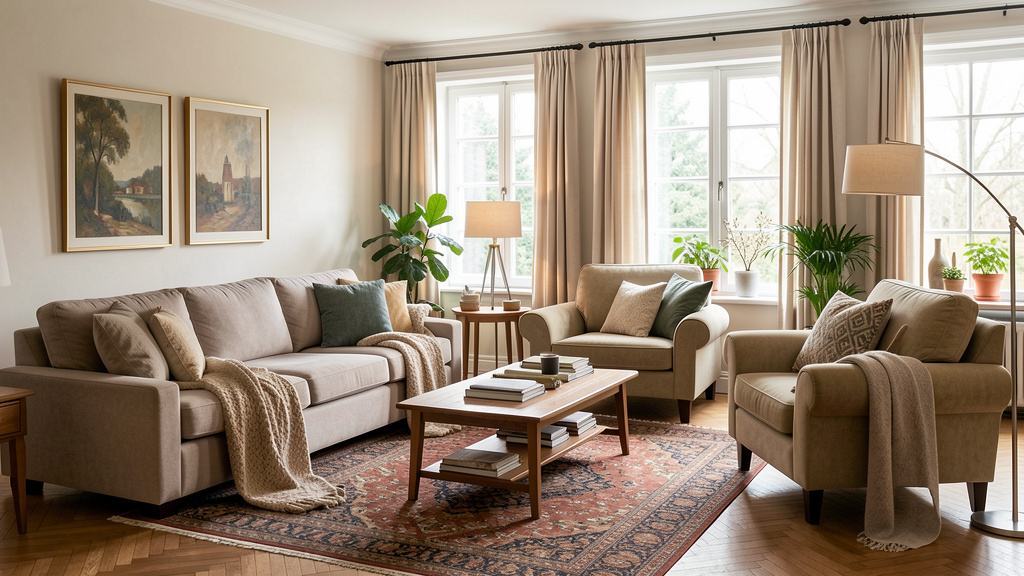
Move beyond aesthetics to create spaces that resonate on a deeper, sensory level—where every detail aligns with human experience, not just the camera lens.
You’ve felt it. You step into a home featured in a glossy magazine spread—impeccable styling, curated art, perfectly coordinated colors—and yet a subtle unease settles in your chest. The space is undeniably beautiful, yet it lacks warmth. It feels staged, sterile, or strangely exhausting to inhabit. Conversely, you might recall a modest, unassuming cottage where time seemed to slow, laughter flowed easily, and you felt an immediate, inexplicable sense of belonging. This isn’t imagination. It’s the profound difference between a space that merely looks good and one that genuinely feels right. This guide dismantles the illusion, revealing the hidden architecture of human-centered spaces through a multi-layered framework grounded in environmental psychology, sensory science, and observable patterns in how people interact with their surroundings. We’ll move beyond superficial tips to equip you with diagnostic tools and actionable strategies to transform any room from a visual specimen into a sanctuary that nourishes your spirit.
Introduction: The Unseen Architecture of Belonging
Walk into any major bookstore or scroll through design-focused social media, and you’ll be inundated with directives: Choose this paint color. Arrange furniture this way. Invest in that statement piece. The entire industry operates on a largely unchallenged assumption—that visual appeal is the primary, even sole, metric of a successful home. Yet, for decades, thinkers like Christopher Alexander (in A Pattern Language) and researchers in environmental psychology have documented a persistent phenomenon: spaces can achieve technical perfection in composition, color theory, and style adherence while failing utterly at their most fundamental purpose—to support human well-being, foster connection, and feel authentically lived-in. This disconnect isn’t a personal failing; it’s a systemic gap in how we discuss and create home environments. Current discourse overwhelmingly prioritizes the observer’s perspective (how the space photographs, how it impresses guests) over the inhabitant’s embodied experience (how it feels to wake up there, cook a meal there, seek comfort there). Research consistently indicates that our surroundings silently shape our stress levels, cognitive function, emotional state, and social interactions. A home that feels “wrong” often triggers low-grade, chronic stress responses—the subtle tension of navigating awkward furniture arrangements, the visual fatigue of excessive visual noise, the psychological unease of poor spatial flow—without us ever consciously identifying the cause. This guide bridges that critical gap. We shift the focus from creating a stage set to cultivating a living ecosystem. By understanding and intentionally designing across four interconnected layers—Sensory, Psychological, Functional, and Temporal—you gain the power to diagnose why a space feels off and implement precise, meaningful corrections. This isn’t about discarding aesthetics; it’s about elevating them. True beauty emerges not from isolated visual elements, but from the harmonious integration of all elements that serve human experience. The goal is a home that doesn’t just look like a place you should want, but feels unmistakably like a place you do belong.
The Resonance Framework: Four Layers That Transform How a Space Feels
Forget fleeting trends and rigid style rules. Lasting comfort—the kind that makes you sigh with relief the moment you walk through your front door—arises from deeper alignment. Patterns observed across diverse residential settings reveal a consistent insight: homes that feel authentically “right” resonate across four distinct, yet deeply interconnected, layers. Think of these layers as the invisible architecture of belonging. Neglecting any single layer creates subtle but persistent dissonance—a beautiful room that feels cold, a functional layout that feels chaotic, a stylish space that feels impersonal. The Resonance Framework provides a systematic lens to diagnose the root cause of the “looks good, feels wrong” phenomenon and implement targeted solutions. This framework synthesizes established principles from environmental psychology, neuroscience, and human-centered design into a practical diagnostic methodology. Mastering these layers transforms you from a passive consumer of design trends into an intentional architect of your daily experience.
Layer 1: The Sensory Layer — Tuning the Invisible Instruments of Comfort
We experience our homes not just with our eyes, but with our entire nervous system. The Sensory Layer encompasses all inputs processed below the threshold of conscious thought: the quality of light on skin, the texture underfoot, the ambient soundscape, the subtle scent in the air, the thermal comfort of a room. A space can be visually flawless yet feel profoundly uncomfortable due to sensory mismatches. This layer frequently contributes to the “feels wrong” sensation because its signals are processed by the limbic system—the brain’s emotional and survival center—before reaching conscious awareness. Ignoring it is like composing a symphony while deaf to half the instruments.
Why This Layer Matters: Human beings are sensory creatures. Evolution has hardwired us to respond to environmental cues for safety, comfort, and resource availability. Harsh overhead lighting can trigger subtle stress responses. Echoey rooms with hard surfaces create auditory chaos that fatigues the brain. Conversely, warm, layered lighting signals safety and rest. Textural variety (wood grain, woven fibers, soft textiles) provides comforting tactile feedback. Natural sounds (a gentle water feature, rustling leaves outside a window) may support relaxation. When sensory inputs conflict with our biological needs—like cool, sterile surfaces in a space meant for relaxation—the body may register dissonance, manifesting as unease, restlessness, or fatigue. Studies in environmental psychology suggest that variations in texture and lighting quality significantly influence perceived comfort, even when visual aesthetics remain constant.
Conducting a Sensory Audit: A Step-by-Step Guide
Don’t rely on memory. Experience your space anew with focused attention. Set aside 20 minutes. Remove distractions (phone on silent). Move slowly through one room at a time. Engage each sense deliberately:
- Sight (Beyond Color & Style): Stand in the center of the room at different times of day. Observe the quality of light. Is it harsh and glaring (creating sharp shadows and visual strain) or soft and diffused (wrapping objects gently)? Note areas of visual clutter that create “noise” for the eyes. Are there harsh reflections on screens or glossy surfaces? Does the lighting support the room’s primary function? (e.g., bright, shadow-free task lighting over a kitchen counter vs. warm, dimmable ambient light in a bedroom). Pay attention to sightlines—what do you see immediately upon entering? Is it calming or chaotic?
- Sound: Close your eyes. Listen. What is the baseline soundscape? Is there a constant hum from HVAC, refrigerator, or traffic? Does sound bounce sharply off hard floors and walls (creating an echoey, fatiguing environment), or is it absorbed? Clap your hands once sharply. How long does the sound linger? Notice transitions between rooms—are doorways creating sudden acoustic shifts? Are there pleasant sounds? (e.g., wind chimes, a ticking clock, birdsong from an open window).
- Touch (Haptics): Run your hands over surfaces. Sit on furniture. Walk barefoot. Is the sofa fabric scratchy or invitingly soft? Are countertops cold and unyielding, or do they have a warm, natural feel (like wood)? Is the rug plush underfoot or thin and hard? Do door handles feel substantial and smooth, or flimsy and cold? Temperature matters too—is one corner of the room consistently drafty or overheated?
- Smell: Breathe deeply. What is the dominant scent? Is it neutral, fresh, or does it carry faint odors (cooking residues, mustiness, synthetic air fresheners)? Are there layered, natural scents? (e.g., beeswax polish, dried lavender, the smell of books). Avoid overpowering artificial fragrances; the goal is subtle, clean, or naturally evocative.
- Thermal & Air Quality: Do you feel a draft? Is the air stagnant or gently circulating? Does the humidity feel comfortable (not too dry, not too damp)? Notice how your body feels—relaxed or subtly tense?
Common Sensory Pitfalls and Targeted Corrections:
* Pitfall: The “Showroom Syndrome” (All Hard Surfaces). Polished concrete floors, glass tables, leather sofas, marble countertops. Visually sleek, but acoustically harsh and thermally cold. Why it feels wrong: Creates a high-stimulus environment that may fatigue the nervous system. Lack of texture provides no comforting tactile anchors. Sound reverberation can increase stress. Correction: Introduce strategic softness. Layer a thick, textural wool or jute rug. Add linen or velvet throw pillows and a chunky knit blanket. Place a wooden tray on the glass table. Hang heavy fabric curtains to absorb sound and soften light. Incorporate a small indoor water feature for gentle, calming sound.
* Pitfall: Monolithic Lighting. Relying solely on a single overhead fixture (especially cool-white LEDs). Why it feels wrong: Creates unflattering shadows on faces (making social interaction feel strained), eliminates depth and dimension, and may signal “institutional” rather than “residential” to the brain. Correction: Implement layered lighting. Ambient: Soft, overall illumination (dimmable ceiling fixtures, cove lighting). Task: Focused light for specific activities (adjustable desk lamp, under-cabinet kitchen lights). Accent: Highlights features and creates warmth (wall sconces, picture lights, a focused beam on a plant). Prioritize warm color temperatures (2700K-3000K) for living and sleeping areas. Use dimmers universally. Place lamps at varying heights to create pools of inviting light.
* Pitfall: Sensory Overload. Excessive patterns, competing colors, visual clutter on every surface, loud background noise. Why it feels wrong: May overwhelm cognitive processing capacity, leading to fatigue, anxiety, or difficulty relaxing. Correction: Embrace negative space. Edit surfaces thoughtfully—leave generous clear areas on countertops, shelves, and walls. Choose a cohesive, limited color palette with one or two accent colors. Introduce sound absorption: area rugs, fabric wall hangings, bookshelves filled with books (excellent sound diffusers). Use white noise machines or fans strategically to mask disruptive external sounds.
Budget-Conscious Sensory Adjustments:
* Method A (Ideal Investment): Install dimmer switches for primary lights; invest in one high-quality, textural area rug.
* Method B (Budget Conscious): Swap harsh LED bulbs for warm-dimmable LEDs (2700K); drape a soft, oversized blanket over the sofa; place a small bowl of dried lavender or eucalyptus on a nightstand for subtle scent; use removable hooks to hang a lightweight fabric tapestry to soften echoes on a large wall.
* Method C (Quick Refresh): Light an unscented beeswax candle (provides warm, flickering light); place a folded quilt at the foot of the bed for immediate textural warmth; open a window briefly to refresh stale air.
Targeted sensory adjustments can profoundly alter a space’s emotional impact without altering its visual aesthetic. The shift from sterile to sanctuary often lies in these subtle, embodied details.
Layer 2: The Psychological Layer — Aligning Space with Subconscious Needs
Beneath sensory input lies the Psychological Layer—the realm of emotion, memory, identity, safety, and belonging. This layer addresses the profound question: Does this space support who I am and how I need to feel? A room can be sensorially comfortable yet psychologically misaligned. Think of a corporate-style home office with stark white walls in a space meant for creative writing—it might be functional and well-lit, but it may stifle inspiration and feel alienating. This layer draws on established concepts like Prospect-Refuge Theory (the human preference for spaces offering both a view out for awareness and a protected area in for safety) and Biophilia (the affinity for nature and natural processes).
Why This Layer is Foundational: Our brains continuously scan environments for cues about safety, connection, and identity. A space contradicting deep-seated psychological needs may create dissonance. An open-plan area with no defined zones might feel “airy” visually but trigger unease in someone craving defined personal space (lack of refuge). A bedroom dominated by work-related items signals “productivity,” potentially making unwinding more difficult. Spaces devoid of personal history or meaning may feel transient. Research in environmental psychology indicates that connections to nature and views of greenery correlate with reduced stress and greater satisfaction. In the home, this translates directly to feelings of peace versus agitation, connection versus isolation.
Diagnosing Psychological Alignment: Key Questions to Ask
Move beyond “Do I like this?” to deeper inquiries:
* Safety & Security: Does this space make me feel exposed or protected? (e.g., Is the bed positioned with a solid wall behind it? Does seating allow awareness of room entrances?). Are there elements triggering subconscious unease? (e.g., dark corners; furniture blocking pathways).
* Identity & Authenticity: Does this space reflect my values, history, and personality, or does it feel like a generic template? Are there objects with genuine meaning—a child’s artwork, a souvenir from a meaningful trip, well-loved books? Or does it feel borrowed from someone else’s life?
* Prospect & Refuge: In seating areas, do I have a view of the room’s activity (prospect) while feeling nestled and protected (refuge)? (e.g., An armchair in a corner with a side table offers refuge; facing the main living area provides prospect). Does the layout support both connection and retreat?
* Biophilic Connection: Are there tangible connections to the natural world? Natural materials (wood, stone, clay), views of sky or greenery, changing light patterns, or representations of nature (landscapes in art, water features). Does the space feel alive?
* Memory & Narrative: Does the space tell a story of my life? Are there layers of history—a vintage rug, furniture with visible patina, photos capturing genuine moments? Or does it feel frozen, devoid of lived experience?
Correcting Psychological Dissonance: Strategies for Authentic Alignment
* Creating Refuge Zones: In open-plan spaces, define intimate areas. Use a tall bookshelf, room divider, or large plant to create a visual boundary around a reading chair. Position seating with backs against walls where possible. Add a high-backed armchair or canopy over a bed to enhance enclosure. Example: Transforming a corner of a large living room into a dedicated “reading nook” with a comfortable chair, floor lamp, and small side table creates a powerful refuge zone within the larger prospect of the room.
* Infusing Authentic Identity: Display items with personal significance: frame a child’s drawing; arrange seashells from a family vacation; use a vintage suitcase as a side table. Rotate displayed items seasonally. The goal isn’t clutter, but curated authenticity. Counter-Example: A living room filled with generic art and brand-new furniture, with no personal touches, often feels like a hotel lobby—impressive but impersonal. The psychological message shifts from “this space is for display” to “this space is for you.”
* Strengthening Biophilic Bonds: Maximize natural light and views. Keep windows unobstructed. Choose natural materials and organic shapes. Incorporate living elements thoughtfully: a resilient snake plant, a small herb garden on a kitchen windowsill. Use nature-inspired colors and patterns. Even high-quality nature photographs can provide psychological resonance. Nuance: Biophilia is about creating a relationship with natural processes. Notice how afternoon sun warms a specific floor patch in winter, or how rain streaks the windowpane. Design to highlight these moments.
* Honoring Memory and Narrative: Create a “memory wall” with framed photos (candid moments, not just portraits), postcards, and small artifacts. Display books you’ve read. Allow furniture to show gentle wear—it tells a story of use and love. Avoid pressure for everything to look perpetually new. A slightly faded armchair holding memories of countless evenings is psychologically richer than a pristine, unused piece. Analogy: A home is like a journal. A blank journal is pristine but empty. One filled with handwritten notes, coffee stains, and pressed flowers holds meaning. Your home should be the latter.
Addressing Common Psychological Frictions:
* “My minimalist home feels cold and unwelcoming.” Diagnosis: Over-prioritization of visual simplicity may have erased psychological warmth and identity. Solution: Introduce “warm minimalism.” Keep clean lines but add one or two deeply personal, textural objects: a hand-thrown ceramic mug, a single framed family photo, a vintage wool blanket. Focus on the quality and meaning of the few items present.
* “I feel anxious in my own open-plan living area.” Diagnosis: Lack of defined zones may create a constant state of alertness (no refuge). Solution: Use area rugs to visually anchor distinct zones. Position furniture to create implied boundaries—sofas and chairs facing inward define a conversation area. Add a tall plant or slender screen to break up sightlines without closing off space. Ensure seating offers some sense of enclosure.
* “My bedroom doesn’t feel restful.” Diagnosis: Psychological cues may conflict with the room’s purpose. Work items, bright screens, or stimulating colors signal “activity.” Solution: Enforce a “no work zone” policy. Remove laptops and files. Choose calming colors for walls and linens. Use blackout curtains. Position the bed for a view of the door without being directly in line with it (aligning with prospect-refuge principles). Keep surfaces clear and serene.
Layer 3: The Functional Layer — Designing for the Reality of Daily Life
Aesthetics without function is decoration. Function without consideration for human behavior is engineering. The Functional Layer sits at the crucial intersection: How does this space support the actual, messy, beautiful reality of how I live? This layer addresses flow, ergonomics, storage, maintenance, and the seamless integration of daily rituals. A kitchen can feature high-end appliances and gorgeous countertops—but if the workflow between sink, stove, and refrigerator is inefficient, if there’s nowhere to place groceries upon entering, or if cleaning requires moving heavy stools, the space will breed frustration. The disconnect arises when design prioritizes an idealized version of life over lived reality.
Why Function Dictates Feeling: Friction in daily routines creates cumulative stress. Every time you navigate around poorly placed furniture, search for a misplaced item, or struggle with inadequate lighting, your nervous system may register a tiny spike of frustration. Over time, these micro-stresses erode peace. Conversely, a space that works effortlessly—where keys have a designated spot, the coffee maker is intuitive, pathways are clear in the dark—frees up cognitive and emotional energy. This energy redirects toward connection, creativity, rest, and joy. Function isn’t mundane; it’s the foundation of psychological safety and autonomy within your own home. When your environment supports your actions without resistance, you feel capable and respected.
Mapping Your Functional Reality: The “Day in the Life” Exercise
Forget aspirational boards. Grab a notebook. For one full day, document everything:
* Morning (6:00 AM – 9:00 AM): Where do you wake up? First actions? Where are clothes discarded? Where is breakfast made/eaten? Where are lunches packed? Where are keys, wallet, bags gathered? Note traffic jams in hallways or bathrooms.
* Evening (5:00 PM – 10:00 PM): Where do you enter? Where do shoes, coats, bags land? Where is mail sorted? Where is dinner prepared/eaten? Where do dishes go? Where does homework happen? Where do you relax? Where do devices charge?
* Pain Points: Note every moment of friction: “Had to move stool to open dishwasher,” “Tripped over toy in hallway,” “Couldn’t find scissors,” “Felt cramped unloading groceries.”
This exercise reveals the true functional requirements of your space, often starkly different from the “designed” intent. It identifies critical pathways (routes taken repeatedly) and essential landing zones (where items naturally accumulate).
Designing for Frictionless Flow: Core Principles
* The Golden Path: Identify the 3-5 most traveled routes (e.g., front door → kitchen; bedroom → bathroom). Ensure these paths are consistently clear, well-lit (consider subtle night lighting), and unobstructed. Width matters—a path should feel generous, not constricted.
* Landing Zones are Essential: Every entry point needs a dedicated, accessible landing zone. At the main entrance: a small bench (for removing shoes), hooks at varying heights (for coats, bags), a tray for keys/wallet, a bin for mail. In the kitchen: clear counter space near the entrance for groceries. In the bedroom: a chair or ottoman for discarding clothes. These zones acknowledge human behavior and provide dignified places for transition moments.
* Storage Must Match Behavior: Storage fails when inconvenient or misaligned with use. Example: Storing everyday dishes in a high cabinet above the stove requires unsafe stretching. Solution: Keep daily-use dishes in lower cabinets near the dishwasher. Example: A deep pantry where items get lost. Solution: Use clear, uniform bins labeled by category and implement a “first in, first out” system. Principle: “A place for everything” only works if “its place” is logical, accessible, and matches frequency of use. Store seasonal items out of the way; keep daily essentials within easy reach.
* Ergonomics: Designing for the Human Body: Furniture and fixtures should support, not strain, the body. Counter heights should allow comfortable food prep. Chair seats should support thighs without cutting circulation. Task lighting should eliminate shadows. Consider all household members—lower hooks for children, lever-style handles for easier grip. Common Mistake: Choosing a stunning, low-slung sofa that is beautiful but requires significant effort to get in and out of. Function must serve the people who live there.
Functional Fixes for Common Scenarios:
* Scenario: “The kitchen looks amazing but is a nightmare to cook in.”
* Diagnosis: Poor workflow, insufficient counter space near key appliances, inadequate task lighting, storage not aligned with cooking sequence.
* Solutions: Clear counter space next to the stove and sink. Install under-cabinet task lighting. Use a movable cart for extra prep space. Group utensils and spices near where used. Implement a “landing zone” for incoming groceries.
* Scenario: “The living room is beautiful but no one sits in it.”
* Diagnosis: Furniture arranged for visual symmetry rather than conversation; seating too formal; lack of accessible surfaces; poor lighting for relaxation.
* Solutions: Arrange seating to encourage eye contact. Ensure surfaces for drinks/books are within comfortable reach of all seats. Incorporate multiple, warm light sources (floor lamps, table lamps). Place a soft throw blanket and well-loved books visibly on the coffee table to signal “use me.”
* Scenario: “Clutter constantly takes over, making me feel stressed.”
* Diagnosis: Insufficient or poorly designed storage; lack of designated homes for items; cumbersome systems.
* Solutions: Edit volume first to match available storage. Create hyper-specific homes: a basket for remotes, drawer dividers for utensils. Use vertical space (wall shelves, over-door organizers). Choose dual-purpose storage furniture (ottoman with storage, bed with drawers). Implement a “one in, one out” rule. Remember: The goal is intuitive systems requiring minimal mental effort to maintain.
Budget-Conscious Functional Adjustments:
* Method A (Ideal): Custom built-in storage designed for specific needs.
* Method B (Budget): Repurpose existing furniture (vintage dresser as TV console); install adhesive hooks inside cabinet doors; use uniform, labeled baskets to corral items; add peel-and-stick LED strip lights under cabinets.
* Method C (Quick Reset): Dedicate 15 minutes each evening to a “closing ritual”: reset the main living area—return remotes, fluff pillows, clear surfaces. This small, consistent action prevents clutter accumulation and creates calm order each morning.
Layer 4: The Temporal Layer — Honoring the Passage of Time and Change
A home frozen in time feels like a museum, not a home. The Temporal Layer acknowledges a fundamental truth: we change, seasons change, life changes. A space that feels “wrong” is often one rigidly adhering to a single moment—a past trend, an outdated life stage, an idealized future. It fails to accommodate growth, memory, seasonal shifts, or the gentle patina of use. This layer is about designing for fluidity, adaptability, and the beautiful impermanence of life. It asks: Does this space have room for my story to continue unfolding?
Why Temporal Awareness Matters for Authentic Feeling: Humans have a deep psychological need for environments reflecting our current reality while honoring our past and allowing for future growth. A nursery meticulously preserved years after a child has moved creates dissonance—it speaks of a past chapter, not the present family. Conversely, a space evolving with you builds profound emotional resonance. It becomes a living scrapbook. The Japanese concept of wabi-sabi—finding beauty in imperfection, impermanence, and the marks of time—offers a powerful perspective. A scratch on a wooden table tells a story of family meals; faded fabric on a favorite armchair holds memories of quiet evenings. These are not flaws; they are evidence of a life well-lived. Ignoring the temporal layer creates disconnect between the static environment and dynamic reality, leading to feelings of stagnation or inauthenticity.
Integrating Temporal Intelligence: Strategies for a Living Home
* Design for Adaptability (The “Grow-With-You” Principle): Choose foundational elements (flooring, major cabinetry, wall colors) in neutral, timeless palettes providing a flexible canvas. Express personality through easily updated layers: paint accent walls, swap textiles, rotate artwork, update hardware. Example: A child’s bedroom in a bold, trendy color may feel exciting at age 5 but limiting at age 12. Painting walls a soft neutral and using bedding and decor to reflect current interests allows seamless evolution. Similarly, modular furniture systems can be reconfigured as needs change.
* Embrace Seasonal Rhythms: Intentionally shift your environment with the seasons to stay connected to the natural world. Spring: Lighten textiles, introduce fresh flowers, open windows to air out the house. Summer: Use light-colored linens, add a small fan, display citrus fruits. Autumn: Bring in warmer textures (chunky knits), incorporate earthy tones and natural elements (pinecones), use warmer lighting. Winter: Layer rugs for warmth, use deep accent colors, incorporate soft candlelight (real or flameless LED), display evergreen branches. This isn’t about excessive decoration; it’s about subtle, sensory shifts signaling time’s flow, fostering mindfulness.
* Curate, Don’t Hoard: The Art of Meaningful Evolution: Regularly assess belongings through a temporal lens. Ask: “Does this object reflect who I am now? Does it hold genuine, positive meaning? Does it serve my current life?” Let go of items anchoring you to a painful past, outdated identity, or passed life stage. This isn’t discarding memory; it’s making space for the present and future. Preserve memories intentionally: digitize photos, create a single memory box per child with select items, frame a meaningful letter. The goal is a home filled with objects resonating with your current truth. Nuance: Approach this with compassion. Letting go can be emotional. Focus on gratitude for the item’s role, then release it to honor your present self.
* Honor Patina and Imperfection: Shift perspective on wear and tear. See a scratch on hardwood not as damage, but as a record of laughter and life. Choose materials aging gracefully: solid wood develops richer patina; leather softens; unlacquered brass gains a unique glow. Avoid finishes that look “cheap” when worn. Celebrate the history embedded in your space. Analogy: A well-loved book with dog-eared pages is often more cherished than a pristine, unread copy. Your home should hold similar evidence of engagement.
Addressing Temporal Dissonance: Real-World Scenarios
* Scenario: “My house still looks like it did when my kids were toddlers, but they’re teenagers now.”
* Diagnosis: The environment is frozen in a past life stage, failing to reflect current family needs and maturity.
* Solution: Involve teenagers in updating shared spaces. Repaint walls in colors they connect with. Replace juvenile artwork with pieces they select. Update lighting to feel more mature. Create zones supporting current activities (study nook, space for instruments). Preserve toddler memories intentionally in a photo album or single shadow box, rather than having the entire home reflect that era.
* Scenario: “I feel overwhelmed by all the stuff from my past relationship.”
* Diagnosis: The environment is cluttered with objects carrying emotional weight tied to a closed chapter, creating psychological friction.
* Solution: Approach with self-compassion. Sort items into clear categories: Keep (only if bringing genuine, uncomplicated joy now), Donate/Sell, Discard, Archive (strictly limit this box). For items with strong negative associations, consider a ritual release. Focus on filling the space with new, positive associations—buy one new plant, frame a recent photo of friends, choose new bedding in an empowering color. Reclaim the space as yours.
* Scenario: “Everything is brand new and perfect, but it feels sterile and unlived-in.”
* Diagnosis: The pursuit of perfection has eliminated evidence of human presence and the passage of time. No history, no story, no warmth of use.
* Solution: Intentionally introduce elements of life. Display books you are currently reading. Place a half-finished project in a basket. Use the nice dishes. Allow fresh flowers to wilt naturally before replacing. Choose one piece of furniture with visible wood grain or handmade texture. Signal that this space is used, loved, and alive.
The Fundamental Principle: A home that feels truly right is not a static monument to a single moment, but a dynamic, evolving partner in your life journey—a canvas that holds the beauty of your past, supports the reality of your present, and makes space for the promise of your future.
Beyond the Framework: Navigating Real-World Constraints and Nuances
Understanding the four layers provides immense diagnostic power, but real life introduces complexities: tight budgets, rental restrictions, shared living with conflicting needs, or inherited furniture with sentimental value. The goal isn’t perfection across all layers simultaneously—a pursuit leading only to frustration. It’s about intentional progression. Start where you are. Focus on the layer causing the most acute discomfort. A single, well-chosen intervention can shift the entire feeling of a space. Progress, not perfection, builds resonance.
Navigating Common Constraints:
* Renting with Restrictions: Cannot paint walls or install permanent fixtures. Strategy: Focus intensely on controllable layers. Sensory: Use removable wallpaper samples as art; layer rugs; invest in warm-toned lamps; add heavy curtains (tension rods). Psychological: Display personal photos and meaningful objects prominently; use textiles reflecting your identity; create a dedicated “refuge” corner. Functional: Use furniture sliders to optimize layout; employ stylish storage ottomans or baskets; create landing zones with a small console table. Temporal: Rotate artwork and textiles seasonally; use removable hooks. Your home can feel deeply personal without altering the landlord’s property.
* Budget Limitations: True resonance doesn’t require a renovation budget. Strategy: Prioritize high-impact, low-cost interventions. Sensory: Swap light bulbs (warm dimmable LEDs); deep clean windows; add one textural element (a thrifted wool blanket). Psychological: Edit surfaces—remove items that don’t spark joy; frame one meaningful photo; rearrange furniture to improve flow. Functional: Implement the “15-minute nightly reset”; label existing bins for better organization; clear one critical pathway. Temporal: Rotate items already in your home. Mindful curation and rearrangement often yield greater satisfaction than minor new purchases.
* Conflicting Needs in Shared Spaces: Partners or family members have different preferences. Strategy: Approach collaboratively, using the framework as a neutral diagnostic tool. “I notice the bright overhead light in the evening makes it hard for me to relax (Sensory Layer). Could we try adding a floor lamp for softer light?” Focus on the feeling and need behind the preference, not the aesthetic itself. Compromise often lies in creating zones: one side of the desk for minimalist organization, the other for creative chaos. The goal is mutual respect for each person’s comfort.
* Sentimental Items That Clash Aesthetically: You love the item, but it disrupts visual harmony. Strategy: Honor the sentiment without letting it dominate. Display with Intention: Place the item where its story is celebrated—a vintage rocking chair in a dedicated reading corner. Group for Impact: Cluster smaller sentimental items together on a shelf to create a cohesive “memory vignette.” Repurpose Thoughtfully: Could fabric from a beloved quilt recover a small pillow? Photograph and Release: For items with strong sentiment but no practical place, photograph beautifully, frame it, and release the physical object. Make the item feel chosen and honored.
Beware the “Pinterest Trap”: Social media presents highly curated, single-moment snapshots, often staged by professionals devoid of real-life context (no toys, no mail, no evidence of cooking). Comparing your lived-in, evolving home to these images invites dissatisfaction. Remember: You are seeing the highlight reel, not the daily reality. Use inspiration images for ideas (e.g., “I love the layered lighting”), not rigid blueprints. Your home’s value lies in its authenticity to your life. When comparison arises, shift focus inward: “Does this space, right now, support my well-being and my household’s?” That is the only metric that matters.
Your Questions, Answered
Q: My home looks exactly like the design blogs I follow, but I still feel uneasy there. What’s missing?
A: This is the quintessential “looks good, feels wrong” scenario. Design blogs primarily address the visual layer and often prioritize photographic appeal over lived experience. The disconnect likely stems from neglecting the other three layers. Ask yourself: Does the layout support my actual daily routines (Functional Layer)? Are there personal, meaningful objects reflecting my story (Psychological Layer)? Does the space feel adaptable to my changing life (Temporal Layer)? Start by conducting the “Day in the Life” exercise to identify functional friction points—that’s often the most immediate source of unease.
Q: Can a space feel “wrong” even if I love all the individual decor items?
A: Absolutely. The feeling of a space emerges from the relationship between elements and how they interact with you, not from the sum of isolated “pretty things.” A room can contain only items you adore individually, but if they clash sensorially (e.g., a scratchy velvet sofa paired with cold metal tables and harsh lighting), create psychological dissonance (e.g., serene art hung above a chaotic desk), or function poorly (e.g., a beautiful but tiny coffee table), the overall experience will feel off. Focus on harmony and integration across the four layers. Edit ruthlessly—sometimes removing one “loved” item that disrupts the whole creates more resonance than adding another.
Q: I live in a small apartment. How can I apply these layers without making it feel cramped?
A: Small spaces benefit immensely from this framework, as every square inch has amplified impact. Sensory: Maximize light reflection (light walls, mirrors opposite windows); use sheer curtains; choose multi-sensory items (a rug soft underfoot and sound-absorbing). Psychological: Define zones clearly with rugs or furniture to create psychological “rooms”; use vertical space for personal photos to avoid surface clutter; ensure at least one dedicated refuge nook. Functional: Prioritize multi-functional furniture (storage ottoman, fold-down desk); implement meticulous, accessible storage; keep pathways ruthlessly clear. Temporal: Embrace intentional curation—only keep items serving current needs and bringing genuine joy; rotate seasonal items in compact storage. In small spaces, resonance comes from extreme intentionality.
Q: How do I know if the “wrong” feeling is the space or my own mood/anxiety?
A: Practice self-awareness. Notice when the feeling arises. Does it happen consistently upon entering a specific room, regardless of prior mood? Does it ease when you change one element (e.g., turning on a lamp, opening a window)? If discomfort is room-specific and shifts with environmental changes, the space is likely a contributing factor. If pervasive across all environments and tied to internal states, it’s more likely internal. However, environments amplify internal states. A chaotic space may worsen anxiety; a calm space can provide relief. Use the space as a tool: if feeling anxious, optimize one layer nearby (dim lights, play calming music, clear the surface). Observe the effect. A resonant space won’t eliminate deep-seated anxiety, but it can reduce environmental triggers.
Q: Is there scientific backing for these ideas, or is it just subjective opinion?
A: The framework synthesizes well-established principles from multiple disciplines. Environmental psychology has long documented how spatial design influences stress and well-being. Neuroscience confirms sensory inputs directly impact brain regions regulating emotion. Ergonomics provides evidence-based guidelines for reducing physical strain. Concepts like biophilia are supported by research indicating connections to nature correlate with reduced stress and improved cognitive function. While individual preferences vary, core human responses to safety cues, sensory comfort, functional efficiency, and nature connections reflect widely observed tendencies. This is applied science for human well-being.
Q: I inherited a lot of dark, heavy furniture. It feels oppressive, but I can’t replace it all. What can I do?
A: You can dramatically shift the feeling without discarding furniture. Sensory Layer: Maximize natural light—keep windows spotless, use light-colored sheer curtains. Add multiple warm light sources (lamps with 2700K bulbs) to counteract visual weight. Introduce light, textural textiles: a cream-colored slipcover or tailored throw, light linen pillow covers, a pale jute rug. Psychological Layer: Style intentionally. Place vibrant, meaningful art above the credenza. Add a thriving green plant. Display carefully chosen personal items. Functional Layer: Ensure furniture arrangement allows easy movement—don’t cram pieces together. Create clear pathways. Cleaning and polishing wood furniture to restore its natural luster can transform it from “oppressive” to “rich and warm.”
Q: How long does it take to “fix” a space that feels wrong?
A: There is no single timeline—it depends on the root cause and your capacity. A critical Functional Layer issue (e.g., a blocked pathway) might be resolved in 20 minutes of rearranging, yielding immediate relief. Addressing deep Psychological Layer misalignment may require thoughtful editing over weeks or months. Focus on consistent, intentional action. Celebrate micro-wins: “Today I added a lamp to my reading chair—now it feels like a true refuge.” Resonance builds cumulatively. Avoid pressure for overnight transformation. Sustainable change aligned with your life rhythm is far more effective.
Q: What if my partner/family member doesn’t “get it” and resists changes?
A: Frame changes around shared benefits and feelings, not aesthetics. Instead of “This beige wall is boring,” try “I’ve noticed the bright overhead light in the evenings makes it hard for me to unwind. Would you be open to trying a softer lamp? I think it might help us both relax.” Use “I feel” statements. Start with changes in your personal space to demonstrate positive impact. Invite collaboration: “Help me find a rug that feels soft underfoot and has a pattern you like.” Focus on solving a shared pain point identified through the “Day in the Life” exercise. Small, successful collaborations build trust. Respect that resonance is personal; the goal is a space working for everyone, which may involve compromise and designated personal zones.
Q: Does this apply to outdoor spaces like patios or gardens?
A: Emphatically yes. Outdoor spaces are powerful extensions of the home. Apply the layers: Sensory: Consider underfoot texture, ambient sounds (wind chimes vs. traffic), dappled shade vs. harsh sun, scent of herbs. Psychological: Create prospect (a view of the garden) and refuge (a sheltered corner); incorporate biophilic elements deeply (native plants, bird feeders); add personal touches (a painted rock from a hike). Functional: Ensure clear pathways; provide surfaces for drinks/books; consider storage for cushions. Temporal: Design for seasonal interest (spring bulbs, summer blooms, fall foliage); allow space to evolve with plant growth; create rituals (morning coffee on the porch). A resonant outdoor space feels like a natural extension of your inner sanctuary.
Q: I’ve tried decluttering multiple times, but clutter always comes back. Am I failing?
A: No, this is common and usually indicates a system failure, not personal failure. Clutter returns when storage solutions don’t match behavior or volume. Revisit the Functional Layer: Are there enough accessible homes for all items? Is storage convenient? (If putting toys away requires climbing a ladder, it won’t happen). Is volume simply exceeding capacity? The solution isn’t more willpower; it’s better systems and honest editing. Implement “one in, one out” rigorously. Designate a “clutter catch-all” bin; when full, spend 15 minutes sorting it. Focus on creating landing zones making putting things away effortless. Decluttering is an ongoing practice of mindful curation. Be compassionate. Progress is measured in reduced friction, not perfection.
Conclusion: From Observation to Transformation
We began with a universal yet often unspoken experience: the quiet dissonance of a home that captivates the eye but fails to comfort the spirit. Through the lens of the Resonance Framework—Sensory, Psychological, Functional, and Temporal—we’ve uncovered the hidden architecture behind this disconnect. True belonging in a space isn’t accidental. It’s cultivated through intentional alignment across these four interconnected layers. It’s the warmth of layered light on a winter evening (Sensory), the quiet pride of seeing your family’s story reflected in curated objects (Psychological), the effortless flow of preparing a meal without frustration (Functional), and the gentle acceptance of a well-loved armchair’s patina as a testament to years of comfort (Temporal). This framework empowers you to move beyond passive consumption of design trends and become an active, compassionate architect of your daily experience. You now possess diagnostic tools to pinpoint why a space feels off and strategic pathways to correct it, regardless of budget, space constraints, or life stage.
Recap: The Three Foundational Shifts
1. Shift from Observer to Inhabitant: Prioritize how the space feels to live in over how it looks to photograph. Your embodied experience is the ultimate metric.
2. Shift from Decoration to Integration: View every element—light, texture, layout, object—not in isolation, but for its role in the holistic ecosystem of your home and its contribution to the four layers of resonance.
3. Shift from Perfection to Progress: Embrace the journey. A single, intentional change—a softer lightbulb, a cleared pathway, a meaningful photo displayed—creates a ripple effect of increased comfort and authenticity. Sustainable transformation happens through consistent, compassionate action.
The 24-Hour Rule: Your First Step Toward Resonance
Do not wait for the “perfect time.” Within the next 24 hours, choose one micro-action from one layer addressing your most immediate source of friction:
* Sensory: Swap one harsh overhead bulb for a warm-dimmable LED (2700K) in a room used most in the evening.
* Psychological: Place one object with genuine personal meaning—a child’s drawing, a souvenir from a joyful trip—where you will see it first thing tomorrow morning.
* Functional: Spend 10 minutes creating a dedicated “landing zone” for keys and wallet right inside your front door (a small dish or hook).
* Temporal: Open a window for 5 minutes to refresh the air, then place a single seasonal item where you’ll see it (a pinecone in winter, a fresh flower in spring).
This tiny action is not trivial. It is a declaration of intent. It breaks the cycle of passive dissatisfaction and initiates active co-creation with your environment. Notice the subtle shift. Feel the agency. This is the seed from which profound transformation grows.
The Big Picture: Your Home as a Living Practice
A home that feels truly right is never a finished project. It is a living practice—a continuous, gentle dialogue between you and your environment. It evolves as you evolve. It holds space for joy and sorrow, growth and rest, memory and anticipation. By applying the principles of resonance, you cultivate more than just a comfortable house; you nurture a sanctuary that actively supports your well-being, strengthens your connections, and honors the beautiful, imperfect, ever-unfolding story of your life. You move from merely occupying space to truly inhabiting it. The journey inward, to understand what you need to feel safe, seen, and supported, is the most important design work of all. Trust your feelings. Listen to your space. Make one small, intentional choice today. Your home is waiting to resonate with you.
Explore Our Complete System:
The Science of Cozy: Designing for Deep Comfort | Sensory Home Audit: Your Step-by-Step Diagnostic Guide | The Psychology of Space: Creating Rooms That Support Your Mind | Functional Flow: Mapping and Optimizing Your Home’s Daily Rhythms | Biophilic Design for Everyday Wellbeing: Simple Ways to Bring Nature Home | The Adaptable Home: Designing Spaces That Grow With Your Life | Memory and Meaning: Weaving Personal History Into Your Decor Without Clutter