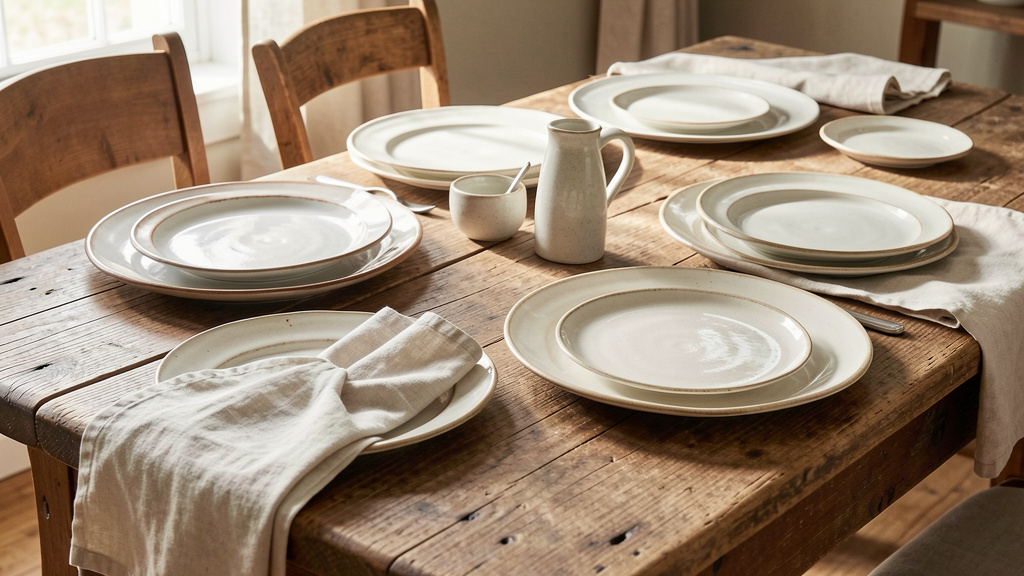
Transform your dining space with intention—whether you’re preserving heirloom elegance or crafting a relaxed gathering spot, this framework adapts to your life.
Your dining room is more than just a place to eat. It’s where birthday candles flicker over frosting-smudged smiles, where job offers are celebrated with clinking glasses, where quiet Tuesday dinners become sacred rituals. Yet so many homes contain a dining space that feels disconnected from real life—a room preserved behind closed doors like a museum exhibit, or a chaotic afterthought crammed between the refrigerator and the laundry chute. This guide moves beyond fleeting inspiration and rigid design dogma to deliver a deeply practical, psychologically aware framework for creating a dining environment that authentically reflects how you actually live. We’ll navigate the full spectrum from structured elegance to effortless comfort, decode the subtle language of furniture placement and lighting, and equip you with actionable strategies to transform underutilized space into your home’s most meaningful hub. No matter your square footage, budget, or aesthetic leanings, you’ll discover how to cultivate a dining experience that feels genuinely yours.
Introduction
Walk into any home across the globe, and the dining area reveals intimate truths about its inhabitants. In Tokyo apartments, a low kotatsu table doubles as living room centerpiece and dining zone, reflecting space-conscious ingenuity. In Provence farmhouses, weathered wooden tables bear generations of knife marks and wine stains—a testament to meals shared without pretense. In mid-century American suburbs, formal dining rooms with crystal chandeliers once signaled arrival and aspiration. These variations aren’t merely decorative choices; they’re physical manifestations of cultural values, family rhythms, and personal priorities. Today’s homeowners face a unique challenge: navigating abundant design inspiration while reconciling conflicting desires—Should I honor this inherited mahogany table? Can I make this room feel welcoming for my toddler’s sticky hands? How do I host Thanksgiving without panic?
Patterns observed across diverse residential settings reveal that the most harmonious dining spaces achieve alignment between physical environment and lived experience. This isn’t about discarding tradition or chasing minimalism—it’s about cultivating awareness. When a room’s design consciously supports its actual usage patterns, emotional friction dissolves. Children feel invited to set the table. Guests linger after dessert. Weeknight meals become moments of connection rather than logistical chores. This guide provides a structured yet flexible pathway to move from aspiration to authentic implementation, whether you’re working with a dedicated formal room, a compact breakfast nook, or an open-concept kitchen island. We begin not with paint swatches or furniture catalogs, but with the most critical foundation of all: understanding your own life.
The Lifestyle Alignment Framework: Designing a Dining Room That Fits Your Life
Forget “farmhouse” or “modern” as starting points. True design clarity begins with honest self-assessment. The Lifestyle Alignment Framework is a three-phase process developed through observation of recurring patterns in residential spaces. It shifts focus from what the room looks like to how the room serves you. This methodology prevents common missteps—like selecting delicate surfaces for high-traffic households or installing rigid layouts in spaces meant for flexible use. By anchoring decisions in observable behavior rather than abstract ideals, you create a space that feels intuitively right, day after day.
Step 1: The Honest Assessment—How Do You Really Use This Space?
Before moving a single chair, become a neutral observer of your current reality. For seven consecutive days, keep a simple log. Note:
– Frequency: How many meals occur in this space weekly? (Breakfast? Lunch? Dinner?)
– Participants: Who typically gathers here? (Just partners? Children? Extended family? Frequent guests?)
– Duration: How long do people linger after eating?
– Secondary Activities: Does homework happen here? Bill paying? Morning coffee rituals? Game nights?
– Emotional Tone: Does the space feel stressful (“Hurry up and clear the table!”) or serene (“Let’s talk awhile”)?
Why this step is crucial: Aspiration (“We’ll host dinner parties monthly!”) often clashes with reality (“We eat takeout on the couch most nights”). One household meticulously restored a formal dining room with velvet chairs and a large table, only to realize their family of four used it twice yearly. The room became a source of guilt. Another converted their “unused” dining area into a homework station with durable surfaces and built-in storage—transforming resentment into daily utility. Your log reveals truth. Honor it.
Common mistakes to avoid:
– The Inspiration Trap: Saving numerous images without noting why each resonates. (Is it the warm lighting? The sense of intimacy? The storage solutions?)
– The Inheritance Pressure: Feeling obligated to use furniture that doesn’t fit your lifestyle. (Solution: Repurpose meaningful pieces elsewhere; use their story in another context.)
– Ignoring Traffic Flow: Placing the table where it blocks paths to the kitchen or backyard, creating daily friction.
Concrete example: A family logged their habits and discovered:
– Weeknight dinners: 4x/week (family of 3)
– Weekend breakfasts: 2x/week
– Homework station: Daily after school
– Guests: 3-4 times/year
Their “formal” dining room was rarely used because the table was too large for three people, chairs were uncomfortable for homework, and the room felt isolated. Their solution? Replaced the large table with a sturdy 42-inch round table (intimate for three, expandable for guests), added task lighting for homework, and painted the walls a warm, inviting neutral. The room became the heart of their home.
Step 2: Define Your Non-Negotiables—Function, Feeling, and Flow
With data from Step 1, distill your core requirements into three categories. Be specific.
Function Non-Negotiables (The Practical):
– Seating Capacity: “Must comfortably seat 6 regularly, 8 occasionally.”
– Surface Needs: “Requires space for serving dishes during gatherings.”
– Storage: “Needs hidden storage for table linens, board games, or school supplies.”
– Durability: “Surfaces must withstand daily use.”
– Accessibility: “Clearance for mobility aids or aging parents.”
Feeling Non-Negotiables (The Emotional):
– Atmosphere: “Should feel calm and uncluttered,” or “Energetic and conversation-sparking.”
– Sensory Cues: “Warm lighting essential,” “Natural materials preferred,” “Must feel connected to garden view.”
– Memory Triggers: “Space should accommodate holiday traditions,” “Display area for children’s art.”
Flow Non-Negotiables (The Spatial):
– Traffic Patterns: “Must allow clear path from kitchen to living room without circling the table.”
– Adjacencies: “Needs proximity to kitchen for serving,” or “Should feel separate from TV noise.”
– Flexibility: “Furniture must be movable for activities.”
Why this step is crucial: Vague goals (“I want it cozy”) lead to inconsistent choices. Specific non-negotiables become your decision filter. When evaluating a rug, you’ll ask: “Does this size allow adequate clearance around chairs and feel soft underfoot?” When choosing paint, you’ll test: “Does this shade feel calming during rushed mornings?”
Real-life application: One household defined their non-negotiables:
– Function: Seats 4 daily, expands to 8; durable surfaces; stores high chair.
– Feeling: Bright, cheerful, connected to backyard.
– Flow: Open to kitchen; no tripping hazards.
This led them to choose a round pedestal table (no corner bumps), wipeable upholstered chairs, a built-in bench with storage under the window, and large doors opening to the patio. Every element served their defined needs.
Step 3: Execute with Intention—Curating Elements That Support Your Vision
Now, translate non-negotiables into physical choices. Style emerges organically from purpose—not the reverse.
The Intentional Selection Process:
1. Start with the Anchor Piece: Usually the table. Does its shape (round = inclusive conversation; rectangular = traditional hierarchy), size, and material align with your Function and Flow needs?
2. Layer Supporting Elements: Chairs must complement table height and satisfy Feeling needs (upholstered for comfort? wood for easy cleaning?). Lighting must provide adequate task light and set the desired mood.
3. Edit Ruthlessly: Remove any item that doesn’t serve a defined purpose or evoke the intended feeling. An ornate sideboard might be beautiful, but if it blocks flow and you lack storage needs, it creates visual noise.
4. Test Before Finalizing: Arrange furniture with painter’s tape on the floor. Sit in candidate chairs for 10 minutes. Observe the space at different times of day.
Why this step is crucial: Execution without intention leads to “decorated” spaces that feel hollow. Intentional curation creates cohesion and reduces decision fatigue. When every object has earned its place through utility or emotional resonance, the room feels settled and authentic.
Common pitfalls:
– Over-Accessorizing: Clutter competes with connection. Leave negative space for eyes (and conversations) to rest.
– Ignoring Scale: A massive fixture in a small room feels oppressive; tiny art above a large buffet looks lost. Measure twice.
– Forgetting the Human Factor: A table that seats eight might technically fit, but if chairs scrape walls when pulled out, the space feels stressful. Prioritize human comfort over theoretical capacity.
The Fundamental Principle: A dining room’s style should be a natural extension of your daily rhythms, not a rigid category imposed from the outside. When function, feeling, and flow align, “style” becomes effortless authenticity.
The Formal Dining Room: History, Hallmarks, and Modern Relevance
To thoughtfully engage with formal dining—whether embracing it, adapting it, or moving beyond it—we must first understand its origins and enduring purpose. The formal dining room, as codified in Western architecture during the Victorian era, was never merely about eating. It was a stage for social ritual, a demonstration of prosperity, and a container for cultural ceremony. In 19th-century England, separate dining rooms emerged as families sought to emulate aristocratic lifestyles, separating food preparation from consumption. Servants passed dishes through butler’s pantries; specific chairs denoted hierarchy; elaborate place settings signaled refinement. This wasn’t arbitrary—it reinforced social structures and provided predictable rituals in a rapidly changing world.
Understanding this history liberates modern homeowners. You aren’t “failing” if your formal room feels unused. You’re operating in a different cultural context. Today’s relevance of formal dining lies not in replicating historical rigidity, but in intentionally preserving its core strengths: ceremony, focus, and elevated connection. A formal space, when aligned with contemporary needs, offers something increasingly rare: a dedicated zone free from screens, chores, and distractions—a sanctuary for deep conversation and milestone celebrations. The key is adaptation, not abandonment.
When Formal Dining Shines: Occasions and Advantages
Formal dining retains profound value in specific contexts. Recognizing these helps determine if—and how—this style serves your life:
- Milestone Celebrations: Weddings, graduations, anniversaries. The deliberate setup (linens, candles, place cards) signals, “This moment matters.” The physical separation from daily chaos elevates the experience.
- Intergenerational Gatherings: For families honoring traditions (e.g., Passover Seder, Christmas Eve dinner), a dedicated space preserves ritual integrity. Seating arrangements can reinforce familial continuity.
- Focused Conversation: Without TV glare or kitchen clutter, attention turns inward. Business discussions, heartfelt talks, or reconnecting with a partner benefit from this intentional container.
- Displaying Heirlooms: A formal room provides context for cherished pieces—a grandmother’s china cabinet, a hand-carved sideboard—that might feel out of place elsewhere.
Concrete example: One family uses their formal dining room exclusively for Lunar New Year. For weeks, the room remains quiet. On celebration day, they unfold the red tablecloth, arrange symbolic foods, and seat elders first. The room’s formality isn’t cold—it’s reverent. It transforms a meal into a living heritage lesson.
Counter-example: Another household kept their formal room “perfect” year-round: crystal untouched, chairs covered, table perpetually set. It felt like a museum, not a home. Guests felt anxious (“Don’t spill!”). The space created distance, not connection. Their solution? They now store holiday decor in the sideboard, use the table for wrapping gifts in December, and host an annual gathering where the room’s elegance feels earned, not intimidating.
Core Elements of a Traditional Formal Dining Room (and How to Adapt Them)
Authentic formal dining rooms share architectural and decorative signatures. Modern interpretation lies in selectively honoring these elements while softening rigidity:
| Traditional Element | Original Purpose | Modern Adaptation Strategy |
|---|---|---|
| Symmetrical Layout | Reinforced order/hierarchy | Keep: Balanced furniture arrangement. Adapt: Offset symmetry with an organic-shaped rug or asymmetrical art to feel less rigid. |
| Dining Table (Rectangular/Oval) | Accommodated serving from sides | Keep: Size appropriate for gatherings. Adapt: Choose extendable tables; use round tables for inclusivity; select finishes that age gracefully. |
| Upholstered Host/Hostess Chairs | Signaled status of primary seats | Keep: Two distinctive chairs for visual interest. Adapt: Ensure all chairs are equally comfortable; use durable performance fabric. |
| Sideboard/Buffet | Stored serving pieces; displayed status | Keep: Essential storage. Adapt: Use for everyday dishes, board games, or as a coffee station. Style with books and plants. |
| Chandelier (Centered) | Primary light source | Keep: Focal point. Adapt: Install dimmer switch; layer with wall sconces or buffet lamps for adjustable ambiance. |
| Formal Window Treatments | Controlled light; displayed wealth | Keep: Quality hardware. Adapt: Use simple linen panels that filter light softly; avoid heavy fabrics that feel oppressive. |
| Wallpaper or Wainscoting | Demonstrated craftsmanship | Keep: Architectural detail. Adapt: Paint wainscoting a soft neutral; use subtle textured wallpaper for depth without formality. |
Why adaptation matters: A room filled with “correct” formal elements but devoid of human warmth feels sterile. The goal is refined comfort, not museum replication. Swap stiff upholstery for textured bouclé in a warm neutral. Replace a single harsh fixture with layered lighting at varying heights. Display children’s framed art alongside antique prints. These subtle shifts invite use without erasing elegance.
Common Pitfalls and How to Avoid Them
Even well-intentioned formal spaces falter due to predictable missteps. Awareness prevents frustration:
-
Pitfall: The “Do Not Touch” Vibe
Symptom: Guests hover near the doorway, afraid to sit or use the restroom.
Root Cause: Overly pristine surfaces, fragile decor, lack of “inviting” cues.
Solution: Introduce tactile elements—a woven basket of blankets, a bowl of seasonal fruit on the table, chairs with slightly worn leather that invites use. Place a small tray with coasters on the sideboard. These signals say, “This space is for living.” -
Pitfall: Poor Lighting Layers
Symptom: The room feels like an operating theater or a cave.
Root Cause: Relying solely on a central fixture.
Solution: Implement the 3-Layer Lighting Rule: - Ambient: Dimmable overhead fixture (sets base mood).
- Task: Buffet lamp for serving; under-cabinet lighting if near kitchen.
-
Accent: Wall sconces to highlight art; candles (real or flameless) for warmth. Install dimmers on all circuits.
-
Pitfall: Ignoring Acoustics
Symptom: Conversations feel strained; clattering dishes echo.
Root Cause: Hard surfaces (wood floors, bare walls) amplify sound.
Solution: Add softness strategically: a thick rug under the table, upholstered chairs, fabric wall panels behind the buffet, heavy curtains. Even a large potted plant absorbs sound. -
Pitfall: Scale Mismatch
Symptom: The room feels cramped or cavernous.
Root Cause: Furniture too large/small for the space.
Solution: Follow the 36-Inch Rule: Allow minimum 36 inches between table edge and walls/furniture for chair clearance and traffic flow. For small rooms (<12×12), choose a round table (max 48″ diameter) and armless chairs. For large rooms, float the table away from walls; add a console behind seating area.
Real-world fix: One household inherited a formal room with dark wood paneling, a massive table, and stiff chairs. It felt unwelcoming. They:
1. Painted paneling a soft neutral (keeping architectural detail but lightening mood).
2. Replaced two host chairs with comfortable upholstered versions; recovered others in durable fabric.
3. Added a large natural-fiber rug to define the space and soften acoustics.
4. Installed dimmable sconces flanking the window.
5. Styled the sideboard with family photos in simple frames and cookbooks.
Result: The room now hosts weekly game nights and feels “like us, but elevated.”
The Casual Dining Space: Variations on Relaxed Gathering
Casual dining isn’t a single style—it’s a philosophy centered on accessibility, comfort, and integration with daily life. It rejects the notion that “special” spaces must be separate from “everyday” living. Instead, it weaves nourishment and connection into the fabric of routine. This approach resonates deeply in contemporary homes where open floor plans dominate, families prioritize flexibility, and the line between “entertaining” and “living” blurs. A casual dining area might be a sun-drenched breakfast nook tucked under a window, a sturdy table in the kitchen’s heart, or stools pulled up to a kitchen island. Its power lies in lowering barriers: no need to “set the table” formally; no anxiety about spills; no separation from the hum of household activity. This isn’t about laziness—it’s about intentionality. By designing spaces that welcome imperfect, authentic moments, we create environments where connection happens organically.
Crucially, “casual” does not mean “careless.” Thoughtful casual spaces exhibit deliberate choices: durable materials that age beautifully, lighting that feels warm at dawn and dusk, seating that supports lingering conversations. The aesthetic varies widely—from Scandinavian minimalism with light wood and clean lines to rustic farmhouse with reclaimed beams and mismatched chairs—but the underlying principles remain consistent: functionality, warmth, and human-centered design.
Defining Casual: From Rustic Farmhouse to Urban Minimalist
Casual dining manifests across distinct aesthetic families. Understanding their core traits helps you identify what resonates with your version of “relaxed”:
-
Rustic Farmhouse:
Hallmarks: Reclaimed wood tables with visible grain; Windsor or ladder-back chairs; open shelving displaying everyday dishes; pendant lights with natural materials; vintage textiles.
Psychological Appeal: Evokes nostalgia, authenticity, and “unfussy” warmth. Feels grounded and timeless.
Ideal For: Families who value tradition, enjoy cooking from scratch, appreciate natural materials with character.
Modern Adaptation: Pair a live-edge table with sleek metal chairs for contrast. Use performance fabric on bench seating. Avoid excessive distressing—opt for pieces that look loved, not broken. -
Scandinavian/Hygge:
Hallmarks: Light wood tables (oak, ash); simple bentwood or upholstered chairs; abundant natural light; textural layers (sheepskin throws, chunky knit pillows); minimalist tablescapes.
Psychological Appeal: Promotes calm, clarity, and mindful presence. “Hygge” emphasizes comfort and contentment in simple moments.
Ideal For: Those seeking tranquility, minimal visual clutter, and spaces that feel restorative.
Modern Adaptation: Incorporate black accents for sophistication. Use modular seating (benches that store linens) for small spaces. Prioritize ergonomics—Scandinavian design champions human comfort. -
Coastal/California Casual:
Hallmarks: Whitewashed or light oak tables; woven rattan or cane-back chairs; breezy linen curtains; blue-and-white ceramic tableware; abundant greenery.
Psychological Appeal: Evokes ease, openness, and connection to nature. Feels airy and optimistic.
Ideal For: Homes with abundant light, outdoor views, or residents craving a vacation-like atmosphere daily.
Modern Adaptation: Avoid cliché nautical themes. Focus on texture: jute rugs, seagrass baskets, matte ceramic vases. Use “coastal” as a feeling (light, airy) not a theme. -
Urban Industrial:
Hallmarks: Metal-base tables with wood or concrete tops; exposed bulb pendants; metal stools or utilitarian chairs; exposed architectural elements; minimalist art.
Psychological Appeal: Celebrates raw authenticity, creativity, and adaptive reuse. Feels energetic and unpretentious.
Ideal For: Loft apartments, converted spaces, or those who appreciate architectural honesty.
Modern Adaptation: Soften hardness with warm wood tones, leather chair pads, or a large wool rug. Ensure lighting is dimmable—industrial spaces can feel cold without warmth.
Why specificity matters: Calling your style “casual” is like ordering “food” at a restaurant. Pinpointing which casual aesthetic aligns with your emotional needs prevents disjointed choices. Do you crave the warmth of farmhouse or the serenity of Scandinavian? This clarity guides every decision—from chair shape to paint sheen.
Breakfast Nooks, Kitchen Tables, and Open-Plan Solutions
Casual dining thrives in adaptable configurations. Let’s explore three common scenarios with tailored strategies:
The Breakfast Nook (Window Seat Sanctuary)
Best for: Small homes, cozy corners, maximizing unused space.
Design Essentials:
– Banquette Seating: Built-in benches save space and feel intimate. Pro Tip: Add lift-up seats for hidden storage (linens, board games). Upholster in performance fabric for spill resistance.
– Table Shape: Round or oval tables prevent knee bumps in tight quarters. A custom-cut table that fits the nook perfectly feels intentional.
– Lighting: Wall-mounted swing-arm lamps provide focused task light for morning coffee without overhead glare.
– Personal Touch: Install open shelves above the bench for daily mugs; add a small hook rail for aprons or tea towels.
Real Example: One homeowner converted a 6×8 alcove into a nook. They built a U-shaped banquette with storage, chose a 36-inch round table, and hung a single woven pendant. The space now hosts morning coffee, homework sessions, and intimate dinners. “It’s our favorite spot,” they shared. “It feels like a hug.”
The Kitchen Table (Heart of the Home)
Best for: Families who cook together, value constant connection, prefer open-concept living.
Design Essentials:
– Durability First: Solid wood (maple, oak) withstands homework, crafts, and meal prep. Avoid glass tops with young children.
– Seating Variety: Mix chairs and a bench. Benches seat more people flexibly; chairs offer individual comfort. Ensure all seats are same height relative to table.
– Integration Cues: Position table near kitchen workflow (not blocking the fridge!). Use matching finishes between table legs and kitchen island for visual cohesion.
– Daily Rituals: Keep a fruit bowl, cookbook stand, or small vase of flowers permanently on the table to reinforce its purpose.
Real Example: One family’s kitchen table is a reclaimed oak slab on iron trestles. One side has a built-in bench with storage; the other has four mismatched vintage chairs recovered in durable fabric. “It’s never perfectly tidy,” they admit, “but that’s the point. It’s where life happens—spilled milk, birthday cards, helping with math homework. It feels alive.”
Open-Plan Integration (Defining Zones Without Walls)
Best for: Modern homes where dining blends with living/kitchen areas.
Design Essentials:
– Rug as Anchor: A large rug (extend 24+ inches beyond table edges) visually defines the dining zone. Choose durable, low-pile wool or indoor/outdoor weave.
– Lighting as Boundary: A statement pendant cluster centered over the table creates a “ceiling” for the space, separating it from adjacent areas.
– Furniture Flow: Angle a console table behind dining chairs to create a subtle barrier between dining and living zones. Avoid placing seating with backs to high-traffic paths.
– Color Continuity: Use one accent color across zones (e.g., navy chairs in dining area, navy throw pillows in living room) to create harmony.
Real Example: In one open-concept home, a 9×12 rug with geometric pattern grounds the dining area. Three pendants hang at varying heights over a walnut table. A low bookshelf behind the dining chairs holds cookbooks and subtly separates the space. “Guests naturally gather here,” the homeowner notes. “The lighting and rug make it feel intentional.”
Creating Comfort Without Sacrificing Style
Casual spaces risk feeling “unfinished” if comfort is prioritized over curation. Elevate relaxation with these intentional touches:
- Chair Comfort is Non-Negotiable: Test seats for 10+ minutes. Look for:
- Seat Depth: 16-18 inches (prevents knee pressure).
- Seat Height: 17-19 inches (allows feet flat on floor; table height should be 28-30 inches).
- Back Support: Slight lumbar curve; avoid completely straight backs for long meals.
-
Armrests: Optional, but ensure they fit under the table if present.
Budget Tip: Recover dated chairs in performance fabric. Add cushioned seat pads to hard chairs. -
Textural Layering: Casual doesn’t mean flat. Combine:
- Smooth: Wood table, ceramic dishes.
- Rough: Linen table runner, woven placemats.
- Soft: Upholstered chairs, wool rug.
-
Shiny: Glass water pitcher, metallic flatware.
This creates visual interest and sensory richness without clutter. -
Intentional “Imperfection”:
- Use slightly mismatched vintage plates for character (thrift stores are goldmines).
- Let a wooden table show water rings—they tell a story of use.
-
Drape a chunky knit throw over a bench for spontaneous coziness.
Avoid: Deliberate “distressing” that looks cheap; true character comes from authentic use. -
Greenery as Lifeblood:
A single stem in a small vase feels more intentional than plastic plants. Low-light options: ZZ plant, snake plant, pothos. For sunny spots: herbs (rosemary, thyme) in small pots double as cooking ingredients.
The Comfort-Style Balance: A room with only comfortable elements (overstuffed chairs, dim lighting) can feel sleepy. A room with only stylish elements (acrylic chairs, stark lighting) feels cold. The sweet spot: comfortable foundations (ergonomic chairs, warm light) layered with thoughtful details (textured rug, meaningful art). This creates a space that feels both inviting and intentional—a place you want to spend time in.
The Transition Zone: Blending Formal and Casual for a Hybrid Space
For many homeowners, the binary choice between “formal” and “casual” feels limiting. Life isn’t that simple. You might cherish holiday traditions requiring a set table for twelve, yet crave daily ease for family breakfasts. You may inherit a formal dining room but live a relaxed lifestyle. This tension isn’t a design failure—it’s an opportunity. The most resonant contemporary dining spaces exist in the transition zone: thoughtfully blended environments that honor ceremony without demanding rigidity, and embrace comfort without sacrificing elegance. This hybrid approach reflects modern reality—where work-from-home parents host client lunches at the same table where toddlers smear peanut butter, and where “entertaining” means ordering pizza with friends as often as serving a multi-course meal.
Blending styles successfully requires strategy, not randomness. Throwing a rustic bench into a formal room creates discord, not charm. True fusion emerges from identifying unifying threads—shared materials, complementary colors, or consistent quality—that allow disparate elements to converse harmoniously. This section provides actionable frameworks for creating intentional hybrids that feel cohesive, purposeful, and uniquely yours.
Why Hybrid Spaces Are Rising in Popularity
Several cultural and architectural shifts fuel the demand for blended dining environments:
- The Death of the “Closed-Door” Room: Modern floor plans favor openness. Formal dining rooms isolated behind pocket doors feel increasingly anachronistic. Homeowners seek spaces that integrate with daily flow while retaining special-occasion capability.
- Multigenerational Living: Families housing aging parents or adult children need spaces adaptable to varying mobility, traditions, and comfort levels. A hybrid room can feel formal enough for grandparents’ visits yet casual enough for grandchildren’s art projects.
- The Experience Economy: People prioritize meaningful moments over perfect aesthetics. A room that facilitates connection—whether during a quiet coffee or a boisterous birthday—is valued more than one that merely looks “correct” in photos.
- Sustainability Mindset: Repurposing existing furniture (an heirloom table, a vintage sideboard) rather than discarding it aligns with eco-conscious values. Blending old and new tells a richer story.
Industry Insight: Design resources note a growing preference for “flexible formal” spaces in recent years. The phrase “I want it to feel special but not stiff” appears consistently in homeowner briefs. This reflects evolving human needs, not fleeting trends.
Practical Strategies for Style Blending
Achieving cohesion in a hybrid space hinges on deliberate technique. Apply these principles systematically:
Strategy 1: Anchor with a Unifying Material
Choose one material to repeat across formal and casual elements. This creates visual rhythm.
– Example: A traditional dark wood table paired with modern woven cane chairs feels disjointed. Solution: Add a jute rug (echoing cane texture) and wood-bead pendant lights. The repeated organic texture bridges the styles.
– Another Example: A sleek glass-top table with ornate antique chairs. Unify with black metal accents: refinished chair legs, a metal buffet lamp, black picture frames. The consistent finish ties eras together.
Strategy 2: Control the Color Palette
Limit your core palette to 3-4 colors. Let one dominant neutral (e.g., warm white, greige, soft gray) cover 60% of the space (walls, large rug). Use a secondary neutral (wood tone, stone) for 30%. Reserve 10% for an accent color (deep green, terracotta, navy) applied consistently.
– Why it works: Color overrides style cues. A formal upholstered chair painted the same warm white as casual slipcovered chairs instantly feels part of the family.
– Pro Tip: Pull your accent color from a meaningful source—a favorite painting, a travel souvenir—to add personal resonance.
Strategy 3: Layer Lighting with Purpose
Lighting is the ultimate mood-shifter. Design layers that serve both modes:
– Ambient: Recessed lights on dimmer (bright for homework, low for dinner).
– Task: Buffet lamp with warm bulb (2700K) for serving; swing-arm lamp at banquette for reading.
– Accent: Dimmable central fixture for ceremony; string lights draped casually for weekend brunches.
– Key Move: Install smart bulbs allowing preset scenes: “Weekday Breakfast” (bright, cool white), “Holiday Dinner” (warm, dimmed), “Game Night” (accent lights only).
Strategy 4: Mix Seating Intentionally
Avoid chaotic mismatched chairs. Create intentional variety:
– Rule of Three: Use three distinct but complementary seat types. Example: Two upholstered host chairs (formal anchor), two woven side chairs (casual texture), one built-in bench with storage (functional hybrid).
– Unifying Element: Recover all seats in the same fabric (performance velvet in a neutral tone) for instant cohesion. Or, ensure all wood finishes are within the same temperature family (all warm tones or all cool tones).
– Comfort Check: Every seat must pass the 10-minute test. No “pretty but painful” chairs.
Strategy 5: Curate Accessories with Narrative
Accessories tell the story of your blend. Avoid generic decor. Instead:
– Display heirloom china in use on open shelves alongside everyday stoneware.
– Frame children’s artwork in simple black frames matching formal art elsewhere.
– Use a vintage quilt as a table runner for holiday meals; swap for a linen runner daily.
– Place a modern ceramic vase holding fresh herbs next to a traditional silver tray.
The Goal: Every object should feel chosen, not accidental. It should answer “Why is this here?” with purpose.
Case Study: Transforming an Underused Formal Room into a Multi-Functional Hub
The Challenge: A family inherited a 14×16 formal dining room in their 1920s colonial. Dark walnut table, six stiff upholstered chairs, heavy drapes, crystal chandelier. Used twice yearly. Felt “like a room in a hotel no one stays in.” Family of four (kids 8 and 10) ate meals at the kitchen island. Room induced guilt and dust.
The Assessment (Applying Lifestyle Framework):
– Function Needs: Daily homework station; casual family dinners 3x/week; holiday hosting for 8; display space for kids’ art.
– Feeling Needs: Bright, welcoming, connected to kitchen; “happy energy,” not solemn.
– Flow Needs: Clear path to backyard; visible from kitchen for supervision.
The Hybrid Transformation:
1. Furniture Shift:
– Replaced large rectangular table with a 48-inch round pedestal table (seats 4 comfortably, expands to 6 with leaf). Pedestal base eliminates knee bumps, feels lighter.
– Kept two original host chairs; recovered in durable navy performance velvet. Added four mismatched vintage chairs found at flea markets, all recovered in same navy fabric for unity.
– Converted built-in china cabinet into “homework hub”: Removed doors, added corkboard backing, installed under-shelf LED lighting, labeled bins for school supplies.
- Lighting Overhaul:
- Removed crystal chandelier. Installed three black metal mini-pendants on a track (adjustable height).
- Added wall sconces flanking the window with warm LED bulbs.
- Placed a slim buffet lamp on the repurposed china cabinet.
-
All circuits on dimmers; smart bulbs allow scene presets.
-
Color and Texture:
- Painted dark wood paneling and trim a soft, warm white.
- Walls: Warm greige paint.
- Added large jute rug (9×12) to define space and soften acoustics.
-
Replaced heavy drapes with simple linen panels on black iron rods.
-
Personalization:
- Created “Art Wall”: Black grid system holds rotating kids’ artwork in uniform white mats.
- Sideboard styled with family photos in simple black frames, a stack of favorite cookbooks, a small vase with seasonal branches.
- Added a woven basket by the door for soccer cleats/backpacks—embracing real life.
The Result:
– Weekdays: Kids do homework at the table; parents prep dinner nearby. Warm task lighting creates focus.
– Weeknights: Family eats dinner here 3x/week. Round table encourages conversation.
– Weekends: Brunches with friends; board game tournaments.
– Holidays: Table expanded; formal linens used; space feels special but not stiff.
– Emotional Shift: “It’s no longer a room we avoid,” shared the homeowner. “It’s where we live. The kids ask to eat here. My mom cried seeing her old chairs recovered and loved. It honors the past but serves our present.”
Key Takeaway: Hybrid design isn’t compromise—it’s curation. By preserving meaningful elements while adapting function, this space holds multiple truths: it is both formal and casual, historic and contemporary, ceremonial and everyday. This depth is what makes a space feel truly lived-in and loved.
Layout and Flow: The Unseen Foundation of a Functional Dining Area
A beautifully styled dining room fails if its layout creates daily friction. Flow—the intuitive movement of people and energy through a space—is the silent architect of comfort. Poor flow manifests as subtle stressors: chairs scraping walls when pulled out, guests navigating a maze to reach the kitchen, children trapped between table and cabinet. Excellent flow feels effortless, almost invisible. It guides movement naturally, supports intended activities, and prevents minor annoyances from accumulating into resentment. This foundation matters more than any decorative choice. A room with perfect paint and flawed flow will feel “off”; a room with modest decor and brilliant flow will feel deeply satisfying.
Flow considerations begin long before furniture selection. They start with architectural realities: door swings, window placements, HVAC vents, and adjacencies to other rooms. Ignoring these leads to costly mistakes. Conversely, working with your space’s bones unlocks potential. This section provides a systematic approach to analyzing and optimizing dining area layout, grounded in ergonomic principles and real-world usage patterns. Whether you’re working with a dedicated room, a nook, or an open-plan zone, these strategies ensure your space functions as gracefully as it looks.
Measuring for Movement: Clearance Zones and Traffic Patterns
Precision measurements prevent frustration. Arm yourself with a tape measure, painter’s tape, and this essential checklist:
The 36-Inch Clearance Rule (Non-Negotiable):
– Allow minimum 36 inches between the edge of the table (with chairs pushed in) and any wall, cabinet, or fixed obstacle.
– Why: This provides space to pull out chairs comfortably and walk behind seated people. Less than 36 inches creates a “pinch point,” making the room feel cramped and stressful.
– Exception: In tight nooks with banquette seating, 30 inches may suffice since no chairs pull out on that side.
Chair Pull-Out Test:
– Measure your chosen chairs’ depth (front to back). Add 18 inches for comfortable seating space behind the chair.
– Example: A chair 20 inches deep requires 38 inches total clearance from table edge to wall (20″ chair + 18″ clearance).
– Pro Tip: Use painter’s tape on the floor to outline table and chair positions. Walk the path. Sit in each taped “chair.” Does it feel spacious?
Traffic Lane Width:
– Primary pathways through the dining area (e.g., kitchen to living room) should be at least 36 inches wide.
– For high-traffic zones (e.g., path to frequently used bathroom), aim for 42+ inches.
– Critical Check: Open all adjacent doors (kitchen pantry, hallway closet). Ensure door swings don’t collide with table or chairs. Adjust layout if needed.
Table Size Relative to Room:
| Room Dimensions (excluding clearance zones) | Max Table Size (Rectangular) | Max Table Size (Round) |
|———————————————|——————————|————————|
| 10′ x 10′ | 42″ x 72″ | 42″ diameter |
| 12′ x 12′ | 48″ x 84″ | 48″ diameter |
| 14′ x 16′ | 60″ x 96″ | 60″ diameter |
| Open Plan Zone (defined by rug) | Scale to rug size | Scale to rug size |
Real Consequence: One family bought a 96-inch table for their 12×14 room. After placement, they had only 28 inches clearance on two sides. Chairs scraped the wall; serving dishes required acrobatics. They felt constantly “in the way.” Solution: Downsized to a 78-inch table. The room instantly felt calmer, more usable. “We actually use it now,” they admitted. “The smaller table forced us to prioritize what mattered.”
Rug Sizing for Defined Zones (Open Plans):
– Rug should extend at least 24 inches beyond all sides of the table.
– Why: When chairs are pulled out, all four legs remain on the rug. This prevents tripping, defines the space visually, and anchors the furniture.
– Formula: Table length + 48 inches = minimum rug length. (e.g., 72″ table needs 120″ rug).
– Material Tip: Choose low-pile, durable rugs (flatweave, indoor/outdoor, wool blend) for high-traffic dining areas. Avoid thick shags that catch chair legs.
Adapting to Challenging Architectural Features
Every home has quirks. Windows, radiators, sloped ceilings, or awkward corners aren’t obstacles—they’re opportunities for creative solutions.
Window Seat Integration:
– Challenge: Table placement blocking light or view; chairs bumping window frame.
– Solution: Float the table 12+ inches away from the window. Use the windowsill as a display ledge for plants or candles. If space allows, build a banquette under the window with storage, positioning the table to face inward.
– Pro Tip: Hang curtains high and wide (6+ inches beyond window frame) to maximize perceived height and light. Use sheer liners behind blackout panels for daytime softness.
Radiator or Baseboard Heater Placement:
– Challenge: Furniture can’t block heat source; safety hazard.
– Solution: Position table parallel to radiator, not perpendicular. Leave 12+ inches clearance. Use a radiator cover (vented for airflow) as a display shelf for art or greenery. Never place upholstered chairs directly against a hot radiator—fabric can discolor.
– Alternative: If radiator dominates one wall, make that the “display wall” with art or a console table (kept clear of heater). Position dining table on opposite wall.
Awkward Corners or Angled Walls:
– Challenge: Wasted space; furniture feels misaligned.
– Solution: Embrace the angle. Place a triangular console table in the corner for serving. Install floating shelves for vertical storage. Use a round table to soften angularity. Angle art or a mirror to follow the wall line.
– Psychological Shift: Don’t fight the architecture. Work with it. An angled wall can create intimate nooks; a corner can become a dedicated coffee station.
Low Ceilings or Sloped Roofs (Attic Spaces):
– Challenge: Feeling cramped; lighting fixtures too low.
– Solution: Choose low-profile furniture (tables under 29″ height, armless chairs). Avoid tall buffets. Use wall sconces instead of hanging pendants. Paint ceiling and walls the same light color to create visual continuity and height illusion.
– Lighting Hack: Install LED tape lighting under a floating shelf or buffet edge for ambient glow without taking up vertical space.
Door Swings and Pocket Doors:
– Challenge: Doors hitting chairs or table when opened.
– Solution: Map all door swings with tape. Position table so doors open away from seating area. If unavoidable, replace hinges with “swing-clear” hinges that allow doors to open fully flush against the wall. For pocket doors, ensure the pocket cavity doesn’t interfere with furniture placement behind the wall.
– Critical Check: Test door operation after furniture is placed. Adjust if needed.
Furniture Arrangement Templates for Common Room Shapes
Apply these proven layouts to your specific footprint. Always validate with painter’s tape first.
The Square Room (10×10 to 12×12):
– Best Table: Round (42″-48″ diameter) or square (36″-42″).
– Layout: Center table in room. Place two chairs on opposite sides; add a bench or two chairs on remaining sides. Float a narrow console (12″-18″ deep) against one wall for storage/display.
– Why it Works: Round tables eliminate “head of table” hierarchy, encouraging inclusive conversation. Maximizes clearance on all sides.
– Avoid: Rectangular tables in small squares—they create narrow, unusable side aisles.
The Rectangular Room (12×16+):
– Best Table: Rectangular (proportional to room: e.g., 42″x84″ in 12×16 room).
– Layout: Center table lengthwise. Place host chairs at ends. Position sideboard/buffet on longest wall opposite main traffic path. Angle art above buffet to draw eye upward.
– Flow Tip: Leave wider clearance (42″+) on the side used for serving (typically near kitchen entry). Narrower clearance (36″) on quieter side.
– Variation: For rooms deeper than 16 feet, create two zones: dining area at one end, small seating nook (two chairs + side table) at the other.
The Open-Plan Zone (Adjacent to Kitchen/Living):
– Best Table: Shape depends on flow. Round for central placement; rectangular if aligned with kitchen island.
– Layout: Define zone with rug (per sizing rules above). Position table so the “back” faces the least active area (e.g., not toward TV or high-traffic kitchen path). Place a low console (under 30″ tall) behind dining chairs to create subtle separation from living area without blocking sightlines.
– Critical Alignment: Align the table’s orientation with the kitchen island or main architectural feature for visual harmony.
– Pro Move: Install a half-wall or room divider with open shelving between zones. Provides definition while maintaining light and connection.
The Narrow Alcove or Nook (Under 8 feet wide):
– Best Table: Round (max 42″) or drop-leaf table against wall.
– Layout: Banquette seating on one or two walls. Table centered in nook. Swing-arm wall lamps for task lighting (saves table space).
– Space-Saver: Choose a table with tapered legs or pedestal base to maximize knee room.
– Psychological Trick: Paint the back wall a slightly darker shade than side walls to create depth illusion.
The Multi-Functional Room (Dining + Office + Play):
– Layout Strategy: Zone with furniture placement. Position dining table near natural light source. Place desk perpendicular to table, creating a visual “L” separation. Use a bookshelf (open back) as a room divider between dining and play zones.
– Furniture Choice: Opt for nesting tables or a trestle table that can be easily moved for floor play. Choose chairs that stack or tuck completely under table.
– Storage Solution: Utilize vertical space—wall-mounted shelves above buffet for dishes; under-bench storage in banquette for toys.
– Key Principle: Every item must earn its square footage. If the play zone dominates, the dining function suffers. Regularly audit: “Does this object support our primary intended use?”
Final Flow Wisdom: Walk the path of a typical meal. From kitchen (grabbing plates), to table (serving), to sink (clearing). Does the journey feel logical? Smooth? If you find yourself weaving or backtracking, adjust. Flow isn’t about perfection—it’s about reducing friction so connection can flourish. When movement feels intuitive, attention shifts from logistics to the people around the table.
Lighting, Color, and Texture: Setting the Emotional Tone
Lighting, color, and texture operate below conscious awareness yet profoundly shape our experience of a space. They are the emotional grammar of design—the subtle cues that signal “celebrate here” or “unwind here,” “gather close” or “spread out.” A room with perfect furniture but poor lighting feels cold; harmonious colors with jarring textures create unease. Mastering this triad transforms a dining area from a mere location into an atmosphere. This section moves beyond basic “warm vs. cool” advice to explore how these elements interact dynamically across times of day, seasons, and occasions. We’ll decode the psychology behind choices and provide actionable strategies to craft environments that feel intentionally supportive of your desired experiences—whether that’s energizing morning focus, intimate evening connection, or joyful holiday gathering.
Layered Lighting: Ambient, Task, and Accent
Lighting is the most powerful—and most overlooked—tool for adapting a space’s function. A single overhead fixture creates flat, unflattering light that highlights every crumb and shadow. Layered lighting provides control, dimension, and emotional resonance. Implement all three layers for maximum flexibility:
Ambient Lighting (The Foundation):
– Purpose: Provides overall, diffused illumination. Sets the base mood.
– Sources: Recessed ceiling lights (on dimmer), cove lighting, uplights in corners.
– Critical Specs:
– Color Temperature: 2700K-3000K (warm white). Avoid 3500K+ (cool white) in dining—it feels clinical.
– Dimmability: Non-negotiable. Allows adjustment from bright (cleaning, homework) to low (dinner).
– Placement: Space recessed lights evenly; avoid placing directly over table (creates harsh shadows on faces).
– Pro Tip: In rooms with high ceilings (>10 ft), use uplights aimed at ceiling to bounce light softly downward—more flattering than direct downlights.
Task Lighting (The Functional):
– Purpose: Illuminates specific activities: reading menus, serving food, homework.
– Sources:
– Pendant Lights: Hung 30-36 inches above table surface. For rectangular tables, use 2-3 pendants spaced evenly. For round tables, one central pendant.
– Buffet Lamps: Place on sideboard for serving prep. Choose lamps with opaque shades to prevent glare.
– Swing-Arm Wall Sconces: Ideal for banquette seating or nooks; directs light precisely where needed.
– Critical Specs:
– Pendant Height: Adjust so bottom of fixture is at eye level when standing (prevents glare). For 8-foot ceilings, 30″ above table; for 9+ foot ceilings, 36″.
– Bulb Brightness: 200-400 lumens per pendant (soft glow, not spotlight). Use dimmable LEDs.
– Shade Material: Fabric shades diffuse light softly; metal shades create sharper pools of light.
– Real Example: One homeowner installed two pendants with linen shades over their kitchen table. At 32 inches above the surface, they provide perfect task light for homework without blinding seated family members. A dimmer switch lets them lower intensity for dinner.
Accent Lighting (The Emotional):
– Purpose: Highlights architectural features, art, or greenery; adds depth and drama.
– Sources:
– Picture Lights: Mounted above art or family photos on buffet.
– LED Tape Lighting: Under buffet edge, inside glass-front cabinets, along banquette base.
– Candles: Real (unscented beeswax) or high-quality flameless LEDs. Place in clusters of odd numbers (3, 5) for organic feel.
– Uplights: Small fixtures aimed at textured walls or plants.
– Psychological Impact: Accent lighting creates focal points that draw the eye upward or inward, making spaces feel larger and more intentional. Candlelight (even simulated) triggers parasympathetic response—slowing heart rate, encouraging relaxation and conversation.
– Pro Tip: Install accent lights on a separate dimmer switch or smart plug. Create a “mood” scene: ambient lights low, pendants at 50%, candles glowing.
The Lighting Control System:
– Minimum: Three separate dimmer switches (ambient, pendants, accent).
– Ideal: Smart lighting system with preset scenes:
– Morning Boost: Ambient lights bright (3000K), pendants off.
– Homework Focus: Ambient medium, pendants bright.
– Weeknight Dinner: Ambient low, pendants medium, accent on.
– Holiday Feast: Ambient off, pendants low, candles glowing.
– Budget Hack: Use smart plugs for lamps; control via phone/app. Add dimmable LED bulbs to existing fixtures.
Why Layering Matters: During a family dinner, harsh overhead lights make food look unappetizing and create shadows under eyes. Layered lighting solves this: ambient lights provide soft background glow; pendants illuminate the table surface without glare; candles add warmth and intimacy. The result? Food looks delicious, faces are flattering, and conversation flows more easily. Lighting isn’t decoration—it’s environmental psychology. Seasonal note: In winter months, lean into warmer color temperatures (2700K) and candlelight to counter shorter days; in summer, slightly brighter ambient light can feel refreshing.
Color Psychology in Dining Spaces
Color influences mood, perceived space size, and even appetite. Choices should align with your defined “Feeling Non-Negotiables” from the Lifestyle Framework.
Warm Neutrals (Beiges, Greiges, Warm Whites):
– Psychological Effect: Calming, welcoming, timeless. Creates a “blank canvas” that feels restorative.
– Best For: Spaces intended for relaxation, connection, multi-generational use.
– Application: Walls, large rugs, upholstery.
– Pro Tip: Avoid flat, cool neutrals. Choose neutrals with subtle undertones:
– Warm White: Soft, creamy; pairs with wood tones.
– Greige: Balanced; works with both warm and cool accents.
– Clay: Earthy; adds subtle warmth without overwhelming.
– Caution: In north-facing rooms with little natural light, very light neutrals can feel cold. Add warmth through wood furniture or textured textiles.
Earthy Tones (Sage Green, Terracotta, Warm Taupe):
– Psychological Effect: Grounding, nurturing, connected to nature. Sage green is associated with calm; terracotta evokes warmth and hearth.
– Best For: Creating cozy, intimate atmospheres; spaces used for lingering conversations.
– Application: Accent wall behind buffet, dining chairs, large area rug.
– Real Example: One homeowner painted the wall behind their buffet a deep sage green. Against their light oak table and white walls, it creates a “nesting” effect—making the dining zone feel intentionally separate and serene. “It’s like a hug for the room,” they shared.
– Balance Tip: Pair deep earth tones with ample light neutrals and natural textures (wood, linen, rattan) to prevent heaviness.
Cool Tones (Soft Blues, Gray-Blues):
– Psychological Effect: Calming, expansive. Light blues can make small rooms feel larger.
– Best For: Breakfast nooks, spaces with southern exposure (to counter intense sun), coastal aesthetics.
– Application: Accent pillows, artwork, ceramic tableware.
– Caution: Avoid cool grays or blues on large wall surfaces in dining areas—they can make food look unappetizing and feel emotionally distant. If using, limit to one accent wall and balance with warm wood tones and textiles.
– Exception: In very warm, sun-drenched rooms, a cool-toned wall can provide visual relief.
Bold Accents (Navy, Forest Green, Deep Burgundy):
– Psychological Effect: Sophisticated, focused, ceremonial. Creates a sense of occasion.
– Best For: Formal or hybrid spaces used for special gatherings; adding depth to neutral palettes.
– Application: Upholstered host chairs, sideboard finish, window treatment lining.
– Pro Strategy: Use the 60-30-10 rule:
– 60% Dominant Neutral (walls, floor)
– 30% Secondary Color (upholstery, large rug)
– 10% Accent Color (pillows, art, tableware)
– Avoid: Painting all walls a bold color in small rooms—it can feel oppressive. Use on one focal wall only.
Color and Light Interaction:
– Test Before Committing: Paint large swatches (2×2 ft) on multiple walls. Observe at dawn, noon, dusk, and under artificial light. Colors shift dramatically.
– Room Size Illusion:
– Small Room: Light, cool colors recede visually (make room feel larger).
– Large Room: Warm, deep colors advance visually (make room feel cozier).
– Ceiling Trick: Paint ceiling 1-2 shades lighter than walls to enhance height perception. For intimacy in high-ceilinged rooms, paint ceiling same color as walls.
Final Color Wisdom: Your dining room color should support the activity, not dominate it. Neutral backdrops allow food, faces, and connection to take center stage. Save bold statements for elements that can be changed easily (art, textiles, tableware). When in doubt, choose warmth. Human connection thrives in environments that feel emotionally warm. Seasonal adaptation: Consider removable elements like table runners or pillow covers in seasonal palettes—deep reds and greens for winter holidays, light linens and pastels for spring—to keep the space feeling fresh without repainting.
Texture and Material Choices That Influence Perception
Texture adds dimension, comfort, and sensory richness. In a dining context, it directly impacts perceived comfort, durability, and acoustic quality. A room with only smooth surfaces (glass table, leather chairs, hardwood floor) feels cold and echoey. Layering textures creates visual interest and physical comfort.
The Texture Palette Framework:
Aim for 3-5 distinct textures in the space. Categorize them:
| Texture Type | Examples | Psychological Effect | Best Application |
|---|---|---|---|
| Smooth | Glass, polished stone, lacquered wood, ceramic | Sleek, modern, clean | Tabletops, serving dishes, light fixtures |
| Rough | Reclaimed wood, brick, raw linen, jute | Authentic, grounded, rustic | Table bases, accent walls, rugs, placemats |
| Soft | Upholstery, wool rugs, knit throws, velvet | Comforting, inviting, cozy | Chair seats, area rugs, window treatments |
| Hard | Metal, concrete, ceramic tile | Structured, durable, industrial | Light fixtures, chair frames, floor surfaces |
| Organic | Rattan, cane, seagrass, live-edge wood | Natural, relaxed, biophilic | Chair backs, pendant shades, baskets |
Why Layering Matters:
– Acoustics: Soft and rough textures absorb sound; hard and smooth reflect it. Balance prevents echo (common in modern open plans).
– Visual Weight: Rough and soft textures feel “heavy” and grounding; smooth and hard feel “light” and airy. Distribute evenly.
– Tactile Invitation: A smooth wooden table feels elegant; adding a rough linen runner and soft upholstered chairs creates layers of sensory engagement.
Material-Specific Guidance:
Tables:
– Solid Wood (Oak, Walnut, Maple): Ages beautifully; shows character. Requires maintenance (coasters!). Warm underfoot. Best for families valuing longevity.
– Reclaimed Wood: Sustainable; unique grain patterns. Ensure sealed properly for spills. Adds instant history.
– Glass: Creates illusion of space; modern. Shows every fingerprint/smudge. Use tempered glass for safety. Pair with textured base (metal, wood) to avoid coldness.
– Marble/Stone: Luxurious; heat-resistant. Stains easily; requires sealing. Best for low-traffic formal spaces.
– Metal Base with Wood Top: Industrial-modern hybrid. Durable; easy to clean base.
Chairs:
– Upholstered: Most comfortable for long meals. Choose performance fabric for stain resistance. Avoid delicate fabrics in high-use areas.
– Wood (Windsor, Ladder-back): Timeless; easy to clean. Add cushion for comfort. Look for curved backs supporting lumbar.
– Metal (Bentwood, Industrial): Durable; stackable. Can feel cold/hard. Add seat pad. Ensure powder-coated finish.
– Rattan/Cane: Airy; casual. Avoid in humid climates (can warp). Wipe clean with damp cloth.
Rugs:
– Wool: Durable; naturally stain-resistant; soft underfoot. Best investment.
– Jute/Sisal: Affordable; textural. Stains easily; not for spill-prone zones. Use in low-traffic formal areas.
– Indoor/Outdoor (Polypropylene): Virtually indestructible; easy to hose clean. Modern weaves mimic natural fibers. Ideal for families with kids/pets.
– Vintage Kilim: Colorful; unique. Requires professional cleaning. Use in low-traffic zones.
Walls and Surfaces:
– Paint Sheen:
– Matte/Flat: Hides imperfections; velvety. Hard to clean. Best for low-traffic accent walls.
– Eggshell: Slight sheen; wipeable. Ideal for dining room walls (balances durability and softness).
– Satin: More durable; subtle glow. Good for trim and high-moisture areas.
– Wall Treatments:
– Grasscloth Wallpaper: Adds subtle texture and warmth. Use on one focal wall.
– Wood Paneling (Shiplap, Board-and-Batten): Adds architectural interest. Paint same color as walls for subtle texture; contrast for drama.
– Textured Plaster: Luxurious; artisanal. High cost; requires skilled applicator.
The Sensory Checklist:
Before finalizing choices, engage all senses:
– Sight: Does the texture palette feel balanced? (Not too smooth, not too rough)
– Touch: Run your hand over samples. Does it feel inviting?
– Sound: Tap surfaces. Does the room feel acoustically comfortable?
– Smell: Avoid materials with strong chemical odors. Opt for low-VOC finishes.
Real Texture Success: One household combined:
– Smooth: Maple table top
– Rough: Reclaimed wood table base, jute rug
– Soft: Performance velvet chairs, wool throw on bench
– Hard: Black metal pendant lights
– Organic: Rattan placemats, seagrass baskets under bench
Result: A space that feels layered, comfortable, and resilient. “You want to touch everything,” noted the homeowner. “It feels alive, not staged.”
Final Texture Insight: Texture is where personality lives. A perfectly matched “catalog” room feels sterile. Intentional textural variation—like a smooth ceramic vase holding rough dried branches—creates visual poetry. It whispers, “This space is lived in, loved, and uniquely ours.” Seasonal note: Swap textural elements with the seasons—a chunky knit throw for winter, lightweight linen napkins for summer—to keep the space feeling attuned to the year’s rhythm.
Furniture Selection Guide: Tables, Chairs, and Storage Solutions
Furniture is the functional and emotional backbone of your dining space. Choices here impact daily comfort, long-term usability, and the room’s entire aesthetic narrative. Yet this critical phase is often rushed—driven by sales, trends, or impulse buys. A table purchased without considering chair clearance becomes a daily frustration. Chairs chosen solely for looks cause discomfort during lingering conversations. Storage ignored leads to cluttered surfaces and visual chaos. This guide transforms furniture selection from a transactional chore into a strategic, values-aligned process. We’ll dissect each component with ergonomic precision, material intelligence, and real-world adaptability—ensuring every piece serves your defined Lifestyle Framework non-negotiables. Whether you’re investing in enduring pieces or curating budget-friendly finds, these principles guarantee choices that feel intentional, comfortable, and enduring.
Choosing the Right Table: Shape, Size, and Material
The dining table is more than furniture—it’s a stage for life’s moments. Its selection demands careful consideration of three interconnected dimensions: shape (psychological impact), size (functional reality), and material (practical longevity).
Shape Psychology and Practicality:
– Rectangular:
– Pros: Maximizes seating in narrow rooms; traditional hierarchy (head of table); ideal for larger gatherings.
– Cons: Can feel divisive in small groups; corners pose bump hazards for children.
– Best For: Rooms longer than wide; households hosting larger dinners regularly; traditional aesthetics.
– Pro Tip: Choose tables with rounded corners for safety and softer visual feel.
- Round:
- Pros: Encourages inclusive conversation (no “head”); space-efficient in small rooms; no corner hazards.
- Cons: Less surface area for serving dishes; challenging to seat large groups (>8).
- Best For: Square rooms; intimate gatherings; families with young children; hybrid/formal-casual spaces.
-
Pro Tip: Pedestal bases maximize legroom and chair flexibility vs. four-legged tables.
-
Oval:
- Pros: Combines rectangular seating capacity with round-table inclusivity; softens room geometry.
- Cons: Requires more space than round; harder to find extendable options.
-
Best For: Formal rooms; elongated spaces needing softening; households valuing both tradition and connection.
-
Square:
- Pros: Intimate for 4; efficient in small nooks; modern aesthetic.
- Cons: Limited seating capacity; can feel cramped with place settings.
-
Best For: Breakfast nooks; apartments; casual daily use for couples/small families.
-
Expandable/Leaf Tables:
- Pros: Adapts to changing needs; space-efficient daily.
- Cons: Leaf storage required; mechanism can fail; seam visible when extended.
- Best For: Households with variable guest counts; small homes needing flexibility.
- Critical Check: Test the leaf mechanism in-store. Does it operate smoothly? Is storage solution practical?
Size Calculation: The Human-Centered Approach
Forget “seats 8” labels. Calculate based on your bodies and habits:
– Per Person Space: Allow 24 inches of table width per seated person for comfort. For elbow room during long meals, aim for 30 inches.
– Table Length Formula: (Number of regular seats x 24″) + 12″ buffer = Minimum table length.
– Example: For 6 regular seats: (6 x 24″) + 12″ = 156″ (13 feet). If space is tight, 144″ (12 feet) is workable but cozy.
– Table Width: Minimum 36 inches to accommodate place settings + serving dishes. 40-42 inches ideal for comfort.
– Clearance Reminder: Always subtract 72 inches (36″ per side) from room dimensions to determine max table size. A 12×14 room has only 10×12 of usable space after clearance.
Real Sizing Story: One family bought a “seats 8” table for their 11×13 room. After placement, chairs scraped walls, and serving required contortion. They downsized to a 72-inch round table. “We actually use it now,” shared the homeowner. “The smaller size forced us to prioritize connection over capacity. We seat six comfortably, and the room breathes.”
Material Intelligence: Beauty Meets Real Life
| Material | Durability | Maintenance | Best For | Caution |
|———-|————|————-|———-|———|
| Solid Hardwood (Oak, Maple, Walnut) | Excellent (with care) | Regular dusting; occasional oiling; use coasters | Heirloom pieces; families valuing longevity; traditional/hybrid styles | Shows scratches/water rings; requires commitment to care |
| Reclaimed Wood | Very Good | Same as solid wood; unique character marks | Rustic, farmhouse, eco-conscious homes; adding history | Ensure properly sealed; may have irregular surfaces |
| Engineered Wood (Veneer) | Good | Wipe clean; avoid standing water | Budget-friendly; modern styles; low-traffic areas | Veneer can peel if damaged; less repairable than solid wood |
| Glass (Tempered) | Good (scratch-resistant) | Frequent cleaning (shows smudges); use placemats | Small spaces (visually opens room); modern aesthetics | Cold feel; shows every fingerprint; safety concern if not tempered |
| Marble/Stone | Fair (stains/scratches) | Immediate spill wiping; annual sealing | Formal spaces; luxury aesthetic; low-traffic use | High maintenance; etches with acidic foods (wine, citrus) |
| Metal (Base) | Excellent | Wipe clean; check for rust | Industrial styles; durability focus; mixed-material tables | Can feel cold; ensure powder-coated finish |
| Concrete | Excellent | Seal regularly; avoid acidic spills | Modern, industrial; sculptural statement | Very heavy; cold; porous if unsealed |
The Finish Factor:
– Matte/Oiled: Hides scratches; warm feel; requires re-oiling.
– Satin/Lacquered: Easier maintenance; shows scratches more.
– Distressed: Intentional character; hides wear. Avoid if you prefer pristine surfaces.
– Pro Advice: Request finish samples. View under your home’s lighting. Test with a damp cloth—does water bead or absorb?
Budget Spectrum Strategy:
– Investment Tier: Solid hardwood table from reputable maker. Heirloom quality; repairable; ages gracefully.
– Mid-Tier: High-quality engineered wood with real wood veneer; solid wood bases with veneer tops. Balance of cost and durability.
– Budget Tier: Prioritize solid construction (check joint types: mortise-and-tenon > dowels > staples). Add character with paint or refinishing later.
– Thrift/Flea Market: Solid wood tables often found affordably. Budget for professional refinishing if needed. Unique character; sustainable.
Selecting Chairs That Balance Comfort and Style
Chairs are where connection happens—they must support both bodies and conversations. Prioritize comfort without sacrificing your aesthetic vision.
Ergonomic Essentials:
– Seat Height: 17-19 inches from floor. Table height should be 28-30 inches, creating 10-12 inches of clearance between seat and tabletop.
– Seat Depth: 16-18 inches. Too shallow = no thigh support; too deep = pressure behind knees.
– Back Height: Should support the lumbar curve. For long meals, look for chairs with slight backward tilt (100-110 degrees).
– Armrests: Optional. If included, ensure they fit under the table (measure table apron height). Armless chairs maximize seating flexibility.
Style and Material Considerations:
– Upholstered Chairs: Most comfortable for extended seating. Choose performance fabrics (Crypton, Revolution) for stain resistance in family settings. Avoid delicate silks or velvets in high-use areas.
– Wood Chairs (Windsor, Ladder-back, Bentwood): Timeless, easy to clean, and often stackable. Add a cushion (secured with ties or non-slip pad) for comfort. Look for curved backs that follow spinal alignment.
– Metal Chairs: Durable and modern. Can feel cold/hard—add a seat pad. Ensure powder-coated finish to prevent rust. Bentwood metal chairs offer surprising comfort through ergonomic curves.
– Rattan/Cane Chairs: Airy and casual. Ideal for warm climates or sunrooms. Avoid in humid environments where natural fibers may warp. Wipe clean with a damp cloth.
Mixing and Matching Strategically:
– The Rule of Three: Use three distinct but complementary chair types (e.g., two upholstered host chairs, two woven side chairs, one bench). Creates visual interest without chaos.
– Unifying Elements: Recover all seats in the same fabric, or ensure all wood finishes share the same temperature (all warm tones or all cool tones).
– Comfort Test: Sit in every chair candidate for at least 10 minutes. Does your back feel supported? Do your feet rest flat? Would you linger here after dinner?
– Practical Tip: For households with young children, consider