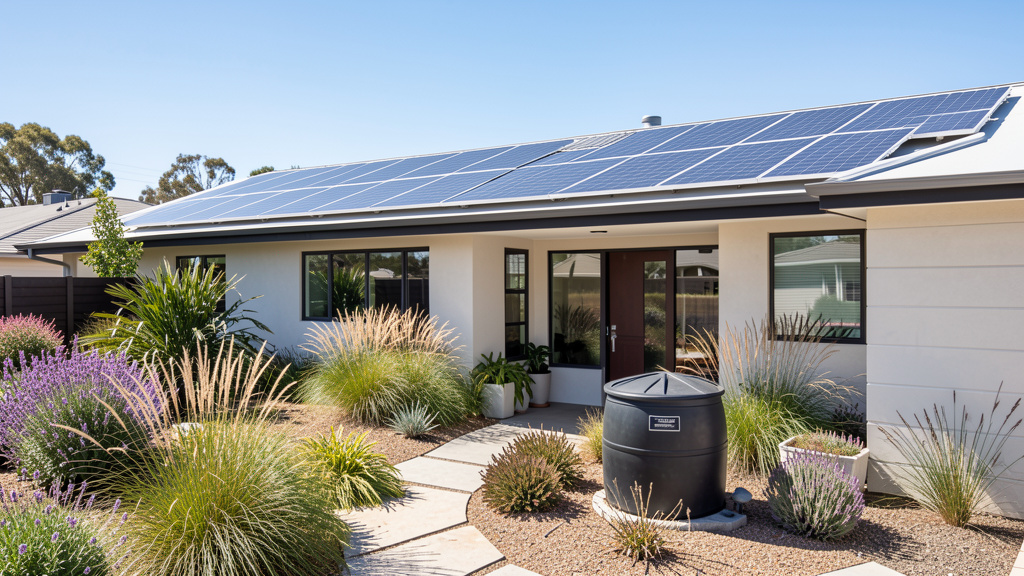
Move beyond fragmented tips and build a resilient, resource-wise home ecosystem that aligns your values with daily action—without burnout, guilt, or perfectionism.
Imagine waking up in a home that actively supports your well-being and the planet’s. Sunlight filters through energy-efficient windows onto houseplants thriving in repurposed containers. Your morning coffee brews using beans stored in a reused jar. The quiet hum of efficient systems maintains comfort while thoughtfully managing resources. This isn’t a fantasy reserved for off-grid homesteaders—it’s the tangible reality of intentional, accessible sustainable living. This guide delivers a cohesive framework to transform your living space into a hub of ecological harmony, economic sense, and personal fulfillment. We cut through greenwashing, overwhelm, and one-size-fits-all advice to provide actionable pathways tailored to renters, homeowners, tight budgets, busy families, and every climate zone. Sustainability isn’t about sacrifice; it’s about designing a home that works with you.
Introduction: Beyond the Buzzword—Why Your Home Is a Meaningful Lever for Positive Change
In an era of complex global challenges, the home offers a grounded space for meaningful action. Residential energy use, water consumption, and waste generation represent significant portions of household environmental impact. Yet this awareness isn’t meant to induce guilt—it reveals agency. The choices made within your living space create ripple effects across ecosystems, local economies, and community well-being.
Sustainable living transcends trendiness. It’s a thoughtful integration of time-honored wisdom and contemporary understanding: designing spaces that conserve resources, support health, foster connection, and build resilience. Research consistently links elements like abundant natural light, non-toxic materials, and biophilic design to improved well-being—reduced stress, better sleep, and enhanced focus. Financially, efficiency-focused choices often compound quietly through lower utility expenses, reduced replacement frequency, and extended product lifespans.
This guide synthesizes principles from widely recognized environmental frameworks into a practical, human-centered roadmap. We prioritize strategies with documented co-benefits over viral shortcuts, emphasizing solutions adaptable to real-world constraints. Crucially, we reject the myth of the “perfectly green home.” Sustainability is a dynamic, personal practice—not a destination. Progress, measured in consistent, informed choices aligned with your context, is the only meaningful metric. Whether you live in a high-rise apartment, a suburban home, or a rural dwelling; whether you have five minutes or five hours to invest—this blueprint meets you where you are with clear, compassionate pathways forward.
The Three Pillars Framework: Cultivating a Home That Thrives Through Integration
Fragmented advice—”swap your bulbs!” “compost everything!”—often leads to frustration. True sustainability emerges from integration. Introducing the Three Pillars Framework, a holistic model designed to create synergy between your inner motivation, your home’s physical systems, and your daily rhythms. Informed by behavioral science and systems thinking, this approach ensures changes endure because they’re woven into the fabric of your life—not added as burdensome tasks.
Visualize three interlocking circles:
– Pillar 1: Mindset (The Compass) – Clarifying your “why,” building awareness, and embracing progress over perfection.
– Pillar 2: Systems (The Architecture) – Optimizing your home’s energy, water, waste, and material flows for passive efficiency and regeneration.
– Pillar 3: Habits (The Current) – Embedding sustainable actions into existing routines until they become effortless.
When aligned, these pillars create reinforcing cycles. Understanding why reducing standby power matters (Mindset) motivates installing smart power strips (Systems), which then makes energy-conscious behavior automatic (Habits). A household tracking water use (Mindset) installs efficient fixtures (Systems), making mindful water use feel natural (Habits). This section provides foundational tools to build each pillar with intention, patience, and self-compassion.
Pillar 1: Cultivating the Compass—Your Sustainable Mindset
Before purchasing a single item or undertaking a project, the most transformative work happens internally. A resilient mindset shifts the narrative from restriction (“I can’t use this”) to empowered choice (“I choose solutions aligned with my values”). It transforms sustainability from an external obligation into an internal compass guiding daily decisions.
Step 1: Conduct a Personal Values Reflection (15 Minutes That Clarify Direction)
Grab a notebook or open a digital document. Answer these prompts honestly:
– What does “a sustainable home” mean to me? (e.g., “A healthy space for my family,” “Financial stability through lower bills,” “Honoring ancestral resourcefulness,” “Protecting local ecosystems.”)
– Rank these potential motivations by personal resonance: Health, Financial Security, Environmental Stewardship, Community Connection, Legacy, Simplicity/Reduced Clutter.
– What specific frustration with current habits do I want to address? (e.g., “I dislike food waste,” “My energy bill feels unpredictable,” “I feel overwhelmed by packaging.”)
Why this step matters: Research in environmental psychology indicates that actions rooted in intrinsic values demonstrate stronger long-term adherence than those driven by external pressure. If “family health” tops your list, prioritizing non-toxic cleaning solutions will feel deeply rewarding. If “financial security” resonates most, efficiency upgrades become exciting investments. This reflection prevents burnout by ensuring efforts align with what genuinely matters to you.
Common pitfall to avoid: Skipping this reflection and diving straight into projects seen online. Without alignment, efforts may feel disconnected, leading to abandonment. There is no universal “right” priority; your values are uniquely yours.
Budget-friendly implementation: Zero cost. Use a notebook you own or a free notes app. The investment is time and honesty.
Step 2: Map Your Home’s Baseline Flows (Awareness Without Judgment)
You cannot thoughtfully improve what you do not observe. Conduct a gentle, non-judgmental audit of three core flows over one typical week: Energy, Water, and Waste. This is diagnostic—not self-criticism.
- Energy Snapshot: Note lights or appliances running unnecessarily. Review a recent utility bill for usage context. Feel for drafts around windows or doors on a breezy day. Listen for devices humming in standby mode.
- Water Watch: Time an average shower. Place a container under the kitchen faucet while waiting for hot water—note the volume. Check for dripping faucets or running toilets (add a few drops of food coloring to the tank; if color appears in the bowl without flushing, there’s a leak).
- Waste Walkthrough: Keep a small notepad by your main bin. For seven days, jot down the top recurring items (e.g., “food scraps,” “shipping materials,” “beverage containers”).
Why this transforms overwhelm: Data replaces vague concern with specific, actionable insights. Discovering that food scraps dominate your waste stream makes composting a logical next step. Noticing lights left on in unoccupied rooms highlights an easy win. This audit creates a personalized “before” picture, making future progress visible and motivating.
How to execute effectively: Use free resources like the EPA’s Household Carbon Footprint Calculator for context. A simple spreadsheet with columns for “Observation” and “Potential Action” works well. Approach this with curiosity, not criticism.
Illustrative example: One household tracked waste for a week and discovered recyclables and food scraps filled half their landfill bin. They placed a clearly labeled recycling container beside the trash and started a small countertop compost vessel. Within weeks, landfill waste noticeably decreased. The data made the solution clear.
Counterpoint: Randomly purchasing reusable items while overlooking significant drafts around an attic access point misses strategic opportunity. Without baseline awareness, efforts lack focus.
Step 3: Embrace Progress Over Perfection (Your Antidote to Burnout)
Sustainability is a lifelong practice of refinement, not a finish line. Celebrate “micro-wins” with genuine appreciation: remembering reusable bags twice this week, air-drying one load of laundry, choosing a package-free item at the market. These small victories build neural pathways, making the next sustainable choice easier.
Why this principle supports longevity: Studies in behavioral science show that individuals who permit flexibility and acknowledge incremental progress are significantly more likely to maintain new habits long-term compared to those pursuing rigid, all-or-nothing goals. Perfectionism often triggers discouragement; consistent progress fuels momentum.
Practical application: Set “Minimum Viable Goals” (MVGs). Instead of “I will zero-waste my entire kitchen,” start with “I will bring my own container for bulk items on my next grocery trip.” Instead of “I will eliminate all plastic,” try “I will refuse single-use straws.” Achieving the MVG builds confidence to expand later.
Supportive analogy: Learning sustainable living is like learning a musical instrument. You begin with scales and simple melodies (turning off lights), not performing a symphony. Mastery emerges through consistent, patient practice. Honor where you are today.
The Guiding Principle: Sustainability flourishes not through dramatic, unsustainable gestures, but through the quiet, consistent repetition of aligned choices—each one a thread weaving a stronger, more resilient home.
Pillar 2: Engineering the Architecture—Optimizing Home Systems for Passive Impact
Your home’s physical systems form the backbone of resource stewardship. Thoughtful upgrades create “passive impact”—reductions in resource use that happen automatically, without daily willpower. This pillar prioritizes actions by potential impact, feasibility, cost, and applicability across living situations. We move room-by-room and system-by-system, providing nuanced guidance.
Energy Systems: Powering Your Home with Intelligence and Care
Heating, cooling, and electricity represent significant portions of most homes’ resource use. Strategic attention here often yields meaningful reductions in consumption and cost.
Step 1: Seal the Building Envelope—Weatherization as Foundational Care
Heating and cooling account for a large share of residential energy use. Before considering major upgrades, address air infiltration through gaps in windows, doors, walls, and attics.
How to implement effectively:
– Windows & Doors: Apply adhesive-backed foam weatherstripping around movable sashes and frames. Install door sweeps or draft stoppers (fabric “snakes” filled with rice or sand) at the base of exterior doors. Renter-friendly: Removable V-seal weatherstripping or temporary window insulation kits (removed seasonally) are often landlord-approved. Always photograph the original state before installing.
– Attic Access: Heat rises. Seal the attic hatch or pull-down stairs with self-adhesive foam tape and add an insulated cover. Ensure attic insulation meets recommended levels for your climate zone (consult local building resources). Professional insight: Many utilities offer subsidized energy audits, which may include a blower door test to pinpoint leakage locations precisely.
– Electrical Outlets & Switches: On exterior walls, install foam gaskets behind outlet and switch plates—a low-cost fix that blocks drafts.
Why this step delivers value: Proper air sealing can meaningfully reduce heating and cooling energy use, with relatively short payback periods. It also improves comfort (eliminating cold drafts) and indoor air quality (reducing dust infiltration).
Common considerations:
– Balance sealing with adequate ventilation to avoid moisture buildup. Ensure bathroom and kitchen exhaust fans vent outside and are used during cooking or showering. In tightly sealed homes in extreme climates, energy recovery ventilators (ERVs) may be worth exploring.
– Attic leaks are frequently significant sources of loss—don’t overlook this area.
– Use purpose-built weatherization products; temporary fixes like standard duct tape degrade quickly.
Adaptable pathways:
– Immediate/Zero-Cost: Roll up an old towel or make a draft stopper from scrap fabric. Place under drafty doors nightly.
– DIY Mid-Range ($20–$100): Weatherstripping kit, door sweep, outlet gaskets, removable window film kit. Most require only basic tools.
– Professional Investment ($300–$2000+): Blown-in wall insulation, professional air sealing, attic insulation top-up. Key consideration: Research utility rebates and government incentives (e.g., U.S. tax credits for energy efficiency upgrades). These can substantially reduce net costs.
Regional adaptation: In humid climates, pair insulation with vapor management strategies. In very dry, hot climates, radiant barriers in attics may provide additional benefit. Consult your local cooperative extension office or sustainability office for climate-specific guidance.
Step 2: Lighting and Appliance Efficiency—Smart Upgrades with Clear Value
Lighting and major appliances operate continuously. Optimizing them creates ongoing, silent savings.
Lighting Transformation:
– Action: Replace incandescent, halogen, and CFL bulbs with certified high-efficiency LEDs.
– Why it matters: LEDs use significantly less energy and last much longer than traditional bulbs. Replacing frequently used bulbs can yield noticeable savings over time.
– Nuanced selection: Choose color temperature thoughtfully. 2700K–3000K offers a warm glow for living areas and bedrooms. 3500K–4000K provides bright, neutral light ideal for kitchens, bathrooms, and task lighting. Ensure dimmable LEDs are compatible with existing dimmer switches.
– Renter advantage: Bulbs are generally considered tenant property. Swap upon move-in; reinstall originals (if required) when departing. Document changes with photos.
Appliance Strategy—Thoughtful Replacement Timing:
Focus upgrades on older, frequently used appliances nearing end-of-life (typically 10–15 years). Prioritize based on usage patterns:
1. Refrigerator: Runs constantly. Modern certified-efficient models use notably less energy than units from two decades ago.
– Optimization tip for existing units: Maintain recommended temperatures (fridge ~37°F, freezer ~0°F). Clean condenser coils every six months—dust buildup forces the compressor to work harder. Test door seals with the “dollar bill test”: close the bill in the door; if it slips out easily, the seal may need replacement.
– Renter reality: If using an older unit, optimize usage: avoid overfilling (blocks airflow), let hot food cool before storing, minimize door-open time.
2. HVAC System: When replacement is necessary, explore high-efficiency heat pumps. Modern cold-climate models operate effectively in very low temperatures, providing both heating and cooling with high efficiency.
– Bridge solution: Install a programmable or smart thermostat. Set schedules: adjust temperatures when asleep or away. These devices can contribute to meaningful savings and often pay for themselves relatively quickly. Renter note: Most are easily removable; reinstall the original thermostat before moving out.
3. Laundry: Wash clothes in cold water whenever possible (most energy goes to heating water). Air-dry when feasible—sunlight naturally freshens fabrics. If purchasing new, front-loading machines typically use less water and energy.
Addressing a common question: “Should I replace my still-working appliance?”
Manufacturing new appliances carries its own footprint. A practical guideline: Only replace if the appliance is inefficient and nearing the end of its reliable service life. Compare estimated operating costs of new versus old models. Calculate simple payback: (Net cost of new appliance) / (Estimated annual savings). If payback is reasonable (e.g., under 7–10 years) and the unit is aging, replacement may be justified. Otherwise, optimize the existing unit.
Illustrative outcome: After replacing an aging refrigerator with a certified-efficient model and installing a programmable thermostat, one household observed a noticeable decrease in their average monthly electric bill. The thermostat provided quick return; the refrigerator’s savings accumulated over time—while offering quieter operation and improved temperature stability.
Step 3: Exploring Renewable Energy Pathways—Options Across Circumstances
Shifting energy sources represents a deeper level of engagement, with accessibility varying widely. Explore options on a spectrum of feasibility.
Homeowners with Suitable Roofs:
– Process: Obtain quotes from multiple certified installers. Request detailed proposals including system size, estimated production, payback analysis, and financing options (loan, lease, Power Purchase Agreement).
– Maximize value: Consider pairing generation with storage for resilience during outages. Time major appliance use for peak production hours if feasible.
– Incentives matter: In many regions, federal, state, or utility incentives significantly reduce net costs. Factor these into evaluations. Community solar programs allow participation if rooftop installation isn’t feasible—subscribe to a share of a local solar array and receive credits on your utility bill.
Renters and Apartment Dwellers:
– Green Power Programs: Many utilities offer renewable energy options. For a modest premium per kilowatt-hour, your payment supports wind, solar, or hydro generation added to the grid. This is a high-impact, low-effort action.
– Community Solar: Subscribe to a local solar garden. Receive bill credits for your share of energy produced, often with no upfront cost and portability if you move.
– Micro-Solutions: Use portable solar chargers for small electronics. Install a small solar-powered light for a balcony planter. These build familiarity and demonstrate commitment.
Addressing accessibility: Costs for renewable options have decreased substantially. Leasing or Power Purchase Agreements (PPAs) may require little to no upfront investment, with payments potentially lower than current electric costs. Start where you are: participating in a green power program is a meaningful step. Every unit of renewable energy displaces conventional generation.
Water Systems: Honoring Every Drop as a Precious Resource
Freshwater conservation supports local watersheds, reduces energy used for pumping and heating, and lowers utility expenses—especially where water/sewer rates are high.
Step 1: Fixture Efficiency—High-Impact, Accessible Upgrades
Modern efficient fixtures deliver excellent performance while using less water.
- Showerheads: Replace older models with certified water-efficient showerheads (≤2.0 gallons per minute). Advanced aerator technology maintains satisfying pressure. Impact: A household can save thousands of gallons annually.
- Faucet Aerators: Install certified aerators (≤1.5 gpm for bathroom sinks, ≤2.2 gpm for kitchen). They mix air with water for effective flow. Cost: typically under $10 each.
- Toilets: Toilets account for a significant portion of indoor water use. Replace pre-1994 models (3.5+ gallons per flush) with high-efficiency models (1.28 gpf or less). Dual-flush options offer flexibility.
- Renter solution: Propose the upgrade to your landlord, framing it as a potential cost-saving measure for the property. Offer to cover part of the cost or handle installation. Many landlords approve. If not, the “displacement method” (securely placing a weighted water-filled bottle in the tank) can reduce water per flush. Never use bricks—they can crumble and damage mechanisms.
- Critical fix: Repair leaking toilets promptly. A silent leak can waste hundreds of gallons daily. Use the food coloring test described earlier.
Installation guidance: Most fixtures twist off by hand. Take the old part to match thread size. Online tutorials abound for specific models. If unsure, a handyperson can often complete upgrades quickly.
Avoiding pitfalls:
– Very cheap aerators may underperform. Look for certification marks ensuring performance standards.
– Fixture upgrades pair best with mindful habits (e.g., shorter showers). Technology and behavior work together.
Step 2: Rainwater Harvesting—Capturing Skyfall for Earthly Needs
Rain barrels transform stormwater runoff—a potential pollutant—into a valuable resource for non-potable uses like garden watering.
How to establish a simple system:
1. Select a barrel: Food-grade drums (thoroughly cleaned) work well. Commercial barrels often include spigots, overflow hoses, and secure lids.
2. Placement: Position under a downspout on a stable, level surface. Elevate on cinder blocks or a sturdy stand to improve water pressure for hoses.
3. Connection: Cut the downspout and attach a diverter kit (directs water into the barrel; overflows back into the downspout when full). Cover the inlet with fine mesh to block debris and insects.
4. Usage: Attach a hose to the spigot for watering gardens, washing outdoor items. Never drink or cook with untreated rainwater.
Why this practice matters: Reduces demand on municipal supplies, lowers bills, mitigates local runoff pollution, and provides chlorine-free water beneficial for plants. In areas with water restrictions, harvested rainwater keeps gardens thriving.
Regional and legal considerations:
– Arid regions: Every drop is precious. Consider multiple barrels or larger cisterns if feasible.
– Rainy regions: Size your system to capture significant volume from frequent rains. Ensure robust overflow management directing excess water away from foundations.
– Legal note: Rainwater harvesting regulations vary. While many areas encourage it (some with rebates), a few have specific restrictions. Always check local municipal and state regulations before installing. Contact your water utility or public works department for guidance.
Budget-friendly pathways:
– DIY: Source a cleaned food-grade drum locally. Add a spigot kit.
– Community: Some cities offer subsidized barrels or workshops. Check with local environmental departments.
– Apartment adaptation: Place a decorative container under a balcony downspout to collect water for container plants. Even small-scale capture builds awareness.
Myth addressing: “Rain barrels attract mosquitoes.” Solution: Ensure tight-fitting lids, use fine mesh screens, and empty barrels weekly. Adding a few drops of vegetable oil creates a surface film that prevents larvae development without harming plants. Mosquito dunks (containing Bti bacteria) are a safe, organic option.
Step 3: Greywater Awareness—Advanced Reuse with Caution
Greywater is gently used water from showers, sinks, and washing machines (not toilets or kitchen sinks with heavy grease). Redirecting it to irrigate ornamental plants and fruit trees (never edible roots or leafy greens) can reduce freshwater demand.
Important note: Greywater systems are heavily regulated due to health considerations. Never install a greywater system without consulting local building and health department codes. Permits are often required. This section provides conceptual awareness, not installation guidance.
Basic principles for informed exploration:
– Laundry-to-Landscape (L2L): Often the simplest permitted system in supportive areas. Uses the washing machine’s pump to send greywater through a diverter valve to mulch basins around trees/shrubs. Requires no pumps or complex filters.
– Safety first: Use only biodegradable, plant-friendly soaps. Never store greywater—use it immediately. Keep systems simple and gravity-fed where possible.
– Professional consultation is essential: Work with installers certified in greywater systems familiar with local regulations. Organizations like Greywater Action (U.S.) provide educational resources.
Why consider it? In water-scarce regions, greywater can significantly reduce landscape irrigation needs. It embodies circular resource use. For most readers, starting with rainwater harvesting and efficient fixtures is the prudent first step. Greywater represents a deeper level of engagement for those with suitable properties and regulatory approval.
Waste Management Systems: Designing Out Waste, Designing In Value
Moving beyond the linear “take-make-dispose” model, sustainable homes embrace circular principles: reduce consumption first, then reuse, repair, and responsibly manage what remains. Composting transforms organic “waste” into valuable soil amendment.
Step 1: Design a Clear, Frictionless Sorting System
Contamination undermines recycling efforts. Clarity and convenience are paramount.
Implementation strategy:
– Central Hub (Kitchen): Use a divided container or three separate bins:
– Landfill: Clearly labeled for true non-recyclables.
– Recycling: Labeled with accepted items per your local program (e.g., “Bottles & Cans Only—Rinse!”).
– Compost: Countertop container with a filter lid (emptied daily).
– Satellite Stations: Place small bins in bathrooms (for eligible items), home office (paper), and garage (collection point for batteries, e-waste).
– Visual Cues: Print your municipality’s recycling guide and tape it inside the cabinet door or on the bin lid. Use color-coded liners if helpful.
Why this system works: Reduces decision fatigue. When sorting is easy and visible, participation increases. Households often report meaningful reductions in landfill waste within months of implementing a clear system.
Critical nuance: Know your local rules. “Wish-cycling” (placing non-recyclables in recycling “just in case”) contaminates entire loads. Common contaminants: plastic bags (jam machinery—return to grocery store collection bins), greasy pizza boxes, coffee cups (plastic lining), styrofoam. Bookmark your waste hauler’s website. When in doubt, leave it out—or better yet, avoid purchasing it.
Illustrative example: One household added a small battery collection jar to their entryway. After several months, they had a full container to take to a municipal hazardous waste drop-off. This prevented heavy metals from entering landfills and made the task feel manageable.
Step 2: Composting—Closing the Nutrient Loop
Composting food scraps and yard waste reduces methane emissions from landfills and creates nutrient-rich humus for gardens.
Choosing your method based on living situation:
– House with Yard:
– Open Bin: Simple pallet structure or wire mesh enclosure. Layer “greens” (food scraps, grass) and “browns” (dry leaves, shredded cardboard). Turn occasionally. Low cost, slower process.
– Tumbler: Enclosed drum on a stand. Easier turning, faster decomposition, pest-resistant. Higher upfront cost. Ideal for beginners.
– Apartment/Balcony/Patio:
– Bokashi Bin: Ferments all food waste (including meat, dairy) using beneficial microbes in an airtight bucket. Takes ~2 weeks. Produces pre-compost liquid (dilute for plants) and solids (bury or add to community compost). Odor-free when sealed. Perfect for small spaces.
– Worm Bin (Vermicomposting): Red wiggler worms process fruit/veggie scraps into rich castings. Requires shade, moisture control, and avoiding citrus/onions. Thrives under a sink or in a closet. Educational and fascinating.
– Limited Space/Time:
– Municipal Programs: Many cities offer curbside compost pickup. Check availability.
– Community Gardens: Many accept food scraps from members.
– ShareWaste App: Connects you with neighbors who compost and welcome scraps.
Mastering the basics (for outdoor bins):
– Green Materials (Nitrogen): Fruit/veggie scraps, coffee grounds, fresh grass clippings.
– Brown Materials (Carbon): Dry leaves, shredded paper/cardboard, straw.
– Ideal Ratio: Aim for roughly 3 parts brown to 1 part green by volume. Too many greens = potential odor; too many browns = slow decomposition.
– Maintenance: Keep moist as a wrung-out sponge. Turn pile periodically for aeration. Chop materials for faster breakdown.
– Troubleshooting:
– Smelly? Add more browns immediately; turn pile.
– Not breaking down? Chop materials smaller; ensure moisture; add more greens if too dry.
– Attracting pests? Bury food scraps under browns; use a lidded bin; avoid meat/dairy in open bins.
Debunking myths:
– “Composting is messy/smelly.” A well-managed pile smells earthy. Odors indicate imbalance (too wet, not enough air/browns).
– “I don’t have a garden, so why compost?” Compost enriches soil anywhere—potted plants, community gardens, or donation to neighbors. The primary goal is keeping organics out of landfills.
Step 3: The Repair and Reuse Station—Cultivating a Maker Mindset
Designate a specific drawer, shelf, or cabinet as your “mend and make” zone. Stock it with:
– Basic sewing kit (needles, thread, buttons, patches)
– Strong adhesives (wood glue, epoxy)
– Multi-tool or basic screwdrivers
– Sandpaper, wood filler
– Jars for organizing small parts
– Fabric scraps for patches
Why this station transforms consumption: It shifts your relationship with objects from disposable to repairable. Mending a torn shirt, regluing a chair leg, or repurposing a glass jar builds skills, saves money, and fosters appreciation. Extending the life of clothing and goods reduces resource extraction and waste.
Habit integration: Schedule a monthly “mend and make” session. Play music, involve family (simple sewing projects), and celebrate restored items. Host a clothing swap with friends—refresh wardrobes without buying new. Before discarding anything, ask: “Can this be repaired, repurposed, or donated?”
Material Choices: Building and Furnishing with Health and Longevity in Mind
Materials surrounding us impact indoor air quality, resource use, and end-of-life considerations. Prioritizing durable, low-impact, and circular materials creates a healthier home and reduces ecological burden.
Step 1: Prioritize Indoor Air Quality—Reducing Hidden Irritants
Volatile Organic Compounds (VOCs) can off-gas from paints, finishes, furniture, and cleaning products. The EPA identifies indoor air quality as a significant environmental health consideration.
Actionable strategies:
– Paints & Finishes: Choose zero-VOC or low-VOC paints (look for Green Seal GS-11 or Greenguard Gold certification). For stains and sealants, seek water-based, low-VOC options.
– Furniture:
– New: Select solid wood (FSC-certified for responsible forestry) over composite boards. Look for GREENGUARD Gold certification for low chemical emissions.
– Secondhand: Often an excellent choice. Off-gassing occurred years ago. Vintage solid wood furniture is durable, beautiful, and avoids new resource extraction. Check thrift stores, online marketplaces, estate sales.
– Upholstery: Request fabric swatches. Avoid stain-resistant treatments containing PFAS; opt for natural fibers (cotton, linen, wool) which are inherently more durable and biodegradable.
– Flooring:
– Preferred: Solid hardwood (refinishable), FSC-certified bamboo, cork, natural linoleum (made from linseed oil, pine resin, jute—not vinyl).
– Acceptable: High-quality laminate with low-VOC certifications if budget-constrained.
– Use Caution With: PVC vinyl flooring (potential VOC emissions; challenging end-of-life).
– Textiles (Curtains, Rugs, Bedding): Choose natural fibers (organic cotton, linen, hemp, wool). Avoid synthetic rugs with chemical backings; use natural fiber rug pads. Wash new textiles before use.
Health connection: Reducing exposure to certain chemicals may alleviate sensitivities for some individuals. This is especially relevant for infants, children, and those with respiratory conditions.
Budget-conscious approach: Prioritize the bedroom—where you spend significant time. Air out new items in a garage or porch before bringing them inside. Open windows regularly for cross-ventilation. Add air-purifying plants like snake plants (NASA research notes modest benefit; primary solution is source control and ventilation).
Step 2: Embrace Circular Economy Principles in Purchasing
Before acquiring anything new, consider the “Circular Filter”:
1. Refuse: Do I truly need this? Can I borrow, rent, or go without?
2. Reduce: Can I buy a smaller quantity or a more durable version?
3. Reuse/Repair: Can I find this secondhand? Can I repair what I have?
4. Recycle/Compost: What happens at end-of-life? Is it recyclable or compostable locally?
Practical applications:
– Tools: Join a tool library (growing in urban centers) instead of buying infrequently used items. Borrow from neighbors.
– Clothing: Host seasonal clothing swaps. Use consignment apps. Mend visible mends (sashiko stitching) as a statement of care. Support brands with repair programs.
– Furniture & Home Goods: Habitat for Humanity ReStores offer high-quality donated items at deep discounts. Estate sales yield treasures. Upcycle pallets into planters (ensure HT-stamped for heat-treated, not chemically treated).
– Kitchenware: Buy spices, grains, and oils in bulk using your own jars. Choose glass or stainless steel containers. Use beeswax wraps or silicone lids instead of single-use plastic wrap.
Why this mindset shift matters: Purchasing secondhand extends product life, supports local economies, and often saves money. Manufacturing new products consumes significant resources. Sustainability isn’t primarily about buying “green” products; it’s fundamentally about consuming less and choosing wisely.
Counteracting greenwashing: Be wary of vague terms like “eco-friendly” or “natural.” Seek specific, verifiable certifications (FSC, GOTS for textiles, B Corp). Research brand transparency: Do they publish supply chain information? When in doubt, choose simplicity: less packaging, fewer ingredients, timeless design.
Pillar 3: Riding the Current—Embedding Sustainable Habits into Daily Life
Systems create the conditions for success, but habits determine long-term outcomes. This pillar leverages behavioral science to weave sustainable actions into existing routines until they become automatic. We focus on “habit stacking”—attaching a new behavior to an established cue.
Energy Habits: Conscious Consumption Without Constant Vigilance
Habit 1: The Evening Phantom Load Check (2 Minutes)
“Phantom load” (standby power) from devices on standby—TVs, chargers, coffee makers—accounts for a portion of residential electricity use.
Implementation:
– Stack it: Attach this to your existing “pre-bed” routine (brushing teeth, setting out clothes).
– Action: Do a quick sweep of living areas and kitchen. Unplug chargers not in use. Flip the switch on power strips powering entertainment centers or computer peripherals. Ensure dishwashers/washing machines are fully off.
– Upgrade: Consider smart power strips where the “master” outlet (e.g., TV) controls “slave” outlets (soundbar, game console), cutting power automatically when the master device is off.
– Impact: Can contribute to noticeable annual savings. Creates immediate awareness of energy flows.
Why it sticks: Tied to a strong existing habit, it requires minimal willpower. The two-minute timeframe feels achievable.
Habit 2: Thermostat Awareness Paired with Layering
Heating and cooling dominate energy use in many climates. Small behavioral shifts amplify system efficiency.
Implementation:
– Cooler Months: When feeling a slight chill, add a layer (sweater, socks) before adjusting the thermostat upward. Set the thermostat to a comfortable but conservative temperature when awake and home; lower it when asleep or away.
– Warmer Months: When feeling warm, drink water, use a fan, or step into shade before lowering the AC. Set AC to a moderate temperature when home; raise it when away.
– Stack it: Pair thermostat adjustments with leaving/returning home. Make it part of grabbing keys or hanging up your coat.
– Supporting Insight: Each degree adjustment for several hours can contribute to savings on heating/cooling costs. Layering clothing is a highly efficient personal comfort strategy.
Renter adaptation: If you lack thermostat control, focus on micro-climates: Use a small fan or space heater only in the occupied room (with main settings adjusted accordingly), or use thermal curtains to block heat loss/gain at windows.
Water Habits: Mindful Flow in Everyday Moments
Habit 1: The Mindful Shower Practice
Reducing shower time conserves water and the energy used to heat it.
Making it sustainable:
– Tool: Use a simple sand timer stuck to the shower wall or a dedicated shower playlist of 4–5 songs. When it ends, you’re done.
– Technique: Try the “Navy shower”: Wet down, turn off water while soaping/shampooing, turn on to rinse. Cuts water use significantly.
– Stack it: Begin your shower routine only after the timer is set or playlist started.
– Impact: Reducing shower duration saves water and energy. For households, this accumulates meaningfully over time.
– Compassion note: If medical conditions, mobility issues, or caregiving require longer showers, focus energy on other water habits. Sustainability is personal and non-judgmental.
Habit 2: The “Full Load” Approach for Dishwashers and Washing Machines
Modern dishwashers often use less water than hand-washing (especially with pre-rinsing under running water). Washing machines use similar water per cycle regardless of load size.
Implementation:
– Dishwasher: Scrape food scraps into compost; load directly. Skip pre-rinsing—modern detergents work with food residue. Run only when full. Use air-dry or eco-mode.
– Washing Machine: Wait until you have a full load. For smaller households, use the “half-load” setting if available, or hand-wash a few items. Wash clothes in cold water whenever possible (saves most of the energy used per load).
– Stack it: Make loading the dishwasher part of post-dinner cleanup. Start the washer only when the hamper is full.
– Exception: For heavily soiled items or specific hygiene needs, run necessary smaller loads. Balance is key.
Waste Reduction Habits: Rethinking Consumption at the Source
Habit 1: The 24-Hour Reflection for Non-Essential Purchases
Impulse buys drive waste. Creating space between desire and action fosters intentional consumption.
Implementation:
– Rule: For any non-essential item (clothing, decor, gadgets), wait 24 hours before purchasing.
– Process: When tempted, write it down or save the link. Sleep on it. Revisit the next day. Ask: “Do I need this? Do I have space? Will I use it regularly? Does it align with my values?”
– Stack it: Attach this rule to opening a shopping app or entering a store. Make it a conscious pause.
– Impact: Reduces regrettable purchases, clutter, and associated waste. Frees up financial resources. Builds discernment.
– Psychological basis: Engages rational decision-making instead of impulse. Creates emotional distance from marketing triggers.
Habit 2: Weekly Meal Planning and the “Eat-Down” Night
Food waste represents squandered resources—water, energy, labor, and money.
Systematic approach:
– Planning Session: Review your fridge, freezer, and pantry. Plan several dinners around items that need using. Check grocery flyers for sales on planned ingredients. Make a precise shopping list—and stick to it.
– “Eat-Down” Night: Designate one evening weekly to creatively use leftovers, wilting vegetables, or items nearing expiration. Turn roasted veggies into frittata, blend soft fruit into smoothies, make “clean-out-the-fridge” soup.
– Smart Storage: Learn proper food storage: Herbs in a glass of water, berries in airtight containers lined with paper towels, potatoes and onions in cool, dark, separate bins.
– Impact: Can significantly reduce household food waste and associated costs. Reduces trips to the store.
– Stack it: Tie meal planning to a consistent weekly moment (e.g., Sunday morning coffee). Make “eat-down” night a fun family challenge.
Navigating Real-World Frictions: Compassionate Solutions for Common Challenges
Sustainability journeys are rarely linear. Obstacles are expected, not failures. This section addresses frequent friction points with empathy and practicality.
“I Rent—My Landlord Controls Major Systems. What Can I Really Do?”
Landlord restrictions are valid concerns, but not dead ends. Focus on reversible, portable, or mutually beneficial actions.
High-Impact, Reversible Actions:
– Lighting: Swap bulbs for high-efficiency LEDs (keep originals in a labeled box to reinstall upon moving). Document the change with photos.
– Water: Install efficient showerheads and faucet aerators (remove upon moving; most twist off by hand). Keep originals.
– Drafts: Apply removable adhesive weatherstripping around windows/doors. Use draft stoppers (fabric snakes) under doors—remove when leaving.
– Thermal Management: Hang thermal-backed curtains to insulate windows. Use removable window film kits for added insulation (peel off cleanly seasonally).
– Waste: Set up a compact compost system (Bokashi bin or worm bin) under the sink—odor-free if managed well. Participate in municipal compost pickup if available.
Strategic Communication with Landlords:
Frame upgrades as mutually beneficial:
“Hi [Landlord Name], I’ve researched a water-efficient showerhead that reduces water usage. This could lower water heating costs for the unit. I’m happy to cover the cost and install it myself. I’ll reinstall the original fixture when I move out. Would you be open to this?”
Many landlords appreciate proactive, responsible tenants. Offer solutions, not demands. Highlight benefits: modernization, tenant retention.
Focus on Habits: Since structural changes may be limited, emphasize Pillar 3 habits: phantom load check, full laundry loads, meal planning, refusing single-use items. Your consumption choices remain entirely within your control.
“I’m on a Tight Budget—Sustainability Feels Out of Reach”
Sustainable living is fundamentally about resourcefulness, not spending. Many highest-impact actions cost nothing.
Zero-Cost Habits with Immediate Impact:
– Turn off lights and unplug devices when not in use.
– Air-dry clothes on a rack or line (saves energy, extends clothing life).
– Drink tap water (with a filter if preferred) instead of bottled.
– Repair clothing and household items instead of replacing.
– Practice “batch cooking” to save energy and reduce food waste.
– Open blinds on sunny winter days for passive heat; close them on hot summer days for cooling.
Reinvesting Micro-Savings:
– Save the small amount from shorter showers → after several months, buy a low-flow showerhead.
– Save from reducing food waste → after several months, buy a countertop compost bin.
– Use utility rebates: Many energy/water utilities offer free high-efficiency bulbs, discounted smart thermostats, or insulation incentives. Check their websites—these are programs you help fund through rates.
Secondhand as Strategy:
Thrift stores, Buy Nothing groups, Freecycle, and online marketplaces are treasure troves. You can often find higher-quality, more durable items (solid wood furniture, cast iron pans) secondhand than new at big-box stores. View “shopping” as treasure hunting.
Reframe the Narrative: The most sustainable product is the one you already own. Taking care of what you have—mending, cleaning, maintaining—is profoundly sustainable. Financial constraints often foster incredible creativity and resourcefulness—the very heart of sustainability.
“I Feel Overwhelmed—Where Do I Even Start?”
Analysis paralysis is the enemy of progress. Apply the “One Thing” Rule.
The Protocol:
1. Pause. Breathe. Acknowledge the feeling without judgment.
2. Review your Values Reflection (from Pillar 1). What resonates most right now? (e.g., “Saving money on bills,” “Reducing kitchen waste”).
3. Pick ONE micro-action related to that value. Examples:
– Value: Save Money → “I will conduct a 10-minute phantom load check before bed tonight.”
– Value: Reduce Waste → “I will place a small container on my counter for food scraps to start composting tomorrow.”
– Value: Health → “I will replace one conventional cleaner under my sink with a simple vinegar-water solution this weekend.”
4. Do ONLY that one thing this week. Celebrate completing it.
5. Next week, pick one more micro-action.
Why this works: It breaks the monumental into the manageable. Success breeds motivation. You build evidence that you can do this. Momentum replaces overwhelm. Remember: the journey begins with a single step. Your sustainable home journey begins with the very next choice you make.
“My Family/Roommates Aren’t On Board—How Do I Avoid Conflict?”
Sustainability is a team sport, but you can’t force teammates. Lead with empathy and shared benefits.
Strategies for Influence Without Pressure:
– Speak Their Language: Frame actions in terms of their values.
– For cost-conscious partners: “This change could help reduce our electric bill.”
– For health-focused family members: “Switching to this cleaner may reduce irritants for the kids.”
– For convenience seekers: “Using these reusable bags means one less thing to remember at checkout.”
– Start Small & Make it Fun: Propose a short trial: “Let’s try Meatless Monday for a month and see how we like it.” Involve kids in decorating compost bins or sorting recycling with colorful labels. Turn thermostat adjustments into a “cozy sweater challenge.”
– Lead by Quiet Example: Consistently practice your habits without commentary. When others see your genuine enjoyment (pride in a thriving compost bin, satisfaction from lower bills), curiosity often follows.
– Find Common Ground: Focus on universally appealing benefits: saving money, eating fresher food, having a more organized home.
– Avoid Judgment: Never shame or criticize. Say “I’ve been learning about…” instead of “You should…” Sustainability is a personal journey; respect others’ pace.
When Resistance Persists: Focus on areas within your control (your bedroom, your purchases). Protect your peace. Change often happens gradually through consistent, positive modeling. Your commitment may plant seeds that sprout later.
Your Questions, Answered: Clarity on Common Concerns
Q: Is sustainable living actually more expensive long-term?
A: The perception of high cost is common but often incomplete. While some upgrades require upfront investment (solar panels, heat pumps), the vast majority of sustainable practices save money immediately or pay for themselves:
– High-efficiency bulbs cost more initially but save significantly in electricity over their lifetime.
– Weatherization (caulking, weatherstripping) typically pays back quickly through lower bills.
– Reducing food waste saves households substantial amounts annually.
– Line-drying clothes extends garment life and eliminates dryer energy costs.
View sustainable choices as shifting spending: from disposable items to durable ones, from utility bills to efficiency upgrades. Long-term, resource-wise homes often have lower operating costs. Studies indicate homes with verified efficiency features may hold value well. The initial perception of cost often stems from comparing a single sustainable product to the cheapest conventional alternative, ignoring lifetime value and broader impacts.
Q: How do I avoid greenwashing and know if a product is truly eco-friendly?
A: Greenwashing—misleading environmental claims—is widespread. Arm yourself with discernment:
– Seek Third-Party Certifications: These require verification. Trustworthy examples:
– Energy: ENERGY STAR
– Water: WaterSense
– Materials: FSC (wood), Greenguard Gold (low emissions), GOTS (organic textiles), Cradle to Cradle
– Companies: B Corp certification (holistic social/environmental performance)
– Scrutinize Vague Language: Avoid products labeled “natural,” “green,” or “eco” without specific evidence. Ask: “What does this claim mean? How is it verified?”
– Research Brands: Do they publish sustainability reports? Disclose supply chains? Have transparent labor practices? Resources like Good On You rate fashion brands.
– Prioritize Simplicity: Often, the most sustainable choice has less packaging, fewer ingredients, and is secondhand. When in doubt, choose durability and repairability.
– Trustworthy Resources: Environmental Working Group (EWG) for cleaning/personal care; Sustainable Apparel Coalition; Project Drawdown for climate solutions.
Q: What is the SINGLE highest-impact action I can take at home?
A: Impact is highly context-dependent (location, home type, current habits). For many households in regions reliant on fossil fuels for electricity and heating, reducing energy consumption for heating, cooling, and electricity often yields significant carbon reduction potential. Start here:
1. Explore a professional home energy audit (often subsidized by utilities). It identifies your home’s specific inefficiencies with data.
2. Address air leaks and insulation—typically high-value upgrades.
3. Explore renewable energy options via green power programs or community solar if rooftop solar isn’t feasible.
For immediate, no-cost action: adjust thermostat settings seasonally (wear layers in cooler months, use fans in warmer months). This directly reduces energy demand. If your home is already highly efficient, focus may shift to diet or transportation—but within the home sphere, energy is often a high-leverage area. Always prioritize actions with the greatest relevance to your specific situation.
Q: Can I compost in a small apartment without it smelling or attracting pests?
A: Yes—modern methods are designed for this. Success hinges on choosing the right system and consistent management:
– Bokashi Bin: Ideal for apartments. An airtight bucket ferments all food waste using beneficial microbes. No odor if sealed properly. After ~2 weeks, liquid “tea” is drained (dilute for plants); solids are buried or added to community compost. Takes minimal space.
– Worm Bin (Vermicomposting): Red wiggler worms process fruit/veggie scraps into rich castings. Requires a ventilated bin, bedding (shredded cardboard), and avoiding citrus/onions. Odor-free when balanced. Thrives in closets or under sinks.
– Municipal Programs: Many cities now offer curbside compost pickup. Check availability—this is often the simplest solution.
– Key Practices:
– Empty countertop containers daily into the main bin.
– Balance “greens” (food scraps) with “browns” (shredded paper) to absorb moisture.
– Keep bins clean; rinse regularly.
– Store bins in a cool, dark place.
– If using municipal pickup, keep scraps in a sealed container in the freezer to eliminate odors until collection day.
Start small. A Bokashi bin handles kitchen scraps effortlessly. Properly managed systems smell earthy or neutral.
Q: Are reusable products (bags, bottles, coffee cups) actually better than single-use, considering manufacturing impact?
A: Yes—but only if used repeatedly enough to offset their initial footprint. Life Cycle Assessments (LCAs) provide context:
– Cotton Tote Bag: Must be used many times to offset its impact versus a single plastic bag. Solution: Use it consistently for groceries; keep it accessible. Choose durable totes.
– Stainless Steel Water Bottle: Breaks even with plastic bottles after relatively few uses. Given it lasts years, the impact savings are substantial.
– Reusable Coffee Cup: Breaks even after a modest number of uses versus disposable cups.
The critical factor is consistent reuse. The greenest option is always refusing what you don’t need. If you’ll use an item hundreds of times (water bottle, coffee cup), reusables win decisively. For items used infrequently, refusing single-use is better than buying a reusable you’ll rarely use. Carry reusables only if you’ll actually use them. Focus on high-frequency items where reuse is guaranteed.
Q: What should I do with packaging that isn’t recyclable in my area?
A: The hierarchy is: Refuse > Reduce > Reuse > Recycle > Dispose. Focus efforts upstream:
1. Refuse at Source: Choose products with minimal or recyclable packaging. Buy in bulk using your own containers (find package-free stores via Litterless.com). Support brands using compostable or take-back packaging.
2. Advocate: Contact companies: “I love your product, but the packaging isn’t recyclable locally. Please consider alternatives.” Consumer feedback drives change.
3. Specialty Recycling: For unavoidable items:
– Plastic Bags/Film: Return to grocery store collection bins (do not put in curbside recycling).
– Hard-to-Recycle Items: TerraCycle offers programs for specific waste streams (snack wrappers, beauty products). Check their website.
– Electronics/Batteries: Use Call2Recycle locator for drop-off sites.
4. Repurpose Creatively: Glass jars for storage, plastic containers for organizing, cardboard tubes for seed starters.
5. Dispose Responsibly: If all else fails, place non-recyclables in landfill trash. Do not “wish-cycle”—contamination harms the entire recycling stream. Channel energy into upstream solutions (refusing, advocating).
Q: How does sustainable living adapt to extreme climates (very hot or very cold)?
A: Climate-specific strategies are essential. Sustainability isn’t one-size-fits-all; it’s about working with your local environment:
– Cold Climates:
– Priority: Air sealing and insulation (attic is critical).
– Heating: High-efficiency heat pumps (modern cold-climate models work in very low temperatures). Supplement with passive solar: open south-facing curtains on sunny days; close them at night.
– Water: Insulate hot water pipes. Let faucets drip slightly during deep freezes to prevent bursts (collect drip water).
– Landscaping: Plant evergreen windbreaks on the north/northwest side.
– Hot/Arid Climates:
– Priority: Shading and reflective surfaces. Install awnings, pergolas with deciduous vines, or exterior solar screens. Choose light-colored roofing.
– Cooling: Ceiling fans (allow raising thermostat setting). Whole-house fans for cool evenings.
– Water: Xeriscaping with native, drought-tolerant plants. Drip irrigation. Rainwater harvesting is valuable.
– Landscaping: Plant deciduous trees on the west/southwest side for summer shade.
– Hot/Humid Climates:
– Priority: Ventilation and moisture control. Ensure attics are well-ventilated. Use dehumidifiers if needed.
– Cooling: Cross-ventilation strategies. Energy-efficient AC with proper sizing.
– Materials: Choose mold/mildew-resistant materials in wet areas.
Consult local experts: Cooperative Extension offices, native plant societies, and local sustainability groups offer hyper-localized advice. Adapt the framework to your context.
Q: How can I meaningfully involve young children in sustainable living?
A: Make it playful, sensory, and age-appropriate. Children learn through doing and observation:
– Toddlers (2–4):
– “Sorting Game”: Let them place recyclables in the bin (supervised).
– Water plants with a small watering can.
– Help pack a lunch with a cloth napkin.
– School-Age (5–10):
– Start a worm bin together—kids love feeding the worms.
– Create a “waste audit” chart: Track landfill vs. recycling vs. compost with stickers.
– Grow fast-sprouting seeds (beans, sunflowers) in reused containers.
– Decorate reusable shopping bags.
– Teens (11+):
– Involve them in meal planning to reduce waste.
– Research eco-products for the family (e.g., “Find the best reusable water bottle under $25”).
– Volunteer together at a community garden or park cleanup.
– Universal Principles:
– Lead by example—children absorb habits more than lectures.
– Focus on connection: “We compost so food scraps help grow our tomatoes.”
– Celebrate contributions: “Thank you for remembering the bags!”
– Avoid fear-based messaging; emphasize hope, care, and empowerment.
Sustainability becomes a shared family value when woven into joyful, collaborative activities.
Q: Is purchasing an electric vehicle (EV) a necessary part of a sustainable home?
A: Not necessarily—and for most households, optimizing home energy use often offers significant carbon reduction potential per dollar spent compared to vehicle transitions. Consider this perspective:
1. Maintain your current vehicle well. Proper tire inflation, regular tune-ups, and smooth driving improve efficiency. The most resource-efficient vehicle is often the one already manufactured.
2. Reduce driving overall: Walk, bike, use public transit, carpool, combine errands. Telecommute if possible.
3. If buying a new vehicle is unavoidable:
– An EV typically has lower lifetime emissions than a comparable gas car in many grids, even accounting for battery production.
– Factors to consider: Your local electricity grid cleanliness, ability to charge at home, driving needs.
– Alternative: A hybrid (especially plug-in hybrid) can be a pragmatic step.
4. Prioritize home first: Sealing leaks, adding insulation, or exploring renewable energy options often yield substantial benefits.
View transportation and home sustainability as interconnected parts of a larger lifestyle. Focus energy where you have the most leverage and where changes align with your values and budget. An EV is a powerful tool for some contexts, but not a prerequisite for a sustainable home.
Q: How do I stay motivated when progress feels slow or I face setbacks?
A: Sustainability is a marathon, not a sprint. Cultivate resilience:
– Track Non-Scale Victories: Keep a “win jar.” Write down small successes (“Fixed leaky faucet,” “Compost bin thriving”) on slips of paper. Read them when discouraged.
– Revisit Your “Why”: Return to your Values Reflection (Pillar 1). Reconnect with your core motivations. Post a reminder where you’ll see it daily.
– Focus on Systems, Not Willpower: Forgot to bring bags? Instead of self-criticism, ask: “How can I make remembering easier?” (e.g., hang bags by the door). Design your environment for success.
– Connect with Community: Join a local gardening group, online forum (r/ZeroWaste, r/Sustainability), or community-supported agriculture (CSA) program. Share challenges and victories. You are not alone.
– Practice Self-Compassion: Setbacks are normal. Forgot to compost? Used a plastic bag? Forgive yourself. Sustainability is about consistent effort, not perfection. As author Anne Lamott says, “Progress, not perfection.”
– Celebrate the Journey: Notice ancillary benefits: lower bills, a calmer home, pride in mended items, connection to seasons through gardening. These joys sustain motivation far more than guilt ever could.
Your commitment matters. Every mindful choice ripples outward. Trust the process.
Conclusion: Weaving Your Legacy—One Intentional Thread at a Time
Creating a sustainable home is not about achieving an unattainable ideal. It is a profound act of care—for yourself, your loved ones, your community, and the living world. It is the quiet courage to choose differently, the patience to learn and adapt, and the wisdom to recognize that small, consistent actions accumulate into meaningful impact. By anchoring your journey in the Three Pillars Framework—Mindset, Systems, and Habits—you build a foundation resilient to overwhelm and rich with purpose.
Recap of enduring principles:
1. Clarity precedes action. Your personal values are the compass that guides sustainable choices and sustains motivation through challenges. Revisit them often.
2. Optimize systems for passive impact. Strategic attention to your home’s energy, water, and waste flows creates ongoing benefits with minimal daily effort, making sustainable living easier and more rewarding.
3. Habits are the engine of change. By weaving small, intentional actions into existing routines, you cultivate automatic behaviors that compound over time. Progress, not perfection, is the measure of success.
The 24-Hour Rule: Your Immediate, Tangible Next Step
Within the next 24 hours, take one micro-action aligned with your deepest motivation:
– If health drives you: Mix a simple all-purpose cleaner (1 part white vinegar, 1 part water) and replace one conventional cleaner under your sink.
– If financial security energizes you: Conduct a 10-minute “phantom load check” before bed tonight—unplug idle electronics and flip power strip switches.
– If reducing waste calls to you: Place a small container on your kitchen counter labeled “Compost” and commit to collecting food scraps for the next 24 hours.
This single step breaks inertia. It is a declaration to yourself: I am capable. I am beginning. Momentum builds from action, not contemplation.
The Ripple Effect: Your Home as a Catalyst for Wider Change
Your sustainable home is far more than a personal achievement. It is a living testament to possibility. It influences neighbors who admire your rain barrel garden, inspires friends who taste tomatoes grown in your compost-enriched soil, and contributes to market shifts as demand grows for durable, non-toxic, circular products. Children who grow up sorting recycling and tending a garden carry those values forward. In a world facing complex challenges, the home is a powerful, accessible unit of positive change. You are not merely reducing a footprint; you are cultivating a legacy of stewardship, resourcefulness, and hope.
Begin exactly where you are. Use what you have. Do what you can. The journey of a thousand miles begins with a single step—and your sustainable home journey starts with the very next choice you make. With compassion for yourself and commitment to progress, you are already building the home, and the world, you wish to see.
Explore Our Complete Sustainable Living System:
The Zero-Waste Kitchen Handbook: From Pantry to Plate | Water Wisdom: A Room-by-Room Guide to Conservation | Energy Independence Decoded: Solar, Heat Pumps & Smart Grids for Every Home | The Non-Toxic Home Sanctuary: A Health-Focused Room-by-Room Guide | Conscious Consumption: The Mindful Shopper’s Framework | Urban Homesteading Essentials: Growing Food in Small Spaces | Regenerative Renovations: Eco-Upgrades That Heal Your Home and Habitat