Transform Your Home into a Thriving Multi-Generational Sanctuary Through Intentional Design, Clear Communication, and Adaptable Systems
Creating a home where grandparents, parents, and children flourish together requires thoughtful preparation beyond shared walls and good intentions. This guide offers a structured, compassionate framework to navigate the emotional nuances, spatial considerations, and relational dynamics inherent in multi-generational living—turning potential friction points into opportunities for deeper connection, mutual support, and lasting family legacy. Whether renovating, building anew, or adapting your current space, this blueprint provides adaptable pathways to cultivate harmony that evolves with your family’s journey.
Introduction
Across diverse communities worldwide, households spanning three generations are increasingly common—a reflection of evolving economic landscapes, cultural values, and a shared desire for intergenerational connection and care. While this living arrangement offers profound benefits, many families embark without a clear roadmap, encountering predictable challenges around privacy, communication, financial clarity, or spatial flow. Without intentional design, these friction points can strain relationships over time.
Observations from enduring multi-generational households reveal a consistent pattern: sustained harmony stems not from perfection, but from deliberate, adaptable systems addressing three interconnected dimensions—shared values and agreements, physical and operational structures, and relational culture. Families who thrive actively shape their coexistence with empathy, clarity, and foresight. This guide synthesizes these observable patterns into a practical, non-prescriptive framework. It moves beyond inspiration to offer nuanced considerations, contextual adaptations, and actionable steps tailored to varied family structures, cultural backgrounds, financial situations, and spatial constraints. Whether supporting aging relatives, welcoming adult children home, blending families, or intentionally cultivating intergenerational community, this blueprint provides scaffolding to help every generation feel respected, valued, and truly at home.
The Harmony Blueprint: A Three-Layer Framework for Sustainable Coexistence
Enduring multi-generational households often reflect an intentional architecture of systems working in concert. Drawing from established principles in family dynamics, spatial design, financial planning, and communication studies—as well as patterns observed across diverse, long-term arrangements—a cohesive model emerges. Sustainable harmony rests upon three interdependent layers. Each layer reinforces the others; strengthening all three cultivates resilience. Neglecting one may create vulnerability elsewhere. These layers are not linear steps but cyclical, evolving practices requiring ongoing attention.
Visualize them as the bedrock, framework, and living atmosphere of shared life:
– Layer 1: The Foundation – Shared values, explicit agreements, and emotional groundwork. This defines your collective “why” and core principles.
– Layer 2: The Structure – Tangible systems: spatial layout, financial models, daily routines, and logistical protocols. This embodies the “how.”
– Layer 3: The Atmosphere – Lived culture: communication rhythms, conflict navigation, rituals, and emotional awareness. This shapes the daily “feeling” of home.
A shift in one layer naturally influences the others. A spatial modification (Layer 2) may prompt revisiting boundary agreements (Layer 1). A new communication practice (Layer 3) might inspire a shared ritual. The power lies in consciously tending to all three with flexibility and care.
The Guiding Insight: Harmony in multi-generational living is not the absence of friction, but the presence of adaptable systems that transform friction into deeper understanding and connection.
Layer 1: The Foundation – Clarifying Values and Establishing Shared Agreements
Before discussing floor plans or finances, successful families invest in emotional and philosophical alignment. This layer prevents misunderstandings from escalating by creating shared clarity before challenges arise. Families who skip this groundwork often face avoidable tension around unspoken expectations.
Step 1: The Family Vision Session – Articulating Purpose Together
Schedule a calm, dedicated conversation with all adult household members (including mature teenagers when appropriate). Begin with purpose, not logistics. Use open prompts:
– What does “success” look like for us in this arrangement? (e.g., “Grandparent feels secure and engaged,” “Teenagers have autonomy,” “Parents experience reduced caregiving stress”)
– What core values must guide our home? (Identify 3–5: Respect, Autonomy, Joy, Mutual Support, Growth)
– What hopes or concerns do we each hold? (Foster psychological safety: “All perspectives are welcome. Naming concerns helps us address them thoughtfully.”)
– What does “privacy” mean to each of us? (Be specific: “I need quiet time after work,” “I value knocking before entry,” “I need uninterrupted space for virtual meetings”)
Why this matters: Unspoken expectations often become relationship stressors. One generation may assume daily grandchild care is included; another may envision occasional support. Clarifying these early builds mutual understanding. Document key themes (not verbatim transcripts) to reference respectfully during future discussions. This becomes your living “Family Charter”—a compass, not a contract.
Supportive practice: Ensure quieter voices are heard. Consider written reflections shared beforehand if power dynamics feel uneven. For complex dynamics, a neutral facilitator (family mediator, counselor) can provide valuable structure.
Step 2: Crafting the Living Agreement – Making Expectations Visible
Translate Vision Session insights into a clear, written Living Agreement. Frame it as a tool for mutual respect and peace of mind—not distrust. Review annually or during significant life transitions (health changes, new jobs, family additions). Essential sections include:
- Private Space Boundaries: Define zones and access norms. Example: “The lower-level suite is [Grandparent’s] private space. Family members knock and await invitation before entering, except in urgent situations.”
- Shared Space Guidelines: Clarify kitchen use, noise considerations after designated hours, guest protocols, and TV/common area scheduling. Example: “Kitchen cleanup occurs immediately after use. A shared digital calendar helps coordinate oven access during evening hours.”
- Contributions Framework: Outline how household needs are met—monetarily, through services, or a blend. Specify decision processes for unexpected expenses (e.g., appliance repair, home modifications). Avoid vague language like “We’ll take care of everything.” Instead: “We will jointly research options and funding approaches for future mobility needs, reviewing quarterly.”
- Care Roles & Evolution: Clarify current responsibilities and how future needs will be discussed. Example: “Currently, [Parent] manages grocery shopping. Should mobility needs change, we commit to consulting an occupational therapist together to explore home adaptations.”
- Decision-Making Process: Define how household decisions are made. Consensus? Designated leads per domain (e.g., Parent oversees maintenance; Grandparent guides garden care)? Protocol for respectful disagreement?
- Transition Clause: Include compassionate terms for reevaluating the arrangement. Example: “Any adult member may request a review of living arrangements with respectful notice. We commit to supporting transitions with dignity.” This reduces anxiety—it affirms that change is manageable, not failure.
Illustrative example: A family integrated a grandparent’s contribution of preparing one weekly family meal and sharing cultural stories with grandchildren. When arthritis later limited cooking, the agreement was revisited: storytelling continued, and the family collectively funded bi-weekly cleaning support. The agreement provided the framework for graceful adaptation without blame.
Why written clarity helps: It depersonalizes friction. Instead of “You left dishes again,” the focus shifts to “Let’s revisit our kitchen guideline.” It validates every voice and creates predictability. Store the agreement accessibly—digitally and in a shared household binder.
Step 3: Legal and Financial Safeguards – Supporting Long-Term Security
Emotional agreements benefit from structural reinforcement. Consult qualified professionals before cohabitation begins:
– Elder Law Guidance: Discuss implications for benefits eligibility (where applicable), advance directives, power of attorney, and caregiver agreements. Formalizing in-home care contributions can help prevent future misunderstandings among siblings.
– Estate Planning Review: Ensure documents reflect current living realities. How might co-ownership or gifting impact future transitions? These conversations, approached with care, protect relationships.
– Tax and Accounting Insight: Clarify implications of financial support structures. In some regions, structured contributions may have different considerations than gifts. Local professionals provide context-specific guidance.
– Insurance Assessment: Verify homeowners/renters policies cover all residents. Review health coverage details, especially regarding in-home care provisions. Consider supplemental liability coverage if appropriate.
Accessible pathways: If professional fees are challenging, explore community resources: Area Agencies on Aging (US), Citizens Advice (UK), provincial senior services (Canada), or nonprofit legal aid clinics. Reputable mediation organizations often offer adaptable agreement templates—always customize thoroughly with family input.
Framing with care: Present these steps positively: “We’re taking these steps to honor everyone’s security and preserve our relationship,” not “We need protection in case things go wrong.” The intent is peace of mind through preparation.
Layer 2: The Structure – Designing Physical and Operational Systems
With foundational clarity established, Layer 2 translates intention into daily reality. Thoughtful spatial design, transparent contribution models, and streamlined operations reduce friction before it arises. A well-structured environment supports dignity, autonomy, and connection.
Designing Physical Space: Balancing Privacy, Accessibility, and Togetherness
The home’s layout profoundly influences daily experience. Prioritize three interconnected needs: Privacy (personal sanctuary), Accessibility (safety and ease for all ages and abilities), and Connection (inviting spaces for shared moments). There is no universal floor plan—only what aligns with your family’s dynamics, budget, property, and cultural context.
Core Principle: Defined Private Zones with Autonomous Access
Every adult generation benefits from a self-contained living area. This supports autonomy, not isolation.
– Separate Entry Point: A discreet exterior access (e.g., to a basement suite, converted garage apartment, or ADU) allows independent coming and going. Even a secondary door to a lower-level space significantly enhances psychological comfort.
– Private Kitchenette: Minimum: sink, small refrigerator, microwave, beverage station. For greater independence: compact cooktop. This accommodates dietary needs, varying schedules, and reduces kitchen congestion.
– Ensuite Bathroom: Essential for privacy and dignity. Avoid requiring passage through shared spaces for bathroom access.
– Acoustic Consideration: Prioritize sound management. Strategies include resilient-channel drywall, acoustic insulation between floors/walls, solid-core doors, strategic rug placement, and furniture layout. Test sightlines and sound flow during planning: Can conversation in the living room be heard clearly in the private suite? Address proactively.
Adaptation insight: A family converted an unfinished lower level into a private suite. Budget constraints meant no full kitchen, but they installed a high-quality combination microwave/convection oven, full-size refrigerator, sink, and coffee station, plus a walkout exterior entrance. The resident shared: “Having my own space where I control the environment makes me feel respected and independent.” The investment was a fraction of alternative care costs and preserved autonomy.
Universal Design: Elegant Solutions for All Ages and Abilities
Integrate accessibility features thoughtfully—they benefit everyone today and support changing needs tomorrow. These are intelligent design choices, not clinical additions:
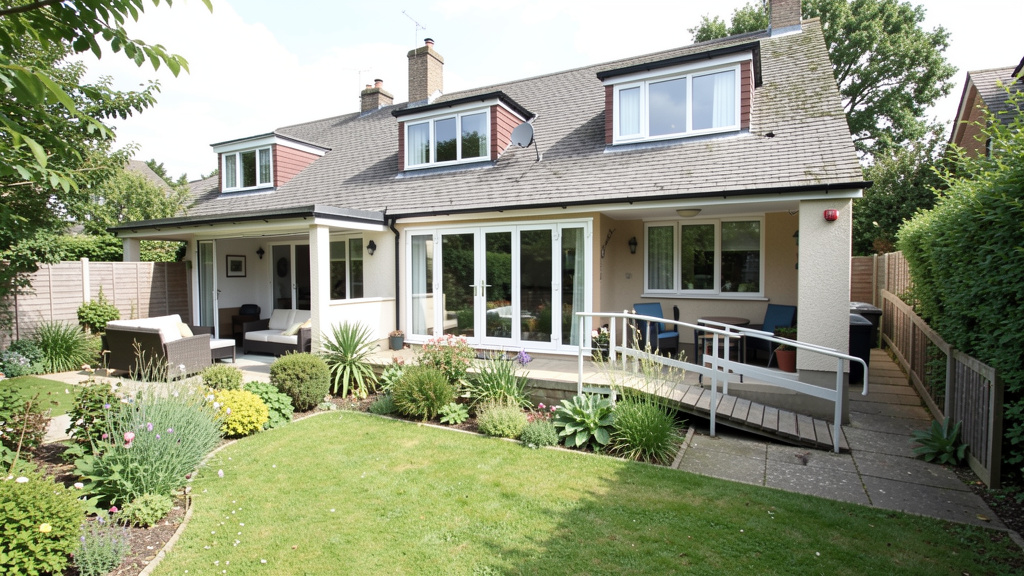
– Step-Free Entries: Eliminate thresholds at all access points. Gentle ramps can blend seamlessly with landscaping.
– Wider Doorways (36+ inches): Accommodates mobility devices, strollers, and furniture moves while enhancing spatial flow.
– Lever-Style Hardware: Easier for arthritic hands, children, or when carrying items. More intuitive than knobs.
– Adaptable Fixtures: Roll-under sinks (or cabinets with removable bases), adjustable-height countertops, and shower seats that double as shelves.
– Layered Lighting: Combine ambient (ceiling), task (under-cabinet, bedside), and accent lighting. Install motion-sensor nightlights in hallways and bathrooms. Use warm-white LEDs (2700K–3000K) for calming ambiance. Place switches at consistent, reachable heights.
– Secure Flooring: Choose textured porcelain tile, luxury vinyl plank (LVP), or cork over highly polished surfaces. Ensure area rugs have non-slip pads.
– Discreet Support: Install sturdy grab bars in showers and near toilets that double as towel bars. Modern designs are sleek and integrated.
Phased implementation approach:
1. Phase 1 (Immediate): Widen one critical doorway (bedroom/bath), install lever handles, add non-slip mats, enhance lighting in key pathways.
2. Phase 2 (Near-Term): Add grab bars, lower closet rods in one bedroom, install shower seat.
3. Phase 3 (Future-Proofing): Reinforce wall studs where a stairlift might be installed later; pre-wire for emergency alert systems.
Consideration to avoid: Placing a bedroom requiring stair navigation without current or planned accessibility supports. Proactive adaptation prevents isolation. Design with current needs plus a margin of flexibility.
Shared Spaces: Intentional Layouts for Connection Without Pressure
Common areas should invite interaction while respecting autonomy. Avoid “fishbowl” layouts where all activity is constantly visible.
– Kitchen Flow: Create distinct zones (cooking, cleanup, beverage) to allow multiple people to move comfortably. An island with seating enables engagement without crowding the primary cook. Maintain clear pathways (minimum 42 inches between counters).
– Living Area Zoning: Divide larger spaces into smaller conversation areas with varied seating heights and arrangements. Position seating to facilitate eye contact across generations.
– Quiet Retreat Nook: Dedicate a small, accessible space for reading, calls, homework, or meditation—away from main activity zones. Label respectfully: “Sanctuary Space – Please Knock.”
– Outdoor Integration: A shared patio, garden, or covered porch extends living space. Include accessible pathways, raised garden beds for varied mobility, and shaded seating. A fire pit or outdoor dining area becomes a natural gathering point.
Cultural awareness: In cultures where the kitchen is a vibrant, multi-generational hub (common across many Asian, Latin American, and Mediterranean traditions), design must support fluid activity—ample counter space, durable surfaces, and seating for lingering. In contexts valuing more spatial separation, consider a pass-through window between kitchen and dining area to maintain connection without congestion. Honor your family’s unique cultural rhythms.
Contribution Frameworks: Clarity and Fairness in Shared Responsibilities
Financial and logistical contributions are frequent sources of unspoken tension. Transparency and perceived fairness foster security. There is no single “correct” model—only what feels sustainable and respectful for your family. The goal is clarity, not complexity.
Evaluating Contribution Approaches
Move beyond simplistic “Who pays the mortgage?” to consider the full ecosystem of support:
| Contribution Type | Examples | Fair Assessment Approach | Consider When |
|---|---|---|---|
| Monetary | Rent share, utility contributions | Percentage of income or amount aligned with local value of private space | Clear income capacity; adult children returning home |
| In-Kind Services | Childcare, meal preparation, home maintenance, transportation | Assign value based on local service rates (e.g., typical childcare rate per hour). Track consistently. | Limited cash flow but available time/skills; honoring non-financial contributions |
| Hybrid Model | Base contribution + service credits | Calculate fair value of private space. Deduct agreed value of services (e.g., childcare hours). | Most balanced approach; validates diverse forms of contribution |
| Future-Oriented | Payments toward future equity | Requires formal legal agreement outlining terms, valuation, and timelines | Long-term commitment with clear path to ownership; requires professional guidance |
Practical implementation steps:
1. Research Local Context: Use rental listings to understand the typical value of comparable private space in your area. This provides an objective anchor for discussion.
2. Map Shared Expenses: List all household costs: mortgage/rent, property tax, insurance, utilities, shared groceries, supplies, maintenance fund. Categorize clearly.
3. Define Logistics: Who manages funds? A dedicated household account is ideal. When are contributions due? Automate where possible.
4. Establish a Maintenance Reserve: Set aside a small, consistent amount monthly for unexpected repairs (e.g., appliance service, minor fixes). All contribute proportionally. This prevents crisis-mode decisions.
5. Schedule Annual Reviews: Plan a calm “Contribution Check-In” to adjust for life changes. Frame positively: “Let’s ensure our system continues to feel fair and sustainable for everyone.”
Illustrative scenario: A family welcomed a grandparent whose fixed income covered part of the suite’s typical value. They agreed the grandparent would contribute a modest cash amount plus prepare one weekly family meal and share cultural stories with grandchildren. The parents covered remaining household costs. All felt the arrangement honored the grandparent’s dignity and contribution. They documented the understanding simply: “Grandparent’s Contribution: Cash + weekly meal + storytelling = Full occupancy of private suite.”
Pitfall to avoid: Keeping contributions informal to preserve harmony. Informality often breeds uncertainty. Framing clarity as “This honors your role and contribution” builds mutual respect.
Navigating Common Scenarios with Care
- Adult Child Returning Home: Establish clear, respectful terms—a defined initial period (e.g., 12 months), contribution expectations, and shared goals (e.g., saving for future independence). This supports healthy adult dynamics and prevents regression.
- Supporting Aging Parents: If resources are limited, focus on contributions within capacity—meal help, light gardening, managing correspondence. Explore community resources or government programs they may qualify for to offset costs. Never commingle personal finances without professional guidance.
- Multiple Adult Households: If multiple adult children (and families) co-reside with parents, meticulous documentation of space use, contributions, and decision rights is essential to prevent sibling friction. A written agreement is highly advisable.
Daily Operations: Systems That Reduce Mental Load
Harmony lives in daily rhythms. Proactive systems prevent the slow accumulation of resentment from overlooked tasks or scheduling conflicts.
The Household Operations Hub (Digital or Physical)
Create a centralized, accessible resource for logistical clarity:
– Shared Calendar: Use a digital calendar (Google, Apple) shared with all adults. Color-code: Work, Care Responsibilities, Appointments, Family Events. Block recurring items: chore rotations, meal prep times, quiet hours.
– Chore Clarity: Move beyond “help out.” Use a rotating chart (physical board or app) with specific tasks and frequencies: “Empty dishwasher: Mon/Wed/Fri,” “Take recycling out: Tuesday,” “Vacuum common areas: Sunday (rotating).” Include age-appropriate tasks for children/teens. Acknowledge completion warmly.
– Meal Coordination: Reduce dinner stress with clear protocols:
– Shared Core Meals: Family eats together 3–4 nights weekly. Rotate cooking responsibility.
– Parallel Cooking: Units prepare separate meals but share occasional dishes. Designate “community meal” nights.
– Hybrid: Parents handle weekday dinners; grandparent hosts Sunday lunch; adult child orders Friday pizza. Document preferences/allergies visibly.
– Grocery Protocol: Fund shared staples (milk, bread, toilet paper) from the household account. Personal items purchased individually. Use a shared shopping list app. Designate primary shopper(s) with clear reimbursement steps.
– Maintenance Log: Track filter changes, service dates, warranty info. Assign seasonal tasks (gutter check, HVAC filter).
Why this works: It removes invisible mental labor (“Whose turn is it?”) and emotional strain. Systems depersonalize tasks, creating predictability—especially valuable for children and elders who thrive on routine.
Technology as a Supportive Tool
Use technology thoughtfully to enhance, not complicate:
– Communication Channels: Maintain a dedicated group text only for household logistics (“Plumber arriving at 10 AM,” “Running late for dinner”). Keep emotional conversations face-to-face. Voice notes add warmth.
– Smart Home Aids: Smart thermostats with room sensors enable personalized comfort zones. Smart locks allow keyless entry to private suites. Video doorbells let residents screen visitors. Always discuss privacy boundaries first—no monitoring in private zones.
– Emergency Preparedness: Ensure all phones have ICE (In Case of Emergency) contacts. Discuss medical alert options if relevant. Keep a printed emergency contact sheet accessible. Practice evacuation drills quarterly, including roles for assisting those with mobility considerations.
Layer 3: The Atmosphere – Cultivating Connection and Navigating Friction
Layer 3 is the living culture of your home—the daily practices, communication rhythms, and emotional awareness that transform cohabitation into genuine intergenerational sanctuary. This layer requires gentle, consistent nurturing and yields profound rewards: trust, joy, and resilient bonds.
Communication Rhythms: Building Bridges of Understanding
Without intentional channels, minor irritations can accumulate. Successful families establish predictable, low-pressure opportunities for connection and course-correction.
The Weekly Family Check-In
Schedule a brief (20–30 minute), recurring meeting. Keep it structured, positive, and solution-focused.
– Timing: Sunday evening or Saturday morning—when energy is calm.
– Simple Format:
1. Appreciations (5 mins): Each person shares one specific, genuine appreciation for another household member (“Thank you for fixing my bike,” “I loved hearing your story at dinner”).
2. Logistics Preview (10 mins): Review the shared calendar for the week. Confirm chore rotations, meal plans, appointments. Resolve scheduling gently.
3. One Small Improvement (5 mins): “What’s one tiny tweak to make next week smoother?” (e.g., “Can we move trash prep to Saturday morning?”). Focus on systems, not people.
– Guiding Principles: No interrupting. Use “I” statements (“I feel rushed when…” vs. “You always…”). Keep solution-oriented. End on a positive note.
Why it works: It creates a safe container for feedback before frustration builds. The appreciation ritual actively cultivates gratitude—a powerful buffer against resentment. It models healthy communication for younger generations.
Navigating Disagreements: A Collaborative Approach
When tension arises (as it will), having a shared protocol reduces escalation:
– Pause: If emotions rise, agree to pause. “I need a few minutes to gather my thoughts. Can we revisit this after dinner?” Prevents reactive words.
– Acknowledge: When reconvening, validate the other’s perspective. “I hear you felt concerned when…” Validation ≠ agreement.
– Understand the Need: Gently explore beneath the surface. “What need were you hoping to meet?” (e.g., “I needed quiet to recharge,” “I felt disconnected and wanted connection”).
– Seek Solutions Together: Brainstorm options meeting both needs. “Could we have quiet time until 7 PM, then watch a show together?”
– Establish & Evaluate: Agree on a trial solution. Set a brief check-in: “Let’s try this for three days and revisit at our Check-In.”
Practical application: A teenager felt grandparents were overly present during homework time in the shared living area. Using this approach: Pause (teen stepped away calmly). Acknowledge (“I see you were trying to be nearby”). Understand (“I need focused quiet to concentrate”). Seek Solutions (“Could I use the quiet nook after 4 PM? Or wear headphones as a signal?”). Establish (“Let’s try the nook for a few days”). This shifted conflict into collaborative problem-solving.
Rituals and Connection: Weaving the Intergenerational Tapestry
Shared rituals foster belonging and transmit values across generations. Consistency matters more than scale—small, repeated moments build deep connection.
Daily Micro-Connections
- Morning Greeting: A specific, warm acknowledgment when someone enters shared space—a smile, “Good morning, glad you’re here,” a shared beverage. Takes seconds; builds warmth.
- Evening Reflection: Over dinner or before bed, share “Rose & Thorn” (one highlight, one challenge). For young children: “Happy/Sad/Mad.” Ensures everyone feels seen.
- Bedtime Connection: Rotate who reads to young children. Grandparents sharing cultural folktales; parents sharing childhood favorites. Creates irreplaceable bonding.
Weekly and Seasonal Traditions
- Family Meal Night: Rotate cooking duties. Include a “story from our history” segment where elders share memories (consider audio recording these).
- Game or Activity Night: Choose accessible activities (board games, charades, puzzles). Focus on shared laughter, not competition.
- Seasonal Projects: Plant seeds together in spring; harvest herbs in summer; preserve garden bounty in fall; decorate for holidays collaboratively. Creates shared accomplishment and marks time meaningfully.
- Skill Sharing: Grandparent teaches a craft; parent shares budgeting tips; teen demonstrates a tech skill. Validates every generation’s wisdom and capability.
Honoring Individuality Within Unity
Harmony embraces diversity. Celebrate differences thoughtfully:
– Cultural Blending: If families have diverse backgrounds, intentionally incorporate elements from each—foods, music, holiday customs. Create new hybrid traditions unique to your household.
– Personal Expression: Encourage private zones to reflect individual personality through decor, art, or music. Reinforces identity within the collective.
– Sanctity of Solitude: Normalize and protect alone time. “I’m recharging in my room until 3 PM” is a valid, respected statement. Model this practice yourself.
Meaningful example: A family created a “Memory Wall” in a hallway. Each generation contributed: grandparents added vintage photographs; parents added childhood images of the children; teens added concert tickets or artwork. They add new items monthly. It serves as a visual narrative of their shared journey—a gentle, daily reminder of interconnectedness.
Supporting the Caregiver: Preventing Burnout
In multi-generational homes, primary caregivers (often middle-generation adults) face significant emotional and physical demands. Sustainable harmony requires intentional support:
– Scheduled Respite: Formalize breaks. “Every Tuesday evening, Parent A has personal time; others handle evening routines.” Hire occasional help if feasible.
– External Connections: Encourage all adults to maintain friendships and activities outside the home. Isolation fuels resentment; external support sustains capacity.
– Direct Check-Ins: Ask caregivers specifically: “What’s one task I can take off your plate this week?” “How is your energy?” Listen without immediately problem-solving.
– Professional Resources: Normalize utilizing caregiver support groups (online or community-based), counseling, or respite services. Frame as “strengthening our family system,” not personal failure.
Navigating Common Challenges: Contextual Strategies for Real-Life Friction
Even with thoughtful preparation, challenges arise. How a family navigates them builds resilience. Below are frequent friction points with adaptable, principle-based strategies.
Challenge 1: Balancing Privacy and Connection
Symptom: Feeling constantly observed; teens withdrawing; elders feeling excluded.
Root Consideration: Unclear boundaries around space, time, or information sharing.
Solutions:
– Physical Cues: Reinforce private zones. Add subtle signals: a small sign (“Available after 10 AM”) or closed door = knock and wait.
– Temporal Boundaries: Establish agreed “quiet hours” (e.g., 9 PM–7 AM). Define norms for private space access.
– Information Respect: Agree what is shared. Example: “Medical details discussed only with designated family members on a need-to-know basis.” Honor digital privacy—no accessing devices without permission.
– Invited Connection: Counter isolation with gentle invitations: “I’m making tea—would you like a cup?” Offer connection without demand. Respect “no” gracefully.
IF privacy concerns persist due to layout constraints, THEN prioritize creating a dedicated quiet nook or scheduling time-sharing for high-demand spaces.
Challenge 2: Navigating Generational Differences in Parenting or Values
Symptom: Grandparents unintentionally undermining parents’ boundaries; differing views on screen time, discipline, or lifestyle.
Root Consideration: Unspoken assumptions about roles; fear of overstepping or being disrespected.
Solutions:
– Pre-emptive Alignment: Parents clarify core parenting values with each other first, then communicate respectfully to grandparents: “We’ve decided screen time ends at 8 PM. We’d appreciate your support—it helps the children feel secure.”
– Clarify Grandparent Role: Frame positively: “Your gift is being the joyful, loving grandparent. Our role as parents is setting consistent boundaries. We need your partnership with these rules.” Offer simple scripts: “When asked for candy before dinner, you might say, ‘Let’s check with Mom/Dad.'”
– Private, Timely Feedback: If a boundary is crossed, address it calmly and privately soon after: “Mom, I noticed candy was offered after we’d said no. I know you love them, and consistency helps them feel safe. Can we align on snack times?” Focus on impact, not intent.
– Bridge with Curiosity: When values differ, practice: “Help me understand your perspective.” Share your reasoning calmly. Seek common ground: “We both want [Child] to feel loved and secure. How can we support that together?”
IF cultural or generational values clash significantly, THEN involve a neutral family counselor to facilitate dialogue focused on shared goals.
Challenge 3: Evolving Care Needs and Role Shifts
Symptom: Adult child assuming parental role for aging parent; loss of dignity for elder; guilt or exhaustion for caregiver.
Root Consideration: Unpreparedness for changing abilities; emotional weight of role reversal.
Solutions:
– Proactive Conversations: Discuss future care preferences during healthy times. Use structured guides for advance care planning available through healthcare providers or community organizations. Ask: “What matters most to you if you need help with daily tasks?” Document preferences.
– Neutral Assessment: When needs shift, involve an objective professional—a geriatric care manager or occupational therapist. Their recommendations (“A shower chair enhances safety”) often feel less personal than family suggestions.
– Preserve Dignity Actively: Frame assistance collaboratively: “Let’s find the easiest way to get to your appointment together.” Involve elders in decisions affecting them. Uphold their role as family historian, advisor, or ritual keeper.
– Distribute Responsibility: Create a visible care calendar. Can siblings contribute financially for services? Can neighbors assist with transportation? Utilize community resources (meal programs, senior centers). Caregiving should never rest solely on one person.
IF care needs exceed family capacity, THEN compassionately explore supplemental professional support or alternative living arrangements—framed as honoring well-being, not failure.
Challenge 4: Financial Transparency and Perceived Fairness
Symptom: Resentment over contributions; secrecy about spending; anxiety about future costs.
Root Consideration: Lack of transparency; unspoken comparisons; fear of burdening others.
Solutions:
– Revisit the Framework: Hold the scheduled annual contribution review. Adjust compassionately for life changes: “Given your new role, let’s recalculate what feels sustainable.”
– Normalize Financial Dialogue: Briefly review household budget during Weekly Check-Ins: “Utility costs were higher this month—let’s be mindful of thermostat settings.” Makes finances a shared responsibility.
– Acknowledge All Contributions: Publicly value non-monetary support: “[Name]’s childcare support provides significant stability for our household.” Validate every form of contribution.
– Plan Collectively for the Unexpected: The dedicated Maintenance Reserve prevents panic over repairs. For larger future needs (home modifications), start a visible “Future Fund” with small, voluntary contributions. Celebrate progress: “We’ve saved toward our goal!” builds collective ownership.
IF financial strain causes persistent tension, THEN consult a fee-only financial planner specializing in family dynamics for neutral guidance.
Challenge 5: Adapting to Space Constraints in Existing Homes
Symptom: Feeling cramped; lack of private zones; constant noise.
Root Consideration: Attempting multi-generational living in a layout not designed for it.
Solutions (Prioritized by Impact):
1. Redefine “Private Space”: Convert underutilized areas (large closet, garage corner) into a quiet retreat using room dividers, curtains, or bookshelves.
2. Time-Sharing High-Demand Areas: Create a clear schedule for bathrooms or kitchen use during peak hours. Use the shared calendar.
3. Budget-Friendly Sound Management: Heavy curtains, area rugs, upholstered furniture absorb sound. White noise machines in bedrooms. Designate quiet zones.
4. Vertical Space Optimization: Loft beds for teens, wall-mounted desks, under-bed storage.
5. Expand Outdoors: Invest in a covered patio, screened porch, or garden shed workspace. Creates vital “third space” away from main living areas.
6. Explore Long-Term Options: Research local regulations for Accessory Dwelling Units (ADUs)—backyard cottages, garage conversions. Many communities now encourage ADUs. Even a modest unit transforms dynamics.
IF space constraints cause ongoing distress despite adaptations, THEN thoughtfully consider adjacent housing (duplex, nearby homes). Living near each other with intentional connection can be wiser than forcing an unsustainable arrangement. This reflects wisdom, not failure.
Your Questions, Answered
Q: How do we introduce a Living Agreement without making family members feel distrusted?
A: Frame it as an act of care and clarity for everyone’s comfort and peace of mind. Say: “I love that we’re building this life together. To help us all feel respected and avoid misunderstandings later, I found a gentle template for a family living agreement. It’s like a shared roadmap so we can focus on enjoying our time together. Could we look at it together and shape it to fit our family?” Emphasize it protects all parties and can evolve as we do.
Q: What if my aging parent is reluctant to discuss future care needs or legal documents?
A: Approach with patience and empathy, not pressure. Start small: “Mom, I was updating my own emergency contacts and realized I don’t have your doctor’s number. Could I add it?” Link discussions to their values: “I know how much you value your independence. Planning ahead is one of the strongest ways to protect that.” Involve a trusted third party they respect—a physician, faith leader, or elder law professional. Structured conversation guides focused on personal values (available through healthcare or community services) can provide a gentle entry point. Never force; plant seeds with kindness and revisit gently over time.
Q: How do we honor differing religious or cultural practices under one roof?
A: This is where the Foundation Layer provides essential guidance. During your Vision Session, explicitly discuss: “How will we honor each person’s beliefs and traditions?” Create shared agreements: “We’ll display holiday decorations from all traditions in common areas,” “Meal planning will include options respecting dietary practices,” “Quiet time will be observed for prayer or meditation.” Designate private spaces for personal practices. Focus on shared underlying values (compassion, gratitude, family) that transcend specific doctrines. When differences arise, return to your agreed values: “How can we handle this in a way that respects both our traditions and our shared commitment to respect?”
Q: My teenager feels self-conscious about living with grandparents. How can we support them?
A: Validate their feelings without judgment: “It’s completely okay to feel that way. Many teens have similar worries.” Then, empower them:
– Ensure their private space feels authentically theirs (decor, music, privacy protocols).
– Establish clear, respectful protocols for hosting friends: “You can use the basement rec room for friends; a quick heads-up is appreciated.”
– Highlight unique benefits: “You get after-school snacks made with love,” “Grandpa can give you a ride if we’re delayed.”
– Connect them with peers in similar situations (school groups, community programs).
– Most importantly: Protect their dignity. Never share embarrassing stories about them without consent. Model consistent respect for their growing autonomy and privacy.
Q: How do we thoughtfully include aging parents with limited financial resources?
A: Fairness is contextual and deeply personal. Focus on contributions that honor dignity and feel sustainable:
– Meaningful In-Kind Support: Childcare, meal preparation, gardening, managing household correspondence, sharing cultural knowledge with grandchildren. Discuss and agree on the value this brings to the household.
– Asset Considerations: If they sold a previous home, could a portion support modifications benefiting all (e.g., creating a main-floor bedroom)?
– Community Resources: Research programs they may qualify for that offset costs (veterans’ benefits, in-home support waivers).
– Family Collaboration: Siblings may contribute financially to support parents living with one sibling. Document agreements clearly to prevent future misunderstandings.
The guiding question: “Does this arrangement allow Mom/Dad to feel valued, secure, and respected—not like a burden?” Adjust until the answer resonates for everyone.
Q: How often should we revisit our Living Agreement?
A: Schedule intentional reviews:
– Annually: A calm, comprehensive review of all sections.
– After Significant Life Events: New job, health change, birth, loss.
– When Friction Persists: If the same issue causes repeated tension, call a special meeting: “This keeps coming up. Let’s revisit our agreement on [topic] to see if we need to adjust.”
Keep the agreement accessible. Encourage any family member to suggest a review. Frame updates positively: “We’re learning and growing—let’s refine our system to work even better for us.”
Q: What signs suggest multi-generational living may not be sustainable?
A: Watch for persistent patterns, not isolated incidents:
– Chronic resentment, sarcasm, or passive-aggressive communication.
– One person (often the middle generation) showing sustained signs of burnout (exhaustion, withdrawal, irritability).
– Family members consistently avoiding common areas or shared meals.
– Repeated arguments about the same issues without resolution.
– Noticeable decline in mental or physical well-being linked to home stress.
If these patterns emerge, address them compassionately. Call a family meeting using your agreed communication protocol. Seek support from a family therapist specializing in multi-generational dynamics. Sometimes, the most loving choice is transitioning to a different living arrangement—and that reflects courageous self-awareness, not failure.
Q: How can we meaningfully include young children in creating a harmonious home?
A: Age-appropriate involvement builds ownership and belonging:
– Ages 3–6: “You get to choose the color for your special kitchen drawer!” Draw simple pictures of “happy home rules” together (e.g., “We use gentle hands”).
– Ages 7–12: Involve in chore charts with visual cues or small rewards. Let them help plan one family meal weekly. Create a “suggestion box” for home ideas.
– Teens: Assign real responsibility—managing the shared streaming account, tech support for grandparents. Include them in Weekly Check-Ins for logistics (not sensitive adult topics). Respect their input on shared space decor.
Always explain the “why” simply: “We have quiet hours so Grandpa can rest comfortably, and you can focus on homework. It helps everyone feel good.”
Q: How do we navigate sibling disagreements about caring for aging parents in our home?
A: This requires patience and structure:
1. Gather All Siblings: Hold a dedicated meeting (in person or video call).
2. Center the Parent’s Well-Being: Begin with: “What does Mom/Dad need to feel secure, respected, and connected?” Incorporate input from healthcare providers if available.
3. Acknowledge Realities Honestly: “I can provide housing but need support with medical appointments.” “I live far away but can manage finances or coordinate services.”
4. Create a Sibling Agreement: Document roles, communication protocols, financial contributions (if any), and decision-making processes. A neutral mediator can be invaluable.
5. Leverage Technology: Shared calendars, care coordination apps keep everyone informed without overburdening the primary caregiver.
Remember: You are a team supporting your parent. Differences in capacity or proximity do not reflect differences in love or commitment.
Q: How do we nurture romance and partnership as parents in a multi-generational home?
A: Intentionality is essential. Without it, caregiving roles can overshadow partnership:
– Schedule Connection: Block brief “connection time” on the shared calendar—even 20 minutes after others are settled with tea and conversation. Guard this time.
– Create Micro-Moments: A 5-minute check-in when one returns home. A handwritten note. A shared glance of understanding.
– Sanctuary Space: Ensure your bedroom is a true retreat—minimize clutter, optimize for rest and connection.
– Utilize Support: respectfully ask grandparents for occasional childcare to enable outings: “We’re stepping out for a walk—could you keep an ear out for the kids?”
– Communicate Needs Gently: “I’ve been feeling a bit disconnected. Could we prioritize 15 minutes of uninterrupted talk time tonight?”
Modeling a respectful, connected partnership benefits the entire household—it shows all generations what healthy relationships look like.
Conclusion and Your Next Step
Multi-generational living is not a return to the past, but a conscious, forward-looking choice—a deliberate architecture of care, connection, and mutual support uniquely suited to our complex world. It requires more than goodwill; it calls for the thoughtful cultivation of systems across three vital layers: the Foundation of shared values and clear agreements; the Structure of intelligently designed spaces, transparent contribution models, and streamlined daily operations; and the Atmosphere of respectful communication, meaningful rituals, and compassionate conflict navigation. When these layers work in harmony, your home transcends mere cohabitation. It becomes a living ecosystem where wisdom flows across generations, energy is shared, and love circulates freely. Children gain irreplaceable bonds with elders; grandparents find renewed purpose; parents receive vital support; and every generation learns the profound strength found in interdependence.
This journey is not about achieving perfection. There will be days of friction, moments of doubt, and necessary adjustments. Harmony is not the absence of discord, but the resilient capacity to navigate it with grace, returning again and again to your shared commitment. The families who thrive are not those without challenges, but those who have built adaptable tools to transform challenges into deeper understanding and connection.
Your 24-Hour Action Step
Within the next 24 hours, take one small, concrete step to activate your Harmony Blueprint:
1. Schedule a 30-minute “Family Vision Session” for the coming week. Send a calm invitation: “Building Our Home Together – Your Thoughts Matter.”
2. Prepare three gentle questions:
– What’s one thing you’re looking forward to in our shared home?
– What’s one consideration you’d like us to plan for thoughtfully?
– What does “feeling at home” mean to you?
3. Create Comfort: Arrange quiet seating, have water available, and paper for notes. Your sole intention: listen deeply and honor every voice.
This single act—creating intentional space for shared hopes and thoughtful planning—lays the cornerstone of everything that follows. It signals to every family member: You are seen. Your perspective matters. We are building this together.
The Broader Perspective
As you move forward, recognize that your choice reflects a quiet, powerful shift. In a world often marked by isolation, your commitment to weaving generations together is an act of profound hope. You are not merely creating a dwelling; you are modeling interdependence, cultivating empathy across age divides, and building a legacy of connection that will ripple through your family for years to come. The shared laughter in your kitchen, the stories exchanged at bedtime, the quiet support offered during difficult days—these are the threads weaving a tapestry far richer than any single generation could create alone. You are building more than a house. You are nurturing a sanctuary. And in doing so, you offer a meaningful gift to your family, your community, and our shared human future.
Explore Our Complete System:
Designing Accessible Homes: A Room-by-Room Universal Design Guide | The Family Finance Binder: Templates for Shared Household Budgets | Conflict to Connection: Communication Scripts for Every Family Scenario | Creating Meaningful Family Rituals Across Generations | When Living Together Isn’t Working: Compassionate Transition Strategies | Navigating Cultural Traditions in Multi-Generational Homes | Seasonal Home Maintenance Checklist for Shared Households