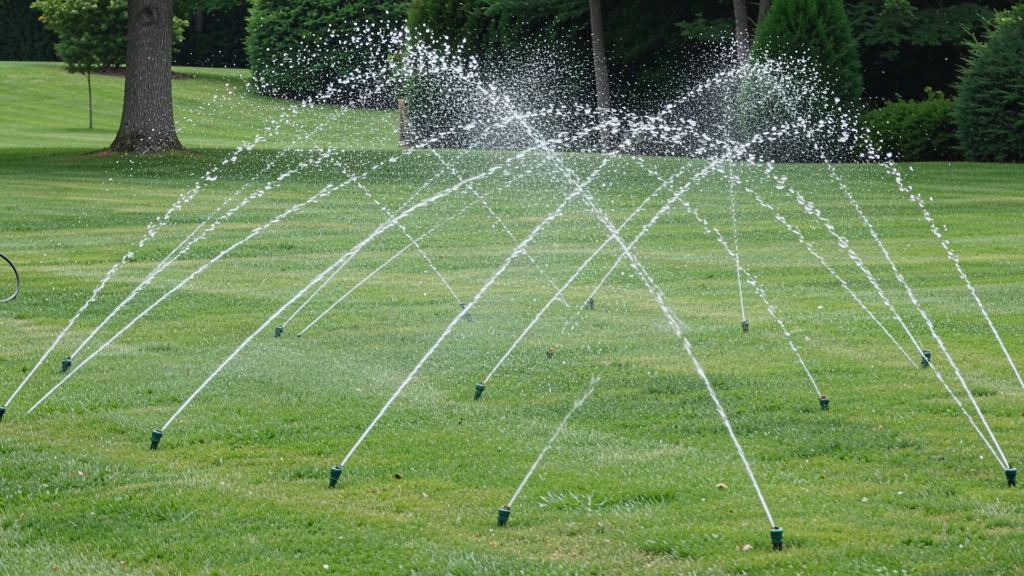
Design with Confidence: Create a Water-Wise Irrigation Plan Tailored to Your Landscape’s Unique Needs
Designing an effective sprinkler system is a thoughtful process of aligning water delivery with your landscape’s specific conditions—soil type, plant needs, slope, and local climate. When approached with care, irrigation becomes a quiet ally: nurturing plant health, conserving resources, and adapting gracefully through seasons. This guide walks you through a clear, step-by-step framework used by experienced designers, translated into accessible actions for homeowners. Whether planning a new system or refining an existing one, you’ll gain practical strategies to reduce guesswork, avoid common pitfalls, and support a thriving outdoor space with intention.
Introduction
Morning walks through neighborhoods often reveal subtle irrigation clues: damp sidewalks where spray overshoots, patchy turf between zones, or mist vanishing before reaching the soil. These aren’t signs of failure—they’re opportunities to refine. Most irrigation challenges stem not from equipment quality, but from foundational mismatches between design choices and site realities. A system perfect for flat, loamy Midwest lawns will struggle on a sloped, sandy Florida lot or a drought-adapted Western xeriscape.
This guide draws on widely accepted irrigation principles reflected in industry resources and field-tested practices. We move beyond isolated tips (“how far to space heads”) toward an integrated perspective where water pressure, soil behavior, plant requirements, and seasonal shifts inform every decision. You’ll learn to observe your landscape’s unique patterns—shade migration, drainage paths, microclimates—and translate them into a responsive irrigation plan. Mastery grows through understanding why certain approaches work in specific contexts, empowering you to adapt confidently. This is stewardship in action: designing systems that honor both your plants and shared resources.
The Triad of Precision Framework: Coverage, Pressure, Efficiency
Every resilient irrigation system balances three interdependent elements:
– Coverage: Delivering water consistently across all intended areas
– Pressure: Maintaining suitable flow for selected components
– Efficiency: Minimizing waste while supporting plant vitality
Optimizing one in isolation risks undermining the others. High coverage with mismatched pressure causes misting; efficiency-focused scheduling on poorly zoned hardware creates dry spots. The Triad of Precision Framework guides you through six sequential phases where each step informs the next. This structured yet adaptable approach builds confidence—transforming complexity into manageable decisions grounded in your landscape’s reality.
Step 1: Comprehensive Site Assessment and Water Audit
Begin with observation before measurement. Walk your property at three key times:
– Early morning: Note lingering dampness, dew patterns, shade boundaries
– Midday: Identify sun-exposed zones, heat reflection off hardscapes, early wilting
– After light rain: Track natural drainage, pooling areas, runoff paths
Document specifics: “Northeast corner stays moist longer,” “South slope shows soil cracking by late morning,” “Patio edge creates a dry shadow on adjacent shrubs.” These microclimate insights are invaluable.
Create a base map:
– Sketch property lines, structures, hardscapes, tree canopies, and existing irrigation
– Label plant groupings (e.g., “cool-season turf,” “native shrub bed,” “vegetable garden”)
– Mark obstacles: mature tree root zones (avoid trenching near drip lines), septic fields (maintain local code clearance), utility corridors (always call 811 before digging), elevation changes
Conduct water diagnostics:
– Static pressure: Attach a gauge to an outdoor spigot closest to your main line. With all household water off, record PSI. Repeat at different times over two days to capture fluctuations.
– Dynamic pressure: Run a garden hose at full flow, then re-measure PSI. The difference reveals usable pressure under load.
– Flow rate (GPM): Time how long a spigot takes to fill a known container (e.g., 5-gallon bucket). Calculate: (Gallons ÷ Seconds) × 60. This defines your maximum zone capacity.
– Soil texture: Dig small test holes in multiple zones. Squeeze moist soil:
– Clay: Holds shape tightly, drains slowly
– Sand: Crumbles immediately, drains rapidly
– Loam: Holds shape briefly, then breaks apart
Why this matters: Soil type directly influences watering strategy. Clay soils benefit from shorter, frequent cycles to allow infiltration; sandy soils often need longer, less frequent watering. Pressure and flow data prevent hydraulic mismatches—like installing more heads than your supply can support.
Common pitfalls to avoid:
– Testing pressure only once (municipal pressure varies by time of day)
– Overlooking microclimates (a shaded north bed may need significantly less water than a sun-baked south slope)
– Ignoring future growth (a young tree’s expanding canopy will alter light and water needs)
– Relying on memory instead of documented observations
Adapting to constraints: Renters or temporary setups can focus on portable solutions: group potted plants by water needs on mobile carts, use pressure-tested hose-end timers with adjustable nozzles, and keep observation notes for future reference.
Step 2: Strategic Zone Design and Hydraulic Planning
Zones group components with similar water needs and hydraulic requirements. The core principle: match precipitation rates within each zone. Spray heads (higher precipitation rate) and rotors (lower precipitation rate) should never share a zone—this mismatch causes runoff in spray areas before rotor zones receive adequate water. Refine further by:
– Plant type (turf vs. shrubs vs. vegetables)
– Sun exposure (full sun vs. dense shade)
– Slope (flat areas vs. inclines)
– Soil type (clay zones vs. sandy zones)
Hydraulic planning essentials:
1. Calculate total GPM demand per proposed zone using manufacturer specs for selected heads.
2. Ensure zone demand stays below your measured flow rate, leaving a small buffer for pressure stability.
3. Select pipe sizing to minimize friction loss:
– Mainlines (water source to valves): Schedule 40 PVC (size based on total flow)
– Laterals (valves to heads): Flexible polyethylene tubing (½” for smaller zones, ¾” for larger)
4. Route pipes to avoid obstacles; use gentle bends instead of sharp elbows to reduce turbulence
5. Position valves in accessible boxes near zone centers to simplify maintenance
Why this matters: Proper zoning prevents the most common efficiency loss—applying uniform water to areas with divergent needs. Correct pipe sizing ensures consistent pressure delivery from first head to last.
Common pitfalls to avoid:
– Overloading zones to avoid adding a valve (compromises entire zone performance)
– Ignoring elevation changes (pressure drops approximately 1 PSI per 2.3 feet of rise)
– Placing valves under permanent hardscapes (creates future repair difficulties)
– Using undersized pipes to reduce upfront cost (leads to chronic inefficiency)
Adapting to constraints: For existing systems with mixed head types, consider retrofitting entire zones with matched-precipitation technology (e.g., rotary nozzles). If splitting a zone isn’t feasible immediately, implement cycle-and-soak programming to mitigate runoff on slopes or clay soils.
Step 3: Sprinkler Head Selection and Precision Placement
Choose technology aligned with zone characteristics—not brand preference:
- Spray heads: Best for small, defined areas (under 15 ft wide). Use pressure-regulated bodies where inlet pressure fluctuates. For better efficiency and wind resistance, consider rotary nozzles (deliver water slower with larger droplets).
- Rotors (gear-driven): Ideal for larger turf areas. Select models rated for your available pressure range. Mid-range rotors offer flexibility for medium-sized zones.
- Drip irrigation: Highly effective for planting beds, vegetables, and containers. Use pressure-compensating emitters on slopes; always include a filter and pressure regulator upstream. Micro-sprayers suit dense ground covers; point-source emitters target individual shrubs.
Placement strategy:
– Head-to-head coverage is essential: Each head’s spray should reach the adjacent head. If a rotor throws 30 feet, space heads 30 feet apart. Water output diminishes at the edge of throw radius; without overlap, dry spots form midway.
– Use triangular (staggered) spacing for rectangular lawns to improve uniformity
– On slopes, orient spray patterns perpendicular to the grade to reduce runoff
– For irregular shapes, use adjustable arcs or specialty nozzles (strip-pattern for narrow borders, corner nozzles for tight angles)
– Verify coverage temporarily: Place catch containers (identical cups) across the zone, run for 10 minutes, and compare water depths. Adjust head positions or nozzles until distribution is consistent.
Why this matters: Precise spacing and matched technology form the physical foundation of uniform coverage. Skipping verification risks permanent dry spots or wasteful overspray.
Common pitfalls to avoid:
– Spacing heads “almost” head-to-head (even small gaps create chronic dry zones)
– Ignoring prevailing wind patterns (position heads to minimize crosswind exposure where possible)
– Selecting nozzles with arcs mismatched to space geometry
– Installing drip systems without filtration (sediment clogs emitters quickly)
Adapting to constraints: Budget-limited projects can prioritize high-efficiency nozzles for existing spray zones—they often retrofit easily and improve distribution. Keep spare nozzles/emitters on hand for future adjustments. For complex shapes, combine technologies: rotors for open turf, drip along curved bed edges.
Step 4: Controller Programming for Adaptive Watering
A controller executes your plan—but thoughtful programming makes it responsive. Move beyond fixed schedules:
- Set watering days by zone need: Established turf often thrives with deep, infrequent watering (encouraging deeper roots); vegetable beds or new plantings may need more frequent cycles. Avoid daily watering for mature lawns unless soil or climate demands it.
- Determine base runtimes: After watering, wait 30–60 minutes. Push a screwdriver into the soil. If it penetrates easily to root depth (typically 4–6 inches for turf), runtime is sufficient. Adjust incrementally.
- Implement cycle-and-soak where needed: Critical for slopes, clay soils, or any zone showing runoff. Instead of one long cycle, split runtime into shorter intervals with rest periods (e.g., three 5-minute cycles with 40-minute breaks). This allows water to infiltrate before the next application.
- Adjust seasonally: Water needs shift with temperature, daylight, and plant growth cycles. Gradually scale runtimes:
- Spring: Moderate runtimes as growth begins
- Early summer: Increase incrementally with rising temperatures
- Peak summer: Highest demand; monitor closely during heatwaves
- Late summer/fall: Gradually reduce as temperatures cool
- Winter: Minimal or no irrigation in dormant seasons (climate-dependent)
Smart technology considerations:
– Weather-based controllers use local evapotranspiration (ET) data to adjust watering automatically.
– Soil moisture sensors water only when soil dries to a target level.
– Rain sensors (even basic models) prevent irrigation during and after rainfall—a highly cost-effective upgrade.
Place sensors thoughtfully: weather sensors away from sprinkler spray and dense shade; soil probes at root depth midway between heads. Verify sensor function quarterly.
Why this matters: Programming accounts for dynamic conditions that static designs cannot. Cycle-and-soak alone can eliminate runoff on challenging terrain. Seasonal adjustments prevent stress during climate shifts.
Common pitfalls to avoid:
– Watering during midday heat (increases evaporation loss; early morning is ideal)
– Setting smart controllers and never reviewing performance logs
– Overriding automated adjustments too frequently (disrupts adaptive learning)
– Ignoring local rainfall (use a rain gauge or utility recommendations to skip cycles)
Adapting to constraints: Without smart technology, use free resources: check your water utility’s seasonal guidelines, observe plant response, and install an affordable rain sensor. Manual seasonal adjustments take minutes but yield significant benefits.
Step 5: Installation Best Practices and System Verification
Thoughtful installation protects your design intent:
- Pre-digging: Mark trenches with biodegradable paint. Call 811 well in advance for utility locates.
- Trenching: Maintain consistent depth (8–12 inches for laterals; deeper in freeze-prone regions per local guidance). Use sand bedding in rocky soil to cushion pipes.
- Swing joints: Connect heads to lateral lines with flexible sections. This allows heads to retract safely if contacted and enables precise height adjustment.
- Valve installation: Mount vertically in accessible boxes. For anti-siphon valves (where required), ensure outlet ports sit above the highest head in the zone. Use proper thread sealant; avoid overtightening.
- Backfilling: Replace soil in layers, tamping gently. Restore turf carefully; water thoroughly to settle soil.
Verification is non-optional:
1. Pressure-test all lines before covering trenches (cap outlets, pressurize slowly, inspect joints).
2. Run each zone individually:
– Confirm all heads pop up fully and streams overlap correctly
– Adjust nozzle arcs with a flathead screwdriver
– Check for leaks at valves, joints, and heads
3. Perform a catch cup test: Place identical containers across the zone, run for 10 minutes, measure depths. Aim for consistent distribution.
4. Observe for runoff during normal cycles; implement cycle-and-soak if needed.
5. Document: Photograph pipe layouts before backfilling. Label valve wires. Save nozzle specs and settings in a waterproof sleeve inside the controller cabinet.
Why this matters: Verification catches design or installation issues while correction is still simple. Documentation becomes invaluable for future maintenance or modifications. Swing joints significantly reduce head damage from mowers or foot traffic.
Common pitfalls to avoid:
– Skipping pressure testing (hidden leaks cause long-term damage)
– Burying valves too deeply (complicates seasonal maintenance)
– Setting head height incorrectly (too low: grass covers them; too high: tripping hazard)
– Ignoring manufacturer installation guidelines for specific components
Adapting to constraints: Rent tools for single projects. Wireless valve actuators eliminate field wiring complexity for some setups. Always prioritize safety: wear eye protection when cutting pipe, and confirm utility locations.
Step 6: Ongoing Optimization and Proactive Care
Irrigation systems evolve with landscapes. Establish a seasonal rhythm:
- Spring startup: After last frost risk passes, slowly pressurize. Inspect all heads, clean nozzles, adjust arcs for new growth, verify controller settings.
- Mid-summer check: After heatwaves, scan for dry spots. Clean clogged nozzles (vinegar soak helps with mineral deposits). Check valve boxes for moisture indicating leaks.
- Fall preparation: Gradually reduce runtimes as temperatures cool. Clean filters, especially on drip zones. Note issues for off-season attention.
- Winterization (freeze-prone areas): Before hard freezes, remove water from pipes using compressed air (regulated to safe pressure) or professional blow-out. Never skip this step where freezing occurs—trapped water can rupture pipes and valves.
Troubleshooting framework:
– Dry spot appears?
→ Is the head operating fully? (Debris in riser? Broken seal?)
→ Is nozzle clogged? (Remove, rinse, reinstall)
→ Is coverage reaching adjacent head? (Adjust arc or position)
→ Is soil compacted? (Aerate gently around spot)
– Runoff or puddling?
→ Implement or refine cycle-and-soak timing
→ Check for slope or soil type requiring adjustment
→ Verify head isn’t spraying hardscape (re-aim arc)
– Low pressure in one zone?
→ Confirm main shutoff valve is fully open
→ Inspect for visible leaks or hissing sounds
→ Check for kinks in supply lines
– Controller not activating zone?
→ Swap solenoid wires with a working zone at controller
→ If issue follows wire: field wiring concern
→ If issue remains: valve or solenoid issue
Track water usage patterns. A sudden unexplained increase may signal a leak. Listen to your landscape: wilting can indicate underwatering, overwatering, disease, or pests—diagnose holistically. Small, documented adjustments compound into lasting efficiency.
Why this matters: Regular care extends system life and maintains performance. Seasonal tuning ensures your system responds to changing conditions rather than working against them.
Common pitfalls to avoid:
– Waiting for complete failure before maintenance
– Overlooking plant feedback (leaves and soil tell stories)
– Skipping winterization “just this once” in cold climates
– Assuming controller settings remain optimal year-round
Adapting to constraints: Create a digital maintenance checklist with calendar reminders. Keep a small repair kit nearby: spare nozzles, swing joints, Teflon tape, valve parts. Photograph issues before fixing for future reference.
The Fundamental Principle: Consistent coverage emerges from intentional alignment of head placement, matched precipitation rates, and pressure-appropriate components—validated through observation and refined with seasonal awareness.
Coverage Deep Dive: Understanding and Addressing Common Patterns
Dry spots or uneven growth often trace to specific, addressable causes. Focus on root patterns rather than quick fixes:
The Mid-Zone Gap
Pattern: Dry strip midway between heads
Cause: Heads spaced beyond effective throw radius; water output diminishes significantly at pattern edges
Response: Re-measure spacing. For existing systems: add a head midway (optimal), or retrofit with rotary nozzles designed for better overlap at existing spacing. Verify with catch cup test after adjustment.
The Edge Fade
Pattern: Lawn thrives inward but perimeter strip stays dry
Cause: Heads positioned too far from edge; spray pattern doesn’t fully reach boundary
Response: Place heads at the edge with arcs oriented inward. Use strip-pattern nozzles for narrow borders. For retrofits, consider low-profile edge heads designed for hardscape adjacency.
The Slope Challenge
Pattern: Water pools at bottom; top remains dry
Cause: Gravity moves water faster than soil can absorb it
Response: Design slope as dedicated zone. Use low-angle, low-precipitation nozzles. Implement cycle-and-soak programming. Consider check valves on downhill heads to prevent low-head drainage after shutoff. For severe slopes, integrate landscape solutions like terracing or deep-rooted ground covers between zones.
Wind Interference
Pattern: Consistent dry area downwind; overspray upwind
Cause: Wind distorts spray patterns, especially high-trajectory nozzles
Response: Switch to low-trajectory or rotary nozzles (heavier droplets resist wind). Water during calmest hours (pre-dawn). Relocate heads where possible to leeward side of windbreaks. Smart controllers with wind sensors can auto-delay cycles.
Obstruction Shadows
Pattern: Dry patch behind tree, post, or ornament
Cause: Physical barrier blocks spray pattern
Response: During design, perform line-of-sight checks from each head location. For existing systems, add a targeted spot head (small spray or drip emitter) for the shadowed area. For trees, use drip rings at the drip line where feeder roots absorb water.
True coverage mastery means reading your landscape’s feedback. After adjustments, retest. Soil probes after watering reveal moisture depth differences. Compacted soil may need aeration; competing tree roots may require localized drip supplementation. Solutions are contextual—what works on one property may need adaptation on another.
Efficiency Mastery: Layered Strategies for Water-Wise Care
Efficiency means delivering the right amount of water to the right place at the right time—not deprivation. Layered approaches compound benefits:
Hydraulic Foundation
– Install pressure-regulating devices where needed (mainline regulators for high static pressure; pressure-regulated spray bodies; pressure-compensating drip emitters on slopes)
– Repair leaks promptly— even small leaks waste significant water over time
– Maintain valves and filters annually to ensure proper operation
Component Selection
– Retrofit standard spray nozzles with rotary nozzles where appropriate—they apply water slower with better distribution, reducing runoff and wind drift
– Convert planting beds to drip irrigation where practical (delivers water directly to roots with minimal loss)
– Use soil moisture sensors for shrub or tree zones with deep root systems
Programming Intelligence
– Implement cycle-and-soak on slopes or slow-infiltration soils
– Adjust runtimes seasonally based on temperature and plant response
– Use rain sensors to skip irrigation after measurable rainfall
– Water during cooler, calmer hours (pre-dawn) to reduce evaporation
Landscape Partnership
– Amend soil with compost to improve water retention and structure
– Apply 2–3 inches of organic mulch around plants (keeps moisture in, weeds out; keep away from stems)
– Group plants by water needs (hydrozoning)—avoid irrigating drought-tolerant and thirsty species on the same schedule
– Choose climate-appropriate plants; raise mowing height in summer to shade soil and encourage deeper roots
Track changes thoughtfully. Compare water usage before and after adjustments. Many utilities provide online usage graphs. Notice plant response: healthier root systems often develop with deeper, less frequent watering. Efficiency is a journey of incremental refinements—not a single fix.
Navigating Real-World Design Challenges
Landscapes rarely match textbook diagrams. These adaptive approaches address common complexities:
Steep Slopes
– Design as dedicated zone with low-precipitation, low-angle nozzles
– Mandatory cycle-and-soak programming
– Install check valves on downhill heads to prevent post-shutoff drainage
– Partner with landscape solutions: terracing, contour trenches, or deep-rooted ground covers to stabilize soil
– When to seek help: Slopes exceeding 25% grade may require structural assessment before irrigation design
Irregular or Fragmented Lots
– Embrace micro-zones: small, purpose-built zones for narrow side yards, isolated islands, or curved beds
– Use specialty nozzles: strip-pattern for borders, corner nozzles for angles, adjustable arcs for curves
– Integrate drip tubing for fragmented planting beds—flexible tubing snakes between areas
– Pro tip: Temporarily stake heads before burial. Run the zone, observe coverage on actual terrain, adjust, then install permanently
Variable or Low Pressure
– Confirm issue isn’t localized (test pressure at multiple points; check main shutoff valve position)
– Reduce heads per zone; split overloaded zones
– Select components rated for lower pressure ranges (many rotary nozzles and drip emitters operate effectively at reduced pressure)
– Schedule watering during times of higher municipal pressure (often early morning)
– When to seek help: Pressure boosting requires professional assessment—improper installation risks system damage
These challenges aren’t failures—they’re invitations to apply core principles more deeply. Document your solutions; they become valuable references for future projects. Always prioritize working with your landscape’s natural patterns.
Your Questions, Answered
Q: How do I determine how many sprinkler heads my zone can support?
A: Start with your measured flow rate (GPM). Consult manufacturer performance charts for your chosen head type at your dynamic pressure. Divide your available GPM by the GPM per head. Example: 8 GPM available ÷ 1.5 GPM per head = ~5 heads maximum. Then verify spacing ensures head-to-head coverage. Prioritize correct spacing over filling every square inch—two well-designed zones outperform one overloaded zone.
Q: Can I mix spray heads and rotors in the same zone if I adjust run times?
A: Not recommended. Spray heads and rotors apply water at significantly different rates. Even with adjusted runtimes, areas under sprays receive water too quickly (risking runoff), while rotor areas receive it too slowly (causing dry spots). This violates the matched precipitation rate principle essential for uniformity. Create separate zones, or retrofit the entire zone with matched-precipitation technology like rotary nozzles.
Q: How should I adjust for heavy clay soil?
A: Clay’s slow infiltration requires patience. Design smaller zones with fewer heads. Implement cycle-and-soak programming as standard practice—never water in one long cycle. Select low-precipitation-rate technology. Water slightly more frequently with shorter durations to maintain moisture without saturation. Over time, amend soil with compost to improve structure. During testing, run a short cycle, wait, and check for standing water before continuing.
Q: Is drip irrigation truly more efficient than sprinklers for flower beds?
A: Generally, yes—when properly designed. Drip delivers water directly to root zones with minimal loss to evaporation or wind. Sprinklers lose more water to non-target areas in beds. However, drip requires attention: use filters, pressure regulators, and place emitters thoughtfully. For frequently changed annual beds, micro-sprayers may offer flexibility. For permanent plantings, drip excels. Bury lines under mulch to protect tubing and reduce evaporation further.
Q: How often should sprinkler components be replaced?
A: Replacement depends on performance, not a fixed schedule. Inspect quarterly during operation. Replace nozzles showing inconsistent spray, misting (indicating wear or pressure issues), or physical damage. Heads that leak, fail to retract, or sit unevenly need attention. In hard water areas, clean or replace nozzles more frequently. Keep spare parts of each type used. When replacing, consider upgrading to pressure-regulated or high-efficiency models for long-term benefits.
Q: What’s the most impactful upgrade for an existing system?
A: Installing a rain sensor paired with implementing cycle-and-soak programming delivers exceptional value. Rain sensors prevent irrigation during wet periods; cycle-and-soak eliminates runoff on slopes or clay soils. Together, they address two of the most common waste sources with minimal investment. Next, consider retrofitting spray zones with rotary nozzles where appropriate. Prioritize data-driven improvements validated by observation.
Q: How do I irrigate a vegetable garden without watering pathways?
A: Drip irrigation is ideal. Run mainline along bed edges, then use spaghetti tubing with emitters to individual plants or inline drip tape alongside rows. Include a filter and pressure regulator. Bury lines under mulch to protect tubing and conserve moisture. Group plants with similar water needs. Avoid overhead watering in vegetable gardens—it can promote foliar diseases and wastes water on paths.
Q: Why do I see muddy patches right around some sprinkler heads?
A: This often stems from heads set too high (water impacts soil with excessive force), misaligned nozzles concentrating spray downward, or soil compaction around the head. Solutions: Adjust head height to sit level with soil grade when retracted; re-aim nozzle arc to distribute water evenly; gently aerate soil around the head and top-dress with compost. Pressure-regulated bodies or rotary nozzles can also reduce impact force.
Q: Are smart controllers worth the investment?
A: For many homeowners, yes—especially where weather varies or water conservation is a priority. Weather-based or soil sensor controllers automate adjustments that manual timers require you to make regularly. They typically reduce unnecessary watering while protecting plants during unexpected dry spells. Success depends on correct setup and sensor placement. They enhance good design but don’t replace foundational zoning and component selection. Evaluate based on your willingness to maintain manual schedules versus valuing automation.
Q: How deep should irrigation pipes be buried?
A: Depth balances protection and practicality:
– Lateral lines (to heads): Typically 8–12 inches deep. In regions with hard freezes, bury below the local frost line (consult local guidelines).
– Mainlines: Usually 12–18 inches deep for added protection.
– Critical: Always call 811 before digging. Place caution tape above pipes as a future warning. Avoid burying under permanent hardscapes where repairs would be difficult. In rocky soil, add sand bedding above and below pipes. When uncertain, consult local irrigation professionals familiar with regional conditions.
Conclusion and Your Next Step
Designing a reliable sprinkler system centers on three enduring principles:
1. Observe before acting: Let your landscape’s unique patterns—soil, slope, sun, plants—guide decisions.
2. Validate through testing: Catch cup tests, soil probes, and visual checks transform theory into proven performance.
3. Adapt with the seasons: Landscapes change; your irrigation approach should evolve with them.
These principles empower you whether installing personally or collaborating with a professional. When discussing designs, you’ll ask informed questions about coverage validation, precipitation matching, and seasonal programming—ensuring your investment serves long-term vitality.
The 24-Hour Rule
Within the next day, complete one small, grounding action:
➡️ Attach a pressure gauge to your outdoor spigot during a quiet household period (evening or early morning). Record the reading. This single data point anchors future decisions—whether optimizing an existing system or planning a new one. Keep the gauge handy; make pressure awareness a quiet habit.
The Bigger Perspective
Your irrigation choices ripple outward. Thoughtful water use supports local watersheds. Healthy soil nurtures biodiversity. Efficient systems reduce energy used in water treatment and distribution. This isn’t just about a greener lawn—it’s about participating in a larger cycle of care. Start where you are. Adjust patiently. Celebrate small improvements. With each refinement, you cultivate not only a thriving landscape but also a deeper connection to the rhythms of your outdoor space.
Explore Our Complete Irrigation System:
Soil Science Decoded: Matching Water to Your Earth’s Unique Texture | Smart Controller Showdown: Weather-Based vs. Soil Sensor Systems | Drip Irrigation Mastery: From Vegetable Gardens to Mature Shrubs | Seasonal Irrigation Calendar: Month-by-Month Adjustments for Every Climate | Troubleshooting Tree: Diagnose Dry Spots, Leaks, and Pressure Issues in 5 Minutes | Water-Wise Planting Guide: Species That Thrive with Less Irrigation | DIY Winterization Protocol: Protect Your System From Freeze Damage