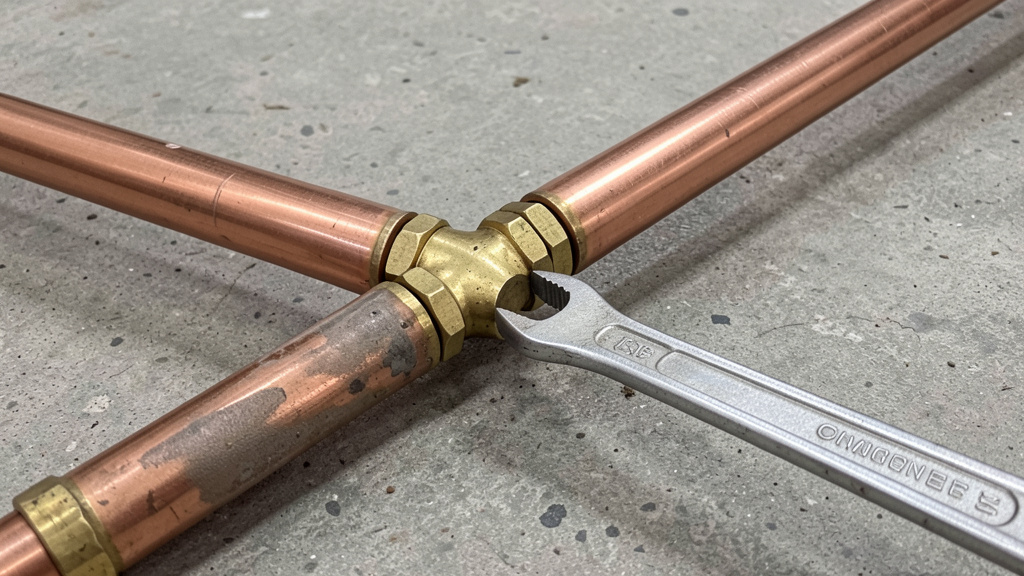
Go beyond quick fixes—build a foundational understanding of plumbing systems to make informed decisions, avoid costly mistakes, and ensure every connection supports long-term home resilience.
Understanding the language of pipes, fittings, and connections forms the bedrock of reliable home plumbing. This guide demystifies materials, techniques, and code considerations, empowering you to approach any plumbing scenario—from a dripping faucet repair to planning a bathroom addition—with clarity and confidence. Whether you’re troubleshooting a leak, evaluating system upgrades, or simply seeking to understand what lies behind your walls, this resource transforms complexity into actionable knowledge grounded in established practice.
Introduction
Plumbing functions as the circulatory system of your home. When operating smoothly, daily life flows uninterrupted; when compromised, disruption radiates through living spaces. Yet homeowners often address plumbing tasks with fragmented knowledge—applying a quick video solution to a specific leak without understanding why that connection failed or how material choices influence long-term performance. This reactive approach frequently leads to repeated repairs, water damage, and unnecessary expense. True plumbing literacy begins with recognizing the interconnected ecosystem: how pipe materials interact with local water chemistry, how fittings translate design intent into physical reality, and how connection methods create either vulnerability or resilience. Drawing from established plumbing codes, material science principles, and documented field patterns, this guide synthesizes critical knowledge into an actionable framework. You’ll learn not just what to do, but why each decision matters—shifting from task completion toward informed system stewardship. This journey cultivates judgment that serves you across every future project, large or small.
The Plumbing Ecosystem Framework: Material → Function → Connection
Plumbing failures rarely stem from a single error. They emerge from mismatches within an interconnected system: selecting a pipe material incompatible with local water chemistry, pairing a fitting designed for low pressure with a high-demand application, or choosing a connection method unsuited to environmental conditions. The Plumbing Ecosystem Framework eliminates guesswork by guiding you through three interdependent decisions. Master this sequence to accurately diagnose existing issues and design new installations with foresight. This is not a rigid checklist—it’s a cyclical thought process where each element informs the others. Before touching a tool, pause and walk through these layers. The minutes invested here prevent hours of frustration and potential water damage later.
Step 1: Decoding Pipe Materials—Beyond the Acronym
Pipes are not interchangeable commodities. Each material possesses distinct physical properties, chemical tolerances, pressure ratings, temperature limits, and environmental sensitivities. Choosing correctly begins with understanding your water’s characteristics and your project’s specific demands.
Copper: The Time-Tested Standard
For decades, copper has served as a backbone of residential water supply systems across North America. Its appeal lies in durability (typically exceeding 50 years under favorable conditions), resistance to UV degradation, and inherent antimicrobial properties. Type M (thin wall) suits low-pressure interior lines; Type L (thick wall) handles main lines, underground runs with protection, and high-pressure zones. However, copper has critical vulnerabilities. In homes with acidic water (pH below 7.0), pinhole leaks may develop as water gradually corrodes the interior—a failure often discovered only after visible damage occurs. In regions with highly mineralized water, scale buildup can gradually reduce flow. Crucially, copper requires skilled soldering; a poorly executed joint creates a weak point prone to failure under thermal stress. Illustrative scenario: In a Pacific Northwest home, copper pipes installed in the 1990s developed multiple pinhole leaks near the water heater by the mid-2010s. Water testing revealed a pH of approximately 6.4. The solution involved installing a neutralizing filter and replacing affected sections with PEX, which demonstrates greater tolerance for acidic conditions. Common pitfall: Using copper for underground lines without dielectric unions where it contacts steel components (like a water heater nipple), accelerating galvanic corrosion. Practical consideration: For non-structural repairs in accessible areas, epoxy-lined copper sleeves may offer temporary reinforcement—but this addresses symptoms, not root causes.
PEX (Cross-Linked Polyethylene): The Modern Workhorse
PEX revolutionized residential plumbing with its flexibility, freeze-resistance, and installation efficiency. Unlike rigid pipes, PEX can expand significantly when water freezes, often preventing catastrophic bursts—a valuable trait in cold climates. It resists scale and corrosion, making it suitable for homes with acidic or hard water. Three subtypes exist: PEX-A (most flexible, ideal for expansion fittings), PEX-B (most widely available, cost-effective), and PEX-C (less common). Color coding (red for hot, blue for cold, white/gray for either) aids organization but carries no functional difference. Critical considerations: PEX degrades under prolonged UV exposure—never install it outdoors without protective conduit. It is permeable to hydrocarbons; avoid routing near gasoline, oil, or solvents (e.g., within garage walls adjacent to storage areas). Oxygen-barrier PEX (featuring an aluminum or EVOH layer) is required for closed-loop hydronic heating systems to prevent oxygen diffusion that could corrode boiler components. Illustrative scenario: During a Minnesota kitchen remodel, PEX-A was routed through floor joists using expansion fittings. During a severe cold snap (-25°F), a section froze solid. The PEX expanded safely; upon thawing, full function was restored with no damage. Common pitfall: Using standard PEX clamps on oxygen-barrier PEX—barrier types require manufacturer-specified fittings to maintain integrity. Temporary measure: For a small puncture in an accessible location, a stainless-steel repair sleeve with crimp rings may restore function until proper replacement can be scheduled.
PVC (Polyvinyl Chloride) & CPVC (Chlorinated Polyvinyl Chloride): Drain and Supply Specialists
PVC dominates drain-waste-vent (DWV) systems due to its smooth interior (reducing clog potential), corrosion resistance, and cost efficiency. Its rigidity provides structural stability in vertical stacks. However, PVC softens at temperatures above 140°F—making it strictly unsuitable for hot water supply. CPVC addresses this limitation. The chlorination process raises its heat tolerance to approximately 200°F, qualifying it for both hot and cold water distribution in many jurisdictions. CPVC also offers greater impact resistance than PVC. Critical distinctions: PVC uses purple primer and clear cement; CPVC requires orange primer and CPVC-specific cement. Mixing cements compromises the solvent weld. Both materials become more brittle in cold temperatures; installation below 40°F requires extra care. Illustrative scenario: A DIYer replaced a leaking kitchen sink drain with PVC but used CPVC cement “because it seemed stronger.” Within weeks, the joint failed. Analysis indicated the CPVC cement did not fully fuse with the PVC material, creating a weak bond. Common pitfall: Using PVC for a washing machine drain line without incorporating required air gaps or standpipes—codes mandate specific configurations to prevent back-siphonage of contaminated water. Contextual note: In seismic zones, some inspectors prefer flexible connections (like braided stainless) between rigid DWV pipes and appliances to absorb movement.
Galvanized Steel: The Legacy System You’ll Likely Encounter
Commonly installed in homes built before the 1960s, galvanized steel pipes were once standard. Today, they often represent significant vulnerability. The zinc coating erodes over decades, exposing iron to rust. Rust accumulates internally, narrowing the pipe diameter (“scaling”), reducing water pressure, and potentially introducing discoloration. Eventually, corrosion may perforate the pipe wall. Critical insight: Replacing only the leaking section is rarely effective. Corrosion is typically systemic. If one joint fails, others are likely nearing failure. Full repiping is generally the only permanent solution. Illustrative scenario: A 1940s bungalow experienced chronically low water pressure. Inspection revealed a ½” galvanized main line with internal diameter reduced to less than ¼” due to rust buildup. Replacement with appropriately sized PEX significantly improved flow capacity. Safety note: Cutting galvanized pipe releases zinc oxide fumes—always wear appropriate respiratory protection. Temporary measure: Installing a whole-house sediment filter may reduce particulate rust in water but does not address restricted flow or imminent leaks.
Less Common but Critical Materials
– ABS (Acrylonitrile Butadiene Styrene): Black plastic primarily used for DWV in colder climates (offers better impact resistance than PVC below freezing). Cannot be solvent-welded directly to PVC—transition fittings are required. Prohibited for DWV in some jurisdictions (e.g., parts of California) due to fire code considerations; always verify local requirements.
– Cast Iron: Found in pre-1980s DWV stacks. Extremely durable but heavy. Failures often appear as rust holes or separated leaded joints. Modern repair approaches include pipe liners or section replacement with ABS/PVC using no-hub couplings.
– Brass: Commonly used for supply lines to fixtures (e.g., toilet fill valves). Vulnerable to dezincification in soft, acidic water—zinc leaches out, leaving a weak, porous copper structure. Look for “inhibited” brass fittings in areas with challenging water chemistry.
– PE-RT (Polyethylene of Raised Temperature Resistance): An emerging option for radiant floor heating systems. Offers flexibility and repair characteristics that may suit specific applications better than standard PEX.
The Fundamental Principle: The right pipe material doesn’t just carry water—it harmonizes with your water’s chemistry, your climate’s demands, and your home’s structural context. Material selection is the first act of proactive system care.
Pipe Material Selection Quick-Reference Guide
| Material | Best Applications | Key Limitations | Code & Installation Notes | Typical Service Life* |
|---|---|---|---|---|
| Copper (Type L) | Main lines, hot/cold supply, protected underground runs | Acidic water (pH<7), requires skilled joining | Dielectric unions required at dissimilar metal connections (e.g., water heater) | 50+ years (water-dependent) |
| PEX-A/B | Whole-house repipe, radiant heat, freeze-prone zones, retrofit | Direct sunlight exposure, proximity to hydrocarbons | Must be secured per code (typically ≤32″ horizontal spacing); oxygen-barrier required for heating loops | 40-50+ years |
| CPVC | Hot/cold supply in slab foundations, budget-conscious remodels | Very cold climates (increased brittleness), high-flex areas | Primer color must match pipe (orange for CPVC); verify local acceptance | ~50 years |
| PVC | DWV systems, vent stacks, outdoor drainage (protected) | Hot water lines, structural support points | Slope must maintain ~¼” per foot for drains; verify local seismic requirements | 70+ years |
| Galvanized Steel | Legacy systems only—plan for replacement | Any new installation; systemic corrosion risk | Prohibited for new supply lines in most modern codes | Highly variable (often failing after 40+ years) |
*Service life estimates vary significantly based on water chemistry, installation quality, and environmental factors. Always prioritize local conditions and professional assessment.
Step 2: Navigating Fittings—The Silent Decision-Makers
Fittings—elbows, tees, couplings, adapters—are not generic connectors. Each type solves specific hydraulic, spatial, or functional challenges. Misselecting a fitting can create turbulence, stress points, or future leak paths.
Elbows: Directing Flow with Purpose
Elbows change direction. The critical detail is the sweep. A standard 90-degree elbow creates sharp turbulence, increasing pressure drop and noise—problematic for supply lines. A long-sweep 90 (or quarter-bend) features a gradual curve, maintaining flow velocity and reducing wear. In DWV systems, long-sweep elbows are typically required for horizontal-to-vertical transitions to prevent waste from impacting the joint and causing clogs. For confined spaces (like behind a toilet), a street elbow (male thread on one end) conserves space. Illustrative scenario: Installing a standard 90 on a washing machine drain line caused gurgling and slow drainage. Replacing it with a long-sweep 90 eliminated the issue by allowing wastewater to flow smoothly into the main stack. Critical reminder: DWV fittings have thinner walls than pressure-rated fittings—never substitute DWV elbows on pressurized supply lines.
Tees: Branching with Intelligence
Tees create branch lines, but selection matters:
– Standard Tee: Suitable for branching pressurized supply lines (e.g., feeding a new bathroom off a main line).
– Sanitary Tee: Used only in DWV systems where a horizontal drain meets a vertical stack. The curved inlet directs flow downward smoothly, preventing waste from entering the vent path. Installing a standard tee here commonly causes clogs.
– Wye (Y-fitting): Often the preferred choice for branching DWV lines at a 45-degree angle. Creates less turbulence than a tee. Frequently paired with a 45-degree elbow to achieve a 90-degree branch with minimal flow disruption.
Critical insight: In supply lines, avoid teeing off a horizontal hot water line to feed a cold line (or vice versa). Thermal expansion differences can create stress. Instead, tee off the main cold line before the water heater for cold branches, and off the heater outlet for hot branches.
Couplings and Unions: Connection Strategy
– Coupling: Joins two pipe ends. A slip coupling has no internal stop, allowing it to slide fully onto one pipe end, position it, then slide back to bridge a gap—essential for repairs where pipes cannot be separated.
– Union: A three-piece fitting (female end, male end, nut) designed for disassembly. Typically required by code where appliances connect (water heaters, washing machines). Never conceal a union within a wall—access is its purpose.
Illustrative scenario: Replacing a corroded copper section under a sink. A standard coupling required perfect pipe alignment. Using a slip coupling, the section was cut out, the coupling slid past the gap, a new pipe section inserted, then the coupling centered and joined—saving significant adjustment time. Common pitfall: Using a union on a DWV line—unions aren’t designed for gravity flow and can create snag points for debris.
Adapters and Transitions: Bridging Material Worlds
Connecting dissimilar materials (copper to PEX, PVC to cast iron) requires adapters to prevent galvanic corrosion and ensure seal integrity.
– Dielectric Union: Contains a non-conductive sleeve separating copper and steel. Prevents electrolytic corrosion where dissimilar metals contact. Required by code between copper pipe and a steel water heater nipple.
– No-Hub Coupling: Stainless steel shield with a neoprene gasket. Compresses around cast iron, ABS, or PVC to create a flexible, vibration-absorbing joint. Ideal for repairing older cast iron stacks.
– PEX-to-Threaded Adapter: Brass fitting with PEX connection on one end and threads on the other. Critical: Use oxygen-barrier PEX adapters for heating systems.
Critical nuance: When transitioning from copper to PEX near a water heater, maintain at least 18 inches of copper between the heater outlet and the PEX adapter. While PEX is rated for high temperatures, sustained extreme heat may accelerate long-term degradation. This copper section acts as a thermal buffer.
Specialty Fittings Solving Specific Problems
– Angle Stop Valve: The shutoff valve under sinks/toilets. Quarter-turn ball valves generally outperform older compression-style stops—they resist seizing and provide full flow when open. Consider upgrading during fixture replacements.
– Cleanout Plug: Found on DWV tees or elbows. Provides access for drain cleaning tools. Must remain accessible (not buried in drywall). Brass plugs are preferred in cast iron systems—they resist seizing better than steel.
– Expansion Tank: Critical for closed systems (homes with backflow preventers or pressure-reducing valves). Absorbs thermal expansion from the water heater, preventing pressure spikes that can damage pipes and valves. Required by code in many areas.
– Dielectric Nipple: Short galvanized steel pipe with a non-conductive liner. Used between water heater and copper lines where a full dielectric union isn’t feasible. Less robust than a true union but preferable to direct metal contact.
Step 3: Mastering Connection Methods—Where Theory Meets Practice
The connection method fundamentally determines joint longevity. Each technique has non-negotiable best practices. Rushing this phase significantly increases failure risk.
Soldering Copper: Precision and Patience
Soldering (sweating) creates a metallurgical bond between pipe and fitting through capillary action. It is not “gluing.”
Why precision matters: A properly executed soldered joint can be stronger than the pipe itself. A flawed joint becomes the system’s weakest point.
Step-by-step execution:
1. Cut square: Use a tubing cutter. Burrs disrupt flow and prevent full insertion.
2. Deburr and clean: Ream the inside edge. Clean pipe and fitting with emery cloth until bright—oxidation blocks solder flow.
3. Apply flux: Use lead-free tinning flux. Coat pipe end and inside fitting socket. Flux chemically cleans metal when heated.
4. Dry-fit first: Ensure pipe inserts fully to the internal shoulder.
5. Heat evenly: Apply torch flame primarily to the fitting, not the pipe. Heat opposite the solder entry point. When flux bubbles actively, touch solder to the joint’s edge—it should wick in smoothly.
6. Wipe clean: While molten, wipe excess solder with a damp rag to inspect the “solder fillet” (a smooth, even ring).
Common pitfalls to avoid:
– Overheating: Burns flux, oxidizes metal, causes solder to ball up.
– Underheating: Solder doesn’t flow fully, creating a “cold joint” with voids.
– Moving the joint while cooling: Causes microscopic cracks. Allow 30+ seconds undisturbed.
– Using acid-core solder: Intended for electrical work only. Plumbing requires rosin-core, lead-free solder.
Illustrative scenario: A newly soldered joint appeared sound externally but leaked under pressure. Cross-section revealed a void where flux coverage was incomplete. Lesson: Consistent flux application is as critical as heat control.
Practical alternative: Push-to-connect fittings (e.g., SharkBite) can repair a failed solder joint without re-soldering—but address underlying causes (e.g., water hammer) first.
Solvent Welding PVC/CPVC: Chemistry in Action
Solvent cement temporarily dissolves plastic surfaces, fusing them into a single homogeneous piece as the solvent evaporates.
Why technique matters: A proper weld exceeds the pipe’s strength. A weak weld fails under pressure or soil load.
Step-by-step execution:
1. Dry-fit first: Mark alignment on pipe and fitting.
2. Apply primer (mandatory for CPVC, recommended for PVC): Purple for PVC, orange for CPVC. Cleans, softens, and ensures even cement application.
3. Apply cement: Use a brush sized for the pipe. Coat pipe end and inside socket thoroughly.
4. Join immediately: Insert pipe with a slight ¼-turn twist to spread cement evenly. Hold firmly for 30 seconds—solvent sets rapidly.
5. Wipe excess: A small bead at the joint is normal; wipe excess to inspect.
6. Respect cure time: Wait at least 15 minutes before handling, 2+ hours before pressure testing (longer in cold/humid conditions).
Common pitfalls to avoid:
– Skipping primer: Creates weak bonds, especially critical for CPVC.
– Over-applying cement: Washes away the dissolved layer, weakening the joint.
– Not holding the joint: Pipes can “push out” as cement liquefies.
– Testing prematurely: Causes joint separation.
Illustrative scenario: Installing a sink drain in a cool garage (50°F). Cement was applied, but the joint wasn’t held firmly. The pipe shifted slightly as cement softened. After curing, the joint leaked under sink weight. Solution: Cut out the section and re-weld with adequate hold time.
Contextual note: In high-humidity environments, “rainy day” cement formulations may set more reliably before moisture interference.
PEX Connection Systems: Crimp, Clamp, or Expand?
PEX requires mechanical fittings. Three primary methods exist—each with distinct considerations.
– Crimp System: Copper or stainless ring slides over PEX onto a barbed fitting. A specialized tool compresses the ring.
Considerations: Lower initial tool cost. Requires precise ring placement; verification with a go/no-go gauge is essential. Copper rings may corrode in coastal/salty environments.
– Clamp (Cinch) System: Stainless steel clamp replaces copper ring. Tool often features a ratcheting mechanism for consistent pressure.
Considerations: Clamps generally resist corrosion better than copper rings; visual verification is often easier.
– Expansion System (PEX-A only): A tool temporarily expands the PEX pipe. Slide over fitting, then release—pipe contracts tightly onto barbs.
Considerations: No metal rings contact water; often considered the most reliable seal; handles thermal movement well. Higher tool investment; requires PEX-A pipe.
Universal best practices for PEX connections:
– Cut pipe square with a dedicated PEX cutter (scissors create burrs).
– Insert pipe fully onto the fitting barb until it stops—marking insertion depth aids verification.
– Support pipes within 2 inches of every fitting per code requirements to prevent stress.
Illustrative scenario: Crimp rings were used on a coastal Florida home’s PEX system. Within several years, salt air contributed to corrosion at multiple joints. Switching to stainless clamps during repair addressed the environmental factor.
Temporary measure: For a leaking PEX joint in an accessible location, a stainless steel repair coupling can be installed without cutting the entire line—slide over the damaged section, position over the leak, and secure at both ends.
Push-to-Connect Fittings: Versatility with Awareness
Brands like SharkBite, GatorBite, and PushFit offer tool-free connections using a stainless steel grab ring and sealing O-ring.
Why they matter: Enable repairs in confined spaces, allow future disassembly, and work across multiple materials (copper, PEX, CPVC). Ideal for emergencies or those without soldering experience.
Step-by-step execution:
1. Cut pipe perfectly square and deburr thoroughly—any burr can damage the O-ring.
2. Mark insertion depth on pipe (typically ¾” for ½” pipe).
3. Push firmly until the pipe stops—listen/feel for the grab ring engagement.
4. Verify using the fitting’s visual indicator (e.g., release collar position).
Critical considerations:
– Not for threaded pipe ends: Threads prevent proper sealing.
– Temperature limits: Most are rated to 200°F; maintain recommended clearance (often 18+ inches) from water heater outlets.
– Concealed installations: While permitted by UPC and increasingly by IPC jurisdictions, some professionals reserve them for accessible locations or repairs due to long-term O-ring considerations (modern EPDM O-rings are rated for decades, but accessibility aids future verification). Always confirm with your local building department.
– Reuse requires the manufacturer’s release tool: Forcing disconnection damages internal components.
Illustrative scenario: A frozen copper pipe burst behind a bathroom vanity. With no soldering access, the water was shut off, the damaged section cut out, and two push-to-connect couplings with a new copper nipple installed in under 15 minutes—no torch, flux, or waiting.
Cost perspective: Push-to-connect fittings cost more per joint than soldering supplies. For whole-house repiping, soldering or PEX expansion is often more economical. For isolated repairs, the time and accessibility benefits frequently justify the cost.
Code awareness: UPC permits concealed use. IPC adoption varies locally—verification with your building department is essential before enclosing.
Compression Fittings: Accessible but Limited
Common on faucet supply lines and older shutoff valves. A compression nut tightens a ferrule (olive) against the pipe and fitting body.
Best suited for: Connecting rigid copper or steel tubing to fixtures where future disassembly is expected (e.g., toilet supply lines).
Critical limitations:
– For accessible locations only—never conceal within walls. Ferrules can loosen over time from vibration.
– Requires perfectly round, undamaged pipe. Any dent or ovality risks leaks.
– Tightening precision: Over-tightening cracks the ferrule; under-tightening causes leaks. Typical guidance: Hand-tighten, then 1 to 1¼ turns with a wrench.
Illustrative scenario: Replacing a toilet fill valve. The old compression supply line was corroded. A new braided stainless supply line with integrated ends was installed quickly—offering superior durability and flexibility compared to older copper tubing.
Modern alternative: Braided stainless steel supply lines with pre-attached ends (compression or push-to-connect) are widely preferred for fixture connections today.
Application-Specific Connection Guides: Matching Method to Mission
Theory gains value through practical application. These guides translate the Ecosystem Framework into actionable steps for common scenarios.
Water Supply Lines: Pressure, Temperature, and Precision
Water supply lines operate under constant pressure (typically 40-80 PSI) and carry water across a wide temperature range. Every joint must withstand thermal cycling and hydraulic stress.
Scenario: Replacing a Leaking Angle Stop Valve Under a Sink
Common failure points: Old compression-style valves may seize or leak at the compression joint due to pipe corrosion or overtightening.
Step-by-step solution:
1. Shut off the main water supply. Open the faucet to drain residual water.
2. Cut the supply line approximately 2 inches above the old valve using a tubing cutter. Deburr thoroughly.
3. Material decision: Install a quarter-turn ball valve (brass body). Generally more reliable and longer-lasting than older compression valves.
4. Connection decision:
– If supply line is copper: Use a push-to-connect ball valve. Push onto the cut copper pipe. Eliminates soldering in tight spaces.
– If supply line is PEX: Use a PEX-to-threaded adapter on the valve inlet, then connect to existing PEX using the appropriate method (crimp/clamp/expansion).
5. Attach a new braided stainless supply line from the valve outlet to the faucet. Hand-tighten plus a slight additional turn with a wrench.
6. Slowly restore water pressure. Check thoroughly for leaks. Operate the valve several times to seat the internal mechanism.
Pro tip: Install valves with the handle perpendicular to the pipe when closed—this provides a universal visual “off” indicator.
Code awareness: Valves must remain accessible. Never conceal behind finished cabinetry without providing an access panel.
Scenario: Installing a New Bathroom Sink Supply
Planning phase:
– Run new ½” PEX lines from the main manifold or nearest tee.
– Maintain recommended clearance (often 18+ inches) from the water heater if branching nearby.
– Support pipes at intervals per local code (typically every 32 inches horizontally).
Connection sequence:
1. At the main line: Install a PEX tee using the expansion method (often preferred for permanent branches due to reliability).
2. Run PEX to the sink location. Leave a 6-inch service loop coiled behind the future vanity for future adjustments.
3. At the sink: Install a dual-outlet angle stop valve block (hot/cold in one unit) using push-to-connect inlet.
4. Connect braided supplies to the faucet.
Critical nuance: Slope supply lines very slightly downward toward fixtures to help prevent air pockets that can contribute to water hammer (the banging noise when valves close suddenly).
Drain-Waste-Vent (DWV) Systems: Gravity is Your Guide
DWV systems rely entirely on gravity and balanced air pressure. Correct slope, smooth transitions, and proper venting prevent clogs, slow drainage, and sewer gas intrusion.
Scenario: Installing a New Kitchen Sink Drain
Common failure points: Incorrect slope causes standing water; improper fittings create clog traps.
Step-by-step solution:
1. Fitting selection:
– P-trap: Must be positioned directly below the drain tailpiece. Creates the essential water seal blocking sewer gases.
– Tailpiece extension: Used if the sink drain doesn’t align with the P-trap inlet.
– Sanitary tee: Required where the horizontal drain meets the vertical stack (never substitute a standard tee!).
2. Slope calculation: The drain line must slope approximately ¼ inch per foot toward the stack. For a 4-foot run, the pipe end at the stack must be about 1 inch lower than at the P-trap outlet. Use a level with a slope indicator for accuracy.
3. Assembly:
– Dry-fit all PVC pieces first. Mark alignment points.
– Apply appropriate primer and cement to tailpiece, P-trap arms, and sanitary tee inlet.
– Join pieces swiftly. Hold firmly for 30 seconds.
– Verify the P-trap configuration has no “S” shape (prohibited—it can siphon the water seal dry).
4. Vent verification: The drain must connect to a vent within the distance specified by local code (often within 5 feet) to prevent trap siphonage. If adding a sink far from an existing vent, an Air Admittance Valve (AAV) may be an option—verify local code approval first.
Real-world adaptation: Connecting to an old cast iron stack. Solution: Use a no-hub coupling to transition from the new PVC P-trap adapter to cast iron. Tighten stainless bands evenly (using a torque screwdriver if specified) to avoid distorting the gasket.
Common pitfall: Omitting the cleanout plug on the sanitary tee. Install it facing an accessible direction (not into a stud cavity).
Scenario: Addressing a Main Drain Line Blockage
Beyond the plunger:
– For sink/tub clogs: Remove the P-trap first—the clog is often located right there. Clean the trap thoroughly.
– For suspected main line clogs (multiple fixtures backing up):
1. Locate the cleanout plug (typically in a basement floor or outside foundation wall).
2. Place a bucket underneath. Loosen the plug slowly—pressure may eject debris.
3. Insert a drain auger (snake). Feed slowly while rotating the handle clockwise.
4. When resistance is met, rotate to engage the clog. Withdraw gently.
5. Flush with hot water. Reinstall the plug with thread sealant (e.g., Teflon tape) on the threads.
Critical safety: Never use chemical drain cleaners before snaking—they can splash back dangerously when the clog breaks. Avoid cleaners in completely blocked lines (no water flow to carry chemicals down).
Prevention strategy: Install mesh drain covers. Avoid pouring grease down kitchen sinks. For homes with nearby trees, consider periodic professional camera inspections to monitor root intrusion.
Outdoor and Specialty Applications: Environment Dictates Design
Outdoor plumbing contends with UV exposure, temperature extremes, soil movement, and freeze-thaw cycles.
Scenario: Installing a Frost-Free Hose Bibb
Why standard bibbs fail: Water trapped in the pipe behind the valve freezes, expands, and can crack the bibb or wall pipe.
Correct installation approach:
1. Select a frost-free bibb rated for your region’s typical frost depth (e.g., 12 inches for milder zones, 24+ inches for harsh winters). The valve seat is located inside the conditioned space of the house.
2. Mount the bibb through the rim joist or foundation wall with a very slight downward slope (approximately ⅛ inch per foot) away from the house—prevents water pooling at the penetration.
3. Critical connection: Connect the indoor end to your supply line with copper or PEX. If using PEX, include a service loop.
4. Seal the exterior penetration thoroughly with a high-quality, flexible caulk rated for the materials (masonry/wood) to prevent water intrusion and pest entry.
5. Seasonal practice: Disconnect hoses before the first freeze. Even frost-free bibbs can fail if a hose is left connected (trapping water in the bibb body).
Code awareness: Many jurisdictions require vacuum breaker (anti-siphon) devices on all outdoor faucets to prevent contaminated water from being drawn back into the supply lines during pressure drops.
Scenario: Repairing an Irrigation System Poly Pipe
Irrigation poly pipe (distinct from PEX!) is flexible black tubing rated for low pressure (typically up to 100 PSI).
Repair method:
1. Excavate the damaged section carefully. Cut out cleanly with a tubing cutter.
2. Use a barbed poly insert coupling (no clamps typically needed).
3. Slide the coupling fully onto one pipe end.
4. Gently warm the other pipe end with a hairdryer (increases pliability).
5. Slide the coupling onto the second end.
6. Backfill carefully, using sand first around the repair to cushion against sharp rocks.
Why this works: Poly pipe expands and contracts significantly with temperature changes. Barbed couplings accommodate this movement without leaking. Never attempt to use PVC cement on poly pipe—it will not create a bond.
Prevention: Clearly mark sprinkler lines before any digging. Install valve boxes at manifold locations for easy future access.
Troubleshooting Common Connection Failures: Diagnosis Before Repair
Leaks are symptoms, not root causes. Effective troubleshooting isolates the underlying failure mode.
Leak Patterns and Their Likely Meanings
-
Dripping at a soldered copper joint:
Potential cause: Cold joint (insufficient heat during soldering) or residual flux corrosion.
Diagnostic step: Dry the joint thoroughly. Wipe with a cloth dampened with white vinegar—if green residue appears, flux wasn’t cleaned post-soldering.
Repair approach: Cut out the section. Install a push-to-connect coupling for the repair. If recurring, investigate water chemistry. -
Spray from a PEX crimp ring:
Potential cause: Improper crimp (ring misaligned, tool not fully closed) or pipe not fully inserted.
Diagnostic step: Check with a go/no-go gauge. If the gauge doesn’t fit correctly, the crimp is compromised.
Repair approach: Cut off the fitting. Install a new fitting with verified crimp/clamp. Consider stainless components in corrosive environments. -
Slow seep at a PVC DWV joint:
Potential cause: Insufficient cement application, joint movement during cure, or pipe not fully seated.
Diagnostic step: Dry the joint completely. Apply soapy water—bubbles will reveal the leak path.
Repair approach: For non-pressurized DWV, clean the area thoroughly. Applying fresh PVC cement over the joint may allow it to wick into the seam. For pressurized applications (uncommon for PVC), cut out and replace the section. -
Water pooling under water heater:
Potential causes: Temperature & Pressure (T&P) valve discharge (can indicate overheating or pressure issues), leak at a union, or tank failure.
Diagnostic step: Wipe the area dry. Place a paper towel under the T&P valve discharge tube. Check after an hour. If wet, the T&P is discharging—investigate thermostat settings and system pressure. If dry, inspect unions and the tank base carefully.
Repair approach: If T&P discharges frequently, an expansion tank may be needed. If a union is leaking, replace it. If moisture originates at the tank base, the tank is likely failing—plan for replacement.
The Systemic Leak: When One Fix Isn’t Enough
A single leak in an older system often signals broader vulnerability. Before repairing, consider:
1. System age: Is the system approaching typical end-of-life? (Galvanized steel >40 years; copper in acidic water conditions >30 years).
2. Failure pattern: Are multiple joints failing? (Suggests water chemistry issues or systemic stress).
3. Location context: Is the leak in a high-stress zone? (Near sources of water hammer, unsecured pipes vibrating against framing).
4. Water quality: Testing pH and hardness provides critical context. Acidic water often necessitates material changes (e.g., PEX over copper).
Illustrative case: A 1970s home experienced three copper leaks within six months. Water testing indicated pH around 6.2. The solution involved a full repipe with PEX-A using expansion fittings, plus installing a neutralizing filter for the remaining copper sections serving the water heater. This addressed the root cause.
Professional boundary: Leaks on main supply lines entering the house, near the water meter, or involving gas lines (for water heaters) require a licensed plumber. These involve specialized tools, permits, and safety protocols.
Preventing the Top 5 Connection Failures Before They Start
- Water Hammer (Banging Pipes):
Cause: Sudden valve closure creates a pressure shockwave.
Prevention: Install water hammer arrestors near quick-closing valves (washing machines, dishwashers). Ensure pipes are securely strapped per code. - Thermal Expansion Damage:
Cause: Heated water expands in a “closed” system (with backflow preventer), spiking pressure.
Prevention: Install a thermal expansion tank on the cold water inlet to the water heater. Required by code in many areas. - Galvanic Corrosion:
Cause: Dissimilar metals in direct contact (e.g., copper pipe connected directly to a steel water heater nipple).
Prevention: Always use dielectric unions or dielectric nipples at dissimilar metal connections. - Freeze Bursts:
Cause: Water expands approximately 9% when freezing, rupturing rigid pipes.
Prevention: Insulate pipes in unheated spaces. Allow faucets to drip slightly during extreme cold. Use PEX in vulnerable zones where feasible. - UV Degradation:
Cause: Sunlight breaks down plastic polymers (PEX, PVC, CPVC).
Prevention: Never install plastic pipes outdoors without UV protection (conduit or manufacturer-approved paint). Verify product specifications.
Safety, Codes, and When to Call a Professional
Plumbing intersects directly with health, safety, and legal compliance. Respecting these boundaries is non-negotiable.
Non-Negotiable Safety Protocols
- Water Shutoff Proficiency:
Ensure all household adults know the location and operation of the main shutoff valve. If no main valve exists (common in older homes), know how to contact the water utility for street shutoff. For localized repairs, verify fixture shutoffs operate before starting work. - Scald Prevention:
Set water heater thermostats to 120°F (49°C). Install anti-scald valves on showers and tubs, especially in homes with children or elderly residents. - Gas Water Heater Caution:
When working near a gas water heater, ensure the pilot light is off and the gas supply valve is closed before soldering nearby. Soldering sparks can ignite gas fumes. - Lead Awareness:
Homes built before 1986 may contain lead solder or brass fittings with lead content. When cutting old copper, wear a respirator. Flush taps for 30 seconds before drinking after repairs. Consider an NSF/ANSI 53-certified filter for lead reduction if concerns exist. - Confined Space Safety:
When working in crawl spaces or attics, use battery-powered LED lights (avoid extension cords near potential moisture). Be aware of potential asbestos insulation on very old pipes—do not disturb; consult a qualified abatement professional.
Navigating Plumbing Codes: Your Local Reality
Plumbing codes exist to protect public health and safety. They are not optional suggestions, but interpretation varies:
– Model Codes: Most U.S. jurisdictions adopt either the International Plumbing Code (IPC) or Uniform Plumbing Code (UPC). Canada uses the National Plumbing Code.
– Local Amendments: Your city or county may modify model codes significantly. Example: California prohibits ABS for DWV in many areas; Florida requires specific strapping for roof vents in hurricane zones.
– Critical Code Areas for Homeowners:
– Venting: Every trap must connect to a vent within a specified distance to prevent siphonage of the water seal.
– Slope: DWV pipes require precise slope (typically ¼” per foot)—too flat causes clogs; too steep can separate liquids and solids.
– Backflow Prevention: Outdoor faucets, irrigation systems, and dishwasher air gaps require devices to prevent contamination of the potable water supply.
– Pipe Support: Maximum spacing between supports is mandated (e.g., copper every 6 feet horizontally).
– How to Verify Requirements:
1. Contact your local building department. Ask: “Which plumbing code edition is currently enforced here?”
2. Request information on local amendments.
3. For projects typically requiring permits (new fixtures, rerouting pipes, water heater replacement), submit plans for review.
Ethical consideration: Obtaining permits ensures an inspector verifies work meets safety standards. It also protects you during future home sales. Unpermitted work can complicate insurance claims following leaks.
The Professional Boundary: Situations Requiring a Licensed Plumber
While many repairs are DIY-appropriate, these scenarios demand professional expertise:
1. Main Water Line Repairs/Replacements: Involves street shutoffs, pressure testing, excavation near other utilities, and backflow device certification. Requires permits.
2. Sewer Line Repairs/Replacements: Requires camera inspection, specialized trenching or trenchless methods (pipe bursting), and knowledge of municipal sewer connections.
3. Gas Line Modifications: Natural gas or propane line work demands precise leak testing and strict code compliance. Never attempt DIY gas line work.
4. Water Heater Installation (Especially Gas or Tankless): Involves gas piping, venting (critical for combustion safety), electrical work for tankless units, and seismic strapping. Permits are mandatory.
5. Whole-House Repiping: Complex logistics, pressure testing, coordination with other trades, and multiple inspections. Requires permits.
6. Adding Fixtures Requiring New Vents: Venting calculations are complex; improper venting creates health hazards (sewer gas) and functional failures.
7. Suspected Major Structural Damage: If leaks have caused significant framing rot, consult both a plumber and a structural engineer.
When uncertainty exists, call a professional. A service call fee is a prudent investment compared to the cost of water damage or safety hazards. Reputable plumbers welcome informed clients—they will explain their process and reference applicable code sections. Asking, “Could you show me the code section that applies here?” demonstrates engagement and is generally appreciated.
Your Questions, Answered
Q: Can I mix PEX brands or connection types in the same system?
A: PEX pipe itself (PEX-A, -B, -C) is generally cross-compatible. However, never mix connection systems or components on the same fitting. Use only the manufacturer-specified rings, clamps, tools, and fittings designed for that system. Mixing brands of crimp rings, for example, risks improper compression and failure. For system-wide consistency and future repair simplicity, using components from a single manufacturer is often recommended.
Q: How do I know if my plumbing is up to current code?
A: Your local building department holds the definitive interpretation. However, common indicators of outdated systems include: galvanized steel supply pipes (obsolete for new work), absence of dielectric unions at water heater connections, ABS and PVC mixed without proper transition fittings, DWV lines with insufficient slope, or missing backflow preventers on outdoor faucets. A licensed plumber can perform a compliance assessment. Remember: “Grandfathered” systems may be legally permissible but could pose safety or efficiency concerns—prioritize safety and functionality.
Q: Why does my water smell like rotten eggs?
A: This is typically hydrogen sulfide gas, often produced by sulfate-reducing bacteria interacting with the water heater’s anode rod (especially magnesium rods) in the presence of sulfur. If the smell is only in hot water, the water heater is likely the source. Solutions may include replacing the magnesium rod with an aluminum/zinc alloy rod, flushing the heater with a hydrogen peroxide solution, or installing a whole-house filter. If the smell is present in both hot and cold water, test well water (if applicable) or contact your municipal water provider. Always prioritize safety—strong odors warrant professional evaluation.
Q: Is it safe to use push-to-connect fittings inside walls?
A: The Uniform Plumbing Code (UPC) permits their use in concealed installations. Adoption under the International Plumbing Code (IPC) varies by local jurisdiction. Modern fittings utilize EPDM O-rings rated for decades of service. Best practice often reserves them for: repairs where soldering is impractical, accessible locations, or temporary solutions. For new construction within walls, soldered copper or expansion PEX connections are frequently preferred by professionals for maximum long-term confidence. Always verify acceptance with your local building department before enclosing any work.
Q: How tight should I make compression fittings?
A: Hand-tighten the nut until snug, then use a wrench for only 1 to 1¼ additional turns. Over-tightening can crack the ferrule; under-tightening causes leaks. If a leak persists after proper tightening, disassemble, inspect for pipe damage or burrs, replace the ferrule (they are generally considered single-use), and reassemble carefully. Never reuse a compression ferrule.
Q: What’s the difference between a P-trap and an S-trap, and why are S-traps prohibited?
A: Both create a water seal to block sewer gases. A P-trap has a horizontal outlet connecting directly to a vented drain line. An S-trap has a downward outlet without an immediate vent connection. When water flows rapidly through an S-trap, it can siphon the water seal dry, allowing sewer gases to enter the living space. P-traps maintain the seal because the horizontal arm connects directly to a vented stack. S-traps should never be installed; replace with a proper P-trap configuration.
Q: Can I repair a small pinhole leak in copper pipe with epoxy?
A: Epoxy putty (e.g., products like JB Weld Waterweld) is strictly a temporary emergency measure—intended to last only long enough to safely reach a shutoff point. It cannot reliably withstand constant water pressure and thermal cycling long-term. Shut off the water supply, dry the area thoroughly, apply the putty per manufacturer instructions, and use it solely to reach safety. Then replace the damaged pipe section properly. Relying on epoxy as a permanent fix risks catastrophic failure.
Q: Why does my toilet keep running?
A: Most commonly, the flapper valve isn’t sealing properly. Jiggle the handle—if running stops, adjust the chain length (should have approximately ½ inch of slack). If not, replace the flapper (match the brand/model if possible). Other causes include a faulty fill valve (water flowing into the overflow tube) or a float set too high. Modern repair kits (e.g., Fluidmaster) resolve most running toilet issues affordably. Always turn off the water at the shutoff valve before beginning repairs.
Q: How often should I replace washing machine hoses?
A: Replace standard rubber hoses every 3-5 years. Upgrade to braided stainless steel hoses—they resist bursting better and typically last 10+ years. Inspect connections monthly for bulges, cracks, or dampness. Consider installing a water leak sensor under the machine. Whole-house automatic water shutoff systems with leak detection offer additional protection.
Q: What causes low water pressure, and how do I diagnose it?
A: First, determine if the issue is isolated to one fixture or affects the whole house.
– Single fixture: Clean the aerator (mineral buildup) or cartridge (faucet/shower valve).
– Whole house: Verify the main shutoff valve is fully open. Test pressure with an inexpensive gauge ($10 at hardware stores); ideal range is typically 45-60 PSI. Pressure consistently over 80 PSI may require a pressure-reducing valve (PRV). Pressure under 40 PSI could indicate a municipal issue, clogged main line (common with aging galvanized pipes), or a failing PRV. If pressure drops significantly when multiple fixtures run simultaneously, an undersized main line or (for well systems) a failing pump may be the cause. Persistent issues warrant professional diagnosis.
Q: Is PEX safe for drinking water?
A: Yes. PEX tubing and fittings certified to NSF/ANSI Standard 61 are approved for potable water use. Concerns regarding chemical leaching raised years ago led to manufacturing improvements; current products meeting this standard are widely accepted. Always use pipes and fittings clearly labeled “NSF-pw” or “Drinking Water Safe.” Flush new PEX lines thoroughly (5+ minutes) before first use to remove any manufacturing residues. PEX is approved by all major plumbing codes for residential water supply systems.
Q: How do I winterize outdoor faucets properly?
A: For standard (non-frost-free) bibbs: 1) Shut off the interior supply valve. 2) Open the outdoor faucet to drain residual water from the pipe. 3) Disconnect any hoses. 4) Leave the outdoor faucet open throughout winter. For frost-free bibbs: 1) Disconnect hoses. 2) No interior shutoff is typically needed—the valve seat is located inside the warm house. Critical note: Insulation covers alone are insufficient—they can trap moisture and accelerate freezing. Draining the line is the only reliable winterization method. Always consult manufacturer instructions for your specific faucet type.
Conclusion and Your Next Step
Mastering plumbing isn’t about memorizing every fitting or technique. It’s about adopting a systems mindset: recognizing pipes, fittings, and connections as an interdependent ecosystem where material choice, environmental factors, and installation precision converge to create either resilience or vulnerability. You now possess a framework to approach plumbing challenges with clarity—selecting materials aligned with your water’s chemistry, choosing fittings for hydraulic purpose, and executing connections with methodical care. This knowledge transforms uncertainty into informed action. You can troubleshoot leaks with diagnostic precision, plan projects with foresight, and engage professionals as a knowledgeable partner.
Recap: The Three Pillars of Plumbing Confidence
- Material Intelligence: Match pipe type to water chemistry, temperature demands, and location—not convenience. When uncertain, testing your water’s pH and hardness provides invaluable guidance.
- Connection Integrity: Honor the essential steps of each method (proper soldering heat, solvent cure time, PEX insertion depth). Rushing this phase is the most common path to failure.
- Code and Safety Awareness: Know your local boundaries. When a project involves main lines, gas, sewer, or structural elements, honor the professional boundary. Safety is non-negotiable.
The 24-Hour Rule: One Tiny Action That Builds Mastery
Within the next 24 hours, complete this single, specific task:
👉 Locate your home’s main water shutoff valve. Turn it off completely. Open the lowest faucet in your house (usually a basement sink or outdoor spigot) to relieve pressure. Then turn the main valve back on. Verify water flow returns to all faucets.
This takes less than five minutes. Yet this simple act:
– Confirms you know how to stop water flow during an emergency
– Tests valve functionality (many seize after years of disuse)
– Builds muscle memory for critical moments
– Reveals if your valve is accessible or requires future organization
Knowledge unused fades. Action cements understanding. Complete this today.
The Big Picture: Plumbing as Stewardship
Every thoughtful connection, every material chosen with care, every code respected—this is stewardship. You’re not merely fixing a leak; you’re preserving your home’s structural integrity, safeguarding your household’s health, and conserving a vital resource. Plumbing literacy empowers you to leave your home more resilient than you found it. Carry this mindset forward: observe the systems around you, ask “why” behind every component, and share knowledge thoughtfully. The most enduring repairs are those that prevent the next failure. You now hold the understanding to create that legacy—one precise, confident connection at a time.
Explore Our Complete System:
Understanding Water Pressure and Flow Dynamics | DIY Fixture Installation: Toilets, Sinks, Showers | Whole-House Repipe Planning Guide | Water Quality Testing and Treatment Solutions | Emergency Plumbing Toolkit: Essential Tools and Parts | Preventing Frozen Pipes: A Climate-Specific Guide | Reading Your Home’s Plumbing Blueprint