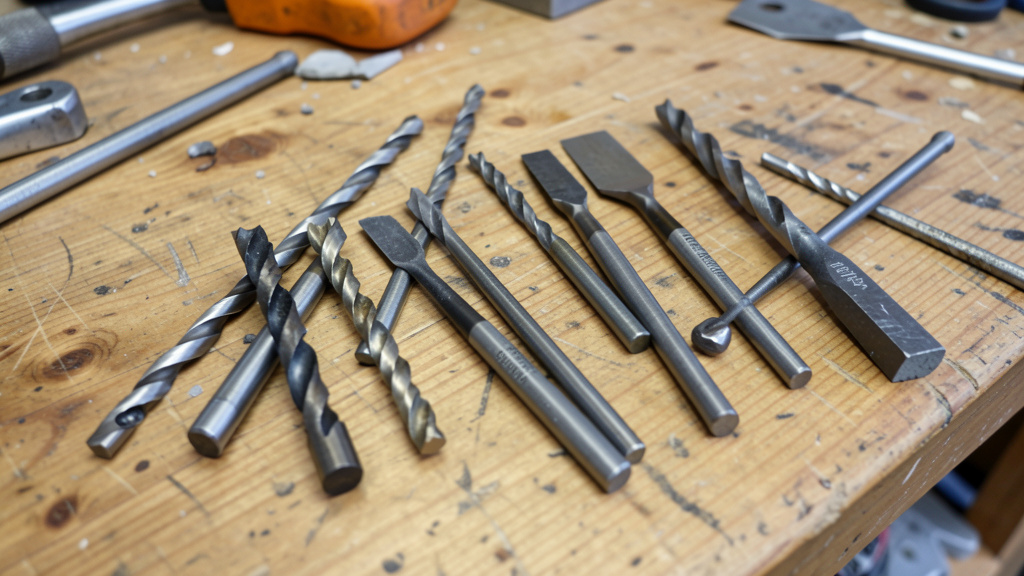
Navigate Any Drilling Task with Clarity—Understand Material Responses, Bit Functions, and Adaptable Techniques for Reliable, Safe Results
Drill bits serve as the critical interface between tool and material. Selecting an inappropriate bit can lead to surface damage, inefficient work, or compromised safety. This guide provides a structured approach to bit selection grounded in material behavior, project requirements, and practical constraints. You’ll gain clear decision pathways, adaptable techniques for common scenarios, and awareness of subtle factors that influence drilling success across wood, metal, masonry, composites, and specialty applications.
Introduction
Hardware store aisles display dozens of drill bit varieties—visually similar yet functionally distinct. A standard twist bit may skate across ceramic tile; a spade bit can splinter the exit side of fine plywood; a masonry bit used without hammer action risks overheating. These outcomes stem not from user error alone, but from mismatched tool-material dynamics. Understanding drill bits involves recognizing how geometry, material science, and drilling physics interact. References such as ANSI B212.15 (twist bit dimensions) and ISO 235 (classification standards) exist to promote consistency and safety. When bit selection aligns with material properties and project goals, results improve predictably. This guide offers a repeatable framework for confident decisions—whether installing shelving, modifying cabinetry, or preparing surfaces for anchors—while emphasizing safety, adaptability, and contextual awareness.
The Bit Selection Matrix: A Four-Step Decision Framework
Successful drilling follows a consistent pattern observed across workshops and trade practices. The Bit Selection Matrix guides you through four sequential considerations. Applying this sequence before each task reduces uncertainty and supports intentional tool selection. This framework adapts to project scale, material variability, and available equipment.
Step 1: Assess Material Composition and Behavior
Materials respond uniquely to rotational force and cutting pressure. Begin by identifying the primary material and its condition.
Wood Considerations
Softwoods (pine, cedar) feature flexible fibers; standard high-speed steel (HSS) twist bits generally suffice, though exit tear-out may occur without controlled feed. Hardwoods (oak, maple) have dense, interlocking grains where brad-point bits excel—their central spur scores the perimeter before cutting lips engage, minimizing tear-out on entry and exit. Plywood, veneers, or laminated surfaces benefit from Forstner bits, whose rim-guided action shears cleanly through layers. Note moisture content: green wood (higher moisture) may clog flutes more readily; kiln-dried wood is more abrasive. Adjust speed moderately—slightly slower for green wood to manage heat, standard speeds for dry stock. When drilling near edges or knots, reduce feed pressure to avoid deflection.
Metal Considerations
Aluminum’s softness can cause standard bits to “grab.” Cobalt-alloy bits (M35/M42) with polished flutes reduce friction and material adhesion. Mild steel (e.g., 1018) accepts HSS bits with cutting fluid and moderate speed. Stainless steel (304/316 grades) work-hardens under heat; use slower speeds (typically under 300 RPM for ¼-inch bits), consistent light pressure, and appropriate coolant. Avoid pausing mid-hole, as heat concentration accelerates hardening. Brass and copper require reduced rake-angle bits and frequent pressure release to prevent self-feeding. Always verify material thickness—thin sheet metal demands specialized approaches to avoid deformation.
Masonry and Brittle Materials
Concrete composition varies: newer pours are less dense but abrasive; older concrete contains harder aggregates. Brick requires drilling into the clay body, not mortar joints, for anchor integrity. Tile, glass, and porcelain are brittle ceramics—standard bits cause cracking. Spear-point carbide or diamond-grit bits concentrate force at a single point. Begin at low speed (200–400 RPM) with light pressure until the bit bites, then gradually increase speed. Crucially, masonry bits require hammer action. Using them in a standard drill (without percussion) risks overheating the bit, damaging the motor, and producing poor holes. Carbide tips are brazed to withstand impact; without hammer function, stress concentrates at the tip.
Composites and Layered Materials
Fiberglass, carbon fiber, melamine, and particleboard require clean-cutting geometries. Standard bits may fray edges. Diamond-coated or specialized composite bits reduce fraying. When drilling through multiple layers (e.g., drywall over wood), anticipate resistance changes. Reduce speed when transitioning between materials. For visible surfaces, consider backing boards or two-sided drilling techniques (detailed later).
Core Insight: Material behavior informs bit geometry—not the reverse. Align the bit’s cutting action with the material’s physical response for controlled, predictable results.
Step 2: Clarify Hole Purpose and Precision Needs
Hole requirements vary significantly. Ask:
– What is the functional role? (Pilot, clearance, countersink, large opening)
– What tolerance is acceptable? (Rough framing vs. visible joinery)
– Is surface finish critical? (Hidden inside a cabinet vs. tabletop edge)
Pilot Holes
Prevent splitting in wood by creating a guided path for screws. Diameter should approximate the screw’s root diameter (core beneath threads). In hardwoods or near edges, a slightly larger pilot hole (e.g., root diameter + 1/64 inch) reduces driving torque. Brad-point bits improve accuracy over twist bits. Depth should match screw length minus a small margin for tip engagement. In metal, pilot holes guide larger bits and reduce motor strain—step up incrementally rather than jumping sizes.
Clearance Holes
Allow screws to pass through the top material without gripping, enabling tight clamping of two pieces. Diameter must exceed the screw’s thread diameter. Use a drill gauge for accuracy; visual estimation often leads to binding or looseness. For applications requiring thermal expansion (e.g., metal brackets outdoors), slightly oversized holes may be intentional—step bits or hole saws offer clean edges.
Countersinks and Counterbores
Countersinks create conical recesses for flat-head screws. Angle must match the screw (typically 82° for wood screws, 90° for machine screws). Apply light pressure to avoid tear-out. Counterbores form cylindrical recesses for screw heads below the surface, often filled with plugs. Forstner bits produce flat-bottomed holes ideal for this. Use depth stops or collars for consistency. Inconsistent depth affects plug seating and visual finish.
Large-Diameter Openings
Holes over ½ inch require strategy. Spade bits work for hidden framing in softwood but cause exit tear-out. Forstner bits deliver cleaner edges in wood for hinges or hardware. Hole saws efficiently remove cores for pipes or cables but leave a center pilot hole and may struggle with layered materials. For visible surfaces: drill partway from the front, flip the workpiece, and complete from the back using the pilot hole as a guide. In sheet metal, step bits (unibits) create clean, graduated holes without changing tools—but respect thickness limits (typically under ⅛ inch for steel).
Step 3: Match Bit to Tool Capability and Technique
Bit performance depends on the driving tool, speed, feed pressure, and chuck security.
Drill Type Compatibility
– Cordless Drills: Suitable for twist, brad-point, spade, and smaller Forstner bits in wood/metal. Avoid large hole saws (>1½ inches) due to torque reaction and battery strain.
– Hammer Drills: Required for masonry bits. Percussive action (BPM) fractures material while rotation clears debris. Never engage hammer mode on wood or metal—it damages bits and surfaces.
– Rotary Hammers: For heavy concrete or stone. Use SDS-plus/max bits designed for mechanical locking. Do not force standard bits into SDS adapters.
– Drill Presses: Ideal for precision tasks (countersinks, Forstner holes). Enable depth control and perpendicular alignment. Always secure workpieces with clamps.
Speed and Feed Guidance
General principle: smaller bits tolerate higher RPM; larger bits require slower speeds. Material overrides size:
– Wood: 1,500–3,000 RPM for bits under ½ inch; reduce to 500–1,000 RPM for larger bits. Feed pressure should be firm but not forced—let the bit cut.
– Metal: 300–1,000 RPM depending on hardness. Aluminum tolerates higher speeds (800–1,200 RPM); steel requires slower speeds (300–600 RPM). Cutting fluid is essential for heat management and chip evacuation.
– Masonry: 400–800 RPM with hammer action. Maintain steady pressure; let percussion do the work. Withdraw periodically to clear dust.
– Tile/Glass: Start at 200–400 RPM with light pressure. Use water as coolant/lubricant (spray bottle or drip). Increase speed gradually after the bit bites.
Note: Speeds are approximate. Always consult your drill and bit manufacturer guidelines. Material condition, bit sharpness, and drill model affect optimal settings.
Chuck Security and Shank Types
– Straight Shank: Standard for most bits. Ensure chuck is tightened securely.
– Hex Shank: Resists slippage under high torque; common for impact-rated bits.
– SDS Shank: Exclusive to rotary hammers. Locks mechanically—no chuck tightening needed.
– Tri-Flats Shank: Features flattened sections to prevent slippage in keyless chucks (common on spade bits and hole saw arbors).
Verify shank compatibility before use. A slipping bit compromises accuracy and safety.
Step 4: Final Safety and Context Check
Complete this brief verification before drilling:
– Eye Protection: Safety glasses with side shields are essential. Flying debris poses permanent eye injury risks.
– Workpiece Security: Clamp materials firmly. Never hold small items by hand.
– Bit Inspection: Check for cracks, chips, discoloration (blue tint indicates overheating), or excessive wear. Discard compromised bits.
– Environment: Ensure adequate lighting. Clear the drilling path of obstructions. For wall drilling, use a stud finder with AC wire detection. Start with a small pilot bit to probe for hidden obstacles.
– Dust Management: Drilling concrete generates silica dust (a respiratory hazard). Use a HEPA vacuum attachment, wet methods where feasible, or wear an N95 respirator. For composites or treated wood, follow local safety guidelines.
– Seasonal/Context Note: In humid conditions, wood may swell slightly—account for this in tight-tolerance joinery. For outdoor projects exposed to temperature swings, consider material expansion in hole sizing.
This framework transforms drilling from guesswork into a deliberate process. By addressing material, purpose, tooling, and safety systematically, you build adaptable confidence across diverse projects.
Drill Bit Types: Functions and Contextual Applications
Twist Bits: Versatile Generalists
Twist bits feature helical flutes that cut material and evacuate chips. Commonly made from HSS, black oxide-coated steel, or cobalt alloys, they handle wood, plastic, and soft metals effectively.
Material Guidance
In softwoods, standard HSS bits perform well at moderate speeds. In hardwoods, reduce speed slightly to minimize tear-out. For metals, black oxide bits offer better heat and corrosion resistance than plain HSS; cobalt bits suit stainless steel or hardened alloys but are unnecessary for softwood tasks. Reserve premium bits for demanding applications to optimize value.
Technique Notes
– Prevent Walking: Create a small dimple with a center punch or awl. Start drilling at very low speed until the bit engages. Masking tape in an “X” over the mark can provide initial grip on smooth surfaces.
– Chip Clearance: Withdraw the bit periodically in deep holes (>2× bit diameter) to clear chips, especially in metal where clogging causes overheating.
– Sharpening: Twist bits can be sharpened with a jig to maintain point angle (typically 118°). For occasional users, replacement may be more practical.
Scenario: Installing curtain rod brackets into drywall over studs.
– Challenge: Drilling directly with a large bit tears drywall paper.
– Adaptive Approach: Start with a small pilot hole (⅛ inch) through drywall into the stud. Switch to the required bit size for the stud portion. The pilot hole stabilizes the larger bit, preserving the drywall surface.
Adaptive Options:
– Budget: Fractional/metric HSS multi-packs suffice for light DIY. Replace when cutting slows noticeably.
– Frequent Use: Cobalt bits with split-point geometry reduce walking and extend life in mixed materials.
– Constraint: No center punch? Use masking tape or a nail set to create a starting dimple.
Brad-Point Bits: Precision for Woodworking
Brad-point bits feature a sharp central spur surrounded by cutting lips. The spur scores the wood perimeter before the lips cut inward, yielding clean entry and exit holes.
Best Applications
– Dowel joints in furniture
– Pilot holes for visible screws in cabinetry
– Drilling veneered plywood or thin stock
– Any task where hole accuracy and surface finish matter
Technique Tips
– Use a backing board when drilling through thin materials to prevent minor exit splintering.
– Withdraw periodically in deep holes to clear chips.
– Avoid use in metal, masonry, or materials with hidden obstructions (nails, knots), where the delicate spur may bend.
Scenario: Assembling a bookshelf with visible dowel joints.
– Challenge: Twist bits create slightly oval holes, causing loose joints and visible tear-out.
– Solution: Brad-point bits matched precisely to dowel diameter (e.g., ⅜-inch bit for ⅜-inch dowels). Use a depth stop for consistency. Joints assemble snugly with minimal sanding.
Constraint Note: In knotty or reclaimed wood, switch to a Forstner bit for better resistance to deflection.
Spade Bits: Efficient for Hidden Work
Spade bits (paddle bits) remove material quickly with a flat blade design. Ideal for rough openings where appearance is unimportant.
Strategic Use Cases
– Running electrical cable through wall studs
– Creating clearance holes for plumbing in framing
– Workshop jigs or temporary fixtures
Limitations and Mitigation
Aggressive cutting causes tear-out on entry/exit and may wander in hardwoods or deep holes. To reduce damage:
1. Drill halfway from the front.
2. Flip the workpiece.
3. Complete the hole from the back using the pilot hole as a guide.
This two-sided approach significantly improves exit quality.
Safety Note: Secure workpieces firmly. Spade bits generate torque reaction; keep hands clear of the bit path and ejection zone. Avoid drill press use without depth stops and secure clamping.
Value Insight: Inexpensive and replaceable. Maintain a dedicated set for rough work to preserve precision bits.
Forstner Bits: Clean, Flat-Bottomed Holes
Forstner bits cut precise, flat-bottomed holes with smooth sides using a cylindrical rim to score the perimeter and radial cutters to remove the interior.
Key Strengths
– Cut overlapping holes (rim-guided design doesn’t require a center point)
– Drill at slight angles (up to ~15°) for specialty joinery
– Excel on veneered surfaces without tear-out
– Essential for hinge cups, hardware recesses, or decorative inlays
Technique Essentials
– Use slow to moderate speeds (500–1,000 RPM). High speed causes burning in hardwoods.
– Apply steady, moderate feed pressure. Forcing causes chatter.
– Clear chips frequently—flutes are shallow. In drill presses, use peck drilling.
– Always use a backing board for through-holes in thin stock.
Scenario: Installing concealed hinges on a cabinet door.
– Challenge: Spade bits create ragged holes, preventing hinge plates from seating flush.
– Solution: 35mm Forstner bit with depth stop set to hinge cup depth. Hole is round, flat-bottomed, and precise. Hinges mount securely; doors align consistently.
Constraints: Require significant torque—use a drill press or high-torque corded drill for bits over 1 inch. Not suitable for metal (except soft aluminum with specialized bits) or masonry. For overlapping holes, start with the outermost hole first to maintain rim guidance.
Hole Saws: Core Removal for Large Openings
Hole saws cut by removing a solid core (“slug”) using a toothed cylindrical rim mounted on an arbor with a pilot bit. Efficient for holes from ¾ inch to 6 inches.
Material-Specific Selection
– Bi-Metal: HSS teeth welded to spring steel body. Suitable for wood, drywall, plastic, and thin metal (up to ⅛ inch steel).
– Carbide-Grit: Embedded particles grind through tile, fiberglass, cement board, or laminates.
– Diamond: For glass, porcelain, or stone. Require water cooling and slow speeds.
Technique for Clean Results
1. Ensure the pilot bit is sharp and centered.
2. Drill at slow speeds (300–500 RPM max). High speed overheats teeth.
3. For thick materials, stop when the pilot bit emerges on the backside. Flip and complete the hole to prevent tear-out.
4. Remove trapped slugs carefully using the saw’s ejection slots and a flat screwdriver. Wear cut-resistant gloves—edges are sharp.
Scenario: Installing a bathroom exhaust fan through drywall and a ceiling joist.
– Challenge: Large spade bits tear drywall and bind in the joist.
– Solution: 4-inch bi-metal hole saw. Drill through drywall first, then maintain steady pressure through the joist. Pilot bit ensures alignment. Hole is clean; fan housing fits securely.
Prevention Tip: Withdraw periodically to clear chips. Overheating discolors teeth (turns blue), reducing effectiveness. Secure workpieces firmly to manage torque.
Masonry Bits: Engineered for Percussive Action
Masonry bits feature a carbide tip brazed to a steel shaft, designed to withstand hammering forces that fracture concrete, brick, or stone.
Why Hammer Action Matters
Concrete is fractured by impact, not cut. Hammer drills deliver rapid blows (BPM) that micro-fracture material ahead of the rotating tip. Using a masonry bit without hammer action causes overheating, poor hole quality, and potential motor damage. Rotary hammers (SDS systems) deliver higher impact energy for demanding tasks.
Reliable Technique
1. Mark the spot and create a starter dimple with a nail set to prevent skating.
2. Begin at low speed (300–400 RPM) with light pressure until the bit bites (5–10 seconds).
3. Gradually increase pressure. Let the hammer action do the work—avoid forcing.
4. Withdraw every ½ inch to clear dust. Use a bulb syringe or vacuum attachment for deep holes.
5. Pause briefly during deep drilling to allow the bit to cool.
Material Adjustments
– Brick: Drill into the brick body, not mortar joints, for anchor strength.
– Reinforced Concrete: If resistance spikes suddenly, stop. You may have hit rebar. Relocate the hole or use a rebar-cutting attachment if available.
– Tile Over Concrete: Use a carbide-grit hole saw or spear-point bit. Drill through the tile first at low speed with water lubrication, then switch to hammer function for the concrete substrate.
Safety Emphasis: Wear a respirator rated for silica dust. Where local regulations require (e.g., OSHA guidelines), use vacuum attachments or wet methods to suppress dust. Concrete dust poses long-term health risks.
Step Bits (Unibits): Graduated Holes in Thin Materials
Step bits feature a conical shape with multiple cutting diameters along the taper. One bit creates holes from ⅛ inch to 1¼ inches (common sizes), ideal for sheet metal, plastic, or drywall.
How They Work
Each step has a cutting edge. As the bit penetrates, the current step cuts until the next wider step engages. The tapered shape provides self-centering guidance. Polished flutes minimize material adhesion—critical for aluminum.
Ideal Applications
– Enlarging knockout holes in electrical boxes
– HVAC duct modifications
– Automotive trim or bracket work
– Creating multiple hole sizes in a single workpiece
Technique for Clean Edges
– Speed: 500–1,500 RPM depending on material thickness. Slower for thicker metal.
– Feed Pressure: Light to moderate. Let the bit self-feed; excessive pressure causes chatter.
– Deburring: Always deburr holes with a countersink bit or deburring tool, especially where wires pass through.
– Coolant: Use cutting oil for steel; light oil or wax for aluminum to prevent buildup.
Scenario: Modifying a metal electrical panel for a new circuit.
– Challenge: Switching between multiple twist bits causes misaligned holes and torn edges.
– Solution: A single step bit progresses smoothly to the required diameter. Hole is concentric with clean edges; no bit changes needed.
Constraints to Respect
– Material Thickness: Max ~⅛ inch for steel, ~¼ inch for aluminum. Thicker materials cause binding.
– Not for Wood: Steps catch on fibers, causing tear-out.
– Depth Limitation: Steps restrict maximum hole depth.
Pro Tip: Mark the target step with tape for quick depth reference. When the tape contacts the surface, stop drilling.
Countersink Bits: Recesses for Flush Fasteners
Countersink bits create conical recesses matching screw head angles (typically 82° for wood screws, 90° for machine screws).
Design Variations
– Single-Flute: Simple and affordable; may chatter if misaligned.
– Multi-Flute (3–6 flutes): Smoother cut, less chatter—preferred for hardwoods and visible work.
– Adjustable: Collar-controlled depth ensures consistency across multiple holes.
Reliable Technique
1. Drill the pilot hole first.
2. Set depth so the screw head sits just below the surface (allows for wood movement or plug coverage).
3. Use slow speed (500–800 RPM) with light pressure. High speed burns wood.
4. Stop immediately when full depth is reached—over-rotation enlarges the hole.
Scenario: Assembling a hardwood tabletop with pocket-hole joinery.
– Challenge: Protruding screw heads create an uneven surface and snag hazards.
– Solution: 82° multi-flute countersink after pilot holes. Screws sit flush. Final sanding yields a seamless surface.
Material Adaptation
– Softwoods: Very light pressure prevents fiber “mushrooming.”
– Hardwoods: Use sharp bits; dull bits burn rather than cut.
– Metal: Dedicated metal countersinks with cutting fluid prevent burrs.
Constraint Option: No countersink bit? For hidden areas, carefully use a larger drill bit at a shallow angle to create a crude recess. Not ideal for visible work.
Specialty Bits: Targeted Solutions
Auger Bits
Long bits with a screw-tip for deep, clean holes in thick timber (e.g., fence posts, timber framing). The screw pulls the bit forward with minimal effort. Deep flutes evacuate chips efficiently. Use with powerful drills or brace handles. Avoid in knotty hardwoods where the screw tip may grab violently.
Glass and Tile Bits
– Spear-Point Carbide: For ceramic tile, porcelain, or glass. Requires low speed, light pressure, and water cooling. Start at 200 RPM, increase slowly after biting.
– Diamond Core Bits: For thick glass, stone, or large tile holes. Require continuous water feed and a drill press for stability.
Installer Bits
Long (12–18 inch), flexible bits with a wire-pulling hole in the tip. Essential for fishing wires through walls. Use with flexible drill extensions. Mark depth with tape to avoid hidden obstacles.
Right-Angle Drill Bits
Short, stubby bits for tight spaces (inside cabinets, behind appliances). Used with right-angle attachments. Sacrifice depth capacity for access.
Self-Centering Hinge Bits
Spring-loaded bits that automatically center over hinge screw holes. Drill pilot and countersink in one motion. Streamlines cabinet installation.
Navigating Common Challenges: Practical Prevention
Challenge 1: Bit Selection Mismatch
Scenario: Using a standard twist bit on ceramic tile causes skating, surface scratches, or shattering.
Why It Happens: Twist bits rely on cutting edges suited for fibrous/ductile materials. Brittle ceramics require concentrated impact initiation.
Prevention Pathway:
– Identify material type first: fibrous (wood), ductile (metal), brittle (tile/glass), composite (concrete).
– Test technique on scrap or inconspicuous area when possible.
– If the correct bit isn’t available, pause. Borrow, rent, or purchase the appropriate tool. Forcing a mismatch risks project damage and injury.
Repair Note: Minor tile cracks may be filled with epoxy grout and relocated. Significant damage often requires tile replacement—far costlier than preventive tool selection.
Challenge 2: Speed and Feed Imbalance
Scenario: Drilling aluminum with a standard bit at high speed causes grabbing, tearing, and aluminum buildup on the bit.
Why It Happens: High RPM generates heat faster than aluminum dissipates it. Soft metal adheres to flutes (“built-up edge”), and sharp edges dig aggressively.
Prevention Pathway:
– Consult general speed guidelines but adjust based on real-time feedback:
| Material | Bit Size | Typical RPM Range | Key Notes |
|—————-|———-|——————-|——————————-|
| Aluminum | <¼” | 800–1,200 | Light pressure; cutting wax |
| Mild Steel | ¼” | 300–600 | Cutting oil essential |
| Hardwood | ½” | 500–1,000 | Reduce for dense species |
| Concrete | ⅜” | 400–800 | Hammer action required |
– Listen to the cut: consistent “hissing” = good; chatter = too light; screeching = too heavy.
– Use coolant/lubricant where appropriate. For deep wood holes, withdraw to clear chips (natural cooling).
Tool Tip: Practice trigger control on cordless drills. Feather the trigger to maintain target speed. Clutch settings help prevent over-penetration in delicate materials.
Challenge 3: Skipping Pilot Holes in Critical Wood Applications
Scenario: Driving a screw into oak shelving near the edge without a pilot hole causes splitting.
Why It Happens: Wood fibers resist radial separation. Without a pilot hole, driving force exceeds the material’s tensile strength, especially in hardwoods or near edges.
Prevention Pathway:
– Pilot hole sizing guidance:
| Screw Type | Material | Pilot Hole Guidance |
|—————-|————|——————————|
| Wood Screw | Softwood | Approx. screw root diameter |
| Wood Screw | Hardwood | Root diameter + slight margin|
| Sheet Metal | Any | ~15% smaller than thread |
– Maintain minimum edge distance: at least 1.5× screw diameter from edge.
– Use a depth flag (tape on bit) set to screw length minus a small margin.
Enhancement: For dense hardwoods prone to splitting, apply beeswax or paraffin to screw threads to reduce friction.
Challenge 4: Forcing Through Unexpected Resistance
Scenario: Drilling into a wall stud, the bit meets sudden resistance. Pushing harder causes the bit to snap.
Why It Happens: Hidden obstacles (nails, knots, conduit, rebar) create abrupt resistance. Forcing concentrates stress at the bit’s weakest point.
Prevention Pathway:
– Scan thoroughly with a quality stud finder featuring AC wire and metal detection.
– If resistance spikes:
1. Stop immediately.
2. Withdraw the bit slowly.
3. Inspect the bit for damage.
4. Probe the hole gently with an awl.
5. Relocate the hole if an obstacle is confirmed.
– Inspect bits before use for micro-cracks, chips, or discoloration.
If a Bit Breaks Off:
– In wood: Attempt removal with needle-nose pliers or a screw extractor.
– In metal/concrete: May require specialized tools or professional assistance. Prevention is significantly safer and more economical.
Challenge 5: Bit Maintenance and Storage Oversight
Scenario: A corroded, nicked spade bit tears through plywood, requiring extensive sanding and filler.
Why It Happens: Bits degrade through use, moisture exposure, and poor storage. Dull bits require excessive force, generate heat, and produce poor results.
Prevention Pathway:
– Cleaning: Wipe bits with a light oil rag after use. For resin buildup (wood bits), brief acetone soak may help.
– Sharpening:
– Twist bits: Bench grinder with a drill bit jig maintains angle.
– Forstner/hole saws: Professional sharpening recommended due to complex geometry.
– Carbide tips: Do not attempt DIY sharpening; replace or use specialist services.
– Storage: Foam-lined toolbox inserts, magnetic strips, or original cases keep bits organized, visible, and protected.
– Replacement Cues: Noticeably increased pressure needed, powdery chips (vs. curled shavings), visible edge damage, or excessive heat during use.
Value Perspective: Sharpening quality bits extends life cost-effectively. For inexpensive bits (e.g., spade bits), replacement is often practical. Prioritize condition for bits used in visible or precision work.
Advanced Techniques for Enhanced Results
Two-Sided Drilling for Clean Through-Holes
When exit-side tear-out is unacceptable (e.g., tabletops, cabinet doors):
1. Mark the hole location on both sides.
2. Set a depth stop to half the material thickness.
3. Drill from the front to the stop.
4. Flip and secure the workpiece.
5. Align the bit with the emerging pilot hole and complete the hole from the back.
Why It Works: The bit exits into a pre-formed cavity, eliminating splintering forces. For added insurance, clamp a sacrificial backing board to the exit side. If flipping isn’t possible (e.g., installed cabinet), a backing board alone significantly reduces tear-out.
Depth Control Beyond Tape Flags
- Drill Press Depth Stop: Essential for repetitive precision (e.g., shelf pin holes). Set once for consistent results.
- Collar Stops: Spring-loaded collars clamp onto the bit shank. Reusable and adjustable for handheld tasks like counterbores.
- Jig Systems: Custom plywood jigs with depth-limiting shoulders ensure uniformity across multiple pieces.
Application Example: Installing shelf pins. - Without control: Inconsistent depths cause wobbling shelves.
- With control: Drill press depth stop set to ¼ inch. All holes identical; shelves sit level and secure.
Angled Hole Drilling
Standard drills favor 90° holes, but joinery sometimes requires angles (e.g., pocket holes, angled supports).
– Angle Guide Jig: Clamp a scrap block cut to the target angle against the workpiece. Drill along the block’s edge.
– Drill Press with Tilting Table: For repeatable angled holes (e.g., chair leg joints).
– Forstner Bit Advantage: Can cut clean holes at slight angles (up to ~15°) due to rim guidance—twist bits tend to wander.
Critical Step: Always create a center punch dimple before starting angled holes. Begin at very low speed until the bit bites securely.
Heat Management Strategies
Heat accelerates wear and compromises results. Material-specific approaches:
– Wood: Withdraw frequently in deep holes. Sharp bits generate less friction heat.
– Metal: Cutting fluid is essential for steel. For aluminum, use kerosene or aluminum-specific oil. Avoid water-based coolants on aluminum (risk of oxidation).
– Plastics: Drill slowly (300–500 RPM). High speed melts material, gumming flutes. Use bits with polished flutes.
– General Rule: If the bit is uncomfortably hot to touch after use, reduce speed, increase chip clearance, or allow cooling pauses.
Constraint-Driven Adaptations (Use Judiciously)
Note: These address unavoidable constraints. Proper bit selection remains the preferred path.
– Reducing Walking: Lightly file a tiny flat spot on a twist bit tip for initial bite on smooth metal/plastic.
– Visual Depth Stop: Wrap thin wire around the shank at the target depth.
– Chip Clearance Aid: Wrap masking tape at intervals along the shank to act as chip breakers in deep holes.
Your Questions, Answered
Q: Can I use a masonry bit in a regular drill (without hammer function) for light concrete?
A: This is not recommended. Without percussive action, the carbide tip overheats rapidly, risking tip failure or shank breakage. The drill motor also strains excessively. For occasional masonry tasks, using a hammer drill (rented or borrowed) is safer and more effective. If absolutely unavoidable, use very slow speed (<200 RPM), minimal pressure, and withdraw every ¼ inch to cool the bit—but success is unlikely and carries safety risks.
Q: Why do drill bits walk or skate off the mark, especially on metal or tile?
A: Walking occurs when the bit tip lacks initial purchase. Effective solutions: 1) Create a center punch dimple with a nail set or awl—this is highly reliable. 2) Apply masking tape in an “X” over the mark to provide micro-grip. 3) Start drilling at the lowest speed until the bit bites (5–10 seconds), then gradually increase speed. 4) Use bits with split-point geometry (common in quality metal bits), which self-center on contact.
Q: How do I know when a drill bit is too dull to use safely?
A: Key indicators include: requiring noticeably more pressure to cut, producing powdery chips instead of curled shavings (in wood/metal), visible nicks or discoloration (blue tint indicates overheating) on cutting edges, or excessive heat generation. Dull bits increase kickback risk and yield poor results. For HSS twist bits, sharpening is often economical. For carbide-tipped, Forstner, or hole saw bits, replacement or professional sharpening is typically safer.
Q: What’s the practical difference between black oxide, titanium-coated, and cobalt drill bits?
A: These address heat, friction, and material hardness:
– Black Oxide: Heat-treated finish that resists corrosion and retains lubricant. Suitable for general-purpose wood and mild steel. Offers moderate lifespan improvement.
– Titanium Nitride (TiN) Coating: Gold-colored ceramic coating reduces friction, enabling slightly higher speeds and longer life in wood, plastic, and soft metals. Not for masonry.
– Cobalt Alloy (M35/M42): Steel alloyed with cobalt (5–8%). Withstands higher temperatures than standard HSS. Recommended for stainless steel, hardened alloys, or high-volume metal tasks. More brittle than HSS—avoid lateral stress.
Choose based on primary use: titanium-coated for mixed DIY projects, cobalt for frequent metalwork, black oxide for budget-conscious general tasks.
Q: Can I drill through tile without cracking it? What’s the reliable technique?
A: Yes, with the correct bit and method:
1. Use a carbide-tipped spear-point bit or diamond-grit hole saw—never a standard twist bit.
2. Apply masking tape over the drill point to reduce initial skating.
3. Set drill to lowest speed (200–300 RPM).
4. Use light, steady pressure. Do not force.
5. Apply water continuously as coolant/lubricant (spray bottle works).
6. Once the bit bites (after 10–15 seconds), gradually increase speed to 500–600 RPM.
7. Complete the hole patiently. Rushing is the most common cause of cracks. Practice on a scrap tile first if possible.
Q: Why do hole saws get stuck, and how do I free them safely?
A: Binding occurs due to trapped cores (“slugs”), overheating (causing metal expansion), or insufficient chip clearance. To free safely:
1. Stop drilling immediately.
2. Reverse the drill slowly while applying gentle outward pressure.
3. If stuck, insert a flat screwdriver through the saw’s slots to lever the slug out.
4. For severe binding, carefully cut the slug with a hacksaw blade through the slots.
Prevention: Drill at slow speeds (300–500 RPM), withdraw frequently to clear chips, use cutting oil for metal, and secure the workpiece firmly.
Q: Are expensive drill bits worth the investment for occasional DIY projects?
A: It depends on the task. For hanging shelves or assembling furniture, mid-tier bit sets (e.g., cobalt-coated twist bits, basic brad-point/Forstner sets) offer strong value. Reserve premium bits (solid carbide, diamond-core) for specific recurring needs. However, invest in quality for bits used in visible or critical work: a reliable brad-point set for cabinetry or a durable masonry bit for home repairs prevents material damage and frustration. Very low-cost bits may wear quickly or produce inconsistent results, potentially costing more in time and ruined materials long-term.
Q: How do I drill a hole in glass without shattering it?
A: This requires specialized tools and patience:
1. Use a diamond-core hole saw designed for glass.
2. Secure the glass on a soft, stable surface (foam pad) to minimize vibration.
3. Create a dam around the area with plumber’s putty; fill with water for continuous cooling.
4. Drill at very slow speed (<400 RPM) with minimal pressure.
5. Let the diamond grit do the work—do not force.
6. Pause frequently to check progress and maintain water level.
For non-critical holes, professional drilling services are a prudent option. Always practice on scrap glass first.
Q: What are the main causes of drill bit breakage, and how can I prevent it?
A: Common causes include:
– Excessive lateral pressure: Causes bending stress. Keep the drill perpendicular; use guides for accuracy.
– Overheating: Dulls bits and weakens metal. Manage speed, use coolant where appropriate, and clear chips.
– Hidden obstacles: Nails in wood, rebar in concrete. Scan thoroughly before drilling.
– Pre-existing damage: Micro-cracks from prior use. Inspect bits before each task.
– Chuck slippage: Bit spins unevenly. Tighten the chuck securely.
Prevention combines proper technique, tool inspection, and respecting material limits.
Q: Can I sharpen drill bits at home, and is it worthwhile?
A: Twist bits can be sharpened with a bench grinder and a drill bit sharpening jig (to maintain the correct angle). Forstner bits, hole saws, and carbide-tipped bits require specialized equipment—professional sharpening is recommended. Sharpening is worthwhile if you drill frequently, own quality bits, and invest in a jig ($20–$50). For inexpensive bits or infrequent use, replacement is often more practical. Proper sharpening can extend bit life significantly but requires care to preserve geometry.
Q: What is the purpose of three flats on some drill bit shanks?
A: This “tri-flats” or “reduced shank” design provides positive grip surfaces to prevent slippage in keyless chucks. Common on spade bits and hole saw arbors where high torque is generated. Even with this design, always tighten the chuck firmly before use.
Q: How do I choose between a step bit and a hole saw for metal work?
A: Consider these factors:
– Material Thickness: Step bits suit thin metal (up to ~⅛ inch steel); hole saws handle thicker stock.
– Hole Size Range: Step bits cover multiple sizes in one tool (efficient for varied holes); hole saws are single-size.
– Edge Quality: Step bits typically leave smoother edges with less burr; hole saws often require deburring.
– Task Context: For electrical boxes or HVAC work with multiple hole sizes in thin metal, step bits are efficient. For large openings (conduit passes) in thicker metal, hole saws are more suitable.
Conclusion and Next Step
Understanding drill bits shifts drilling from uncertainty to informed action. The core principles remain consistent: assess the material’s behavior, define the hole’s functional needs, match the bit to your tool’s capabilities, and complete a safety check. This structured approach—embodied in the Bit Selection Matrix—builds adaptable confidence across diverse projects. Remember three foundational ideas: material properties guide bit selection, speed and feed must align with material physics, and safety protocols protect both project integrity and personal well-being.
The 24-Hour Action: Within the next day, select one drill bit in your toolkit—perhaps a twist bit used for multiple tasks—and review its ideal applications using the framework above. Then, recall one past project where hole quality was less than ideal. Briefly note how applying this framework might have changed your approach. This small reflection bridges knowledge and practice more effectively than passive reading.
Broader Perspective: Drill bit selection reflects a larger principle in skilled creation: the right tool, applied with contextual understanding, prevents damage and unlocks potential. This mindset extends to saw blades, sanding methods, fastener choices, and every interaction where tool meets material. As this discernment deepens, projects proceed with greater efficiency, materials are treated respectfully, and the satisfaction of precise, reliable results becomes increasingly accessible. Each hole drilled is an opportunity to refine this awareness. Carry this intention forward, and observe how thoughtful tool selection compounds into lasting workshop competence.
Explore Our Complete System:
Drill Press Fundamentals: Setup, Safety, and Precision Techniques | Woodworking Clamps Guide: Types, Placement, and Pressure Control | Fastener Selection Handbook: Screws, Nails, and Anchors by Material | Workshop Safety Beyond Basics: Dust, Electricity, and Ergonomics | Wood Species Identification: Characteristics and Working Properties | Metalworking Essentials for Woodworkers: Tools, Techniques, and Adaptations | Jig Building for Repeatable Results: Design Principles and Practical Examples