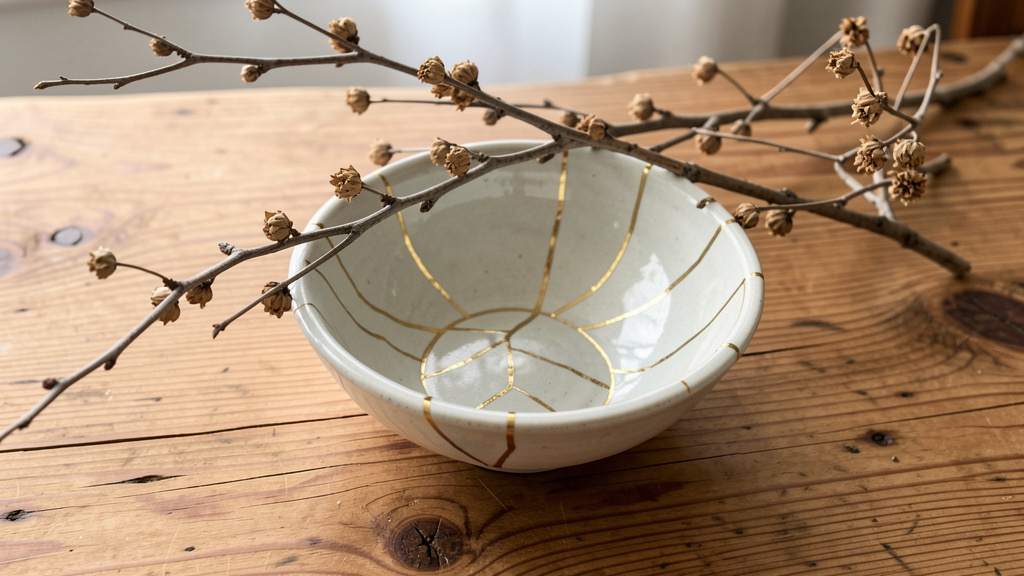
Discover how to cultivate beauty in asymmetry, weathered textures, and mindful simplicity—transforming your home into a sanctuary of quiet joy and profound meaning.
Wabi-sabi interior design is more than an aesthetic trend; it is a centuries-old Japanese philosophy made tangible within your living space—a mindful approach that finds profound beauty in imperfection, impermanence, and incompleteness. This guide explores Zen Buddhist roots and tea ceremony traditions to offer adaptable, room-by-room pathways for weaving authenticity, texture, and soulful presence into every corner of your home. Whether drawn to the gentle crackle of handmade pottery, the silvered grain of reclaimed wood, or the quiet dignity of a visibly mended textile, you may discover ways to cultivate a space that feels deeply yours: calming, storied, and resiliently human. Research in environmental psychology suggests that spaces incorporating natural elements, organic forms, and gentle asymmetry may support reduced stress and enhanced emotional well-being—though individual experiences will vary.
Introduction: The Quiet Rebellion in Plain Sight
Step into a room where sunlight filters through linen curtains onto a wooden table bearing the faint watermark of a shared meal. A hand-thrown mug rests beside an open book; its handle bears the subtle impression of its maker’s thumb. In the corner, a vintage armchair wears its frayed seam not as damage, but as testament to comfort offered over years. This is wabi-sabi—not a style to replicate, but a perspective to inhabit.
Emerging from 15th-century Japanese tea culture, wabi-sabi was championed by masters like Sen no Rikyū, who deliberately chose humble, irregular tea bowls and weathered bamboo utensils to counter ornate aesthetics and cultivate presence. Rooted in Zen Buddhism, it embraces mujō (impermanence), fukinsei (asymmetry), and shizen (naturalness) as pathways to mindfulness. Today, this philosophy offers a meaningful counterpoint to curated perfection: the relentless pursuit of flawless surfaces, identical mass-produced objects, and spaces designed for external validation rather than lived experience.
Wabi-sabi does not demand empty rooms or monastic austerity. It invites warmth. It honors the child’s crayon mark on the windowsill as a fleeting chapter of joy. It celebrates the copper kettle darkening with daily use. It finds poetry in the uneven weave of a hand-loomed rug. This guide meets you exactly where you are—renter or homeowner, minimalist or maximalist at heart, budget-conscious or investing deeply. We move beyond superficial “imperfect decor” to cultivate a lasting mindset: one that may transform how you see your home, your possessions, and ultimately, yourself. By journey’s end, you may carry not a checklist of items, but a compassionate lens for recognizing beauty wherever it quietly resides.
The Wabi-Sabi Mindset: From Scarcity to Soulful Abundance
Before rearranging a single shelf, we begin within. Wabi-sabi is first and foremost an internal orientation—a gentle recalibration of perception that shifts us from judging surfaces to witnessing stories. Consider the cherry blossom (sakura): Western aesthetics often celebrate its brief peak in full bloom. Wabi-sabi invites equal reverence for the single petal drifting to earth, the bare branch holding winter promise, the moss creeping gently up the trunk. This is mono no aware—the poignant awareness of transience, and the deep appreciation it cultivates.
This mindset offers perspective on pervasive cultural narratives:
– Perfection = Value: We are often taught that cracks signify failure, wrinkles denote neglect, and uniformity equals quality. Wabi-sabi reframes these as evidence of life, use, and authenticity.
– Newness = Worth: Consumer culture frequently equates value with novelty. Wabi-sabi finds richness in patina—the leather chair softening with years of conversation, the cutting board etched by family meals.
– More = Better: Clutter competes for attention, fragmenting focus. Wabi-sabi cultivates kanso (simplicity) not as emptiness, but as intentional space for what truly matters.
Psychologically, this shift may support greater self-compassion. When our surroundings honor gentle imperfection, we may internalize permission to embrace our own humanity. A home that feels “lived-in” rather than “showroom-ready” can become a sanctuary for presence. Many find that spaces reflecting natural processes—organic textures, evolving materials, gentle asymmetry—create conditions conducive to calm.
Cultivating the Lens: A Five-Minute Daily Practice
You need no special tools—only presence.
1. Pause: Sit quietly in one room. Set a gentle timer for five minutes.
2. Observe Without Judgment: Notice light shifting across a wall. Trace the grain in a wooden surface. Listen to ambient sounds—the hum of the refrigerator, distant rain.
3. Ask Gently: What memory does this space hold? What small “flaw” brings me comfort? Where do I feel tension when I look around?
4. Acknowledge: Whisper gratitude for one observed detail—a sun-bleached patch on the rug, the way dust motes dance in afternoon light.
This practice trains the eye to see beauty in the ordinary. You might discover the chipped corner of your desk is where your child once sat drawing beside you. The slightly warped floorboard marks where laughter echoed during a dance party. These are not defects. They are anchors of meaning. Wabi-sabi teaches us to collect these anchors consciously, building a home that feels less like a stage and more like a trusted friend.
The Seven Pillars of Wabi-Sabi Design: A Living Framework
Translating philosophy into physical space requires clarity without rigidity. Drawing from historical texts, contemporary applications, and cross-cultural adaptations, we present seven interconnected pillars. These are not rules to obey, but guiding principles to adapt with intuition. Think of them as threads in a handwoven textile—distinct yet inseparable, creating strength through their interplay. Each pillar includes why it matters, how to implement, common pitfalls, and budget-conscious pathways.
Pillar 1: Asymmetry and Irregularity (Fukinsei)
Nature thrives in imbalance. Forests grow without mirrored symmetry; river stones nestle in organic clusters; branches reach in unpredictable arcs. Fukinsei (asymmetry) honors this truth, rejecting rigid formality for dynamic, restful composition. In design, this means deliberately avoiding matched pairs and centered arrangements. Place a low wooden stool beside the sofa instead of identical end tables. Hang art slightly off-center. Cluster three vases of varying heights on a mantel, spaced unevenly. This intentional irregularity guides the eye on a gentle journey, inviting prolonged observation rather than instant, static comprehension.
Why this matters: Perfect symmetry can feel unnervingly precise. Asymmetry introduces humanity. It acknowledges life’s fluidity. In Japanese rock gardens (karesansui), stones are placed with mathematical asymmetry to evoke mountain landscapes; this same wisdom brings soul to modern rooms. A slightly crooked picture frame isn’t negligence—it’s a whisper of spontaneity.
How to implement:
– Start small: On a bookshelf, mix horizontal and vertical book stacks. Place a single sculptural object off to one side.
– Group with intention: Arrange decor in odd numbers (three, five). Vary sizes dramatically—a tall dried branch beside a small ceramic bowl beside a smooth stone.
– Furniture flow: Float a chair at an angle in a corner. Avoid pushing all pieces flush against walls. Create conversational clusters that feel gathered, not staged.
– Step back frequently: Does the arrangement feel settled? Does your eye move comfortably? If one area feels visually heavy, add a lighter element nearby—a delicate branch, a woven basket.
Common mistakes to avoid:
– Forced chaos: Asymmetry requires thoughtful weight distribution. A massive object on one side with nothing to counterbalance feels jarring, not intentional.
– Confusing asymmetry with clutter: Each object should earn its place. Remove items until the composition feels calm. Mantra: “Intentional irregularity, not random disorder.”
Budget pathway: Rearrange existing furniture and decor. Shift a lamp from the left nightstand to the right. Place your favorite book spine-out on a shelf. No purchase required—only perspective.
Pillar 2: Simplicity and Austerity (Kanso)
Kanso (simplicity) is often mistaken for stark minimalism, but its roots run deeper. It is not emptiness for emptiness’ sake, but the courageous act of stripping away the non-essential to reveal what truly nourishes. Imagine a Zen rock garden: raked gravel and carefully placed stones create profound depth through restraint. In your home, this means curating possessions with mindful discernment. Does each object serve purpose (functional or emotional)? Does it bring quiet joy? Does it honor the space?
Why this matters: Clutter fragments attention. Simplified visual fields may reduce cognitive load and support mental clarity. Kanso creates breathing room—allowing a single hand-thrown mug or a child’s drawing to hold center stage. It shifts value from quantity to quality, from acquisition to appreciation.
How to implement:
– The “Wabi-Sabi Edit”: Clear one surface completely (a console table, nightstand). Clean it. Return only items meeting one criterion: 1) Used frequently with appreciation, 2) Holds deep sentimental value, or 3) Exhibits inherent beauty in material/form.
– Limit groupings: Three meaningful objects per surface max. A smooth river stone, a small framed photo, a daily-use ceramic cup.
– Choose furniture wisely: Clean lines with warm materials. Avoid ornate carvings or excessive hardware. Favor closed storage with simple fronts over open shelving overloaded with items.
– Embrace negative space: Leave walls partially bare. Allow floor space around furniture. Empty space is not void—it is visual rest.
Common mistakes to avoid:
– Sterility over serenity: Simplicity should feel warm, not cold. Counter austerity with texture—a nubby wool throw, a rough-hewn wooden bowl.
– Discarding emotional anchors: Kanso is mindful selection, not deprivation. If a slightly worn quilt brings comfort, it belongs. Ask: “Does this object serve my peace?”
Budget pathway: Edit before you buy. Donate unused items. Repurpose a simple wooden crate as a side table. Simplicity costs nothing but courage.
Pillar 3: Natural Materials and Textures (Shizen)
Authentic wabi-sabi celebrates materials in their honest, unadorned state. Shizen (naturalness) means choosing elements that reveal their origin: wood with visible grain and knots, stone with rough facets, clay with finger marks, linen with gentle slubs. These materials age with grace, developing patina that tells a story. A teak table lightens where sun touches it; a copper kettle deepens to antique bronze; a hemp rug softens underfoot. This stands in contrast to synthetics (plastic, laminate, polyester) that resist change and feel disconnected from earth.
Why this matters: Natural materials engage our senses deeply. Running a hand over unfinished oak feels fundamentally different than touching smooth laminate—it is warmer, more varied, alive. Incorporating natural elements may support a greater sense of connection to the living world. Choosing sustainably sourced materials also aligns with wabi-sabi’s respect for impermanence—we acknowledge these items will evolve and eventually return to the earth.
How to implement:
– Audit surfaces: Swap vinyl placemats for woven seagrass. Choose wool or jute rugs over nylon. Opt for cotton, linen, or hemp bedding.
– Furniture focus: Seek solid wood (oak, walnut, ash) with visible grain. Embrace knots and color variations—they are fingerprints of the tree’s life.
– Display raw elements: A cluster of unpolished geodes. A bundle of dried lavender tied with twine. A bowl of smooth river stones collected on a walk.
– Finish thoughtfully: Use natural oils (tung, linseed) instead of high-gloss polyurethane. These protect while allowing materials to breathe and age.
Common mistakes to avoid:
– Faux finishes: Laminate “wood grain” or printed “stone” patterns undermine authenticity. If budget limits solid wood, choose well-made plywood with visible edge grain over plastic veneers.
– Over-sanitizing: A heavily sealed wood table that never shows wear misses the point. Patina is the goal. For high-use areas (like dining tables), apply food-safe mineral oil periodically—it nourishes while allowing gentle aging.
Budget pathway: Visit nature. Collect interesting stones, branches, or seed pods. Display them simply. Thrift stores often carry solid wood items—sand lightly and oil for renewed life. A burlap sack transformed into a pillow cover embodies shizen beautifully.
Pillar 4: Modesty and Humility (Seijaku)
Seijaku encompasses both tranquility and humility—a quiet rejection of ostentation. This pillar asks us to favor dignity over display. Instead of a crystal chandelier, choose a paper lantern casting soft, diffused light. Instead of a brand-new designer sofa, restore a vintage armchair with visible, respectful repairs. Value lies not in price tags or labels, but in craftsmanship, history, and quiet presence. This principle invites us to find profound beauty in the ordinary: a simple clay mug, a well-worn wooden spoon, a humble cotton towel.
Why this matters: In a culture often focused on status symbols, seijaku offers a redefinition of value. It shifts focus from “What will others think?” to “How does this feel to me?” This may cultivate contentment and reduce comparison-driven anxiety. Objects chosen for inherent qualities—not prestige—create a home that feels deeply personal and unpretentious.
How to implement:
– Seek artisan-made goods: Look for slight variations indicating human touch—uneven glaze drips on pottery, irregular weave in a basket.
– Thrift with intention: Flea markets and antique shops hold treasures with history. A chipped ceramic bowl repaired with care holds more soul than a flawless factory copy.
– Repair and repurpose: Mend a torn cushion cover with visible sashiko stitching (a traditional Japanese embroidery technique). Refinish a scratched table top to highlight its history rather than hide it.
– Color wisdom: Choose muted, earth-derived hues (clay red, moss green, charcoal gray) over neon brights or metallic sheens.
Common mistakes to avoid:
– Confusing humility with neglect: Seijaku is intentional modesty, not disrepair. A torn curtain left unrepaired isn’t wabi-sabi—it’s oversight. The key is careful curation: every modest object should be chosen with respect and maintained with care.
– Performative humility: Avoid expensive “distressed” furniture designed to look old. Authenticity matters—seek items with genuine history or simple, honest craftsmanship.
Budget pathway: Mend what you own. Learn basic visible mending. Visit local craft fairs to support makers directly. A $5 thrifted wooden spoon, sanded smooth and oiled, embodies seijaku perfectly.
Pillar 5: Intimacy and Human Scale (Yūgen)
Yūgen suggests profound grace and subtle depth—beauty felt more than seen. In spatial terms, it translates to creating intimate, human-scaled environments. Avoid cavernous, open-plan spaces that feel impersonal. Instead, define cozy nooks: a window seat beside a bookshelf, a low table surrounded by floor cushions, a reading corner with a single comfortable chair. Lower visual ceilings with area rugs. Use lighting to create pools of warmth rather than flooding a room with uniform brightness.
Why this matters: Human beings often seek shelter and security. Oversized rooms can trigger subconscious unease, while intimate spaces foster connection and contemplation. Yūgen invites lingering—to curl up with a book, share quiet conversation, or simply watch rain fall. This pillar is especially valuable in modern homes with high ceilings; it is the antidote to feeling “lost” in your own house.
How to implement:
– Zone large rooms: Place a sofa perpendicular to a wall to create a defined seating area. Use a room divider (folding screen, tall plant, bookshelf) to section off spaces.
– Furniture proportion: Choose pieces scaled to your room. Two modest armchairs with a narrow console feel more inviting than a massive sectional in a small living room.
– Lighting layers: Replace harsh overheads with multiple low-wattage sources—table lamps, floor lamps, wall sconces. Install dimmers. At night, light only what’s needed—a single lamp on a desk, a candle on the dinner table.
– Acoustic comfort: Add soft textiles (rugs, curtains, upholstered furniture) to absorb sound and enhance the sense of shelter.
Common mistakes to avoid:
– Creating claustrophobia: Intimacy should feel cozy, not confined. Ensure clear pathways. Test lighting at different times—dim shouldn’t mean dark.
– Ignoring sensory layers: Hard surfaces amplify sound. Balance wood floors with a wool rug. Pair smooth ceramics with nubby textiles. Engage multiple senses.
Budget pathway: Rearrange furniture to create conversational clusters. Drape a large linen sheet over a card table for a temporary reading nook. Use existing lamps at varying heights to create light pools.
Pillar 6: Impermanence and Patina (Mono no Aware)
Mono no aware is the gentle sadness—and deep appreciation—for the transience of all things. In design, this pillar manifests as a celebration of patina: the silvering of weathered wood, the verdigris on aged copper, the softening of fabric with use. Wabi-sabi does not seek to preserve objects in a state of newness; it honors their journey. A leather chair develops creases mapping years of comfort. A cast-iron skillet becomes smoother with each use. These changes are not degradation—they are evolution.
Why this matters: Embracing impermanence may reduce attachment to material perfection and cultivate gratitude for the present moment. When we appreciate an object’s current state—including signs of age—we practice mindfulness. This perspective extends beyond objects: noticing how light shifts across a wall throughout the day, or how seasons change the view from a window. Mono no aware connects us to larger cycles of life, fostering perspective.
How to implement:
– Choose patina-friendly materials: Solid brass hardware (darkens to antique finish), unfinished leather, raw wood, copper.
– Display evolving items: A cutting board used daily. A ceramic vase collecting subtle water stains. A wooden spoon worn smooth by years of stirring.
– Document change: Photograph a wooden table on day one, then again after a year. Notice shifts with appreciation.
– Honor repairs: When objects break, consider kintsugi (repairing ceramics with lacquer mixed with gold powder) or visible mending. The mend becomes part of the story.
Common mistakes to avoid:
– Neglect masquerading as patina: Patina results from loving use, not abuse. A rusted hinge that no longer functions isn’t celebrated patina—it’s a maintenance issue. Discern between beautiful aging and harmful deterioration.
– Forcing aging: Artificially distressing new furniture misses the point. Authentic patina unfolds naturally. Patience is part of the practice.
Budget pathway: Use what you have daily. A favorite mug will develop character through use. Polish brass fixtures with lemon and salt—they’ll darken beautifully over time. Embrace the journey.
Pillar 7: Subtlety and Suggestion (En)
En refers to the beauty of implication—the space between notes in music, the negative space in a sumi-e ink painting. In wabi-sabi interiors, this means leaving room for the imagination. Avoid over-decorating. Let a single branch in a vase suggest an entire forest. Allow a patch of unplastered wall to hint at history. Use partial reveals: a curtain drawn back just enough to glimpse a garden. This pillar values mystery and invites engagement; the viewer completes the picture.
Why this matters: Constant visual stimulation may exhaust the mind. Subtlety provides cognitive rest. En creates depth and intrigue, making spaces feel larger and more layered than they are. It respects the occupant’s intelligence, trusting them to find meaning without explicit direction.
How to implement:
– Practice restraint: After styling a shelf, remove one item. When arranging a vignette, leave intentional empty space around objects.
– Use translucent materials: Rice paper lamps, linen curtains that diffuse light softly.
– Create frames: Treat a window as a living painting of the outdoors. Position a doorway to offer a curated glimpse into the next room.
– Color wisdom: Favor muted, layered neutrals (warm whites, soft grays, earthy taupes) that allow subtle texture variations to emerge. Avoid bold patterns that dominate attention.
Common mistakes to avoid:
– Emptiness feeling accidental: Subtlety requires intentionality. Empty space should feel deliberate. Sit in the room: does the emptiness feel peaceful or lonely? Add one meaningful object if needed.
– Vagueness over suggestion: Subtlety isn’t ambiguity. Each element should have clear purpose. A randomly placed stone feels accidental; the same stone placed with care on a windowsill to catch morning light feels intentional.
Budget pathway: Clear surfaces. Leave walls partially bare. Arrange a single seasonal element—a fallen leaf in autumn, a sprig of pine in winter. Less is more.
The Fundamental Principle: Wabi-sabi is not about filling your home with “imperfect” objects; it is about emptying your mind of the need for perfection, creating space for authenticity, memory, and quiet joy to emerge organically.
Room-by-Room Implementation: Weaving Philosophy into Daily Life
Theory becomes lived experience through intentional application. This section translates the seven pillars into tangible choices for key living spaces. Adapt freely—your home’s story is unique. The goal is cohesion, not uniformity. Each room should feel like a distinct chapter in your home’s evolving narrative.
The Living Room: Sanctuary for Connection and Calm
The living room often serves as the home’s heart—a place for gathering, resting, and sharing. A wabi-sabi approach prioritizes sensory warmth, authenticity, and comfort over showroom perfection.
Furniture Choices:
– Select pieces with visible craftsmanship: a sofa upholstered in textured, undyed linen (wrinkles signal breathability and use), a solid wood coffee table with a live edge or gentle scratches from family game nights.
– Mix eras and styles intentionally: a vintage Danish armchair paired with a contemporary rattan side table. Avoid matching sets—humanity lies in variation.
– Ensure intimate scale: float seating away from walls to create conversational clusters. Add floor cushions or a low ottoman for flexible, grounded seating.
Textiles and Layers:
– Layer natural-fiber textiles for tactile richness: a chunky wool throw draped over the sofa, a hemp rug with subtle color variations underfoot, linen curtains filtering light softly.
– Embrace visible mending: a sashiko stitch on a cushion cover isn’t hidden—it’s honored as part of the textile’s history. Rotate textiles seasonally—lighter cottons in summer, heavier wools in winter—to acknowledge nature’s rhythms.
Lighting Strategy:
– Eliminate reliance on central overhead lighting. Create ambiance with multiple low-level sources: a paper lantern pendant casting warm glow, a ceramic table lamp with a linen shade, beeswax candles in simple stone holders.
– Install dimmers on all fixtures. At dusk, light only what’s needed—a lamp beside the reading chair, a few candles on the mantel. This practice honors komorebi (dappled sunlight), extending nature’s gentle light play indoors.
Decor with Meaning:
– Display objects sparingly but significantly: a single piece of driftwood on the mantel, a small stack of well-loved books with worn spines, a ceramic vase holding seasonal foraged elements (bare branches in winter, wildflowers in spring).
– Avoid perfect symmetry on shelves—arrange books by color gradient or size with intentional gaps. Incorporate living elements: a slow-growing bonsai on a stand, a moss terrarium requiring mindful care.
– If you have children, include their handmade art—but frame it simply in reclaimed wood, treating it with the same respect as other art. These traces of life are essential.
Pitfall Alert: Over-curating. A wabi-sabi living room should feel lived-in. Leave a book open on the side table. Allow the throw blanket to be casually folded (or unfolded) after use. These traces of life are not mess—they are evidence of connection.
The Bedroom: A True Sanctuary for Rest
The bedroom should embody seijaku (tranquility) above all—a genuine refuge from external noise. Here, wabi-sabi principles foster deep rest through simplicity, natural materials, and subdued sensory input.
Bed and Bedding:
– Invest in a solid wood bed frame (oak, walnut) with visible joinery. Avoid glossy finishes; prefer matte oils that deepen with age.
– Bedding is critical: choose GOTS-certified organic cotton, linen, or hemp in undyed or naturally dyed shades (oatmeal, slate, clay). Linen’s inherent wrinkles are not flaws—they signal breathability and softness. Layer with a hand-knitted wool blanket at the foot of the bed.
Color and Walls:
– Stick to a muted, earth-inspired palette. Walls in warm white (with clay or lime wash for subtle texture), soft gray, or muted sage. Avoid stark whites or bold colors that stimulate the mind.
– If painting, consider natural paints (clay, milk paint) that have gentle variations in finish, reminiscent of aged plaster walls.
Lighting and Atmosphere:
– Prioritize blackout capabilities for sleep, but layer with soft waking light. Install blackout linen curtains lined with natural fabric.
– Use bedside lighting that’s warm and dimmable: ceramic salt lamps, small paper lanterns, or wall sconces with fabric shades. Remove electronic clutter—charge phones in another room.
– Place a small wooden tray on the nightstand holding only essentials: a book, a glass of water, a single grounding stone.
Ritual Integration:
– Incorporate elements supporting bedtime rituals: a low stool for placing tomorrow’s clothes (folding them mindfully), a small incense holder for a single stick of natural hinoki cypress incense to signal wind-down time.
– Keep surfaces clear: one nightstand holds a lamp and book; the other holds water and a journal. This simplicity reduces decision fatigue at day’s end.
Pitfall Alert: Clutter accumulation. Bedrooms easily become dumping grounds. Implement the “one in, one out” rule. Store off-season clothing elsewhere. Make the bed each morning with simple folds—not hospital corners—to honor the space without rigidity.
The Kitchen: Honoring Nourishment and Craft
The kitchen is where wabi-sabi philosophy shines most brightly—celebrating the beauty of use, the dignity of handcraft, and the cycle of nourishment. This is a space meant to be used, and its imperfections should reflect joyful activity.
Cabinetry and Surfaces:
– If renovating, choose solid wood cabinets with simple Shaker-style doors. Avoid high-gloss laminates.
– For countertops, select materials that age gracefully: honed (not polished) soapstone developing a soft patina, butcher block wood showing knife marks (which can be sanded periodically), or concrete with subtle aggregate exposure.
– Open shelving can display daily-use ceramics—but keep it curated. Only place items used regularly within sight; store the rest. This honors kanso (simplicity) and makes cooking intuitive.
Utensils and Cookware:
– Display tools that are both functional and beautiful: hang copper pots that darken with use, store wooden spoons in a handmade ceramic crock, choose cast-iron skillets that improve with seasoning.
– Avoid matching sets. Mix vintage finds with modern essentials. A hand-thrown mug for morning coffee, a chipped but beloved mixing bowl—these objects carry memory and meaning.
– Repair broken tools when possible: rehandle a worn knife, reweave a splinted basket. Honor the object’s journey.
Food and Presentation:
– Extend wabi-sabi to food storage and presentation. Use glass jars for pantry items (rice, beans, flour), labeling them simply with chalkboard tags.
– Display seasonal produce in a wooden bowl on the counter—a gnarled lemon, a cluster of heirloom tomatoes.
– When setting the table, embrace asymmetry: mismatched plates from thrift stores, napkins of varying but complementary linen shades. A single sprig of herbs from the garden as a centerpiece.
Mindful Practices:
– Clean as you cook, honoring the space. After meals, wipe counters and leave the sink empty—a small ritual of closure.
– Compost food scraps to acknowledge the cycle of growth and decay. If you bake bread, display the proofing basket (banneton) as decor when not in use; its flour-dusted grooves tell a story of creation.
Pitfall Alert: Sanitization obsession. While cleanliness is vital, avoid sterile, hospital-like kitchens. A faint watermark on a wooden cutting board isn’t dirt—it’s evidence of meals shared. Use natural cleaners (vinegar, baking soda, citrus) that don’t leave harsh chemical residues. Let the kitchen feel alive.
The Bathroom: Ritual Space for Renewal
Bathrooms are ideal for wabi-sabi’s emphasis on ritual, natural elements, and sensory calm. Transform this utilitarian space into a place of mindful transition—preparing for the day or unwinding from it.
Materials and Fixtures:
– Choose natural, textured materials: a vessel sink carved from a single piece of stone, reclaimed wood for vanity shelves, matte black or unlacquered brass fixtures developing a living finish over time (avoid chrome, which stays “perfect” but feels cold).
– For shower walls, consider handmade zellige tiles with subtle glaze variations, or tadelakt (polished Moroccan plaster) showing gentle wear. If budget allows and conditions permit, natural wood elements like teak stools offer warmth (ensure proper ventilation).
Textiles and Accessories:
– Use undyed organic cotton or linen towels—they’ll soften and fade gently with washes. Store them on open wooden shelves or a ladder rack, folded simply.
– Choose soap dishes and trays from unglazed ceramic or river stone. Display a single bundle of dried eucalyptus in the shower for aroma.
– Keep counters clear: one beautiful soap dispenser, a toothbrush in a handmade cup, a small humidity-loving plant (peace lily, fern).
Lighting and Ambiance:
– Maximize natural light with sheer linen curtains. For artificial light, use warm, dimmable sconces flanking the mirror (avoid harsh overheads).
– Add candlelight for evening baths—a beeswax candle in a stone holder. Incorporate sound: a small tabletop fountain for gentle water trickle, or keep a window slightly open to hear rain.
Ritual Integration:
– Create a small shelf for bath rituals: a wooden tray holding a loofah, a bar of natural soap wrapped in paper, a folded washcloth.
– After use, hang towels to dry fully—this care extends their life and prevents mildew. If you have a window, place a small stool beside it to hold a cup of tea while soaking, connecting the ritual to the outdoors.
Pitfall Alert: Moisture neglect. Wabi-sabi embraces patina, not mold. Ensure proper ventilation (open windows, use exhaust fans) to protect natural materials. Wipe down surfaces after use. Choose humidity-suited materials—teak stools, stone surfaces—and maintain them with natural oils. The goal is serene aging, not deterioration.
The Entryway: Mindful Threshold of Transition
The entryway sets the tone for your entire home—a transition space between the outside world and your inner sanctuary. Wabi-sabi here emphasizes intentionality and welcome.
Functional Elements:
– A solid wood bench (with visible grain and perhaps slight warp from age) for removing shoes.
– A hand-forged iron hook for hanging coats. A shallow ceramic tray to catch keys, loose change, or pocket stones.
– A vintage umbrella stand showing rust marks. These items should be sturdy, beautiful in use, and tell a story of arrival and departure.
Decorative Touches:
– Keep it minimal. A single piece of art—a sumi-e ink brush painting, a framed pressed leaf. A low table holding a bowl of smooth stones collected from travels.
– A small potted plant thriving in low light (snake plant, ZZ plant) symbolizing resilience. Avoid cluttering with too many photos or knickknacks; let the space breathe.
Lighting:
– A single pendant light with a paper or woven shade casting a soft pool of light. Or a wall sconce with a dimmer. The light should feel like a gentle greeting, not a spotlight.
Seasonal Adaptation:
– Change small elements with seasons to honor mono no aware. In autumn, place fallen leaves or acorns in the tray. In winter, a single bare branch. In spring, a sprig of cherry blossoms. This practice connects your home to the natural world outside your door.
Pitfall Alert: Shoe chaos. Designate specific spots for footwear—a woven basket for slippers, a low rack for outdoor shoes. Encourage family members to pause and remove shoes mindfully, treating the entryway as a ritual space of transition.
Small Spaces and Shared Living: Adaptable Applications
Wabi-sabi principles thrive in constrained environments. In studio apartments or shared homes, intentionality becomes even more vital.
For Compact Footprints:
– Vertical asymmetry: Install floating shelves at varying heights. Place a single tall plant in one corner to draw the eye upward.
– Multi-functional humility: Choose a solid wood stool that serves as seating, side table, and plant stand. Store textiles in a visible woven basket—functional and beautiful.
– Light as space: Use mirrors opposite windows to reflect natural light and create depth. Avoid large, heavy furniture that blocks sightlines.
In Shared Homes:
– Collaborative curation: Hold a gentle family meeting: “What three objects in this room hold meaning for you?” Incorporate chosen items with care.
– Designated zones: Use a room divider (a tall bookshelf, a curtain on a tension rod) to create visual separation without walls. Place a small tray in shared areas for communal items (remote, notepad).
– Respectful repair: If a shared item breaks, involve others in the visible mending process. “Let’s fix this bowl together with gold—it’ll remind us we care for our things.”
Renter-Friendly Adaptations:
– Non-permanent texture: Apply removable wallpaper samples as art (frame them simply). Use tension rods for linen curtains.
– Portable anchors: Focus on what travels with you—a hand-thrown mug, a wool blanket, a collection of smooth stones. These create continuity across moves.
– Lighting layers: Battery-operated LED candles in vintage bottles. Plug-in wall sconces that require no hardwiring. These transform ambiance without landlord approval.
Sourcing Wabi-Sabi Elements: Ethical, Authentic, Accessible Paths
Finding objects that embody wabi-sabi principles requires shifting how we shop—from chasing trends to seeking stories. This section guides you toward sources that honor craftsmanship, sustainability, and authenticity, regardless of budget.
Thrift Stores, Flea Markets, and Antique Shops: The Treasure Hunter’s Path
These venues are wabi-sabi goldmines. Every object carries history—a slight chip, a faded pattern, a repair mark. Look for:
– Ceramics and Pottery: Hand-thrown bowls, vintage teacups with gold kintsugi repairs, stoneware crocks. Check structural integrity (no hairline cracks compromising function), but embrace surface imperfections.
– Wooden Items: Cutting boards with knife scars, spindle-back chairs with worn seats, small chests with patinated hardware. Test stability; wobble can often be fixed with simple tightening.
– Textiles: Linen tablecloths with delicate embroidery, wool blankets with subtle moth holes (easily darned), vintage kimono silk fragments framed as art.
Pro Tips:
– Visit regularly—inventory changes constantly. Build relationships with vendors; they may set aside items for you.
– Carry a small measuring tape. Clean items thoroughly before use (vinegar-water solution for ceramics, gentle soap for wood).
– Remember: you’re not buying “junk”; you’re rescuing objects with soul. A $3 chipped bowl repaired with care holds more meaning than a $50 flawless import.
Artisan Markets and Craft Fairs: Supporting Living Craft
Directly connecting with makers ensures authenticity and supports sustainable livelihoods. Seek artisans who:
– Use traditional techniques (hand-throwing pottery, natural dyeing, hand-weaving).
– Source materials locally or sustainably (reclaimed wood, organic fibers).
– Embrace the handmade mark—slight variations between pieces are celebrated.
Ask Questions:
– “What inspires your work?”
– “How is this made?”
– “What materials do you use?”
This dialogue deepens appreciation. Look for:
– Pottery: Mugs with thumb indentations, vases with ash glaze variations.
– Textiles: Hand-loomed rugs, naturally dyed scarves, sashiko-mended items.
– Woodwork: Spoons carved from a single piece of wood, live-edge shelves.
Budget Tip: Buy “seconds” or “studio seconds”—items with minor aesthetic flaws (a glaze drip, a tiny knot) sold at discount. These are perfect for wabi-sabi!
Nature Itself: The Most Authentic Source
Step outside. Wabi-sabi elements abound for free, if you observe mindfully:
– Stones and Driftwood: Smooth river stones for paperweights or shelf decor. Weathered driftwood as a centerpiece base or wall hook.
– Botanicals: Fallen branches arranged in a tall vase. Pinecones, seed pods, dried grasses. Pressed leaves or flowers framed simply.
– Ethical Foraging: Only take what is abundant and fallen (never uproot living plants). Check local regulations. Clean items thoroughly (bake pinecones at low heat to kill insects). Display minimally—a single perfect leaf on a windowsill speaks volumes.
Ethical Online Retailers: Curated Conscious Choices
When shopping online, prioritize transparency:
– Look for: Detailed maker stories, material sourcing information, fair labor practices.
– Avoid: Sites selling mass-produced “wabi-sabi style” items with artificial distressing.
– Recommended Categories:
– Pottery: Etsy shops specializing in handmade ceramics (search “hand-thrown,” “wood-fired”).
– Textiles: Brands using organic fibers and natural dyes (look for GOTS certification).
– Wood: Companies using FSC-certified or reclaimed wood.
– Vintage: Online antique dealers with clear condition descriptions (Chairish, Etsy Vintage).
Always read reviews for authenticity cues. When in doubt, email the seller with questions—their responsiveness reveals commitment.
DIY and Upcycling: Infusing Personal History
Creating or transforming objects deepens connection. Simple projects:
– Kintsugi Repair: Use a beginner-friendly kit (food-safe epoxy with gold powder) to mend a broken mug. The repair becomes a focal point.
– Natural Dyeing: Dye a cotton pillowcase with avocado pits (soft pink) or onion skins (warm yellow). Imperfect results are part of the charm.
– Wood Finishing: Sand a thrifted wooden box, then rub with beeswax and olive oil for a soft, aged finish.
– Textile Mending: Learn basic sashiko stitching to repair a torn jeans knee or quilt tear. Visible mending honors the object’s journey.
Start small. The goal isn’t perfection—it’s presence. Each stitch, each brushstroke, embeds your energy into the object. A child’s clay pinch pot holds more wabi-sabi beauty than a mass-produced sculpture costing hundreds.
Navigating Cultural Sensitivity with Respect
Wabi-sabi originates in Japanese culture. Approach with humility:
– Do: Learn about its philosophical roots (read The Book of Tea by Kakuzō Okakura). Appreciate principles without appropriating sacred symbols (e.g., avoid using Buddhist prayer items as decor).
– Don’t: Claim expertise you don’t have. Avoid phrases like “I’m bringing authentic Japanese wabi-sabi to my home.” Instead, say “I’m inspired by wabi-sabi principles to create a more mindful space.”
– Focus: On universal human values—mindfulness, sustainability, appreciation for craftsmanship—that transcend culture. Honor the tradition by embodying its spirit of humility. Support Japanese artisans directly when purchasing traditional crafts.
Caring for Your Wabi-Sabi Home: The Practice of Loving Maintenance
A wabi-sabi home is not static; it evolves through use and care. Maintenance isn’t about restoring perfection but nurturing beauty in process. This section reframes upkeep as a mindful practice—a way to deepen connection with your space.
Daily Rituals: Small Acts of Attention
- Morning: Open windows to air the house (even in winter, for 5 minutes). Wipe kitchen counters with a damp cloth. Straighten cushions on the sofa—not to “fix” wrinkles, but to honor the space.
- Evening: Light a single candle while preparing dinner. Empty the sink and wipe it dry. Fold the throw blanket casually over the chair arm. These micro-rituals signal transition and care.
- Mindset Shift: View chores as meditation. Feel the warmth of dishwater, the texture of wood under a polishing cloth. Breathe. This transforms obligation into presence.
Seasonal Care: Honoring Natural Cycles
- Spring: Deep-clean with natural solutions (vinegar, baking soda, citrus). Air out textiles. Inspect wood surfaces; apply a light coat of tung oil to tables or cutting boards. Refresh entryway with foraged spring blooms.
- Summer: Rotate textiles to lighter weights. Clean windows for maximum light. Check outdoor elements (porch furniture, planters) for weathering; make minor repairs.
- Autumn: Bring in seasonal elements—pumpkins, gourds, fallen leaves. Prepare wood surfaces for drier indoor air (humidify if needed). Mend any torn textiles before winter storage.
- Winter: Focus on warmth and light. Clean lampshades and light fixtures. Polish brass fixtures with lemon and salt. Display evergreen branches. This cyclical care aligns your home with the world outside.
Repair, Don’t Replace: The Heart of Wabi-Sabi
When objects break or wear:
1. Pause: Ask, “Is this repairable? Does it hold meaning?” If yes, proceed.
2. Research: Simple fixes abound online (YouTube tutorials for re-gluing chair joints, re-weaving cane seats). For complex repairs, seek local artisans (cobblers, woodworkers, tailors).
3. Embrace Visible Mends: Kintsugi for ceramics. Sashiko embroidery for textiles. A contrasting wood patch on a table leg. These repairs become part of the object’s story, increasing its value emotionally and aesthetically.
4. Let Go Gracefully: If an item is beyond repair or no longer serves you, release it with gratitude. Donate usable items. Compost natural fibers. Recycle responsibly. This honors mono no aware—appreciating its role while accepting its end.
When to Intervene: Discerning Patina from Damage
Not all change is beautiful. Use this guide:
– Patina (Celebrate): Wood darkening with sun exposure. Leather softening and creasing. Copper developing verdigris. Linen fading to a softer hue.
– Damage (Address): Mold or mildew (health hazard). Structural instability (wobbly chair leg). Pest damage (woodworm holes). Water stains indicating leaks.
When in doubt, ask: “Does this change enhance the object’s character or compromise its function/safety?” Trust your intuition. Care is active, not passive.
Wabi-Sabi on a Budget: Resourcefulness as a Core Value
Wabi-sabi is inherently anti-consumerist—it finds richness in what already exists. You need not spend lavishly to cultivate this aesthetic. Constraint often sparks deeper creativity.
The “Edit First” Strategy
Before buying anything:
1. Clear Surfaces: Remove all decor from shelves, tables, mantels.
2. Curate Ruthlessly: Return only items that spark genuine joy or serve essential function. Group remaining items thoughtfully (using asymmetry principles).
3. Clean and Repair: Polish wood furniture with beeswax. Mend torn cushion covers. Clean windows thoroughly. Often, this “uncovering” reveals hidden beauty in existing possessions.
This costs nothing but time—and yields profound results. A cleared mantel with one meaningful object feels more wabi-sabi than a crowded one with expensive new decor.
Thrift Store Styling Hacks
- The $5 Transformation: Buy a plain ceramic vase. Wrap twine around the neck and secure with non-toxic glue. Instant texture.
- Mismatched Magic: Collect 3-5 plain white thrifted plates. Use as a wall grouping (arranged asymmetrically) or for everyday dining. Their slight variations become charming.
- Textile Upcycle: Turn a worn wool sweater into a pillow cover. Use pinking shears to prevent fraying; hand-stitch closure with contrasting thread (visible mending).
- Nature’s Free Decor: Fill a clear glass jar with acorns. Arrange pinecones on a tray. Press flowers between book pages for a week, then frame simply.
DIY Material Swaps
- Instead of buying a new rug: Layer two inexpensive natural-fiber rugs (jute + cotton) slightly askew for depth.
- Instead of new art: Frame a beautiful piece of handmade paper. Or create a “shadow box” with found objects (a feather, a key, a smooth stone).
- Instead of expensive lighting: Make a pendant light using a paper lantern and a simple socket kit (follow safety instructions). Or place battery-operated LED candles in vintage glass bottles.
Community Resources
- Buy Nothing Groups: Join local Facebook groups where neighbors give away unwanted items. You might find a solid wood chair needing minor repair—a perfect wabi-sabi project.
- Skill Shares: Trade services. Offer to mend a neighbor’s quilt in exchange for their help refinishing a table.
- Library of Things: Many communities have libraries where you can borrow tools (sandpaper, sewing kits) for DIY projects—no purchase needed.
Mindset Over Money
The most potent wabi-sabi tool is perception. Sit in a room. Notice the light at 4 PM. Appreciate the texture of your existing sofa fabric. Arrange books by color on a shelf. These cost nothing but shift your experience entirely. Remember: wabi-sabi values the story behind an object more than its price tag. A child’s clay pinch pot holds more wabi-sabi beauty than a mass-produced sculpture costing hundreds.
Common Misconceptions and Pitfalls: Navigating with Clarity
Even with the best intentions, misunderstandings can dilute wabi-sabi’s essence. Let’s clarify frequent confusions with compassion and precision.
Misconception 1: “Wabi-Sabi Means Shabby or Neglected”
Reality: Wabi-sabi celebrates lovingly used objects, not neglect. A torn curtain left unrepaired isn’t wabi-sabi—it’s disrepair. The distinction lies in intention and care. A chair with a visible but sturdy repair (like a brass tack reinforcing a joint) honors the object’s history; the same chair with a broken leg and frayed fabric ignored does not. Wabi-sabi spaces are clean, functional, and curated—they simply reject sterile perfection. Key question: “Does this show respectful use or careless abandonment?”
Misconception 2: “It’s Just Another Word for Minimalism”
Reality: While both value simplicity, their roots and goals differ. Minimalism often seeks visual calm through reduction, sometimes resulting in austere, impersonal spaces. Wabi-sabi seeks emotional warmth through authenticity—it may include more objects, but only those with meaning or beauty. A minimalist room might have one stark white chair; a wabi-sabi room might have that same chair plus a hand-knitted blanket, a well-read book, and a single dried flower in a mended vase. Minimalism asks “Can I live without this?”; wabi-sabi asks “Does this enrich my life?” They can complement each other, but conflating them misses wabi-sabi’s soulful depth.
Misconception 3: “You Must Buy Japanese Decor”
Reality: Wabi-sabi is a universal philosophy, not a cultural costume. You need not fill your home with tatami mats, shoji screens, or kanji calligraphy (unless these hold personal meaning). The principles—embracing imperfection, honoring nature, valuing humility—can be expressed through objects from your own heritage or locale. A hand-thrown mug from a local potter embodies wabi-sabi as deeply as a Japanese raku bowl. Focus on the why behind choices, not superficial aesthetics. This avoids cultural appropriation and makes the practice authentically yours.
Misconception 4: “Wabi-Sabi Can’t Work in Modern or Colorful Homes”
Reality: Wabi-sabi is adaptable. In a modern apartment with clean lines, introduce warmth through natural materials: a raw wood coffee table, a nubby wool rug, linen curtains. In a colorful home, let wabi-sabi guide how color is used—choose muted, earth-derived hues (terracotta, ochre, forest green) over neon brights, and apply them sparingly as accents. A vibrant handwoven textile from Guatemala can be a wabi-sabi focal point if chosen for its craftsmanship and story. The pillars are flexible frameworks, not rigid constraints. Tip: Use the “70-20-10” rule: 70% neutral/natural base, 20% secondary texture (wood, stone), 10% intentional color or pattern.
Pitfall: Over-Intellectualizing
Getting lost in philosophy without taking action. Wabi-sabi is lived, not just studied. Start small: place one stone on your desk. Notice its weight, color, texture. That’s wabi-sabi. Perfectionism in pursuit of “perfect wabi-sabi” is ironically anti-wabi-sabi. Embrace beginner’s mind. Your first attempt at arranging a shelf may feel awkward—that’s okay. Return to it tomorrow. Progress, not perfection.
Pitfall: Forcing Imperfection
Buying new items “distressed” to look old, or deliberately breaking objects to repair them. This misses the point entirely. Authentic wabi-sabi arises from genuine use and time. Patience is part of the practice. Let imperfections emerge naturally. If you love a new handmade mug, use it daily—the chips and stains will come in their own time, each telling a story.
Addressing Cultural Appropriation Thoughtfully
As noted earlier, wabi-sabi originates in Japanese culture. To engage respectfully:
– Educate Yourself: Read primary sources (In Praise of Shadows by Jun’ichirō Tanizaki offers profound insights into Japanese aesthetics).
– Credit the Source: When sharing your wabi-sabi journey, acknowledge its Japanese roots. Say “inspired by” rather than “I practice authentic wabi-sabi.”
– Support Japanese Artisans: If purchasing Japanese crafts (Bizen ware pottery, washi paper), buy directly from makers or ethical importers who ensure fair compensation.
– Focus on Principles: Internalize the mindset—mindfulness, humility, appreciation for transience—and express it through your own cultural lens. A Navajo weaving with visible repairs, a Scandinavian wooden spoon worn smooth by generations—these embody wabi-sabi spirit without cultural borrowing.
Your Questions, Answered
Q: Is wabi-sabi the same as Japandi style?
A: While related, they’re distinct. Japandi is a hybrid design style blending Japanese minimalism and Scandinavian hygge—think clean lines, light woods, and cozy textiles. Wabi-sabi is the deeper philosophical foundation influencing Japandi (and many other styles). Japandi focuses on aesthetic fusion; wabi-sabi focuses on mindset. You can have a Japandi-style room without embracing wabi-sabi principles (e.g., using new, perfect items to mimic the look), but a true wabi-sabi space will always feel authentic, regardless of stylistic labels.
Q: Can I incorporate wabi-sabi if I have young children or pets?
A: Absolutely—and it’s especially valuable! Wabi-sabi reframes the “mess” of family life as evidence of love and activity. A crayon mark on a wooden table isn’t a disaster; it’s a timestamp of childhood. Choose durable, repairable materials: solid wood furniture that can be sanded, washable linen slipcovers, ceramic dishes that can be kintsugi-repaired if broken. Involve children in care rituals: “Let’s polish the table together,” or “We’ll mend this teddy bear with visible stitches to show how much we love it.” This teaches resilience and appreciation for objects. Embrace the beautiful chaos—it’s the opposite of sterile perfection.
Q: How do I explain wabi-sabi to family members who prefer “perfect” decor?
A: Frame it in terms of shared values. Instead of “imperfection,” use words like “comfort,” “authenticity,” or “meaning.” Say: “I want our home to feel like us—lived-in, warm, full of memories.” Start small in shared spaces: add one meaningful object (a family photo in a simple frame, a blanket knitted by a relative). In your private spaces, fully embrace wabi-sabi. Over time, others may appreciate the calm it brings. Lead with empathy: “I know you love things tidy; let’s find a balance where surfaces feel clear but also hold what matters to us.”
Q: Does wabi-sabi work in rental properties where I can’t make permanent changes?
A: Perfectly. Wabi-sabi thrives in temporary spaces because it focuses on objects and arrangement, not structural changes. Use removable solutions: tension rods for linen curtains, removable wallpaper samples as art (framed simply), area rugs to define zones. Focus on what you can control: styling shelves with meaningful objects, adding texture with throws and cushions, using lighting to create ambiance. When you move, take these portable elements with you—they’ll carry your story to the next space. This impermanence is itself a wabi-sabi lesson.
Q: How is wabi-sabi different from rustic or farmhouse style?
A: Rustic and farmhouse styles often romanticize rural life with new items made to look old (distressed paint, faux beams). Wabi-sabi values authenticity over simulation. A genuine antique barn door repurposed as a headboard has wabi-sabi spirit; a new door artificially distressed in a factory does not. Wabi-sabi also emphasizes mindfulness and transience—concepts less central to rustic styles. While farmhouse leans cozy and nostalgic, wabi-sabi leans contemplative and present-focused. They can overlap (natural materials, simplicity), but intention separates them.
Q: Can digital spaces (like my phone home screen) reflect wabi-sabi?
A: Yes! Apply the pillars digitally: Simplicity—reduce app icons to essentials, use a muted wallpaper (a photo of weathered stone, a single leaf). Impermanence—change the wallpaper seasonally. Subtlety—avoid flashy widgets. Mindfulness—turn off non-essential notifications. This digital declutter reduces cognitive load, extending wabi-sabi’s calm into your virtual life. Remember: the goal is intentionality, whether physical or digital.
Q: What if I love bright colors? Does wabi-sabi forbid them?
A: Not at all—but it invites thoughtful integration. Wabi-sabi palettes lean earthy because they reflect nature’s hues, but color can have place if it feels authentic. Choose colors derived from natural sources: indigo (from plants), ochre (from clay), madder root red. Use them sparingly as accents—a single deep blue cushion on a neutral sofa, a rust-colored ceramic vase. Avoid synthetic-looking neons. Ask: “Does this color feel grounded and meaningful, or does it dominate and distract?” Your joy matters; wabi-sabi isn’t about deprivation.
Q: How do I maintain wabi-sabi when life gets chaotic (moving, illness, busy seasons)?
A: Wabi-sabi is a compass, not a rigid map. During upheaval, focus on one small anchor: a single stone on your nightstand, a daily minute of noticing light through the window. Release guilt over “imperfect” spaces. A temporarily cluttered room isn’t failure—it’s life. When stability returns, gently reintroduce practices. Wabi-sabi’s deepest lesson is compassion: for your home, and for yourself. The philosophy meets you where you are.
Q: Are there health considerations with embracing patina (e.g., mold, lead paint in antiques)?
A: Safety first. Wabi-sabi celebrates healthy aging. Always inspect secondhand items thoroughly. Test antique paint for lead if sanding/refinishing (use professional services). Address mold immediately—it’s a health hazard, not patina. Choose low-VOC finishes for refinishing. When in doubt, consult experts (conservators, contractors). True wabi-sabi honors well-being; it never compromises safety for aesthetics.
Q: Can wabi-sabi coexist with smart home technology?
A: Yes, with mindful integration. Hide wires and devices where possible. Choose tech with natural materials (wooden speaker covers, fabric-wrapped cords). Use technology to enhance tranquility: smart dimmers for lighting rituals, a speaker playing nature sounds. Avoid tech that demands constant attention (flashing lights, intrusive notifications). The key is intention: does this device serve your peace, or disrupt it? Let wabi-sabi guide your tech choices toward simplicity and purpose.
Q: How can I apply wabi-sabi principles to a home office or workspace?
A: Create a workspace that supports focus and humanity. Choose a solid wood desk with visible grain. Place a single smooth stone or small plant beside your monitor. Use a linen desk pad that softens with use. Store supplies in a hand-thrown ceramic cup. Embrace asymmetry: position your lamp off-center, angle your chair slightly. At day’s end, clear the surface completely—a ritual of closure. This space honors your work without demanding perfection; a coffee ring on the desk becomes a testament to a productive hour.
Q: Can wabi-sabi be applied to outdoor spaces like balconies or gardens?
A: Absolutely. In a balcony garden, use weathered terra cotta pots with visible moss growth. Arrange stones asymmetrically around plant bases. Let climbing vines grow unevenly over a trellis. In larger gardens, embrace shakkei (borrowed scenery)—frame a distant tree through an arbor. Allow fallen leaves to remain in pathways as seasonal texture. Choose native plants that change with seasons. A slightly rusted garden tool left thoughtfully on a bench isn’t neglect; it’s evidence of care. Outdoor wabi-sabi celebrates nature’s own imperfect beauty.
Conclusion and Next Step: Your Journey Begins Now
Wabi-sabi interior design is not a destination to reach but a perspective to carry—a gentle lens that transforms how you see your home and, by extension, your life. We’ve journeyed from ancient tea houses to modern living rooms, unpacking seven pillars that honor asymmetry, simplicity, natural materials, humility, intimacy, impermanence, and subtlety. We’ve explored room-by-room applications, ethical sourcing, mindful maintenance, and budget-friendly approaches, always circling back to the core truth: beauty resides not in flawlessness, but in authenticity, story, and presence.
Recap: The Three Anchors of Wabi-Sabi Living
- Shift Your Gaze: Train yourself to notice beauty in the overlooked—the curve of a worn stair tread, the shadow cast by a single branch, the quiet dignity of a repaired object. This perceptual shift is the foundation.
- Curate with Intention: Let every object in your home earn its place through function, meaning, or inherent beauty. Release the rest with gratitude. Simplicity creates space for what matters.
- Embrace the Journey: Your home will change, as will you. Celebrate the patina of use. Mend what breaks. Release what no longer serves. This ongoing dance with impermanence is where deep peace may be found.
The 24-Hour Rule: One Tiny Action
Within the next day, choose one small, tangible step:
– Place a single smooth stone on your desk or windowsill. Feel its weight. Notice its color variations.
– Remove one item from a crowded shelf. Leave the space empty. Observe how it feels.
– Mend one small tear in a textile with visible stitching. Honor the repair.
This micro-action bridges philosophy and practice. It requires no budget, no renovation—only attention. Let it be your seed.
The Big Picture: Beyond the Walls
As you cultivate wabi-sabi at home, its principles may naturally extend outward. You might find yourself walking more slowly, noticing the cracks in pavement where weeds grow. You might listen more deeply in conversations, appreciating the beautiful imperfections in others’ stories. You might approach challenges with greater resilience, seeing breaks not as failures but as opportunities for kintsugi-like repair. This is wabi-sabi’s greatest gift: it is not merely a design style, but a path toward a more compassionate, mindful, and joyful way of being. Your home becomes a sanctuary that nourishes this inner shift—a quiet invitation to come home to yourself, exactly as you are.
Explore Our Complete System:
The Art of Slow Living: Daily Rituals for a Calmer Home | Mindful Decluttering: How to Let Go with Gratitude | Biophilic Design: Bringing Nature Indoors for Well-Being | The Conscious Consumer’s Guide to Sustainable Home Goods | Kintsugi at Home: A Beginner’s Guide to Visible Repair | Creating Cozy Corners: Designing Intimate Spaces in Any Room | The Seasonal Home: Adapting Your Space to Nature’s Rhythms