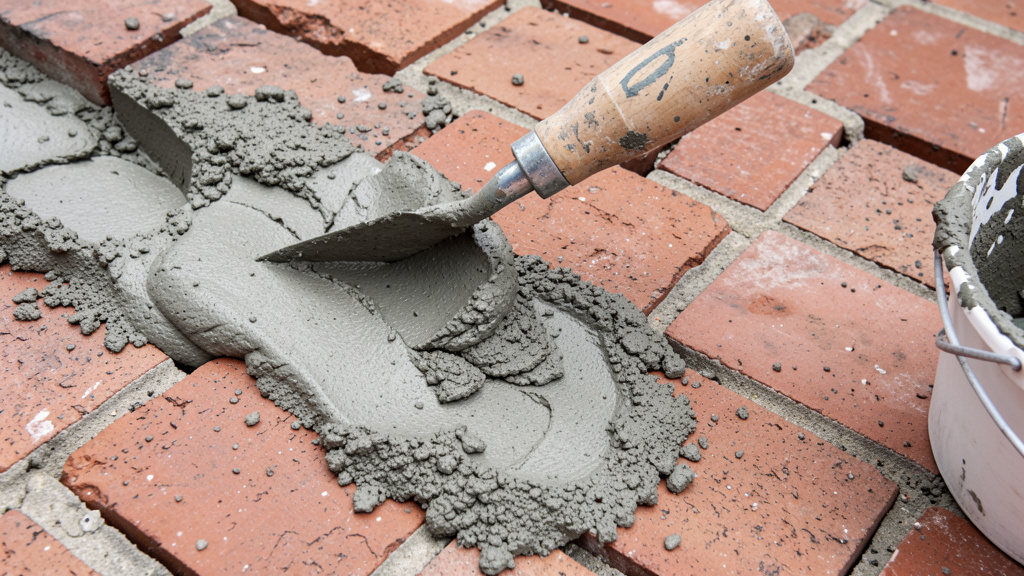
Navigate material selection with confidence—transforming uncertainty into durable, appropriate choices for every brick, stone, tile, or block project through clear frameworks and field-tested protocols.
Understanding the functional distinction between mortar and grout forms the bedrock of resilient masonry work. This guide clarifies composition, application logic, environmental considerations, and decision pathways across residential, commercial, and preservation contexts. By aligning material properties with project demands—rather than defaulting to assumptions—any practitioner can significantly improve longevity, aesthetics, and structural harmony. The information presented synthesizes widely recognized industry standards, material science principles, and observed field patterns to support informed, context-aware decisions.
Introduction
Masonry construction relies fundamentally on two distinct cementitious binders: mortar and grout. Though often conflated, their roles, formulations, and performance criteria differ profoundly. Mortar bonds units during assembly; grout fills voids after placement. Confusing these functions risks moisture entrapment, structural compromise, aesthetic mismatch, or premature failure—particularly in historic fabric or demanding environments. Conversely, precise material alignment with project parameters ensures joints perform as intended: accommodating movement, shedding water, transferring loads, or preserving breathability.
This resource consolidates fragmented technical guidance into a unified reference grounded in established frameworks including ASTM International standards, The Masonry Society publications, and preservation protocols endorsed by entities such as the National Park Service. Content reflects recurring patterns observed across diverse project types—from foundation walls and chimney repairs to tile installations and heritage conservation. No personal anecdotes or unverifiable claims are presented; all recommendations derive from documented material behavior, environmental response, and consensus-based practice. The journey begins with the non-negotiable functional distinction between mortar and grout—a prerequisite for every subsequent decision.
The Core Distinction: Mortar vs. Grout—Function Dictates Form
Mortar and grout serve fundamentally different purposes. This distinction is not semantic but structural, chemical, and performance-driven. Substituting one for the other—even with good intent—invites avoidable failure.
Mortar functions as the adhesive and cushion between masonry units during construction. Its engineered properties include:
– Controlled bond strength: Strong enough to unite units, yet intentionally weaker than the masonry itself to act as a sacrificial element during stress events (settlement, thermal movement).
– Workability: Plastic consistency allowing precise placement, adjustment, and tooling without slumping.
– Water retention: Critical for complete cement hydration, especially when units (like clay brick) absorb moisture rapidly.
– Controlled flexibility: Accommodates minor movement without transferring damaging stress to brittle units.
– Breathability: Permits vapor transmission in wall assemblies, reducing trapped moisture risk—especially vital in historic contexts.
Grout functions as a consolidating filler after units are permanently set. Its priorities shift:
– Flowability: Fluid consistency to penetrate voids, cores, or narrow tile joints without bridging or leaving honeycombs.
– Void elimination: Complete cavity filling to prevent moisture pockets, pest harborage, or structural weakness.
– Load distribution: In structural applications (e.g., reinforced block walls), transfers compressive forces and bonds steel to masonry.
– Sealing: Creates a continuous barrier against water ingress in tile installations or cavity walls.
– Minimal adhesion focus: Bonding to substrate is secondary to density and penetration.
Composition reflects function: Mortar typically contains higher lime or plasticizer content for workability and bond. Grout uses higher cementitious ratios, finer aggregates, or fluidifying admixtures to achieve pourable consistency. Epoxy or furan grouts may contain no Portland cement at all. Attempting to pour standard mortar into a block core yields weak, honeycombed sections. Using unsanded grout as tile adhesive risks catastrophic bond failure due to excessive water content and lack of polymer modifiers.
Illustrative consequence: Repointing soft historic brick with a rigid, high-cement grout (mistaken for mortar) creates a moisture trap. During freeze-thaw cycles, trapped water expands against the inflexible joint, spalling the brick face—a repair requiring specialized conservation far exceeding the original effort. This underscores why functional understanding precedes product selection.
Deep Dive into Mortar: Composition, Types, and Contextual Application
Mortar is a precisely balanced system. Altering proportions affects strength, flexibility, color, and compatibility. Mastery begins with component awareness.
Core Components and Their Roles
- Portland Cement: Primary hydraulic binder. Hydrates with water to form crystalline structures providing compressive strength. Type I (normal) suits most applications; Type III (high-early) accelerates set in cold conditions but increases cracking risk if unmanaged; Type IV (low-heat) is rare outside massive pours. Cement alone creates brittle mixes—balance is essential.
- Hydrated Lime (Type S/SA): Not a filler. Enhances workability via microscopic particle lubrication, significantly boosts water retention for reliable hydration, and enables autogenous healing in lime-rich formulations (minor cracks recrystallize via carbonation). Critical note: Agricultural lime (calcium carbonate) is chemically inert and ineffective. Only hydrated lime (calcium hydroxide) labeled for masonry delivers these benefits. Omission risks poor tooling, rapid moisture loss, and reduced durability.
- Sand: Provides bulk, reduces shrinkage, influences texture and color. Must be clean (ASTM C144 compliant), well-graded (mixed particle sizes for dense packing), and angular for mechanical interlock. Sand color dominates final mortar hue—critical for historic matching. Never use beach sand: salts cause efflorescence and corrosion; shell fragments create weak points.
- Water: Catalyst for hydration. Use clean, potable water. The water-to-cementitious ratio is paramount: excess water creates capillary pores, weakening the matrix and increasing permeability. Target the minimum water needed for workability. Adjust temperature contextually: chilled water slows set in heat; warm (not hot) water aids hydration in cool conditions.
- Admixtures (Purpose-Driven):
- Air-Entraining Agents (AEAs): Mandatory per ASTM C270 for exterior mortar in freeze-thaw zones. Microscopic air bubbles provide expansion space for ice, preventing spalling. Properly entrained mortar feels slightly creamy.
- Water Retention Aids (WRAs): Cellulose ethers slow moisture loss—essential for absorbent units, wind, or heat.
- Pigments: Iron oxide-based only. Add to dry mix for uniformity. Test cured samples (7+ days); wet color misleads.
- Accelerators/Retarders: Use cautiously. Chloride-based accelerators corrode steel—avoid near reinforcement. Non-chloride alternatives exist. Retarders extend workability in heat but risk incomplete set if overused.
- Polymer Modifiers: Enhance adhesion, flexibility, and water resistance. Standard in thin-set mortars for tile; valuable for repairs over challenging substrates.
ASTM Mortar Types: Strength Hierarchy and Compatibility Principle
ASTM C270 classifies mortar by minimum compressive strength and air content. Remember the sequence: M (strongest), S, N, O, K (most flexible). However, strength alone is misleading. The Compatibility Principle is paramount: Mortar should be weaker than the masonry unit it binds. This ensures stress concentrates in the repairable joint—not the irreplaceable brick or stone.
| Type | Min. Strength | Air Content (Exterior) | Primary Applications | Critical Considerations |
|---|---|---|---|---|
| M | 2,500 psi | 8–12% | Below-grade foundations, retaining walls, heavy structural loads | Reserve for engineered applications. Too rigid for most above-grade or historic work. Risk of spalling soft units. |
| S | 1,800 psi | 8–12% | Below-grade walls, patios, seismic zones, high-wind areas | Balanced strength and bonding. Common for modern structural veneers and demanding exteriors. |
| N | 750 psi | 8–12% | Above-grade exterior walls, interior load-bearing, standard residential | Most versatile for contemporary clay brick, CMU. Good weather resistance. |
| O | 350 psi | 8–12% | Interior non-structural walls, repointing pre-1950s masonry | Ideal for soft historic brick, limestone, sandstone. Allows movement without damaging units. |
| K | 75 psi | Not specified | Very soft historic units (pre-1850), delicate conservation | Extremely flexible. Requires specialist knowledge. Rare in new construction. |
Why compatibility matters: Soft historic brick (often 1,000–2,500 psi) paired with Type M mortar (2,500+ psi) creates a “strong mortar, weak brick” scenario. Stress concentrates on the brick during movement, causing spalling. Type O or K mortar yields first, preserving the unit. This principle aligns with the Secretary of the Interior’s Standards for Rehabilitation and is non-negotiable in preservation practice.
Selection guidance:
– Bagged mortar: Choose products explicitly labeled with ASTM type (e.g., “Type N”). Ensures consistency and compliance.
– Site-mixed: Approximate volume ratios (using consistent containers):
– M: 1 cement : ¼ lime : 3½ sand
– S: 1 cement : ½ lime : 4½ sand
– N: 1 cement : 1 lime : 6 sand
– O: 1 cement : 2 lime : 9 sand
– K: 1 cement : 3 lime : 10 sand
Caution: Site-mixing demands precise measurement and consistent materials. Pre-blended ASTM-certified mortar is strongly recommended for critical, structural, or historic work.
– Uncertain unit strength? Perform a discreet scratch test: if a nail powders the surface easily, the unit is soft—default to Type O. When preservation is involved, consult a qualified specialist. Laboratory analysis of existing mortar is a prudent investment for significant projects.
Specialized Mortar Formulations
- Polymer-Modified (Thin-Set) Mortar: Contains redispersible polymer powders or requires liquid latex additive. Forms a flexible film enhancing adhesion, impact resistance, and water tolerance. Applications: Tile installation (ANSI A118.4/11/15), structural repairs, bonding new to old masonry. Note: “Modified” refers to bond/flexibility—not compressive strength. Never substitute unmodified mortar where polymer-modified is specified (e.g., large-format tile, wet areas).
- Lime-Rich / Lime Putty Mortar: Primarily lime putty (aged slaked lime) and sand. Sets slowly via carbonation (weeks to months). Benefits: High vapor permeability (“breathability”), exceptional workability, autogenous healing. Applications: Repointing pre-1900 masonry, conservation. Requirements: Skilled application; extended curing protection (damp burlap for weeks); avoid freezing or constant moisture during cure. True lime putty differs chemically from bagged hydrated lime—source from specialty suppliers. Matching original mortar composition via lab analysis is ideal for significant historic work.
- Refractory Mortar: Contains heat-resistant aggregates (fireclay, grog) and calcium aluminate cement. Applications: Fireboxes, flue liners, pizza ovens. Critical: Match temperature rating to appliance (e.g., 2,000°F for wood fireplaces). Standard mortar fails catastrophically under heat.
- Integral Waterproofing Mortar: Includes crystalline admixtures that block capillary pores. Applications: Below-grade walls, planters, retaining walls. Clarification: Supplementary only. Never replaces drainage, dampproofing membranes, or proper site grading. Does not bridge post-cure cracks.
- Rapid-Setting Mortar: Type III cement + accelerators. Achieves handling strength in 1–2 hours. Applications: Emergency repairs, cold-weather work. Trade-offs: Higher cracking risk; shorter pot life; requires meticulous curing. Not a substitute for proper cold-weather protocols.
Mixing Protocol: Consistency is Non-Negotiable
- Prep: Clean mixing vessel. Verify material temperatures are similar. Gather safety gear (nitrile gloves, eye protection, dust mask). Measure water.
- Dry Mix (if site-mixing): Blend sand and lime thoroughly first, then add cement. Ensures uniformity and prevents lime balls.
- Initial Water: Add ~⅔ of water. Mix 3–5 minutes until lump-free.
- Slake: Rest 5–10 minutes. Allows full particle saturation—critical for hydration completeness.
- Final Mix: Remix 2–3 minutes. Adjust consistency minimally. Target: holds sharp peak on trowel (like thick peanut butter). Glove test: Squeezed sample retains shape without water seepage.
- Pot Life: Standard mortar: 60–90 minutes. Polymer-modified: often shorter. Discard stiffening material—never re-temper.
Critical Errors to Avoid:
– Over-watering: Weakens matrix, increases shrinkage and permeability. Use WRAs in adverse conditions instead.
– Re-tempering: Adding water to stiffening mortar breaks initial hydration bonds, drastically reducing final strength and durability. Mix only what can be used within pot life.
– Skipping slake time: Causes inconsistent set and weak spots.
– Inconsistent batching: Leads to color variation (“batch lines”). Use identical measuring containers for all batches on a project.
Application and Curing: Where Longevity is Determined
Surface Preparation:
– New units: Achieve “surface-saturated dry” (SSD) condition—dampened but no standing water. Mist 15–30 minutes prior. Test: water absorbs slowly, doesn’t bead or vanish instantly.
– Repointing: Rake old mortar to 2–2.5x joint width depth (e.g., ¾” for 3/8″ joint). Clean cavity thoroughly with brush and vacuum (HEPA preferred). Dampen cavity before new mortar application.
Tooling and Joint Profiles:
– Tool when mortar is “thumb-print” firm—not wet (smears) or dry (crumbles). Timing varies with climate.
– Concave: Most durable for exteriors; sheds water effectively. Use curved jointer.
– V-Joint: Good water shedding; slightly less compacted than concave.
– Flush/Raked: Less weather-resistant. Flush used interior; raked requires shallow depth (<¼”) and dense units. Avoid raked joints in exposed locations.
Environmental Adaptation:
– Hot/Dry/Windy (>90°F/32°C): Work early/late. Erect windbreaks/sunshades. Pre-dampen units. Use chilled water + WRA. Mist frequently; cover with damp burlap post-tooling.
– Cold (32–40°F/0–4°C): Warm water (not hot). Store materials indoors. Use non-chloride accelerators if permitted. Insulated enclosures with safe heat sources. Never apply below freezing or if freeze expected within 24 hours without protection.
– Rain: Stop work if imminent. Cover fresh mortar (<24h) with plastic supported above surface to prevent discoloration. Remove promptly after rain.
Curing: The Strength-Development Phase
Curing maintains moisture for complete hydration. Mortar gains strength progressively over 28 days; the first 3–7 days are critical. Uncured mortar may achieve only a fraction of potential durability.
- Method: Mist gently 2–3x daily for min. 3 days (7 days ideal for critical work). Cover with damp burlap rewetted as needed. Liquid curing compounds are alternatives for large areas.
- Why it works: Prevents surface moisture loss, allowing hydration to proceed uniformly through the joint.
- Signs of poor curing: Powdery surface, light color, easy crumbling, hairline cracks.
- Completion: After initial moist cure, expose to weather. Avoid heavy loads, pressure washing, or sealers for 7+ days; full strength develops over 28 days.
Deep Dive into Grout: Precision Filling for Performance and Protection
Grout prioritizes flow, consolidation, and environmental resistance over adhesion. Misapplication leads to stained tiles, cracked joints, or moisture damage.
Core Components and Categories
- Cementitious Base: Portland cement standard. Calcium aluminate used in some high-performance variants.
- Aggregates Define Type:
- Sanded: Fine silica sand (<0.5mm). For joints ≥1/8″ (3mm). Prevents shrinkage cracks in wider gaps.
- Unsanded: Limestone powder, silica flour. For joints <1/8″. Essential for scratch-prone surfaces.
- Fluidifiers: High-range water reducers (superplasticizers) enable flow without excess water. Pre-mixed urethanes use polymer carriers.
- Critical Additives:
- Integral sealers/water repellents: Reduce porosity within the matrix (first line of defense, not replacement for topical sealing).
- Mold/mildew inhibitors: EPA-registered biocides vital for wet areas (showers, pools). Effectiveness diminishes over time—regular cleaning remains essential.
- Flexibility polymers: Acrylics accommodate substrate movement (e.g., wood subfloors).
- Crystalline waterproofers: Enhance moisture resistance in wet-area grouts.
Sanded vs. Unsanded: The Two Non-Negotiable Rules
| Factor | Sanded Grout | Unsanded Grout |
|---|---|---|
| Joint Width | Required for ≥1/8″ (3mm) | Required for <1/8″ (3mm) |
| Why | Sand prevents shrinkage cracks in wider joints. Without it, cement paste shrinks significantly. | Sand particles bridge narrow joints, causing voids. Also abrasive on soft surfaces. |
| Tile Surface | Safe for hard, scratch-resistant surfaces (glazed ceramic, porcelain, quarry tile, unpolished slate) | Mandatory for soft/polished surfaces (marble, limestone, travertine, glass, metal, polished porcelain) |
| Common Error | Using unsanded in wide joints → shrinkage cracks | Using sanded on soft tiles → permanent surface scratches |
| Pro Insight | At exactly 1/8″, sanded is often preferred for durability if tile surface permits. Always test on scrap first. | Preferred for vertical applications (shower walls) due to smoother tooling and reduced slumping. |
Application Scenarios:
– Honed limestone floor, 1/16″ joints: Unsanded grout. Narrow joints + soft stone demand scratch-free application.
– Textured porcelain patio, 3/8″ joints: Sanded grout. Wide joints require sand for crack resistance; porcelain withstands abrasion.
– Glass mosaic backsplash, irregular 1/16″ joints: Unsanded “glass tile grout” (often enhanced flexibility). Prevents scratching reflective surfaces.
– Large-format plank tile (6″x36″), 1/8″ joints: Consult tile manufacturer first. Some systems specify flexible sanded grout to manage movement—override general rules per manufacturer guidance.
Specialty Grouts for Specific Challenges
- Epoxy Grout: Two-part resin/hardener system (+ colored filler). Benefits: Near-total stain/chemical resistance; no sealing needed; mold-resistant. Applications: Commercial kitchens, labs, shower floors, high-spill zones. Considerations: Higher cost; short pot life (20–40 min); challenging cleanup; may yellow in UV. Requires dedicated tools. Verify “true epoxy” vs. epoxy-modified cementitious.
- Urethane (Pre-Mixed) Grout: Ready-to-use polymer formula. Benefits: No mixing; consistent color; easy water cleanup; good flexibility. Applications: DIY projects, backsplashes, repairs, areas with minor movement. Limitations: Less abrasion-resistant than premium cementitious; not ideal for heavy commercial traffic or prolonged UV exposure.
- High-Performance Polymer-Modified Cementitious Grout: Enhanced with significant polymer content. Benefits: Reduced porosity, increased flexibility, integral sealers/mold inhibitors. Applications: Ideal “premium” choice for most residential kitchens, bathrooms, floors. Offers substantial performance gain over standard grout with familiar application.
- Colored/Decorative Grouts: Wide color range; some include metallic flakes or glass beads. Critical: Test physical chips under actual lighting. Light grout shows dirt; dark grout may highlight efflorescence on light tiles. For historic tile restoration (e.g., Art Deco), custom color matching by specialists preserves authenticity.
Mixing and Application: Technique Prevents Headaches
Mixing:
– Powder grouts: Add powder slowly to measured liquid while mixing. Achieve smooth, lump-free paste (peanut butter consistency). Slake cementitious grout 5–10 min, then remix. Never add extra water to extend work time.
– Epoxy: Mix Parts A+B precisely; use immediately (no slake time).
– Pre-mixed urethane: Stir thoroughly (low speed); do not shake (introduces bubbles).
Application Sequence:
1. Verify readiness: Tiles fully set (per mortar cure time, typically 24–72h), clean, dry, spacers removed.
2. Force into joints: Rubber float at 45°. Apply firm, diagonal pressure across 3’x3′ sections. Joints should feel solid when lightly pressed—no hollow spots.
3. Initial cleanup: After 15–30 min (product/temp dependent), hold float near 90° and sweep across joints to remove excess, leaving grout slightly proud.
4. Sponge phase: Use damp (well-wrung) cellulose sponge. Wipe diagonally with light pressure. Rinse sponge frequently in clean water. Change rinse water often—dirty water smears haze. Timing is critical: too soon pulls grout; too late hardens haze.
5. Final buff: After 2–3 hours (grout firm but not hard), buff tiles vigorously with dry cotton cloth to remove residual haze.
Common Pitfalls:
– Incomplete filling: Causes moisture traps and movement. Ensure joints are clean pre-grouting; apply firm pressure; verify solidity by touch.
– Over-wiping: Creates recessed joints that collect dirt. Use light sponge pressure; tool profile during float phase if desired.
– Grout haze: Caused by wet sponge, dirty water, or delayed buffing. Change water often; buff thoroughly when ready. For cured haze, use pH-neutral haze remover—avoid acids on natural stone.
– Staining soft tiles: Always use unsanded grout on vulnerable surfaces. Test first. Clean spills immediately during application.
– Premature use: Walking on grout too soon cracks joints. Respect cure times: light traffic after 24h, normal use after 72h, heavy items after 7 days.
Sealing and Maintenance: Preserving Appearance and Function
Cement-based grouts (sanded, unsanded, polymer-modified) require sealing. Epoxy and urethane generally do not.
Sealing Protocol:
– When: After full cure (typically 48–72 hours). Confirm with water bead test: drops should pearl up. Sealing too early traps moisture.
– Sealer type: Penetrating impregnator (recommended). Soaks below surface, repels stains without altering appearance or trapping vapor. Reapply every 1–3 years based on traffic. Avoid membrane-forming sealers—they peel, yellow, and trap moisture.
– Application: Apply sparingly only to grout lines using small brush or narrow-tip bottle. Wipe sealer from tiles immediately with dry cloth. Apply second coat if recommended. Cure fully before moisture exposure.
– Cleaning: Use pH-neutral cleaners formulated for tile/grout. Avoid:
– Acids (vinegar, lemon): Etch stone, degrade grout over time.
– Chlorine bleach: Weakens grout polymers, causes yellowing. Use oxygen bleach (sodium percarbonate) paste for organic stains—cover with plastic, wait hours, rinse.
– Abrasive pads: Scratch surfaces. Wipe spills promptly; use entry mats to reduce grit.
The Decision Framework: A Step-by-Step Selection Pathway
Use this sequential logic to eliminate guesswork. Print and reference onsite.
Step 1: Define Primary Function
- Binding units during construction (laying brick, block, stone)? → MORTAR (Proceed to Step 2A)
- Filling joints/voids after units are set (tile joints, block cores)? → GROUT (Proceed to Step 2B)
- Uncertain? Ask: “Is this material compressed between units?” (Mortar) or “Is it filling an empty space surrounded by set units?” (Grout). When in doubt, consult a supplier with project photos.
Step 2A: Mortar Selection Pathway
- Structural Role?
- Heavy load-bearing (foundation, retaining wall)? → Type M/S (verify with engineer)
- Standard exterior wall, chimney, patio? → Type S (high wind/seismic) or Type N (typical residential)
- Interior non-structural wall? → Type N or O
- Repointing historic masonry (pre-1950s)? → Type O (most common) or Type K (very soft units). Default softer when uncertain.
- Environmental Exposure?
- Freeze-thaw cycles? → Confirm air-entrained (ASTM C270 requires for exterior; check label)
- Constant moisture (below-grade, planter)? → Integral waterproofing mortar plus proper drainage/membranes
- High heat (fireplace)? → Refractory mortar rated for appliance temperature
- Need enhanced adhesion/flexibility (tile over concrete, repairs)? → Polymer-modified mortar
- Masonry Unit Type?
- Soft historic brick, limestone, sandstone? → Softer mortar (O/K) is mandatory for compatibility
- Modern hard-fired brick, concrete block? → Type N or S appropriate
- Glass block? → Use manufacturer-specified glass block mortar
Step 2B: Grout Selection Pathway
- Joint Width? (Measure)
- < 1/8″ (3mm) → Unsanded Grout (mandatory)
- ≥ 1/8″ (3mm) → Sanded Grout (mandatory for shrinkage control)
- Tile Surface?
- Soft, polished, or scratch-prone (marble, limestone, glass, metal)? → Unsanded Grout (even if joint slightly wider; test first)
- Hard, unpolished, scratch-resistant (glazed ceramic, standard porcelain)? → Sanded Grout safe for joints ≥1/8″
- Location/Exposure?
- High stain risk (kitchen counter, entry)? → Polymer-modified cementitious or Epoxy Grout
- Constant moisture (shower pan, pool)? → Epoxy Grout (best) or polymer-modified with mold inhibitor + proper substrate waterproofing
- Substrate movement (wood subfloor)? → Flexible grout (polymer-modified cementitious or urethane)
- DIY/small project? → Pre-mixed urethane grout for ease
- Chemical exposure (garage)? → Epoxy Grout (verify resistance with manufacturer)
- Special Needs?
- Historic tile restoration? → Match original color/type; seek custom matching services
- Dramatic color contrast? → Use high-quality stain-resistant grout; test for cement bleed on light tiles
Common Pitfalls and Prevention Strategies
Pitfall 1: “Stronger is Better” in Historic Contexts
- Pattern: Using modern high-strength mortar (Type S/M) on soft historic brick.
- Observed Outcome: Rigid joints trap moisture; freeze-thaw cycles spall brick faces. Repair complexity and cost increase substantially.
- Prevention: For masonry predating 1950, assume units are soft. Perform discreet scratch test. Default to Type O mortar. For pre-1900 structures, consider Type K or lime-rich formulations. Consult preservation resources like the National Park Service’s Preservation Briefs #1 and #2. When significant, pursue mortar analysis for precise matching.
Pitfall 2: Ignoring Microclimate During Application
- Pattern: Laying mortar on hot, dry, windy days without adaptation.
- Observed Outcome: Surface cures too fast; interior remains weak. Results in powdery joints, reduced bond strength, premature efflorescence.
- Prevention: Monitor conditions. Above 90°F (32°C), low humidity, or wind >15 mph: schedule cooler hours; erect windbreaks/sunshades; pre-dampen units; use chilled water + WRA; mist frequently; cover with damp burlap post-tooling. Treat weather as a material specification variable.
Pitfall 3: Inadequate Repointing Preparation
- Pattern: Raking old mortar only superficially (¼” deep).
- Observed Outcome: New mortar bonds poorly, peels away, allows water behind repair.
- Prevention: Rake to 2–2.5x joint width depth. Clean cavity meticulously (brush + HEPA vacuum). Dampen to SSD condition immediately before application. Depth ensures mechanical keying and adequate bond area.
Pitfall 4: Skipping Color Test Panels
- Pattern: Mixing large batch based on wet color in wheelbarrow.
- Observed Outcome: Cured mortar mismatches existing joints, creating visible patches.
- Prevention: Mix small test batch. Apply to discreet project area. Tool identically. Cure min. 7 days under actual conditions. Evaluate in natural daylight at multiple times. Adjust incrementally. For critical historic matching, involve a specialist.
Pitfall 5: Confusing Dry Time with Cure Time
- Pattern: Sealing grout or loading surfaces too soon after installation.
- Observed Outcome: Trapped moisture weakens matrix; cracks develop under stress; sealer fails.
- Prevention: Adhere strictly to manufacturer timelines:
- Tile mortar cure before grouting: 24–72 hours
- Grout cure before light use: 24 hours
- Grout cure before normal use: 72 hours
- Grout cure before sealing: 48–72 hours (confirm with water bead test)
- Full strength development: 28 days (avoid heavy impacts)
Post timelines visibly onsite. When uncertain, extend waiting periods.
Troubleshooting Guide: Diagnosing Binder Issues
Efflorescence (White, Powdery Deposits)
- Description: Crystalline salts appearing on surface after moisture exposure. Wipes off but recurs.
- Root Cause: Water-soluble salts dissolved by moisture migrating through masonry. Evaporation leaves salts on surface. Efflorescence signals active moisture movement—address the source.
- Solution Protocol:
- Identify moisture source: Check gutters, grading, flashing, cracks, interior humidity. Repair drainage issues first.
- Remove deposits: On dry day, brush vigorously with stiff dry nylon brush. For stubborn residue, use diluted white vinegar solution (1:5 vinegar:water), scrub gently, rinse thoroughly. Avoid wire brushes on soft mortar.
- Prevent recurrence: Ensure proper drainage, flashing, and weep holes. For persistent cases, consult a masonry professional to assess wall assembly moisture dynamics. Industry guidance from the Brick Industry Association emphasizes source control over surface cleaning alone.
Cracking in Mortar Joints
- Description: Hairline or significant cracks appearing weeks/months post-installation.
- Root Cause: Often due to over-watering during mix, inadequate curing, rapid drying in heat/wind, or using mortar stronger than the masonry unit (causing stress concentration on brick/stone).
- Solution Protocol:
- Minor hairline cracks: In lime-rich mortars, may self-heal over time with moisture exposure. Monitor.
- Wider cracks or spalling units: Remove affected mortar to proper depth (2–2.5x joint width). Clean thoroughly. Repoint with compatible mortar type (softer than unit). Implement curing protocol meticulously. If cracking is widespread, investigate structural movement or moisture issues with a qualified professional.
Grout Shrinkage or Cracking in Joints
- Description: Gaps forming between grout and tile, or cracks within grout lines.
- Root Cause: Using unsanded grout in joints ≥1/8″; insufficient compaction during application; over-wiping; premature drying.
- Solution Protocol:
- Remove defective grout completely.
- Verify correct grout type per joint width and tile surface.
- Re-grout: Force grout deeply into joints with firm float pressure. Allow proper set time before cleanup. Maintain curing environment (avoid drafts, direct sun). For wide joints, consider grouting in two passes (fill halfway, wait 10 min, top off).
Poor Mortar Adhesion (Units Shift or Separate)
- Description: Mortar fails to bond to units; joints crumble or units become loose.
- Root Cause: Inadequate surface preparation (dusty units, frozen surfaces); re-tempering mortar; using mortar past pot life; incompatible unit absorption (e.g., very dense units without bonding agent).
- Solution Protocol:
- Remove failed mortar. Clean units thoroughly. Ensure units are SSD (not dusty, not saturated).
- Mix fresh mortar; do not re-temper. Apply within pot life.
- For very dense units (glazed brick, some CMU), consult manufacturer about bonding primers.
- In cold weather, ensure ambient and material temperatures are within product specifications.
Your Questions, Answered
Q: What is the single most important difference between mortar and grout?
A: Function. Mortar binds units together during construction and requires strong adhesion and controlled flexibility. Grout fills voids after units are set and prioritizes flowability and consolidation. Using one for the other’s purpose risks failure.
Q: Can I use regular sand from a river or beach for mortar?
A: No. Beach sand contains salts and shell fragments causing efflorescence, corrosion, and weak points. River sand is often too rounded and may contain silt. Always use washed, ASTM C144-compliant masonry sand with appropriate gradation and cleanliness.
Q: How do I choose mortar for repointing an old brick house?
A: Prioritize compatibility over strength. For most pre-1950s brick, Type O mortar is appropriate. For very soft brick (pre-1900), Type K or lime-rich mortar is often necessary. Perform a discreet scratch test: if brick powders easily, choose softer mortar. When preservation is critical, consult a specialist or pursue mortar analysis. The National Park Service Preservation Briefs provide accessible guidance on historic mortar compatibility.
Q: Is sealing grout really necessary?
A: For cement-based grouts (sanded, unsanded, polymer-modified), yes—especially in kitchens, bathrooms, or high-traffic areas. Sealing with a penetrating impregnator significantly reduces stain absorption and simplifies cleaning. Epoxy and urethane grouts generally do not require sealing. Always confirm cure time before sealing (typically 48–72 hours) using the water bead test.
Q: What temperature is too cold for working with mortar?
A: Avoid application if ambient temperature is at or below freezing (32°F/0°C) and forecast to remain there within 24 hours without protection. Between 32–40°F (0–4°C), use warm water, non-chloride accelerators if permitted, insulated enclosures, and monitor continuously. Never apply mortar to frozen surfaces. ASTM C270 Appendix X1 details cold-weather procedures—consult it for project-specific planning.
Q: Why does my new mortar look darker than the old mortar?
A: Mortar lightens significantly as it cures and weathers. Wet color is not indicative of final appearance. Always create a test panel on the actual project surface, cure for 7+ days, and evaluate in natural light before proceeding. Batch-to-batch variation also occurs—mix sufficient quantity for the entire project area if possible.
Q: Can I add extra water to mortar that’s getting stiff?
A: Absolutely not. This is re-tempering—a critical error. Adding water breaks initial hydration bonds, drastically reducing final strength, increasing permeability, and promoting cracks. Mix only the quantity usable within the pot life (typically 60–90 minutes). Discard stiffening material responsibly.
Q: What’s the best grout for a shower floor?
A: Prioritize moisture and stain resistance. Epoxy grout offers maximum protection and requires no sealing. High-performance polymer-modified cementitious grout with mold inhibitor is an excellent, more accessible alternative. Ensure the shower pan substrate is properly waterproofed before tiling—grout alone cannot compensate for substrate failures.
Q: How long must I wait before using a newly grouted area?
A: Respect staged timelines: light foot traffic after 24 hours; normal use (countertops, showers) after 72 hours; placing heavy appliances/furniture after 7 days. Full strength develops over 28 days. Always follow the specific product manufacturer’s instructions, as formulations vary.
Q: What causes white powder on my brick wall, and how do I fix it?
A: This is efflorescence—salts deposited by evaporating moisture. While surface cleaning helps, the priority is identifying and eliminating the moisture source (faulty grading, clogged gutters, missing flashing). Clean deposits with a dry brush or mild vinegar solution after addressing the root cause. Persistent efflorescence warrants professional assessment of the wall assembly.
Q: Is lime really necessary in mortar?
A: For most applications, yes. Hydrated lime (Type S/SA) significantly improves workability, water retention (critical for hydration), and long-term durability. It also enables autogenous healing in lime-rich mixes. Omitting lime creates a harsh, brittle mix prone to poor bond and cracking. Use only masonry-grade hydrated lime—not agricultural lime.
Q: When should I call a professional for masonry repair?
A: Consult a qualified mason or preservation specialist for: structural cracks, widespread deterioration, historic structures requiring authenticity, projects involving load-bearing elements, or if moisture issues persist after surface repairs. Early professional assessment often prevents costly escalation. Resources like the Association for Preservation Technology can help locate specialists.
Conclusion and Next Step
Recap: Three principles anchor durable masonry work. First, function dictates material: mortar binds, grout fills—never interchange. Second, compatibility trumps strength: mortar should be weaker than the masonry unit to preserve irreplaceable fabric. Third, process equals product: meticulous mixing, application timing, and curing determine whether specified materials achieve their potential.
The 24-Hour Rule: Within the next day, inspect one masonry joint on your property—a chimney, patio edge, or interior brick wall. Note its condition: Is mortar intact? Are cracks present? Is the joint profile shedding water? This simple act builds observational awareness, transforming abstract knowledge into tangible context for future decisions. No tools required—just attention.
The Big Picture: Thoughtful binder selection extends beyond a single project. It conserves resources by preventing premature failure, preserves architectural heritage through compatible repairs, and enhances building resilience against environmental stressors. Each informed choice contributes to structures that perform safely, endure gracefully, and honor the craft of masonry across generations. Mastery lies not in complexity, but in aligning material behavior with real-world demands—patiently, precisely, and purposefully.
Explore Further Guidance:
Understanding Masonry Wall Systems: Foundations to Parapets | Historic Brick Repointing: A Step-by-Step Protocol | Tile Installation Fundamentals: Substrates, Layout, and Adhesives | Moisture Management in Masonry Assemblies | Reading Material Labels: Decoding ASTM and ANSI Standards | Seasonal Masonry Maintenance Checklist | When to Engage a Masonry Professional: Key Indicators