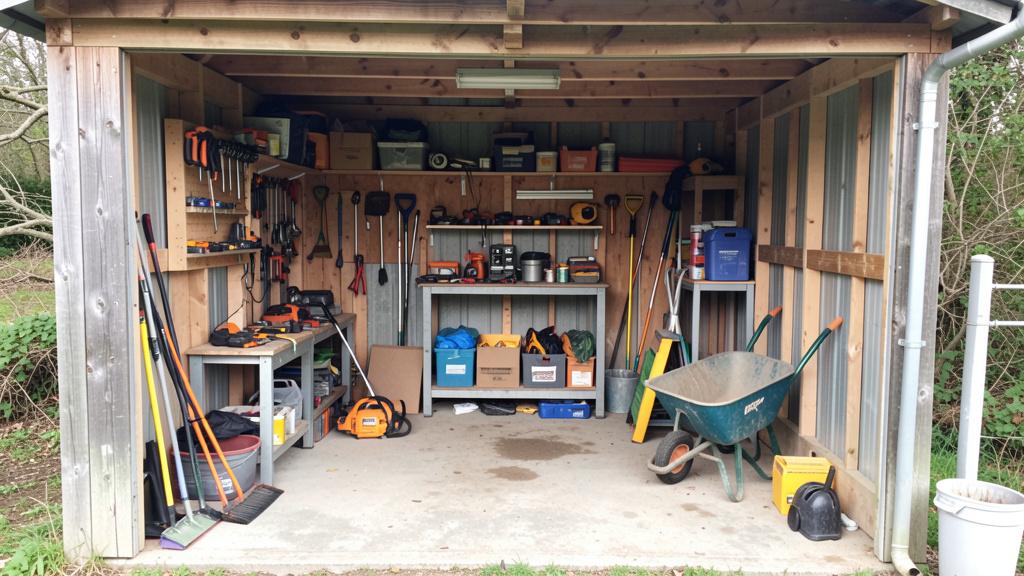
Stop Wasting Money, Space, and Peace of Mind—Unlock a Clear, Repeatable System That Aligns Tool Choices With Your Real-Life Constraints, Values, and Project Needs
You stand in the hardware aisle, heart pounding slightly. The cordless impact driver gleams under fluorescent lights. Do I really need this? Will I use it again? What if the rental place is closed tomorrow? Your garage already holds tools purchased with optimistic “I’ll use this someday” energy—now gathering dust beside last summer’s half-finished project. Meanwhile, a neighbor recently invested heavily in equipment for a single renovation task. This isn’t just about tools. It’s about the quiet tension between ownership anxiety and project dependency. What if you had a clear, adaptable system—one that thoughtfully weighs your budget, available space, timeline, skill level, and personal values—to guide the right choice every time? This guide delivers exactly that: a practical framework informed by financial principles, spatial logistics, safety considerations, and community resource patterns. No fluff, no sales pitches—just actionable clarity you can apply immediately.
Introduction: Beyond the Impulse Aisle
Walk into any home improvement store on a weekend morning, and you’ll witness a familiar scene: hesitation before the tool displays, hands hovering over price tags, minds racing through hypothetical future projects. This moment represents a critical decision point where emotion, practicality, and long-term consequence intersect. Tool-related choices frequently contribute to project budget strain and post-project dissatisfaction among DIYers, yet most available advice remains fragmented: “Always buy quality!” clashes with “Rent everything expensive!” without acknowledging the nuanced reality of your living situation, your actual usage patterns, or your storage constraints.
True tool wisdom isn’t about accumulating the shiniest gear or achieving minimalist purity. It’s about intentional alignment. It recognizes that the optimal choice for installing a single ceiling fan differs radically from preparing for years of home maintenance. It understands that “borrowing” involves reciprocity, clear communication, relationship dynamics, and safety verification—not just a casual ask. This guide synthesizes financial awareness, spatial logistics, safety protocols, environmental considerations, and community resource patterns into a single, adaptable system. We move beyond rigid rules to explore the meaningful dimensions of tool acquisition: the emotional weight of ownership, the environmental implications of manufacturing versus sharing, the safety imperatives of equipment familiarity, and the quiet satisfaction of building a purposeful, functional toolkit. By the final section, you’ll possess a personalized decision process—one applicable to a $15 hand trowel or a $2,000 trencher—with confidence that your choice serves both your immediate project and your broader life context.
The TRIAD Framework: Your Decision Engine for Every Tool
Forget guesswork. The TRIAD Framework transforms uncertainty into clarity through three sequential, reflective filters: Tool Requirement Analysis, Investment Impact Assessment, and Access Duration Evaluation. This is not a rigid flowchart demanding perfect answers; it’s a thoughtful process designed to surface your unique constraints and priorities. Work through each layer deliberately. The insight emerges not from isolated answers, but from the intersection of all three dimensions. A tool scoring “high” in requirement but “low” in duration may still favor borrowing—not buying. Let’s explore each pillar with practical precision.
Step 1: Tool Requirement Analysis (The “Why” Filter)
Before considering cost or access, rigorously define the tool’s role in this specific project. Ambiguity here often leads to regrettable decisions later. Ask these four essential questions:
Frequency Spectrum Mapping
Move beyond “Will I use this again?” Map anticipated usage realistically:
– Single-Use Event: Installing one closet rod. Building a single raised garden bed. Hanging six pictures.
– Project Cluster: Renovating two bathrooms (tile cutter needed repeatedly over weeks). Building a deck (circular saw, drill, sander used throughout a multi-week timeline).
– Recurring Lifecycle: Annual gutter cleaning (ladder, gutter scoop). Seasonal garden prep (rototiller). Monthly furniture assembly (impact driver).
– Core Competency Builder: Learning woodworking (table saw, chisels become foundational). Starting a small furniture-building venture (clamps, pocket-hole jig essential).
Why this matters: A “single-use” classification typically shifts economic and practical advantage toward renting or borrowing. Considering storage, maintenance, and depreciation, tools used infrequently may not justify full ownership for non-professionals. Conversely, “core competency” tools represent skill investment—where reliable ownership accelerates learning and project quality.
Common Pitfall Alert: The “Optimism Bias Trap.” Behavioral research indicates people often overestimate future tool usage. Counter this by reviewing your actual project history: Check your calendar or photo library. How many “I’ll build that planter box!” intentions materialized? Be honest. If you haven’t used a similar tool in 18 months, treat this instance as single-use unless concrete, scheduled plans exist.
Criticality & Consequence Assessment
How significant are the risks of tool failure, inaccuracy, or unfamiliarity? Consider a practical scale:
– Low Impact: Hand trowel for repotting one plant. A bent trowel causes minor delay.
– Moderate Impact: Stud finder for hanging a medium shelf. Incorrect placement requires visible repair.
– High Impact: Circular saw for cutting structural deck joists. Inaccurate cuts compromise integrity.
– Critical Impact: Voltage tester before electrical work. Failure risks serious injury.
– Non-Negotiable Safety: Fall protection system for elevated work. Personal safety dependency.
Why this matters: High-consequence tools (High Impact and above) demand verified reliability. Renting a voltage tester introduces uncertainty about battery life or calibration. Borrowing critical safety equipment like fall harnesses is strongly discouraged—personal ownership of certified, well-maintained gear is essential here. For High Impact tools, renting from a reputable supplier with maintenance records may be viable if you verify condition thoroughly. Low-to-Moderate Impact tools are often ideal candidates for borrowing or renting.
Real-World Nuance: Criticality interacts with user skill. A novice using a miter saw faces higher consequence than an experienced user. If unfamiliar with equipment, seek rental suppliers offering brief operational guidance—many provide this as part of responsible service.
Precision & Quality Threshold
What result quality is necessary for this project?
– Functional: “It holds the shelf securely.” (A standard drill bit may suffice for pilot holes in softwood).
– Professional: “Seamless tile joints, invisible fasteners.” (Requires consistent torque, sharp blades, reliable leveling).
– Artisan: “Gallery-quality wood joinery.” (Demands calibrated tools, sharp blades, stable setup).
Why this matters: Borrowing a neighbor’s dull circular saw blade might be acceptable for rough framing but guarantees frustration and poor results for fine woodworking. Renting often provides access to well-maintained, commercial-grade equipment that outperforms low-cost consumer models purchased hastily. For precision-dependent outcomes, renting quality gear frequently delivers better value and results than buying an inexpensive version.
Exception Spotlight: Some tools have essential quality baselines. A low-cost tape measure may stretch or jam; a reliable mid-tier model ensures accuracy across all projects. For foundational measuring and layout tools (tape measure, level, square), investing in dependable mid-range quality typically repays itself instantly through time saved and errors prevented.
Physical & Skill Constraints
Be candid about your reality:
– Storage Reality: Do you have dry, accessible space? Or is storage extremely limited? Measure available space before deciding.
– Physical Capability: Can you safely lift, maneuver, or operate the equipment? Consider weight, vibration, and required stamina.
– Skill Familiarity: Have you operated this type of tool before? Watching a tutorial ≠ hands-on competency.
Why this matters: Ignoring constraints creates hidden friction. Purchasing bulky equipment with no storage solution leads to frustration. Attempting to use unfamiliar heavy machinery risks injury. If constraints exist, they naturally elevate renting (especially with delivery/setup options) or borrowing (with skilled assistance) within your decision process.
The Fundamental Principle: The optimal acquisition choice aligns the tool’s reliability, precision, and accessibility precisely with the project’s consequence level and your personal constraints—not with generic advice or emotional impulses.
Step 2: Investment Impact Assessment (The “True Cost” Filter)
Sticker prices tell only part of the story. A “$120 drill” carries hidden dimensions. True cost encompasses acquisition, ownership burden, time investment, and broader impact. Let’s build a complete picture.
Acquisition Cost Breakdown
– Buy: Purchase price + tax + delivery.
– Rent: Daily/weekly rate + damage waiver (often 10–15% of rental fee) + potential fuel or delivery charges + deposit hold.
– Borrow: Value of reciprocity (shared labor, small gift, future favor) + your time/fuel for pickup/drop-off.
Pro Tip: Always request written rental quotes. Contact multiple suppliers. Ask: “What is the total cost for three days including all mandatory fees and waivers?” Hidden charges are common. For borrowing, thoughtfully consider the reciprocity—does the implied value feel fair and sustainable within your relationship?
Ownership Cost Perspective (Beyond the Purchase Price)
Ownership involves ongoing considerations often overlooked. Consider annualized impact:
(Purchase Price + Estimated Annual Maintenance) / Expected Years of Useful Life
Illustrative Example: Mid-Tier Cordless Drill
– Estimated Maintenance: Battery replacements, bit sets, cleaning supplies
– Realistic Useful Life: 5–8 years with care
– Annualized Cost: Provides perspective on long-term value
– Per-Use Cost: Divide annualized cost by estimated annual uses
Compare to Renting:
– Typical rental rate: Varies by region and supplier
– Per-Use Cost: Rental fee + your time cost for pickup/return
– Break-Even Insight: If projected total uses over the tool’s life exceed the break-even point (Purchase Price ÷ Daily Rental Rate), buying may be economical. But factor in storage, maintenance effort, and the reality of actual usage patterns. Many tools sit unused far more than anticipated. Tracking usage—via a simple notebook log or digital note—builds valuable data for future decisions.
Hidden Cost Dimensions Often Overlooked
– Storage Opportunity Cost: That corner of your garage or closet has value. In space-constrained living situations, dedicated tool storage represents a meaningful trade-off.
– Depreciation: Most tools lose significant value immediately. Resale rarely recoups investment. Consider this a sunk cost.
– Time Investment: Driving to rent or borrow, waiting in line, cleaning equipment before return. Assign a reasonable value to your time. A two-hour rental errand carries real opportunity cost.
– Risk Exposure: If a borrowed tool is damaged, replacement cost and relationship strain become factors. Rental damage waivers have limitations—understand coverage terms.
Scenario Illustration:
Project: Install floating shelves (requires level, drill, stud finder, anchors).
Option A (Buy): Basic kit purchase. Used once. True cost includes purchase, storage burden, and depreciation.
Option B (Rent): Tool kit rental fee + time investment for pickup/return.
Option C (Borrow): Reciprocity value (e.g., assisting with a neighbor’s task) + time/fuel.
Insight: Borrowing may be optimal if the relationship is strong and reciprocity feels balanced. Renting is often competitive. Buying a full kit for a single, simple project is rarely the most efficient choice.
Environmental Consideration
Manufacturing and transporting tools carry environmental weight. For equipment needed only occasionally, renting or borrowing reduces the per-use footprint significantly. Tool libraries and community sharing networks amplify this benefit by maximizing utilization of existing resources. If environmental impact is a personal priority, this dimension can provide meaningful guidance in close decisions. Choosing to borrow a post-hole digger instead of purchasing supports circular economy principles—a tangible contribution to resource conservation.
Step 3: Access Duration Evaluation (The “Timeline” Filter)
Timing fundamentally shapes feasibility. Map your project against three practical layers:
Project Duration & Urgency
– Short Burst (Hours): Hanging curtains. Fixing a loose railing.
→ Ideal: Borrow (immediate access) or use owned core tools. Renting often has minimum time fees—potentially inefficient.
– Medium Project (Days–Weeks): Deck construction, kitchen backsplash, fence repair.
→ Ideal: Rent (terms align with project length). Borrowing for extended periods may strain relationships.
– Long-Term/Recurring (Months+): Workshop development, multi-phase renovation, seasonal gardening.
→ Ideal: Buy (if Steps 1–2 support it) or utilize a tool library membership.
Urgency Factor: Emergency situations (e.g., weather-related repair) may make borrowing from a trusted neighbor the only viable path. For planned projects, reserving rental equipment well in advance guarantees availability. Popular items (pressure washers, floor sanders) often book weeks ahead during peak seasons—check inventory early.
Future Use Probability Window
Refine the question:
– Within 6 Months: Concrete plans exist? Strengthens buy consideration.
– 6–24 Months: Possible but uncertain? Rent next time; buying only if other TRIAD factors strongly align.
– Beyond 2 Years: Highly speculative? Treat as single-use. Optimism bias is strongest here—apply healthy skepticism.
Documentation Strategy: When renting or borrowing, note the tool, project, and date used. Review these notes quarterly. Patterns emerge: “I’ve rented a tile saw three times in two years—ownership may now make sense.” Or “I haven’t used the specialty gardening tool since last spring.” Data-informed decisions replace guesswork.
Seasonality & Local Context
– Climate: Snowblower ownership makes sense in regions with heavy, frequent snow. In areas with rare snowfall, renting during unexpected events is often wiser.
– Local Ecosystem:
– Tool Libraries: Growing networks exist in many communities. Annual memberships provide access to extensive inventories.
– Rental Availability: Rural areas may have fewer rental options, making borrowing networks or strategic ownership more relevant.
– Community Norms: In close-knit neighborhoods, borrowing is often normalized. In transient settings, tool libraries or rentals may be more reliable. Adapt your strategy to your actual environment.
Practical Workflow: For planned projects:
1. Check local tool library inventory and reservation policies.
2. Obtain quotes from rental suppliers.
3. Identify potential borrowing sources (neighbors, community groups).
4. Then apply the TRIAD analysis. Grounding decisions in actual access options prevents theoretical choices that don’t reflect reality.
Understanding Common Decision Traps
Recognizing psychological patterns behind tool choices builds decision resilience. Behavioral insights highlight three frequent traps:
The “Just-in-Case” Fallacy
Our minds anticipate scarcity: “What if I need it right now?” Yet home organization experience shows many “just-in-case” tools remain unused. Counter this with the 72-Hour Rule: For any non-essential tool over $30, pause for 72 hours before purchasing. During that window:
– Research local rental rates and availability
– Post a polite borrowing request in community groups
– Reassess the project’s true necessity
This intentional pause disrupts impulse and creates space for rational evaluation.
The Identity Projection Trap
We sometimes purchase tools to embody an aspirational identity: “This table saw means I’m a woodworker!” But capability grows through action, not equipment ownership. Start modestly: Borrow a basic tool for one project. Did you enjoy the process? Were results satisfying? Let actual experience guide future investment. Build identity through doing, not acquiring.
The Sunk Cost Spiral
“You’ve already spent money on this project—might as well buy the tool!” This ignores future costs and constraints. Ask instead: “If I had no prior investment, what would be the most practical choice today?” Resetting the mental ledger clarifies the path forward.
Compassionate Note: These patterns aren’t personal failings—they’re common human tendencies. The goal isn’t perfection, but awareness. Noticing the pull of “just-in-case” thinking (“Ah, there’s that scarcity feeling”) creates space for your TRIAD process to operate calmly.
Environmental Stewardship in Tool Choices
Tool acquisition carries ecological considerations increasingly relevant to mindful homeowners. Manufacturing new equipment consumes resources and energy. Your choices contribute to broader patterns:
- Buying New: Highest initial resource investment. Justifiable when usage frequency and longevity validate the footprint (e.g., core tools used consistently for many years). Prioritize brands with repair programs, spare parts availability, and sustainable practices.
- Buying Used: Significantly reduces demand for new production. Explore local resale markets, estate sales, or repair shops that refurbish tools. Inspect carefully for safety and function.
- Renting: Maximizes utilization of existing equipment. One well-maintained rental unit serves many households, reducing the total number of tools manufactured.
- Borrowing/Sharing: Lowest resource footprint per use. Tool libraries and neighbor networks keep tools in active circulation, extending product life and strengthening community resilience.
Practical Integration: If environmental impact matters to you, consider adding a simple “Sustainability Consideration” to your decision process:
– Does borrowing or renting meet the project need effectively?
– Is a used tool a viable, safe option?
– Does this purchase align with long-term usage patterns?
Letting these questions inform close decisions supports personal values and systemic resource conservation. Choosing to borrow a ladder instead of buying shifts demand toward circular models—a quiet, meaningful contribution.
Safety: The Non-Negotiable Layer
Safety considerations must inform every acquisition decision. Compromising here outweighs all other factors.
Borrowing Safety Protocol
Never borrow tools without verification:
1. Inspect Thoroughly: Check cords for damage, guards for integrity, blades for cracks or excessive wear. Test operation safely.
2. Verify Maintenance: For gas-powered tools: “Is the fuel fresh?” Old fuel can damage engines. Ask about recent servicing.
3. Confirm Familiarity: “Have you used this recently?” If unfamiliar, request a brief demonstration before taking possession.
4. Document Condition: Take timestamped photos of the tool before leaving the owner’s property. Protects both parties.
5. Honor Limits: If the tool feels unstable, unfamiliar, or unsafe, return it. No project is worth injury.
Critical Boundary: Avoid borrowing personal safety equipment where hygiene, calibration, or fit are unverifiable: fall harnesses, respirators, hearing protection, or electrical testers. Own these items personally or rent certified units from professional suppliers.
Rental Quality Assurance
Reputable rental centers maintain equipment rigorously, but verification is wise:
– [ ] Safety guards are intact and functional
– [ ] Cords, hoses, or handles show no damage
– [ ] Controls operate smoothly
– [ ] For gas tools: Fuel smells fresh (not varnished), air filter is clean
– [ ] Ask: “Was this serviced after its last rental?”
If anything feels questionable, politely request a replacement unit. Your safety is worth the momentary inconvenience. Many suppliers appreciate responsible renters who ask these questions.
Quality Thresholds That Matter
Some tools demand reliable quality:
– Ladders: Inspect rails for bends, rungs for cracks, feet for wear. Safety is non-negotiable.
– Cutting Tools: Dull blades require excessive force, increasing kickback risk. Rental equipment often features sharper, better-maintained blades than borrowed alternatives.
– Electrical Tools: GFCI protection is essential for outdoor or damp-location use. Verify before operation.
Valuable Insight: Many rental suppliers offer brief safety orientations. Accept them. Learning model-specific nuances prevents accidents and ensures you return the equipment in good condition—a practice suppliers value.
Navigating Tool Categories with Precision
Generic advice falters at the edges. Let’s address high-consideration categories with nuance.
Power Tools: Frequency and Ecosystem
- Drills/Drivers: Own if used multiple times yearly. Convenience for small repairs is significant. Start with a quality brushless kit (drill + impact driver). Avoid ultra-low-cost models prone to premature failure.
- Circular Saws: Rent for single projects. Own if undertaking multiple construction projects. A quality saw often pays for itself across two to three significant projects versus repeated rentals.
- Angle Grinders: Rent unless metalworking is a regular activity. High-risk tool if unfamiliar; requires strict safety protocols (eye/face protection, fire awareness).
- Nail Guns: Rent for framing or deck projects. Own only for frequent finish work (e.g., trim carpentry). Compressor ownership adds storage and maintenance complexity—rent combo kits when needed.
Battery Platform Strategy: If purchasing cordless tools, select one brand’s ecosystem. Mixing platforms creates costly redundancy. Begin with drill/driver + one specialty tool (impact driver, reciprocating saw). Expand slowly based on verified, recurring need.
Hand Tools: The Foundation Worth Owning
Hand tools typically offer high utility, low storage demand, minimal safety risk, and enduring value. Own these core items:
– Tape measure (25 ft., reliable brand)
– Quality claw hammer (16 oz. for general DIY)
– Adjustable wrench (8–10″)
– Screwdriver set (magnetic tips, Phillips/flat)
– Utility knife with spare blades
– Level (24″ for general use)
– Pliers (linesman, needle-nose)
– Safety glasses (multiple pairs—keep in garage, car, workshop)
Why own? Per-use cost becomes negligible. Always available for emergencies. Builds fundamental skills. Invest in mid-tier quality ($30–$60 range)—they endure decades with basic care. Avoid extremely low-cost tools; stripped screws and broken handles create more work.
Large Equipment & Specialty Tools: Rent or Share
- Pressure Washers: Rent for house/driveway cleaning. Gas models typically outperform electric rentals for heavy-duty tasks. Ownership rarely makes sense without frequent, recurring need.
- Trenchers: Rent. Single-use projects only. Delivery/setup often included.
- Floor Sanders: Rent. Professional-grade equipment is essential for quality hardwood refinishing. Consumer models often yield poor results.
- Tile Saws: Rent for backsplashes or bathrooms. Wet saws are messy to store and maintain.
- Generators: Rent for outage backup or remote projects. Fuel storage, maintenance, and safety protocols represent significant ownership burdens.
Exception Note: Rural property owners with documented recurring needs (e.g., annual land maintenance) may find ownership justified after careful TRIAD analysis. Track usage over multiple seasons before purchasing.
Navigating the “Grey Zone”
- Ladders: Own a quality 6-ft. step ladder (frequently needed). Rent extension ladders over 16 ft. Storage is bulky; improper storage risks damage.
- Shop Vacs: Own a mid-sized wet/dry vac ($60–$100). High utility across car cleaning, workshop tasks, minor water issues. Strong utility-to-storage ratio.
- Air Compressors: Rent unless using pneumatic tools weekly. Noise, weight, and maintenance are notable ownership factors.
- Table Saws: Rent for occasional cuts. Own only with committed woodworking practice. Jobsite models offer smaller footprints for limited spaces.
Building Your Personal Core Toolkit: The Essential Foundation
Every household benefits from a baseline toolkit—tools so frequently needed that ownership eliminates friction for daily life and small emergencies. This isn’t about accumulation; it’s about preparedness. Start here, then expand only as verified needs arise.
The Essential Starter Kit ($150–$250 Total Investment)
| Tool | Why Own | Smart Selection Tip |
|——|———|———————|
| 25-ft. Tape Measure | Used in nearly all projects; accuracy is foundational | Reinforced blade, reliable lock mechanism |
| 16-oz. Claw Hammer | Hanging art, minor repairs, general tasks | Smooth face (less marring), comfortable grip |
| 24-in. Level | Shelving, pictures, furniture assembly | Durable I-beam aluminum construction |
| Adjustable Wrench (10″) | Faucet repairs, furniture assembly, bolts | Smooth adjustment mechanism |
| Screwdriver Set (6–8 bits) | Electronics, fixtures, toys | Magnetic tips; include #1 & #2 Phillips |
| Utility Knife | Opening packages, trimming materials | Retractable blade; keep spare blades accessible |
| Needle-Nose Pliers | Electrical tasks, tight spaces, gripping | Insulated handles for safety |
| Safety Glasses (2 pairs) | Every task requiring eye protection | Keep one pair in garage, one in main toolkit |
| Work Gloves | Hand protection during messy or rough tasks | Mechanic-style (dexterity) + heavy-duty pair |
Storage Solution: A modest rolling toolbox ($25–$40) keeps this kit organized, portable, and protected. Place it where you’ll see it daily—not buried in the back of a closet. Visibility encourages use and maintenance.
Phase 2 Expansion (Add After Verified Need)
– Cordless drill/driver kit (within one battery platform)
– Stud finder + non-contact voltage tester
– Reciprocating saw for demolition or plumbing access
– Orbital sander for refinishing projects
– Quality caulk gun
Guiding Principle: Add one tool per quarter. Master its use. Confirm recurring need. Only then consider the next addition. This prevents overwhelm and ensures each tool earns its place through actual utility.
Community Resources: Tapping Into Shared Wisdom
You don’t need to navigate tool needs alone. Modern communities offer powerful alternatives to sole ownership:
Tool Libraries: Community Assets
Modeled after book libraries, these nonprofit organizations lend tools for low annual fees ($20–$60) or donations. Benefits include:
– Access to extensive inventories (ladders, saws, specialty tools)
– Guidance from knowledgeable volunteers
– Workshops on tool use and maintenance
– Zero storage or maintenance burden for you
Locate one near you through online community resource directories. Many offer volunteer opportunities—contributing time can deepen community ties and sometimes offset membership costs.
Digital Sharing Networks
– Hyperlocal Groups: Platforms like Buy Nothing groups (Facebook) or Nextdoor facilitate borrowing requests. Be specific: “Seeking to borrow a post-hole digger Saturday AM for fence project. Happy to return with coffee or assist with a task!” Always offer clear reciprocity.
– Peer-to-Peer Rental Apps: Services like Fat Llama connect neighbors for tool rentals. Verify lender ratings and communicate clearly.
Ethical Borrowing Practices
Borrowing thrives on mutual respect:
1. Be Specific: State exactly what you need, when, and for how long.
2. Return Cleaner: Wipe down, recharge batteries, replace worn parts.
3. Express Genuine Gratitude: Return with a small token of thanks or offer concrete help.
4. Respect “No”: A declined request is not personal. Respond warmly: “No problem at all—thanks for considering!”
5. Confirm in Writing: For valuable tools, text: “Confirming I’ll return your tile saw Sunday by 5 PM, fully cleaned. Thank you!”
If borrowing consistently proves difficult in your context, it’s valuable data—not failure. Shift strategy toward tool libraries or strategic renting without self-judgment.
Navigating Common Friction Points
Even thoughtful frameworks meet real-world hurdles. Here’s how to address frequent sticking points:
“But what if I need it again tomorrow?”
This fear drives many unnecessary purchases. Counter with:
– Rental Buffer: Book the tool for an extra half-day if feasible.
– Tool Library Waitlist: Many allow advance reservations.
– 24-Hour Buffer Rule: For non-urgent projects, schedule return after confirming no further need. Most rental suppliers allow same-day extension calls.
“Renting feels like wasting money—I get nothing to keep.”
Reframe the value:
– You’re paying for verified reliability, professional maintenance, and zero storage burden.
– For infrequently used tools, renting often represents significant savings versus ownership costs.
– View it as “project insurance”—guaranteeing the right tool is available when needed, without long-term commitment.
“Borrowing feels awkward.”
Normalize sharing gradually:
– Start small: “Could I borrow your ladder for 15 minutes to change a lightbulb?”
– Offer first: “I have a stud finder—need to borrow it sometime?” Initiating sharing reduces future hesitation.
– Join a community sharing group where the culture explicitly celebrates mutual aid.
Emerging Alternatives
– Hardware Store Loyalty Programs: Many offer rental discounts (10–15%) for free membership—worth enrolling.
– Co-Ownership: For expensive, occasionally needed tools (e.g., high-end tile saw), discuss shared ownership with trusted neighbors. Create a simple shared calendar and maintenance agreement.
Your Questions, Answered
Q: How can I verify a rental tool is well-maintained?
A: Upon pickup, inspect guards, cords, and moving parts. Test operation briefly (ask staff). For gas tools, note fuel smell—varnished odor suggests old fuel (request replacement). Reputable suppliers maintain service logs; it’s reasonable to ask, “When was this last serviced?” Professional suppliers appreciate responsible renters. If anything feels off, politely request another unit. Safety is paramount.
Q: Is buying used tools safe? Where should I look?
A: Yes—with careful inspection. Best sources: estate sales (tools often well-cared-for), local resale markets, or tool repair shops that refurbish equipment. Inspect thoroughly: test electric tools for unusual sounds or smells, check gas tools for compression, avoid items with cracked housings, frayed cords, or significant rust on critical components. When uncertain, choose a different option. Safety outweighs minor savings.
Q: What’s the absolute minimum toolkit for a new homeowner?
A: Prioritize emergency readiness: tape measure, hammer, level, adjustable wrench, screwdriver set (Phillips #2, flathead), utility knife, safety glasses, work gloves, and a basic stud finder. Store visibly and accessibly. This handles most urgent minor repairs. Add a cordless drill within the first year as needs emerge. Avoid low-quality “starter kits”—invest in dependable mid-tier versions of core items.
Q: How do I approach a neighbor to borrow a tool respectfully?
A: Be specific, respectful, and reciprocal. Example: “Hi [Name], hope you’re well. I’m installing a shelf Saturday morning and need a drill for about an hour. I completely understand if it’s not convenient—but if you’re open to it, I’d be glad to [return the favor with X, bring coffee, etc.]. No pressure at all!” Texting is often less intrusive than an unexpected knock. Always return the item cleaner than borrowed, on time, with sincere thanks.
Q: Are tool libraries worthwhile for infrequent projects?
A: Often yes. Typical annual membership ($30–$50) is covered by avoiding one or two rentals. Beyond economics: access to expert advice, workshops, and community connection. Many offer low-cost day passes to try before committing. For those with limited storage or urban dwellers, they can be transformative resources.
Q: When might renting become less economical than buying?
A: Consider the break-even point: Purchase Price ÷ Daily Rental Rate. Example: A $150 saw ÷ $25/day rental = 6 days of use. If you’ll use it more than that over its functional life, buying may make sense. But factor in storage, maintenance effort, depreciation, and the reality of actual usage. For most DIYers, tools used fewer than 8–10 times total favor renting. Track your rentals—if you rent the same tool multiple times within two years, then reevaluate ownership.
Q: What tools should I avoid borrowing or renting?
A: Personal safety equipment where hygiene, calibration, or fit are critical and unverifiable: fall harnesses, respirators, hearing protection, and electrical safety testers. Own these items personally. Also exercise caution with tools requiring precise calibration (certain laser levels) unless you can verify accuracy. When safety or hygiene cannot be confirmed, personal ownership is the responsible choice.
Q: How should I store tools to maximize their lifespan?
A: Combat three enemies: moisture, dust, and impact.
– Metal Tools: Wipe with light oil after use; store dry. Hang saws by handles.
– Batteries: Store at partial charge (40–60%) in a cool, dry place. Remove from tools during long storage.
– Organization: Pegboard with tool outlines (instant visual inventory). Foam-lined cases for precision tools.
– Environment: Avoid damp, unheated garages in humid climates. A locked cabinet inside living space may better preserve tools than a damp shed. Proper care transforms tools into long-term assets.
Q: What if I accidentally damage a borrowed tool?
A: Take immediate, responsible action. Say: “I’m sorry—this was damaged during my use. I will replace it with an equivalent model promptly.” Do not minimize. Take photos of the damage. Offer to handle the replacement process. Most people deeply appreciate honesty and accountability. This preserves trust—the foundation of borrowing networks. Consider this potential cost when evaluating the “true cost” of borrowing.
Q: Are there tools where a lower-cost option is acceptable?
A: Occasionally, for truly single-use, low-risk items:
– Painter’s tape (technique matters more than brand)
– Disposable utility knife blades
– Basic sandpaper (buy value packs)
– Temporary clamps for one-time glue-ups
Avoid compromising on: measuring tools (inaccuracy compounds errors), cutting tools (dull blades increase danger), safety gear (failure is unacceptable), or tools with complex mechanisms (cheap motors fail prematurely). Invest where precision, safety, or frequency demand reliability.
Q: How do I discuss tool decisions collaboratively with a partner?
A: Frame it as shared problem-solving. Say: “I want us to feel good about this choice for our space and budget. Can we walk through a quick checklist together?” Review the TRIAD questions: “How often will we realistically use this? Where would it live? What’s the true cost versus renting?” Position it as teamwork: “Let’s find the option that gives us the result we want without future stress.” Shared decisions build alignment and prevent resentment.
Conclusion and Your Next Step
You now hold a complete, adaptable system—not just isolated tips—to navigate every tool decision with clarity and confidence. Let’s crystallize the journey:
Recap: The Three Anchors of Intentional Acquisition
1. Requirement First: Match the tool’s criticality, precision needs, and your constraints before cost. Safety and consequence define non-negotiables.
2. True Cost Awareness: Look beyond the price tag. Factor storage, time, maintenance, and broader impact. Data-informed choices replace emotional impulses.
3. Duration Alignment: Let project timeline and verified future need—not optimism—guide the path. Borrow for brief needs, rent for defined projects, own for verified core competencies.
This framework liberates you from guilt (“I should own this”), anxiety (“What if I need it?”), and clutter (“Why is my space full of unused tools?”). It transforms acquisition from a transaction into intentional stewardship—of your resources, your space, your time, and your community connections.
The 24-Hour Rule: Your Immediate Action
Before purchasing any tool over $50:
1. Pause for exactly 24 hours.
2. During that window:
– Check local tool library inventory
– Obtain one rental quote
– Post one polite borrowing inquiry in a community group
3. After 24 hours, revisit the decision with fresh perspective.
This small pause prevents the majority of regrettable purchases. It builds disciplined, values-aligned decision-making. Start today—even for a $60 item.
The Bigger Picture: Tools as Enablers
The most capable makers aren’t defined by their gear. They’re defined by resourcefulness, patience, and willingness to learn. A borrowed hand plane used with care creates beautiful results. A rented floor sander, operated thoughtfully, reveals stunning wood grain. Your capability resides in you—not in ownership. This mindset shift is profound: tools become accessible resources, not burdensome trophies. You gain freedom to tackle meaningful projects without fear of commitment. You deepen community ties through respectful sharing. You reduce waste. You reclaim physical and mental space.
Your journey to intentional tool stewardship begins with one decision. Apply TRIAD to your next project tool need. Notice the clarity. Feel the confidence. Then share this framework with someone navigating similar choices. Multiply the impact.
Explore Our Complete Home Mastery System:
Building Your First Workshop: Layout, Lighting, and Workflow Secrets | The Sustainable Homeowner’s Guide to Material Selection | Project Planning Like a Pro: From Sketch to Completion Timeline | Mastering Basic Repairs: Fix Leaks, Squeaks, and Sticks in Under 30 Minutes | Community Connection: Building Neighborhood Resilience Through Skill Sharing | The Mindful DIYer: Reducing Project Stress and Increasing Joy | Tool Care Deep Dive: Sharpening, Calibration, and Longevity Techniques