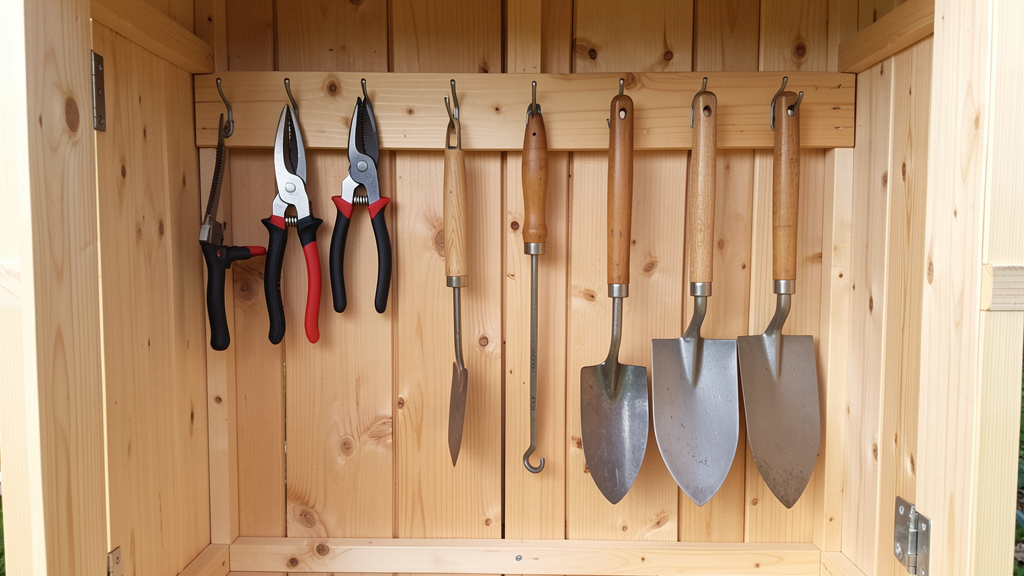
Build confidence, prevent injury, and cultivate thriving landscapes with a thoughtfully curated and meticulously cared-for collection of garden tools—transforming routine chores into joyful, efficient rituals rooted in stewardship and seasonal wisdom.
Every gardener, from the balcony herb enthusiast nurturing mint in a windowsill pot to the suburban homesteader tending heritage roses and vegetable rows, understands a fundamental truth: the quality of your experience is directly shaped by the tools in your hands. A shovel that bends under pressure, pruners that crush rather than cut, or a hose that kinks with every movement doesn’t merely slow progress—it erodes joy, invites frustration, and can contribute to physical strain over time. Conversely, the right tool, properly maintained, becomes an extension of your intention. It slices through soil with satisfying ease, makes precise cuts that heal cleanly on plants, and turns demanding tasks into moments of mindful connection with your outdoor space. This guide moves beyond simple product lists or seasonal checklists. We present a holistic, sustainable system for selecting equipment aligned with your unique garden context, physical needs, and long-term values, coupled with a practical, seasonally-aware maintenance rhythm that ensures decades of reliable service. Whether you’re equipping a new shed, revitalizing a neglected collection, or adapting tools to changing mobility needs, this framework empowers you to work smarter, safer, and with deeper satisfaction—honoring both your labor and the living systems you nurture.
Introduction: Why Your Tools Are the Unsung Heroes of Garden Success
Gardening is often romanticized as a pure dialogue between human and plant, soil and seed. Yet, the physical interface of that relationship—the tools we wield—holds profound influence over outcomes, safety, and sustainability. Consider the difference between attempting to transplant a delicate perennial with a rusty, blunt trowel versus one with a sharp, smooth blade: the former risks root damage, soil compaction around the planting hole, and transplant shock; the latter enables clean separation, minimal root disturbance, and rapid establishment. This principle scales across every task. Horticultural extension resources and experienced growers consistently observe that proper tool selection and care correlate with improved plant recovery, reduced gardener fatigue, and increased time spent enjoying the garden rather than battling equipment. A dull mower blade tears grass blades, creating ragged edges that invite disease and result in a brown-tinged lawn; a sharp blade makes a clean cut, allowing grass to seal wounds quickly and maintain vibrant color. Similarly, ergonomic handle design isn’t merely a comfort feature—it supports biomechanically sound movement patterns, reducing cumulative strain on wrists, elbows, and shoulders during repetitive motions. This foundational understanding—that tools actively participate in garden ecology and gardener well-being—is where true mastery begins. It shifts perspective from viewing tools as disposable commodities to recognizing them as long-term partners in cultivation. By investing thoughtful attention in their selection and stewardship, you align daily actions with broader values: resource conservation, intergenerational care, and mindful engagement with the natural world. This guide synthesizes widely shared best practices from cooperative extension publications, toolsmith traditions, ergonomic guidelines, and community gardening wisdom to provide a clear, adaptable path toward building and sustaining a toolkit that serves you faithfully across seasons and years.
The Three-Pillar System for Garden Tool Mastery
True tool proficiency rests on three interdependent foundations: intentional Selection, mindful Usage, and consistent Maintenance. Neglecting any single pillar undermines the entire system. Selecting a premium pruner is futile if used with incorrect technique that damages the mechanism or stresses plant tissue; meticulous maintenance loses value if the tool’s design clashes with your physical needs or garden scale. This framework provides a cyclical, sustainable approach. Pillar One ensures you start with equipment suited to your specific context. Pillar Two maximizes efficiency, safety, and plant health during active work. Pillar Three preserves value and performance between seasons. Together, they create a virtuous cycle where well-chosen tools are used effectively and cared for diligently, reinforcing confidence and competence with every gardening session. This isn’t about accumulating the most tools; it’s about cultivating the right relationship with the essential few—tools that feel like natural extensions of your hands and intentions.
Pillar One: Intentional Selection – Choosing Tools Aligned With Your Garden and Body
Selecting garden tools demands moving beyond impulse buys at the hardware store checkout lane. It requires honest assessment of your space, recurring tasks, physical attributes, seasonal patterns, and long-term vision. This process prevents wasted resources, reduces frustration, and sets the stage for enjoyable, sustainable gardening. Approach selection as a reflective practice—not a transaction.
Assess Your Garden’s True Needs (Not Aspirations)
Begin with a realistic, season-by-season audit. Walk your space in early spring, midsummer, and fall. Note recurring tasks, soil types, plant varieties, and microclimates. A 4’x8’ raised bed vegetable patch has vastly different tool requirements than a half-acre property with mature trees, perennial borders, clay soil, and lawn. List your current recurring tasks with seasonal context:
Small Space (Balcony/Patio/Container Garden): Focus on precision and storage efficiency. Essential: narrow-blade hand trowel (for tight spaces between pots), hand fork with short tines, micro-pruners (for deadheading delicate blooms), small watering can with fine rose, collapsible kneeling pad. Optional: hori hori knife (doubles as trowel, weeder, measurer), soil scoop for repotting. Seasonal note: In windy urban settings, prioritize tools with secure storage (e.g., trowel with belt loop) to prevent loss.
Medium Space (Typical Suburban Yard): Requires versatility across seasons. Essential: digging shovel (curved blade), spade (flat blade for edging), garden fork (for aeration and lifting root crops), leaf rake (flexible tines), bow rake (stiff tines for leveling soil), stirrup hoe (efficient weeding), bypass pruners, loppers (for branches up to 1.5″), wheelbarrow or garden cart, hose with adjustable nozzle. Seasonal note: If you experience heavy autumn leaf fall, prioritize a sturdy leaf rake with flexible bamboo or polypropylene tines to avoid damaging lawn crowns.
Large Space (Acre+ with Trees, Lawn, Beds): Demands durability, efficiency, and task-specific tools. Essential: all medium-space tools plus: pruning saw (for branches >1.5″), long-reach loppers, mattock (for breaking compacted soil or roots), leaf blower (corded electric for consistent power without emissions), heavy-duty wheelbarrow (pneumatic tires for rough terrain), soil knife (hori hori). Seasonal note:* In regions with rocky soil, a digging bar or pick mattock becomes essential for initial bed preparation.
Crucially, distinguish between core essentials (used weekly or monthly across multiple seasons) and specialized situational tools (used once or twice a year). Prioritize investing in high-quality core tools. Rent, borrow, or choose budget-friendly options for situational items (e.g., a sod cutter for lawn renovation, a bulb planter for mass tulip planting). Avoid the “tool hoarding” trap—cluttered sheds lead to neglected maintenance, forgotten purchases, and safety hazards. Measure your storage space before buying. A beautifully crafted wooden-handled shovel is impractical if it won’t fit in your cramped shed or must be stored horizontally where moisture accumulates. Consider vertical storage solutions early in your planning.
Understand Your Body’s Requirements
Tools must serve you, not the other way around. Ignoring ergonomics is a common reason gardening becomes painful or unsustainable. Key considerations evolve with age, health, and daily energy levels:
Height and Reach: Standard tool handles (typically 42–48 inches) suit average heights (5’4″ to 5’10”). If you are significantly taller or shorter, seek adjustable-length handles or specifically sized tools. For shorter gardeners, tools with D-grips often provide better leverage and control than long straight handles. Taller gardeners may benefit from extra-long handles to avoid excessive bending. Practical test: Stand naturally in gardening shoes. Grip the handle. Your arms should hang comfortably at your sides; you shouldn’t need to hunch shoulders or overextend wrists to initiate motion.
Grip Strength and Joint Health: If you experience arthritis, carpal tunnel syndrome, reduced grip strength, or general joint sensitivity, prioritize tools with:
* Padded, Contoured Grips: Soft, non-slip rubber or thermoplastic elastomer (TPE) that distributes pressure evenly. Look for grips with textured zones for thumb placement.
* Ratcheting Mechanisms: Found on some pruners and loppers, they multiply cutting force with less hand effort—particularly valuable during late-summer pruning when plants are woodier.
* Spring-Assisted Opening: Reduces the muscular effort needed to reopen pruners after each cut, minimizing repetitive strain.
* Lighter Weight Materials: Fiberglass or composite handles versus heavy solid wood; aluminum heads versus forged steel (where task intensity allows). For extended sessions, even a few ounces less per tool reduces cumulative fatigue.
Dominant Hand and Wrist Alignment: While most tools are ambidextrous, some pruners and specialized tools are designed specifically for left-handed users. Using a right-handed pruner left-handed forces an awkward wrist angle, reduces cutting power, and increases strain. Seek out left-handed models—they exist from major brands and make a significant difference. Additionally, offset-handle pruners position the cutting head slightly away from the main handle axis, keeping the wrist in a neutral, straight position during prolonged use—a subtle but impactful ergonomic feature.
Posture and Movement Patterns: Consider tools that support your natural movement. For gardeners who prefer standing tasks, long-handled tools with D-grips enable leverage from the core. For those who work seated or kneeling, compact hand tools with pistol grips reduce shoulder elevation. There is no universal “best”—only what aligns with your body today.
Decoding Materials: Steel, Wood, Fiberglass, and Composites
Materials dictate performance, weight, durability, feel, and long-term care requirements. Understanding trade-offs empowers confident, value-aligned choices. Context matters: a tool used daily in humid coastal climates has different needs than one used seasonally in arid regions.
-
Blade/Head Steel:
- High-Carbon Steel: Widely regarded as the gold standard for cutting edges (pruners, shovels, hoes). Holds a sharper edge longer than stainless variants, is easier to sharpen in the field, and offers superior strength for demanding tasks. Important nuance: Requires proactive maintenance—cleaning and oiling after each use—to prevent surface rust. Ideal for gardeners committed to the 5-minute post-use ritual. In humid or rainy climates, this commitment is non-negotiable.
- Stainless Steel: Highly resistant to rust and corrosion. Excellent for tools constantly exposed to moisture (trowels used in wet soil, soil knives in rainy seasons) or for gardeners in high-humidity regions who may occasionally skip immediate post-use cleaning. Trade-off: Generally softer than high-carbon steel; edges dull faster under heavy use and can be more challenging to sharpen to a fine edge. Often slightly heavier. Best suited for low-maintenance priority tasks or specific wet-environment applications.
- Forged vs. Stamped Construction: Forged steel (heated and hammered into shape) creates a denser, stronger, more durable grain structure—essential for shovels, forks, mattocks, and axes that encounter rocks, roots, or compacted soil. Stamped steel (cut from a sheet) is lighter and less expensive but more prone to bending, cracking, or deforming under stress. Decision point: Always choose forged construction for any tool subjected to prying, digging, or impact forces. Stamped steel may suffice for very light-duty rakes or decorative items.
-
Handle Materials:
- Ash Wood: The traditional favorite for compelling reasons. Strong yet flexible (absorbs shock and vibration), lightweight, provides excellent grip even when damp, and develops a beautiful patina with age and oiling. Care requirement: Requires occasional maintenance—light sanding of rough spots and application of boiled linseed oil or tung oil every 6–12 months—to prevent drying, cracking, or splintering. Its superior vibration dampening is critical for reducing hand fatigue and mitigating risks like hand-arm vibration syndrome during prolonged use.
- Hickory Wood: Extremely hard and durable, often used on heavy-duty tools like mattocks or sledgehammers. Trade-off: Heavier and less flexible than ash, transmitting more shock to the user. Can feel harsh during extended use. Best reserved for tools where maximum impact resistance is required and usage duration is short.
- Fiberglass: Very strong, weatherproof, and requires zero wood-specific maintenance. Won’t rot, crack, or splinter from moisture exposure. Trade-off: Transmits significant vibration to hands and arms; can feel “dead” or harsh during use. Lower-quality fiberglass may become brittle in extreme cold (below freezing). Best suited for tools used occasionally, stored outdoors, or in environments where wood maintenance is impractical (e.g., community garden sheds with inconsistent care).
- Composite (Plastic/Resin): Lightweight, inexpensive, and completely weatherproof. Common on budget tools and children’s sets. Trade-off: Least durable under stress; prone to cracking in cold temperatures or under leverage; poor vibration absorption; often feels flimsy. Generally not recommended for core, frequently used tools where performance, safety, and longevity matter. Exceptions exist for ultra-lightweight tasks (e.g., a small hand rake for seedbed preparation).
-
Handle Shape and Function:
- D-Grip (T-Grip): Provides superior control, leverage, and power transfer for digging, prying, chopping, or lifting motions (shovels, forks, mattocks). Allows pushing firmly with the palm of your lower hand. Essential for tasks requiring downward force or precise directional control.
- Straight Handle: Better suited for raking, sweeping, hoeing, or cultivating motions where a fluid, sweeping action is needed. Allows easy hand repositioning along the shaft for varied grip points.
- Offset Handle (on pruners/loppers): Positions the cutting head slightly away from the main handle axis. Reduces wrist deviation significantly during prolonged pruning sessions by promoting a more neutral wrist alignment. Highly recommended for anyone with wrist sensitivity, repetitive strain history, or who prunes for more than 20 minutes at a time.
The “Try Before You Buy” Ritual (Even If Virtual)
If shopping in person:
1. Hold the tool at working height. Does the weight feel balanced? Does the grip fit comfortably in your hand without pinching knuckles or straining fingers?
2. Mimic the primary motion slowly. For a shovel, simulate a digging motion. For pruners, open and close them several times. Does the action feel smooth? Is the spring tension appropriate—not too stiff to close, not too loose to control?
3. Check structural integrity. On tools with separate heads and handles (shovels, rakes), ensure the socket (where handle meets head) is tight with no wobble. Look for a steel ferrule (reinforcing collar) around the joint—this is critical for durability under stress. Tap the head gently; a solid “clink” suggests good fit, while a “thud” may indicate looseness.
If shopping online:
Scrutinize high-resolution product images for construction details: forged stamp marks, presence of a steel ferrule, grip texture close-ups, and blade bevel angles.
Read reviews strategically: Filter for reviews mentioning “comfort after 30 minutes,” “handle survived rocky soil,” “grip stayed secure when wet,” or “broke after one season.” Pay attention to reviewers who describe similar garden sizes, soil types, or physical considerations.
* Prioritize brands with transparent warranties (lifetime warranties on heads/handles are common with quality brands like Fiskars, Felco, Rogue, Bully Tools) and responsive customer service. A strong warranty reflects manufacturer confidence in materials and craftsmanship. Check return policies—some specialty retailers offer extended trial periods.
Budget Strategy: Invest Where It Counts
Not all tools require top-tier investment. Apply a mindful allocation strategy:
Invest Heavily (Prioritize Core Cutting & Digging Tools): Tools used frequently for demanding tasks where performance directly impacts plant health and your physical well-being: Bypass Pruners, Loppers, Digging Shovel, Garden Fork, Stirrup Hoe. Quality here pays compounding dividends in ease of use, precision, safety, and longevity. A $40 pruner that lasts 15 years with care is more economical than three $15 pruners failing in 2 years.
Moderate Investment (Reliable Workhorses): Tools used regularly but with less physical demand or lower failure risk: Rakes (leaf/bow), Trowel, Hand Fork, Watering Can, Garden Cart. Seek solid mid-range options with forged heads, ash handles, and reputable brand backing.
Budget-Friendly or Shared Choices (Situational Tools):* Highly specialized or infrequently used items: Bulb planter, soil knife (if not used daily), decorative edging tools. Rent from hardware stores, borrow through tool libraries, participate in neighborhood sharing groups, or choose reliable budget brands. Also applies to children’s tools or temporary projects.
This intentional selection process transforms tool acquisition from a reactive chore into a strategic act of garden stewardship. You are not merely purchasing objects; you are curating reliable partners for your horticultural journey—tools that will witness seasons of growth alongside you.
Pillar Two: Mindful Usage – Techniques for Efficiency, Safety, and Plant Health
Owning excellent tools is only half the equation. Using them correctly maximizes effectiveness, protects your body, honors plant physiology, and preserves tool integrity. Poor technique can damage tools, cause injury, harm plants, and create unnecessary fatigue. This pillar focuses on the how—integrating awareness into every motion. Mindful usage is not about perfection; it’s about progressive refinement and listening to feedback from your body and your garden.
The Universal Pre-Use Check
Before any tool touches soil or plant, perform a consistent 10–15 second safety and function check. This ritual builds situational awareness and prevents small issues from becoming hazards:
1. Inspect the Head/Blade: Look for cracks, excessive rust, chips, bends, or loose components. A hairline crack in a shovel blade or a chipped pruner jaw is a failure point.
2. Check the Handle: Run your hand along its length. Feel for splinters, cracks, swelling (indicating moisture absorption), or looseness where it meets the head. A wobbly handle is dangerous—it can detach during use.
3. Test Moving Parts: For pruners, loppers, shears: Open and close smoothly? Spring functioning without sticking? Blade alignment correct (no visible gap when closed on a test cut)?
4. Assess Your Stance and Environment: Stand with feet shoulder-width apart, knees slightly bent. Position your body so you can use leg and core strength, not just arm strength, for leverage. Scan the work area: clear of tripping hazards? Adequate lighting? Stable footing? Avoid twisting your spine awkwardly to reach a branch or plant.
This brief ritual prevents accidents, identifies maintenance needs early, and mentally centers you for focused, intentional work. It’s the gardener’s equivalent of a pilot’s pre-flight checklist.
Task-Specific Technique Deep Dive
-
Digging with a Shovel or Spade:
- The Motion: Place foot squarely on the center of the step (not the edge, which can bend or crack it). Drive the blade vertically into the soil using controlled body weight and leg strength, not frantic arm muscle. For lifting soil, keep your back straight, bend knees deeply, engage core muscles, and lift with legs. Pivot your whole body smoothly to dump the load; avoid twisting at the waist while holding weight.
- Why it Matters: Using leg strength protects lower back structures. Vertical blade entry minimizes soil compaction around the hole edges and makes extraction easier with less resistance. Twisting while lifting is a primary biomechanical cause of disc strain.
- Common Mistake & Correction: “Chopping” at hard, compacted soil with the blade edge. This rapidly dulls the edge, risks chipping the steel, and is inefficient. Instead: Use a garden fork first to loosen compacted soil in the target area, then shovel. For very hard ground (clay after drought, frozen topsoil), use a pickaxe or mattock to break it up initially—match the tool to the soil condition.
- Tool Tip: Understand the distinction: A spade (flat blade, straight edge, sharp step) is designed for edging lawns, slicing sod, digging precise planting holes, and trenching. A shovel (curved, concave blade, pointed tip) is designed for digging, lifting, and moving loose materials like soil, mulch, compost, or gravel. Using the wrong type creates unnecessary struggle and poor results.
-
Pruning with Bypass Pruners and Loppers:
- The Cut: Always cut just above a healthy outward-facing bud, node, or branch collar (the slightly swollen area where a branch meets the trunk). Angle the cut away from the bud (approximately 45 degrees) so water runs off cleanly, not into the bud pocket where moisture can promote rot. For branches thicker than ¾ inch, use the “Three-Cut Method” with loppers or a pruning saw to prevent bark tearing:
- Undercut: Make a shallow cut on the underside of the branch, 6–12 inches from the trunk. This prevents bark from stripping downward when the branch falls.
- Top Cut: Cut through from the top, slightly beyond the undercut. The branch will break cleanly at the undercut.
- Final Cut: Remove the remaining stub just outside the branch collar, preserving the tree’s natural defense zone.
- Why it Matters: Correct cutting technique promotes rapid compartmentalization of the wound by the plant, minimizes disease entry points, and directs new growth in the desired direction. Tearing bark creates a large, irregular wound vulnerable to pests, decay fungi, and structural weakness.
- Common Mistake & Correction: Using anvil pruners (which crush the stem against a flat plate) on live, green wood. Anvil pruners are designed only for cutting dead, dry wood (like winter rose cane cleanup) or very brittle material. Bypass pruners (scissor-action) make clean, precise cuts on living tissue. Using anvil pruners on live branches crushes vascular tissues, leading to dieback, disease susceptibility, and poor healing. Always verify your pruner type before cutting.
- Tool Tip: Keep pruners accessible in a belt holster or tool pouch. Constantly bending down to retrieve them wastes energy and strains your back over time. Wipe blades with a rag dipped in 70% isopropyl alcohol between plants (especially when moving between different species or if disease is suspected) to minimize pathogen transmission—a small act of plant hygiene with significant impact.
- The Cut: Always cut just above a healthy outward-facing bud, node, or branch collar (the slightly swollen area where a branch meets the trunk). Angle the cut away from the bud (approximately 45 degrees) so water runs off cleanly, not into the bud pocket where moisture can promote rot. For branches thicker than ¾ inch, use the “Three-Cut Method” with loppers or a pruning saw to prevent bark tearing:
-
Weeding with a Hoe or Hand Tool:
- The Motion (Hoe): Use a smooth, pendulum-like motion originating from the shoulder, keeping the blade just below the soil surface (1/4 to 1/2 inch deep). Slice weeds off at the root crown. Avoid chopping deeply, which brings buried weed seeds to the light-rich surface where they germinate. A stirrup hoe (scuffle hoe) excels here—the blade slides forward and backward just under the soil with minimal effort.
- The Motion (Hand Weeder): For tap-rooted weeds (dandelions, plantain), insert the tool deep beside the root, lever gently side-to-side to loosen surrounding soil, then pull steadily upward. Don’t yank abruptly, which often breaks the root and leaves it to regrow.
- Why it Matters: Shallow hoeing minimizes soil disturbance, preserving soil structure, moisture retention, and beneficial microbial habitats. Effective root removal prevents rapid regrowth and reduces future weeding time.
- Common Mistake & Correction: Hoeing when the soil is very wet (turns to mud, smears soil structure) or bone dry (hard as concrete, ineffective). Ideal timing: When soil is moist but not soggy—typically a few hours after light rain or early morning when dew has settled but sun hasn’t baked the surface. Test by squeezing a handful; it should hold shape briefly then crumble easily.
- Tool Tip: A Dutch hoe (push-pull action) is often more ergonomic than a traditional draw hoe (pulling motion) for many users, reducing shoulder and wrist strain during extended sessions. For rocky soil, a narrow-blade Cape Cod weeder provides precision.
-
Raking Leaves or Debris:
- The Motion: Use short, controlled, sweeping strokes. Let the tines do the work; avoid forceful dragging. For leaf rakes, use a gentle side-to-side motion. For bow rakes (stiff tines for thatch removal or soil leveling), use a low, scraping motion close to the ground.
- Why it Matters: Forceful raking can damage delicate grass crowns, expose soil roots, or scratch bark on low shrubs. Efficient motion conserves energy and reduces fatigue.
- Common Mistake & Correction: Raking wet, matted leaves. They are heavy, clog rake tines, and are harder to gather cleanly. Instead: Wait until leaves are dry. For large lawns with dry leaves, consider mowing with a mulching blade to chop them finely—they decompose quickly, returning nutrients to the lawn and reducing bagging needs.
- Tool Tip: Aluminum rakes are lightweight but can bend under heavy loads. Steel rakes are durable but heavier. Bamboo rakes are gentle on lawns and quiet but less durable in harsh conditions. Choose based on primary use case and your strength.
Ergonomics in Action: Listening to Your Body
Gardening should enhance well-being, not cause pain. Discomfort is valuable feedback. Integrate these micro-habits to sustain your practice:
Alternate Tasks Strategically: Spend 15–20 minutes weeding, then switch to deadheading or light pruning. This varies muscle groups and prevents repetitive strain injuries. Pair bending tasks (planting) with standing tasks (pruning).
Schedule Micro-Breaks: Set a gentle timer for every 15–20 minutes. Stop. Shake out hands, roll shoulders slowly, stretch wrists (gentle flexion/extension), take three deep breaths, hydrate. These pauses reset your nervous system and prevent fatigue accumulation.
Use Supportive Gear Consistently: A high-quality kneeling pad (with foam core and waterproof bottom) protects knees and reduces strain on getting up/down. For extended ground work, a garden stool with a built-in tool pouch keeps essentials within reach, minimizing repeated bending.
Choose Purposeful Gloves: Gloves aren’t just for blisters. Select gloves with padded palms (for vibration absorption) and breathable, flexible materials (goatskin, synthetic blends) that allow dexterity for seed handling or delicate pruning. Replace worn gloves—the padding compresses over time, losing protective value. Wash regularly to maintain grip.
Respect Environmental Conditions: Avoid gardening during peak heat (typically 10 am – 4 pm in summer). Early morning or late afternoon offers gentler light for plants and cooler temperatures for you. Postpone tasks during high winds (safety hazard, poor pruning cuts), heavy rain (soil compaction risk), or icy conditions (slip hazard). Work with* the weather, not against it.
Mindful usage transforms gardening from a physically taxing chore into a sustainable, almost meditative practice. It cultivates respect—for your body’s wisdom, for plant biology, and for the tools that bridge intention and action. Efficiency emerges not from haste, but from eliminating wasted motion, force, and friction.
The Fundamental Principle: The right tool, used with correct technique and contextual awareness, requires less force, creates less fatigue, causes less damage to plants and soil, and ultimately yields superior results with greater personal satisfaction and safety. True efficiency is the thoughtful alignment of action, tool, and environment.
Pillar Three: Consistent Maintenance – The Sustainable Routine for Decades of Service
Maintenance is not a burdensome chore; it is the tangible expression of stewardship—honoring your investment, ensuring readiness, and participating in a tradition of care that spans generations. A well-maintained tool performs better, is safer to use, and often becomes a cherished object imbued with memory. This pillar provides a clear, manageable rhythm—daily, seasonal, and annual—to integrate care seamlessly into your gardening life. The goal is proactive prevention, not reactive major repair. Consistency trumps intensity.
The 5-Minute Post-Use Ritual (Non-Negotiable Foundation)
This single habit delivers disproportionate returns for tool longevity and your peace of mind. Perform it every single time you finish using a tool, before returning it to storage. Make it as automatic as turning off a light when leaving a room:
1. Clean Thoroughly: Knock off loose soil against a hard edge (like a bucket rim). For caked-on mud or sap, use a dedicated stiff-bristled brush (keep one hanging in the shed) and a damp cloth. For stubborn resin or pitch on blades, use a cloth with rubbing alcohol, mineral spirits, or a dedicated blade cleaner. Critical caution: Never hose down wooden-handled tools and leave them wet—water seeps into the wood grain, causing swelling, cracking, handle loosening, and promoting rust at the socket. Wipe all metal parts completely dry immediately with a clean, absorbent rag.
2. Inspect Mindfully: During cleaning, consciously check for the issues noted in the Pre-Use Check (looseness, cracks, rust spots, bent edges). Catching a hairline crack or slight wobble now prevents tool failure or injury later. This inspection builds intimate knowledge of your tools.
3. Oil Strategically: Apply a light, even coat of oil to:
* Pruner/lopper blades and pivot points (use a drop of lightweight machine oil like 3-in-1 or sewing machine oil on the pivot screw; wipe blade surfaces with an oiled cloth).
* Shovel, spade, fork, hoe blades (wipe thoroughly with an oiled rag). This creates a moisture barrier against humidity and condensation.
* Oil Choice Guidance: Avoid heavy, sticky oils like motor oil—they attract dust, dirt, and grime. Preferred options: Camellia oil (traditional Japanese choice, food-safe, dries cleanly), boiled linseed oil (BLO—readily available, penetrates wood well), or a dedicated tool oil. For quick post-use, a rag with a few drops of BLO works perfectly. Wipe off visible excess to avoid sticky residue that collects debris.
4. Store Intentionally: Hang tools on wall hooks (prevents handle warping from floor moisture, keeps edges safe, saves floor space, allows air circulation). If floor storage is necessary, ensure blades are not resting directly on concrete (use a wooden pallet or shelf; concrete wicks moisture). Store in a dry, covered, well-ventilated area. A simple bucket filled with sand mixed with a cup of oil (kept covered) serves as an excellent storage solution for digging tools—the sand cleans minor debris on insertion/removal, the oil provides light coating.
This ritual takes less time than searching for a misplaced or unusable tool later. It ensures every tool is ready for the next task, building confidence and eliminating pre-work frustration. It transforms maintenance from a seasonal dread into a satisfying closing gesture of each gardening session.
Seasonal Deep Care Schedule
Align maintenance with the garden’s natural rhythm. Treat these sessions as mindful rituals, not chores. Play music, work in good light, and appreciate the care you’re providing.
-
Spring (Pre-Season Tune-Up: Late Winter to Early Spring)
- Goal: Prepare tools for peak season activity; ensure safety and performance from day one.
- Actions:
- Sharpen all cutting edges (pruners, loppers, mower blades, hoes, shovels). Start the season with precision.
- Tighten any loose bolts, screws, or handle connections. Re-secure wobbly handles using methods described later.
- Sand rough spots on wooden handles with fine-grit sandpaper (220 grit); apply a fresh coat of boiled linseed oil or tung oil. Let cure 24–48 hours in a dust-free area before use.
- Check hoses for cracks, leaks, or kinks; repair fittings with hose mender kits or replace damaged sections. Test spray nozzles.
- Clean wheelbarrow/cart: Remove dried mud, lubricate wheel axle and moving parts with lightweight oil, check tire pressure (if pneumatic), inspect for rust spots.
- Organize the storage area: Group tools by function (digging, cutting, watering). Discard broken items responsibly (metal recycling). Wipe down shelves.
-
Mid-Summer (Quick Check: During Peak Heat)
- Goal: Address wear from heavy use; prevent heat/humidity damage.
- Actions:
- Re-sharpen pruners and hoes if used frequently for harvesting or weeding.
- Re-oil wooden handles that feel dry or look faded from sun exposure.
- Check for early rust spots developing from humidity or sweat; remove immediately with fine steel wool (0000 grade) and re-oil.
- Ensure storage area remains dry and ventilated (add a moisture absorber like silica gel packets or DampRid if humidity is high).
- Inspect gloves for wear; replace if padding is compressed or material is thinning.
-
Fall (Post-Season Preservation: After First Frost)
- Goal: Prepare tools for winter dormancy; prevent damage during storage.
- Actions:
- Perform the full 5-Minute Ritual on every single tool used during the season.
- Give a final, thorough sharpening to all cutting edges.
- Apply a slightly heavier protective coat of oil to all metal surfaces (blades, springs, bolts, wheelbarrow frame).
- For wooden handles: Lightly sand if needed, apply 2–3 thin coats of oil, allowing 12–24 hours drying time between coats for deep penetration.
- Drain hoses completely, coil loosely, and store indoors (freezing water cracks hoses, spigots, and internal mechanisms).
- Clean mower deck, sharpen or replace blades, and follow manufacturer storage guidelines (empty fuel tank or add stabilizer).
- Hang tools neatly on designated hooks. Place additional silica gel packets in toolboxes or near stored metal tools. Wipe down storage surfaces.
-
Winter (Rest, Repair, and Reflect: Dormant Season)
- Goal: Minor repairs, planning, and intentional rest for tools and gardener.
- Actions:
- Repair or replace damaged handles using the detailed guide below.
- Replace worn grips on pruners or loppers (many brands sell replacement parts).
- Order replacement parts (springs, bolts, wheels) for tools needing them; have them ready for spring.
- Review the past season: Which tools performed well? Which tasks felt difficult? Jot notes for next year’s tool needs or adjustments.
- Embrace Rest: Allow tools (and yourself) a period of dormancy. This pause is part of the cycle—necessary for renewal. Read gardening books, plan next year’s layout, or simply rest.
Sharpening Demystified: A Step-by-Step Guide for Every Gardener
Sharp tools are fundamentally safer tools. A sharp blade requires less force to cut, reducing slippage risk, user fatigue, and the chance of the tool glancing off material unpredictably. Dull blades crush plant tissue (inviting disease) and make digging laborious. You don’t need a professional workshop—just consistent, mindful practice. Start with one tool.
-
Essential Supplies (Build Your Kit Gradually):
- Mill bastard file (8–10 inch, single-cut) for shovels, hoes, axes.
- Diamond sharpening stone (medium/fine grit) or ceramic sharpening rod for pruners, loppers, knives.
- Honing guide (optional but highly recommended for consistent angle on pruners).
- Vise or clamp (to secure tool safely; wrap jaws in cloth to prevent marring).
- Safety glasses (non-negotiable—metal filings are hazardous).
- Clean rags, light oil, stiff brush.
-
Sharpening a Shovel, Spade, or Hoe:
- Secure the tool head firmly in a vise, blade facing up and stable.
- Identify the existing bevel (the angled cutting edge). Your goal is to maintain this angle (usually 30–45 degrees), not create a new one.
- Using the file, push away from you along the bevel in one smooth, firm stroke. Lift the file completely off the metal on the return stroke. Never saw back and forth—this dulls the file and creates an uneven edge.
- Maintain consistent pressure and angle. File the entire length of the cutting edge evenly. Count strokes (e.g., 10 per side) for consistency.
- Flip the tool and lightly file the flat side (back) of the blade just enough to remove the burr (a thin wire of metal pushed up during filing). Usually 2–3 very light strokes.
- Wipe clean with a rag, apply a light coat of oil. Test on soft soil or a twig.
- Pro Tip: For hoes, focus sharpening effort on the inner curve of the blade where the cutting action occurs. A sharp hoe slices weeds; a dull hoe smashes them.
-
Sharpening Bypass Pruners or Loppers:
- Disassemble if possible (consult manual; many have a pivot bolt). Clean all parts thoroughly with a brush and cloth.
- Secure the cutting blade firmly (in a vise with wood blocks for protection, or held securely in a gloved hand on a stable surface).
- Identify the bevel on the cutting blade (the curved, sharp one). The anvil blade (flat one) usually only needs burr removal.
- Using the diamond stone or ceramic rod, follow the existing bevel angle (typically 20–25 degrees). Stroke the stone away from the edge, maintaining consistent angle and light pressure. Use smooth, deliberate motions.
- After 10–15 strokes per section, check progress by feeling for a slight burr on the flat side of the blade (use fingernail carefully).
- Flip the blade and make 2–3 very light strokes on the flat side to remove the burr.
- Reassemble carefully. Test cut on a fresh green twig of appropriate thickness. Adjust pivot tension if needed (should cut cleanly without crushing or requiring excessive force). Apply oil to pivot point and blades.
- Critical Note: Only sharpen the cutting blade. Sharpening the anvil blade alters the precise gap needed for a clean cut. If the anvil is deeply pitted or damaged, replacement is often more practical than repair for most home gardeners.
- When to Seek Help: If blades are deeply pitted with rust, severely chipped, bent, or if sharpening attempts yield no improvement, professional sharpening services (available at some hardware stores, garden centers, or through tool brands) may be warranted. For very old or sentimental tools, a local blacksmith or tool restorer might offer solutions. Sometimes, replacement is the most sustainable choice.
Handle Repair and Replacement: Breathing New Life Into Trusted Tools
A broken handle does not mean the tool is trash. Replacing a handle is a deeply satisfying act of repair that extends a tool’s life by decades, reduces waste, and connects you to generations of stewards who valued care over disposal. Approach this with patience.
-
Removing an Old Handle (Safely):
- Secure the metal tool head firmly in a vise (protect metal jaws with wood blocks).
- Drive out the securing rivet, bolt, or pin using a punch and hammer.
- If the wooden handle stub is stuck (common with moisture-swollen wood):
- Preferred Method: Drill a small pilot hole deep into the center of the old wood stub. Insert a long, coarse-threaded screw (like a deck screw). The threads will grip the wood. Use locking pliers on the screw head to twist and extract the stub.
- Alternative Method (Use Extreme Caution): Carefully burn out the wood stub with a propane torch outdoors, wearing safety glasses, with water nearby. Heat the metal socket evenly; the wood will char and shrink. Critical: Do not overheat carbon steel blades excessively (can ruin temper/hardness); keep the flame moving. Stop once wood is ash. Brush out residue. Only attempt if comfortable with fire safety.
-
Fitting a New Handle (Precision Matters):
- Purchase a replacement handle specifically sized for your tool head (measure socket diameter and required taper length). Ash wood is ideal for most digging tools.
- Test fit: The handle’s tapered end should slide snugly about ¾ of the way into the clean, dry socket with firm hand pressure.
- Do not force it. If tight, carefully shave the handle taper with a sharp knife, rasp, or sandpaper. If loose, it will never be secure—obtain a correctly sized handle. A proper friction fit is essential.
- Apply a thin, even coat of waterproof wood glue (Titebond III is excellent) to the tapered end and inside the socket.
- Insert firmly and squarely into the socket. Ensure alignment is straight. Wipe away excess glue immediately.
- Secure permanently:
- For Riveted Handles: Insert a new steel rivet pin through the pre-drilled hole. Peen (hammer) the protruding end over securely on an anvil or heavy block.
- For Wedged Handles (Common): Drive a hardwood or metal wedge firmly into the pre-cut slot at the end of the handle inside the socket. Trim excess wedge flush. Some designs use a secondary cross-wedge for added security.
- Trim any excess handle protruding from the socket with a fine-tooth saw. Sand all surfaces smooth. Apply 2–3 coats of boiled linseed oil, allowing drying time between coats. Let cure fully (48+ hours) before use.
This repair is more than practical—it’s philosophical. It embodies resilience, resourcefulness, and respect for craftsmanship. Each time you use that repaired tool, it carries the story of your care.
Navigating Common Frictions and Smart Alternatives
Even with the best intentions, real-world constraints arise. Gardening must adapt to life, not the reverse. This section addresses frequent pain points with practical, empathetic, and tested solutions—proving that effective gardening is inherently adaptable, compassionate, and accessible within your unique reality. There is no single “right” way; only what works sustainably for you.
“I Don’t Have Space for a Proper Shed”
Problem: Apartments, townhouses, small urban lots, or shared housing lack dedicated, dry storage. Tools lean against walls, get rained on, clutter balconies, or create tripping hazards.
Adaptive Solutions:
* Vertical Storage is Non-Negotiable: Install heavy-duty wall hooks inside a garage, carport, covered porch corner, or even a closet interior door. Use a pegboard system (like workshop organization) with labeled outlines for each tool—maximizes minimal wall space, keeps tools visible, organized, and protected from floor moisture.
* Mobile Storage Unit: A sturdy, lockable garden cart becomes your storage solution. Store tools inside the tub, cover securely with a weatherproof tarp, and tuck into a sheltered corner (under stairs, against a wall under eaves). Roll it out when needed. Add hooks on the cart frame for hanging items.
* Compact & Multi-Function Tools: Prioritize versatility. A high-quality hori hori knife replaces trowel, weeder, soil scoop, and measuring stick. A folding pruning saw stores flat. Choose collapsible rakes or hoes with detachable heads. A telescoping handle tool serves multiple heights.
* Indoor Nook Strategy: Dedicate a closet shelf, basement corner, or under-stair space. Use canvas tool rolls for hand tools (rolls up neatly, hangs on a hook). Store larger items vertically in a narrow space behind a door using over-door organizers with deep pockets.
* Community Resourcefulness: Explore tool libraries (rapidly growing in libraries and community centers) or informal sharing agreements with trusted neighbors. Pool resources for expensive, infrequently used items (rototiller, chipper, pressure washer). Apps like Nextdoor can facilitate respectful sharing.
“High-Quality Tools Feel Out of Reach for My Budget”
Problem: Premium brands require significant upfront investment, leading to cycles of buying cheap tools that break quickly, causing frustration and ultimately costing more.
Adaptive Solutions:
* The Strategic Splurge: Apply the budget allocation strategy rigorously. Save intentionally for one core tool at a time. Waiting three months to buy excellent bypass pruners is wiser than buying three cheap pairs that fail. That single reliable tool boosts morale, efficiency, and safety immediately—its value compounds.
* Secondhand Treasure Hunting: Estate sales, thrift stores (especially in older neighborhoods with established gardens), Facebook Marketplace, and Craigslist are goldmines. Solid wood-handled tools from decades past (look for vintage Ames, True Temper, or Spear & Jackson) are often superior in craftsmanship to modern budget tools. Clean thoroughly, sharpen, oil, and replace handles if needed—a deeply rewarding project that connects you to gardening history.
* Brand Outlet & Overstock Channels: Many reputable manufacturers (Fiskars, Bully Tools, Seymour) have factory outlet stores (physical or online) selling seconds (minor cosmetic flaws), discontinued models, or overstock at significant discounts (30–70% off). Functionality is typically identical to retail versions. Sign up for brand newsletters for sale alerts.
* Community Access Programs: Check if your local public library operates a “Library of Things” lending non-traditional items like tools. Community gardens often maintain shared tool sheds accessible to members. Cooperative extension offices sometimes host tool-swapping events.
* Start Minimal & Intentional: Begin with just three versatile, durable tools: a sturdy trowel, bypass pruners, and a hand fork. Master your space with these. Add tools only after a full growing season reveals a genuine, recurring need. This prevents overwhelm and ensures every addition earns its place.
“I Have Limited Strength, Mobility, or Chronic Pain”
Problem: Arthritis, back issues, reduced stamina, joint pain, or other physical constraints make traditional gardening methods painful or impossible, leading to disengagement.
Adaptive Solutions (Focus on Empowerment, Not Limitation):
* Modify the Garden Space: Raised beds (24–36 inches high) or large containers on sturdy stands eliminate bending and kneeling. Use lightweight potting mix. Install vertical gardening systems (pocket planters, trellises) at comfortable heights. Wide, smooth pathways accommodate mobility aids.
* Curate an Ergonomic Tool Arsenal: Prioritize:
* Ratcheting Pruners/Loppers: Significantly reduce required hand force for cutting.
* Tools with Extended or Telescoping Handles: Reach high branches or work while standing upright (e.g., long-reach pruners, stand-up weeders that slice weeds without bending).
* Padded, Oversized, or Contoured Grips: Reduce pressure on sensitive joints. Add foam grip tape (available at hardware stores) to existing tool handles for customization.
* Lightweight Materials: Aluminum heads, fiberglass or composite handles reduce overall weight without sacrificing all durability.
* Kneeler/Stool with Tool Pouch: Provides stable seating and keeps tools within easy reach, minimizing bending and reaching. Look for models with armrests for support when standing up.
* Task Chunking & Pacing: Break gardening into 10–15 minute sessions focused on one small area. Use a timer. Celebrate completing the session, not the size of the task. Alternate sitting and standing tasks. Rest before fatigue sets in.
* Watering & Heavy Lifting Aids: Use a lightweight, expandable hose stored on a wheeled cart. Install drip irrigation or soaker hoses on timers—dramatically reduces repetitive motion and heavy lifting. Use a garden cart for moving soil, mulch, or harvests instead of carrying heavy bags.
* Seek Specialized Resources: Organizations like the National Gardening Association’s “Gardening for People with Disabilities” resources, the Arthritis Foundation’s adaptive tool guides, and university cooperative extension offices offer evidence-based recommendations. Many tool companies now explicitly design and label products for accessibility—look for these lines.
“I Consistently Forget to Maintain My Tools”
Problem: Good intentions fade amidst busy life; tools get dirty and stored, leading to rust, seized mechanisms, and frustration the next season. Maintenance feels like an added burden.
Adaptive Solutions (Build Systems, Not Willpower):
* The “Dirty Tool” Bucket System: Keep a dedicated 5-gallon bucket near your main work area filled with clean sand and a cup of oil (mineral oil or used motor oil). After each use, simply plunge the blade in and pull out—the sand cleans debris, the oil coats the metal. Takes 10 seconds. Cover the bucket when not in use.
* Habit Stacking: Link tool care to an existing, non-negotiable habit. “After I hang up my gardening gloves, I clean my trowel.” “Before I coil the hose, I wipe down my pruners.” Attach the new habit to an old one.
* Seasonal Calendar Anchors: Set a recurring, non-negotiable phone/calendar alert: “Fall Tool Tune-Up – First Saturday in November.” Treat it like a seasonal ritual—play favorite music, make a warm drink, involve family. Frame it positively: “Preparing my tools for rest.”
* Visible Storage as Reminder: Store tools where you see them daily but in a way that prompts care. Hang them on a pegboard in your garage entryway. A visibly dirty tool becomes a gentle cue to clean it, not a source of guilt.
* Start Microscopically: Commit to only the 5-Minute Post-Use Ritual for one specific tool (e.g., your favorite trowel) for one month. Master that tiny habit. Success breeds momentum. Add seasonal sharpening later. Consistency with one small action builds lasting change.
Addressing these frictions isn’t about lowering standards; it’s about applying intelligence, compassion, and creativity to make gardening accessible, sustainable, and joyful within your unique reality. The perfect toolkit is the one you will actually use, care for, and that supports your well-being. Adaptation is wisdom, not compromise.
Your Questions, Answered
Q: What’s the absolute bare-minimum toolkit for a complete beginner with a small flower bed or container garden?
A: Start intentionally small to avoid overwhelm and build confidence. Focus on three versatile, high-quality core tools: 1) A stainless steel hand trowel with a comfortable, non-slip grip (for planting, transplanting, small digging), 2) A pair of bypass pruners (for deadheading spent blooms, light trimming, harvesting herbs), and 3) A hand fork (for weeding, aerating soil around plants, mixing in amendments). Supplement with a small kneeling pad and a watering can with a removable fine-rose sprinkler head. Master these tools and your space for one full growing season before considering additions. This focused start builds foundational skills and reveals your actual needs.
Q: How can I tell if my pruners need sharpening or if the blades are just misaligned or loose?
A: Perform a controlled diagnostic test: Cut a fresh, green twig about the thickness of a pencil. If the cut is ragged, crushed, or requires excessive force, dullness is likely the primary issue. If the cut starts cleanly but the twig gets stuck, the blades don’t close fully, or you feel grinding, it’s likely misalignment or a loose pivot bolt. First, consult the tool manual and try tightening the pivot bolt slightly (often a small hex key is needed). Re-test. If cutting remains poor, sharpening is needed. If blades visibly cross, have a gap when closed, or feel “sloppy,” alignment is off—this often requires professional service for budget pruners; higher-end models (like Felco) have specific adjustment screws. When in doubt, start with cleaning, tightening, and oiling before sharpening.
Q: Is it true that storing tools blade-down in sand keeps them sharp?
A: This common advice requires important clarification. Storing blades vertically in a bucket of clean, dry sand helps keep them clean and dry, preventing rust. However, dry sand alone provides no sharpening benefit and can actually introduce abrasive grit that dulls edges over time if not cleaned off before use. For the sand to provide a light honing/maintenance effect, a small amount of oil (approximately one cup of mineral oil or used motor oil) must be thoroughly mixed into the sand. The oil coats the blade upon insertion, preventing rust, and the fine, oil-suspended sand particles provide minimal abrasion during insertion/removal. The oil-sand mix is primarily a highly effective rust-prevention and light-cleaning storage method—not a substitute for intentional sharpening when edges become dull. Always wipe the blade clean before use.
Q: My wooden handle has a small crack. Can I repair it, or do I need a full replacement?
A: Assess the crack’s location, direction, and depth carefully. Small surface cracks (checking) along the grain on the handle shaft, away from the tool head, are often cosmetic. Sand smooth and apply oil; monitor. However, any crack that runs across the grain (perpendicular to the handle length), is deep, or is located near the tool head socket compromises structural integrity and is a serious safety hazard—it can shatter unexpectedly during use. Cracks near the socket almost always require full handle replacement. For minor cracks further down the handle on light-duty tools (e.g., a hand trowel), a temporary fix involves cleaning the crack, applying wood glue, clamping tightly until dry, then sanding smooth. However, for digging tools, axes, hoes, or any tool subjected to leverage, impact, or prying forces, replacement is the only safe, reliable long-term solution. Safety must always be the priority.
Q: What’s the practical difference between a spade and a shovel, and why does using the correct one matter?
A: While often used interchangeably in casual conversation, spades and shovels are engineered for distinct tasks due to blade geometry: A Spade features a relatively flat, rectangular blade with straight edges and a sharp, often D-shaped, step. It functions like a knife—designed for digging precise holes, edging lawns cleanly, slicing through sod, and trenching. A Shovel has a curved, concave blade (like a scoop) with a pointed or rounded tip. It functions like a scoop—designed for lifting, moving, and transferring loose materials like soil, mulch, gravel, compost, or snow. Using a spade to move mulch is inefficient (material slides off the flat blade); using a shovel to edge a lawn is clumsy and imprecise. Choosing the right tool reduces physical effort, improves task results, prevents unnecessary wear on the tool, and minimizes frustration. Observe the blade shape—it tells you the tool’s purpose.
Q: How often should I realistically sharpen my lawnmower blade?
A: A common guideline is sharpening after every 20–25 hours of mowing time, or at least once per mowing season for average residential lawns. However, visual and performance cues are more reliable indicators than a strict calendar: If your lawn appears brown or ragged at the grass tips within 24 hours after mowing (instead of cleanly cut green), or if the mower seems to be tearing or pulling at the grass rather than cutting it cleanly, the blade is dull. Hitting rocks, sticks, curbs, or hidden objects significantly accelerates dulling—inspect and sharpen immediately after such incidents. Remember: A sharp mower blade is critical for lawn health; torn grass blades are stressed, more susceptible to disease, require more water to recover, and give lawns a dull appearance. Safety note: Always disconnect the spark plug wire before removing a mower blade for sharpening.
Q: Are “self-sharpening” pruners or tools with ceramic blades worth the investment?
A: Approach marketing claims with discernment. “Self-sharpening” mechanisms (often a small file built into the spring housing) are generally ineffective gimmicks. They provide negligible sharpening benefit during normal use and can potentially damage the blade edge over time through inconsistent contact. Ceramic blades (found on some pruners and knives) offer distinct pros and cons: Pros: Hold an edge exceptionally well in many conditions, highly resistant to corrosion and sap adhesion, lightweight, non-reactive (won’t discolor light-colored sap). Cons: Extremely brittle—can shatter if dropped on a hard surface or used on unexpectedly hard material (like a hidden twig or seed pod); very difficult and expensive to sharpen (requires specialized diamond stones); not suitable for heavy-duty pruning or cutting woody stems. Best suited for precise, light-duty tasks (deadheading delicate flowers like roses or peonies, harvesting soft herbs) by careful, experienced users. For general-purpose home gardening involving varied plant materials, high-carbon steel bypass pruners offer the best overall balance of durability, sharpenability, performance, and value.
Q: What’s the safest, most responsible way to dispose of old, broken metal tools?
A: Never place metal tools directly in regular household trash—they pose serious injury risks to sanitation workers and waste processing equipment. Follow this responsible path: First, safely remove any wooden, plastic, or composite handles (dispose of untreated wood in yard waste/compost if local rules allow; otherwise regular trash). Take the metal heads (shovels, rakes, pruners, forks) to a scrap metal recycling facility. Many municipalities operate designated drop-off days or permanent locations for metal recycling—check your local public works website. Some hardware stores (like Home Depot or Lowe’s) host periodic recycling events or accept small metal items. For tools with significant historical craftsmanship or sentimental value, consider donating to a theater prop department, school woodshop program (for handle restoration projects), or local historical society. If a tool is beyond functional repair but holds deep personal meaning, clean it thoroughly, apply a protective coat of clear lacquer or oil, and display it respectfully as garden art or a reminder of stewardship.
Q: Can I use WD-40 for routine garden tool maintenance?
A: WD-40 has specific, limited uses in tool care but is not a substitute for proper protective oil. WD-40 is primarily a water-displacing solvent and light lubricant. It’s excellent for: freeing lightly rusted bolts or pivots, displacing moisture from a wet tool before applying proper oil, or cleaning sticky sap/resin from blades (wipe thoroughly with a clean rag afterward). However, it should NEVER be used as the primary protective oil for storage. WD-40 evaporates relatively quickly (within hours or days), leaving bare metal vulnerable to rust. It can also attract and hold dust, dirt, and grime, creating an abrasive paste. For long-term blade and mechanism protection, always follow any WD-40 cleaning step with a proper light machine oil, camellia oil, or boiled linseed oil. Think of WD-40 as a preparatory cleaner or emergency loosener, not the final protective layer in your maintenance ritual.
Q: How do I confidently choose between bypass and anvil pruners for my garden tasks?
A: This choice is critical for plant health and tool longevity. Bypass Pruners operate like scissors: a sharp, curved upper blade passes by a thicker lower blade (anvil). They are designed exclusively for cutting live, green, growing wood. They make a clean, precise slice that allows plants to heal quickly with minimal damage, reducing disease risk. Use bypass pruners for >95% of home gardening tasks: pruning roses, shrubs, perennials, fruit trees, harvesting vegetables, deadheading flowers. Anvil Pruners work like a knife on a cutting board: a sharp blade closes against a flat soft metal or plastic anvil. They crush the stem. They are designed only for cutting dead, dry, brittle wood (like cleaning up rose canes in late winter) or very hard materials where a clean cut isn’t biologically necessary. Using anvil pruners on live wood crushes plant cells, causing dieback, inviting disease, and creating poor healing. For most home gardeners, a single high-quality bypass pruner is the essential, versatile choice. Only add anvil pruners if you have specific, frequent dead-wood cutting needs and understand the limitation.
Q: My wheelbarrow tire is flat. Should I patch it, replace the tube, or upgrade to solid tires?
A: Consider your usage patterns, terrain, and frustration tolerance. For very occasional use on smooth, paved paths, patching a punctured inner tube can be economical. However, for regular gardening use, rough terrain (grass, gravel, soil), or if you’re tired of recurring flats and downtime, solid (flat-free) tires are overwhelmingly recommended by experienced gardeners. Made of dense microcellular foam or solid rubber, they require zero maintenance, never go flat, and eliminate the hassle of finding leaks or carrying repair kits. The trade-offs are minimal: a slightly firmer ride on very bumpy ground (less shock absorption than pneumatic tires) and marginally heavier weight. Given the significant time saved, reduced frustration, and increased reliability—especially when you need the wheelbarrow urgently—the upgrade to solid tires is frequently cited as one of the most satisfying investments for wheelbarrow longevity and user satisfaction. Many major brands (Jackson, Gorilla Carts) offer solid tire replacement kits compatible with common wheelbarrow models; verify sizing before purchasing.
Q: If I adopt only ONE maintenance habit, what should it be for maximum impact?
A: Without question, commit to the 5-Minute Post-Use Ritual: After every single use, spend five minutes to (1) clean soil/debris off the tool with a brush and dry cloth, (2) inspect for issues (looseness, cracks, rust spots), (3) apply a light coat of oil to all metal parts (blades, pivots, springs), and (4) store it properly (hung on a hook, placed in the oil-sand bucket). This single, consistent act prevents approximately 90% of common tool failures—rust, seized mechanisms, handle loosening from moisture exposure, and corrosion. It takes less time than searching for a tool you can’t find because it’s buried under others in a messy shed. More importantly, it transforms tool care from a daunting seasonal chore into an effortless, integrated closing gesture of your gardening session. It ensures every tool is ready, reliable, and safe for the next task. Start with just one tool you use most frequently. Momentum builds from this foundation. This habit is the cornerstone of lifelong tool stewardship.
Conclusion and Next Step
Mastering your garden toolkit is not about accumulating the most expensive gear, achieving perfection overnight, or adhering to rigid rules. It is a continuous, mindful practice of alignment—aligning tools with your garden’s evolving needs, your body’s unique capabilities and changes, and your personal values of stewardship, sustainability, and joyful engagement. We’ve explored the interconnected Three-Pillar System: Intentional Selection ensures you begin with purpose-built, context-aware partners; Mindful Usage transforms work into efficient, safe, plant-honoring action through technique and awareness; Consistent Maintenance honors your investment and guarantees readiness season after season. These pillars reinforce one another. A well-chosen tool invites proper use; proper use minimizes unnecessary wear; consistent care preserves value and deepens your connection, reinforcing a cycle of confidence, competence, and care. Remember the core truth woven throughout: sharp tools are fundamentally safer tools, ergonomic design is proactive injury prevention, and a moment spent caring for your equipment saves hours of frustration and replaces anxiety with readiness. This approach cultivates more than a beautiful garden; it cultivates patience, respect for craftsmanship, resourcefulness, and a deeper connection to the physical, seasonal rhythms of nurturing life.
Recap: The Three Enduring Principles
1. Select with Intention and Context: Audit your actual space, recurring tasks, body, and storage before acquiring tools. Invest thoughtfully in core cutting and digging tools; choose materials (like carbon steel, ash wood) that reward consistent care with decades of reliable service. Prioritize function and fit over impulse.
2. Use with Awareness and Respect: Employ correct technique for each task—leverage legs and core, not just arms; make clean cuts above buds; listen attentively to your body’s signals and the feedback from plants and soil. Efficiency stems from precision, mindfulness, and working with natural conditions, not force or haste.
3. Maintain with Consistent, Small Actions: Embed the 5-Minute Post-Use Ritual into every gardening session. View seasonal deep care not as a burden, but as a satisfying ritual of preparation and respect. Prevention through small, regular actions is infinitely more sustainable than major repairs born of neglect.
The 24-Hour Rule: Your Tiny, Transformative Action
Within the next 24 hours, select one tool you used most recently—perhaps the trowel resting by your back door or the pruners on your workbench. Spend exactly five minutes with it: Clean any soil residue with a stiff brush and dry cloth. Inspect the blade for nicks and the handle for splinters or looseness. Apply a light coat of oil (even a drop of cooking oil on a cloth works in a pinch) to the metal parts. Hang it neatly on a hook or place it deliberately in your designated storage spot. This single, small act breaks the cycle of neglect. It creates immediate positive reinforcement—you’ll feel the difference the next time you reach for that tool. Momentum begins with one clean, oiled, respected object. Start there. Let that success inspire the next small step.
The Big Picture: Tools as Teachers in a Larger Story
In a culture often oriented toward disposability and speed, the deliberate care of physical objects offers profound lessons. A well-maintained trowel, passed down through generations, carries stories of seasons tended and hands that worked before yours. The smooth wear on a wooden handle reflects years of shared labor and mindful use. This practice cultivates patience—you cannot rush rust removal or wood oiling. It fosters resourcefulness—repairing a handle connects you to timeless skills and reduces waste. It builds resilience—knowing your tools are reliable allows you to face garden challenges (a sudden storm, an unexpected pest) with calm confidence. Ultimately, your relationship with your tools mirrors your relationship with your garden and, by extension, your relationship with the world: it requires attentive presence, consistent care, respect for limits, and faith in gradual growth. By mastering this relationship—not through domination, but through partnership—you don’t just grow healthier plants; you cultivate a deeper, more sustainable, and more joyful way of engaging with the living world. One thoughtful cut, one careful dig, one oiled blade at a time. Your garden, your well-being, and your future self will thank you for the care you invest today.
Explore Our Complete Garden Mastery System:
Building Living Soil: A Season-by-Season Guide to Fertility and Life | Gentle Pest Management: Encouraging Balance in Your Garden Ecosystem | Water Wisdom: Conservation Strategies for Every Climate and Container | Designing Your First Vegetable Garden: Layouts for Sun, Space, and Success | The Gardener’s Journal: Tracking Patterns, Progress, and Joy Through the Seasons | Propagation Pathways: Mastering Cuttings, Division, and Seed Saving | Creating Habitat: Inviting Bees, Birds, and Beneficials into Your Backyard Sanctuary | Adaptive Gardening: Techniques for Changing Abilities, Spaces, and Seasons