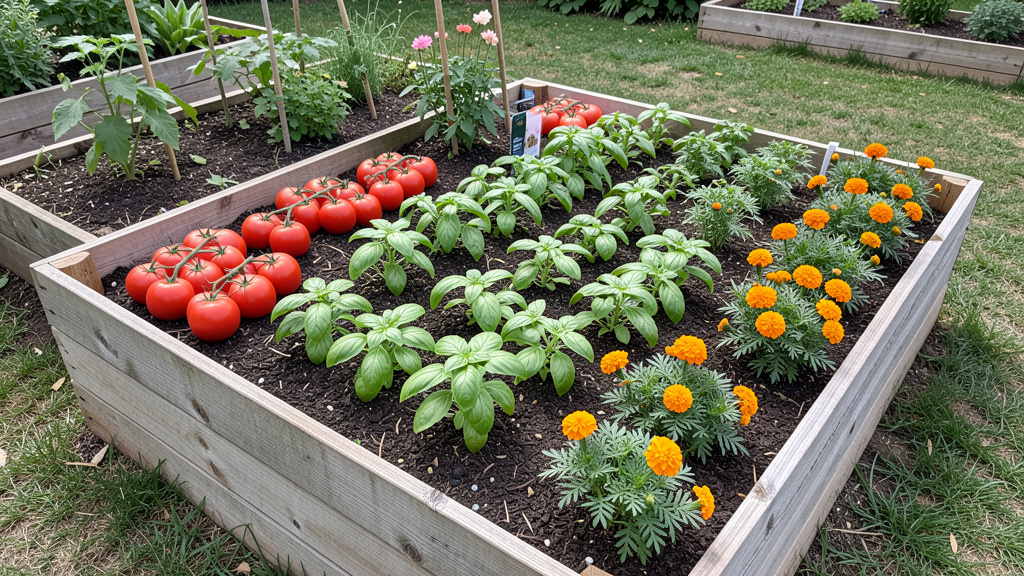
Stop guessing where to plant. This practical system helps you create a productive, resilient garden tailored to your space, season, and schedule—step by step.
Unlock more consistent harvests by designing a vegetable garden layout grounded in observable patterns of sun, soil, and plant relationships. This guide synthesizes widely shared horticultural principles with adaptable strategies used by experienced home gardeners across diverse settings. Whether you’re cultivating a sunlit backyard plot, a compact urban patio, or a sloped yard with unique challenges, these methods help you work with your environment—not against it—to grow more food with thoughtful effort and lasting satisfaction.
Introduction
Visit any community garden on a weekend, and you’ll notice subtle differences in how plots perform. One may show crowded carrots shaded by sprawling squash vines. Another displays tidy rows of lettuce that leave soil underutilized for weeks. A third—a seemingly intricate mix of tomatoes, basil, beans, and marigolds—yields abundant, healthy produce throughout the season. The distinction rarely lies in soil amendments alone, seed brand, or hours spent weeding. It stems from intentional layout: how plants relate to sunlight patterns, soil conditions, water access, and your own movement through the space. Agricultural extension resources and gardener networks consistently observe that thoughtful spatial planning significantly influences garden productivity and ease of care—often more than minor variations in seed selection or fertilizer timing. This isn’t about achieving picture-perfect symmetry or following rigid templates. It’s about designing a living system where plants support one another, resources flow efficiently, and your time yields meaningful returns. True abundance emerges from alignment, not acreage. Let’s build that alignment together.
The Triad Framework: Cultivating Harmony Through Three Interconnected Systems
Most layout advice offers isolated tips: “Plant tomatoes here,” “Space carrots this way,” “Add marigolds.” Helpful in isolation, these rarely address the garden as a dynamic whole. Vegetables grow within a living context—shaped by light, soil biology, moisture, microclimates, wildlife, and your physical capacity to tend them. The Triad Framework brings coherence by organizing every layout decision into three interdependent pillars. When balanced, they create conditions where plants thrive with less intervention, pests are naturally moderated, and your effort feels purposeful. This approach reflects patterns documented across regional gardening communities and educational resources—from university extension publications to urban agriculture initiatives. Gardeners applying these principles often observe more reliable yields, reduced maintenance burdens, and greater enjoyment over multiple seasons.
Step 1: The Foundation Triad (Sun, Soil, Water)
Before seeds touch soil, honor the physical realities of your space. Aligning with these elements prevents recurring frustrations and sets the stage for resilient growth.
Mapping Sunlight Thoughtfully
Sunlight varies by intensity, duration, and seasonal shift. A spot receiving six hours of gentle spring sun differs from six hours of intense July exposure. Begin observing 2–3 weeks before planting:
– Simple Tracking Method: Place stakes at garden corners early morning. Note shadow positions hourly until late afternoon. Repeat near the summer solstice (around June 21 in the Northern Hemisphere) for peak sun insight, and again near the spring equinox (around March 20) to understand shoulder-season light. A sun-tracking app can supplement this, but direct observation captures site-specific nuances like dappled shade from nearby trees.
– Practical Zoning:
– Full Sun Zone (6+ hours direct sun): Ideal for fruiting crops needing ample energy: tomatoes, peppers, eggplants, cucumbers, squash, beans, corn.
– Partial Sun Zone (3–6 hours): Well-suited for root vegetables (carrots, beets, radishes) and leafy greens that benefit from afternoon relief (kale, chard, lettuce). In warmer regions, this zone extends the growing window for cool-season crops.
– Light Shade Zone (<3 hours): Still valuable! Grow culinary herbs (parsley, cilantro, mint), garlic, scallions, or heat-sensitive greens like spinach in summer. (Plant mint in a buried container to manage spread.)
– Key Insight: Note when sun arrives. Morning sun (cooler, gentler) supports leafy crops prone to bolting. Intense afternoon sun suits heat-tolerant plants but requires mindful watering for greens. A bed lit from 10 AM–4 PM functions differently than one lit from 2 PM–8 PM.
– Common Oversight: Assuming “south-facing = full sun.” A south-facing wall may create a warm microclimate ideal for eggplants, while a south-facing spot under a deciduous tree loses critical afternoon light once leaves emerge. Map actual conditions, not theoretical orientation.
– Illustrative Example: A gardener in the Pacific Northwest observed her narrow yard carefully. The eastern edge received strong morning sun until early afternoon—perfect for spring lettuce and spinach. The western side faced intense afternoon exposure. Instead of forcing shade-loving crops there, she planted heat-tolerant tomato varieties and peppers, using the fence for vertical support. Her harvest improved noticeably compared to previous years of random placement.
Understanding Your Soil’s Character
Soil is a living ecosystem. Work with its inherent qualities rather than forcing uniformity.
– Simple Texture Assessment: Take a handful of moist soil. Squeeze gently:
– Sandy Soil (crumbles immediately): Drains quickly, warms early, holds fewer nutrients. Strategy: Group drought-tolerant crops (beans, carrots, radishes). Amend generously with compost before planting. Consider slightly sunken beds to conserve moisture.
– Clay Soil (forms a sticky ball): Drains slowly, stays cooler longer, rich in minerals but prone to compaction. Strategy: Raised beds (even 6–8 inches high) benefit most crops. Avoid working when wet. Excellent for moisture-loving crops like broccoli, cabbage, or kale. Amend with coarse compost; avoid adding sand alone, which can worsen compaction.
– Loam (holds shape but crumbles easily): Balanced texture supporting diverse vegetables. Focus shifts to crop rotation and organic matter maintenance.
– pH Awareness: Most vegetables prefer slightly acidic to neutral soil (pH 6.0–7.0). Blueberries and potatoes favor more acidic conditions; asparagus and cabbage tolerate slightly alkaline soil. An affordable test kit reveals baseline pH. If native soil is highly acidic (common in rainy regions), consider raised beds with amended soil for pH-sensitive crops like tomatoes. Plant acid-preferring crops directly where they naturally thrive—reducing amendment effort.
– Drainage Check: Dig a 12-inch hole, fill with water. If it drains within 4 hours: excellent. 4–12 hours: adequate. Over 24 hours: poor drainage. For poorly drained areas, raised beds, swales to redirect water, or moisture-tolerant crops (celery, watercress) are practical adaptations. Forcing standard vegetables into saturated soil increases disease risk.
– Reading Natural Indicators: Notice persistent weeds. Chickweed often indicates nitrogen-rich zones; plantain suggests compaction. These clues inform placement—e.g., avoid deep-rooted crops where compaction is evident until soil is gently aerated.
Designing for Water Access and Flow
Water access directly impacts consistency of care and plant health. Poor water logistics are a frequent cause of midseason garden decline.
– Source Proximity: Measure the distance from your water source (spigot, rain barrel) to the farthest garden point. If over 50 feet, plan intermediate rain barrels or a dedicated hose path within the layout. Dragging heavy hoses across beds damages plants and discourages timely watering.
– Irrigation Integration:
– Drip Systems: Ideal for defined beds. Lay main tubing along bed edges before planting. Space emitters based on crop density (e.g., 12 inches apart for lettuce, 18 inches for tomatoes). Label zones clearly.
– Soaker Hoses: Best for straight rows. Place under mulch to reduce evaporation. Avoid sharp bends to prevent kinking.
– Hand Watering: Practical only for very small areas (<50 sq ft). Design beds no wider than 4 feet so you can reach the center without stepping in.
– Working With Natural Water Flow: After rain, note where water pools. Can gentle grading direct runoff toward thirsty plants like squash or fruit trees? A shallow swale (a level ditch on contour) on a slight slope captures moisture for crops while reducing erosion. This mimics natural watershed patterns, lessening irrigation demands.
– Pathway Clarity: Ensure a clear, stable path (minimum 18 inches wide) leads directly from your water source to every bed. Cover with wood chips, gravel, or stepping stones. Muddy or obstructed paths lead to skipped watering sessions—a common stressor for young plants.
The Guiding Insight: A resilient garden layout begins by honoring sunlight patterns, soil character, and water flow. Designing with these elements—not against them—creates conditions where plants thrive with less struggle and your maintenance efforts feel purposeful.
Step 2: The Plant Triad (Companions, Spacing, Succession)
With foundational conditions mapped, arrange plants to foster mutual support. This triad encourages biodiversity that naturally moderates pests, optimizes space, and sustains soil vitality across seasons.
Companion Planting: Functional Relationships Over Folklore
Move beyond simplistic pairings. Effective companion planting leverages observable plant traits to create beneficial interactions:
– Pest Confusion & Trap Cropping: Strong-scented herbs can mask host plants from pests. Example: Dill or cilantro near brassicas may disrupt cabbage moth navigation. Nasturtiums often attract aphids away from beans or cucumbers. Certain marigold varieties (Tagetes erecta or patula) release compounds studied for suppressing soil nematodes—plant densely near tomatoes.
– Beneficial Insect Support: Small-flowered plants provide nectar and pollen for predators. Example: Alyssum, dill, fennel, and yarrow attract hoverflies (aphid predators) and parasitic wasps (caterpillar controllers). Integrate these within or alongside vegetable beds—not isolated in distant flower areas.
– Structural & Microclimate Synergy: Tall plants offer shelter. Example: Corn supports pole beans (which fix nitrogen); squash vines shade soil beneath, suppressing weeds and conserving moisture—the classic “Three Sisters” arrangement. Sunflowers can provide afternoon shade for heat-sensitive lettuce.
– Soil Enhancement: Deep-rooted plants access nutrients shallow roots cannot. Example: Daikon radish (as a fall cover crop) breaks compacted layers, drawing minerals upward. When incorporated, it enriches topsoil for subsequent shallow-rooted crops like lettuce.
Practical Companion Pairings (Based on Common Gardener Observations):
| Primary Crop | Supportive Companions | Observed Benefit | Plants to Separate |
|————–|————————|——————|———————|
| Tomatoes | Basil, Marigold, Borage, Onions | Basil may enhance flavor perception; marigolds associated with nematode suppression; borage attracts pollinators | Cabbage family, Corn, Potatoes (shared pest/disease risks) |
| Carrots | Chives, Rosemary, Leeks | Strong scents may mask from carrot fly | Dill (some gardeners note competition) |
| Cabbage Family | Nasturtium, Thyme, Celery | Trap crops and repellents for cabbage worms | Strawberries (shared slug susceptibility) |
| Pole Beans | Corn, Cucumbers, Summer Squash | Corn acts as trellis; squash shades soil | Onions, Garlic (some observe growth inhibition) |
| Lettuce | Chives, Garlic, Tall Tomatoes | Chives/garlic may deter aphids; tomatoes provide afternoon shade | Parsley (vigorous growth may crowd) |
Implementation Tip: Integrate purposefully:
– Plant a border of nasturtiums around cucumber patches.
– Tuck marigolds within tomato groupings.
– Sow alyssum between broccoli rows.
– Place borage adjacent to tomato supports.
Thoughtful Spacing: Balancing Growth and Density
Crowding invites disease and competition; excessive spacing invites weeds. Find balance using these adaptable guidelines:
– Seed Packet as Starting Point: Packet spacing assumes ideal conditions. Adjust based on your context:
– Rich Soil/Ample Water: Plants may grow larger—add 10–20% space (e.g., 14″ instead of 12″).
– Lean Soil/Drier Conditions: Plants may stay smaller—slightly closer spacing is often feasible, but monitor for stress.
– Visual Thinning Guide: When thinning seedlings, leave space approximating the mature plant’s leaf spread. Carrots: thumb-width. Lettuce: fist-width. Cabbage: two fists.
– Vertical Growth is Essential for Vining Crops: Cucumbers, pole beans, peas, and small squash thrive upward. A single cucumber sprawling on soil needs 12+ sq ft; trained vertically on a 4’x4′ trellis uses ~1 sq ft and often produces more fruit due to better air circulation and sun exposure. Install supports before planting to protect roots.
– Adapting Square Foot Concepts: Rigid grids don’t suit all crops. Adjust intelligently:
– 1 per sq ft: Broccoli, cabbage, peppers, determinate tomatoes, eggplant
– 4 per sq ft: Leaf lettuce, spinach, chard, bush beans
– 9 per sq ft: Beets, carrots, onions, radishes
– 16 per sq ft: Baby carrots, radishes (for microgreens)
– Vertical: Pole beans (8 seeds around trellis base), peas (along trellis edge)
Spacing Insight: A gardener planted zucchini 18″ apart per packet directions. By midsummer, three plants created dense shade, stressed nearby peppers, and harbored squash bugs. The following year, he planted one zucchini at the north end of a raised bed, trained it vertically on a sturdy arch, and harvested abundantly while growing peppers and basil in the dappled shade beneath—demonstrating how intentional spacing and verticality optimize space and health.
Succession Planting: Keeping Beds Productive Year-Round
A dynamic garden minimizes bare soil and extends harvests. Succession planting fills space intentionally across seasons.
– Three Practical Approaches:
1. Staggered Sowing: Plant radish or lettuce seeds every 10–14 days for continuous harvest.
2. Relay Planting: Harvest spring spinach → plant bush beans → after beans finish, sow fall kale. One bed, multiple harvests.
3. Interplanting: Sow fast radishes between young tomato seedlings. Radishes mature before tomatoes need the space.
– Creating Your Succession Plan:
– List crops with days to maturity (DTM).
– Note local frost dates (via regional extension resources or frost date tools).
– Calculate backward: For fall kale (DTM 60 days + hardening time), count backward from first expected frost to determine last planting date.
– Identify gaps: After early potatoes, could bush beans fit? Or a soil-renewing cover crop like buckwheat?
– Integrating Season Extenders:
– Cold Frames: Position on south side of a wall/fence for wind protection and reflected warmth. Ideal for early peas or late carrots.
– Row Covers: Design beds with low hoops (PVC or wire) for quick deployment during unexpected cold or pest pressure.
– Cloches: Reserve sheltered spots near foundations for ultra-early sowings.
Sample Succession Plan (Temperate Climate Example):
– Bed 1 (4’x8′):
– Early spring: Spinach, radishes, peas (under row cover)
– Late spring: Harvest spinach/radishes → transplant tomatoes, basil, marigolds
– Early summer: Harvest peas → sow bush beans in cleared space
– Early fall: Harvest beans → plant garlic for next season
– Bed 2 (4’x8′):
– Spring: Carrots, beets, lettuce
– Early summer: Harvest lettuce → sow cucumbers at north end (vertical trellis)
– Late summer: Harvest carrots/beets → sow fall broccoli, kale
Step 3: The Human Triad (Access, Ergonomics, Maintenance)
A garden that respects your body, time, and habits is one you’ll tend joyfully. Sustainability includes your well-being.
Pathways: Designing for Flow and Function
Paths enable care—they are not wasted space.
– Width Guidance:
– Main Paths (to water, compost): Minimum 24 inches for wheelbarrow access without bed damage.
– Secondary Paths (between beds): Minimum 18 inches for comfortable kneeling and reaching bed centers.
– Within Large Beds: Stepping stones every 3 feet prevent soil compaction during harvest or care.
– Surface Options:
– Wood Chips: Suppress weeds, soft underfoot, decompose to enrich soil. Replenish annually.
– Pea Gravel: Stable for tools, drains well. Use edging to contain spread.
– Living Path: Low-growing thyme or chamomile between stones offers fragrance and pollinator appeal. Requires occasional weeding.
– Logical Flow: Avoid dead ends. Create a loop if space allows. Route should flow naturally: Tool Storage → Compost → Water → Beds → Harvest Station. Minimize backtracking.
Ergonomic Bed Design: Supporting Your Body
- Height Flexibility: Standard raised beds (11″–12″) suit many. For knee/back considerations:
- Elevated Beds (28″–36″): Enable gardening while standing or seated. Fill lower section with gravel for drainage, top with soil mix. Ideal for herbs, lettuce, strawberries.
- Keyhole Beds: Circular design (approx. 6′ diameter) with a narrow path to a central composting point. Maximizes accessible edge while minimizing steps—excellent for small spaces.
- Width = Reach, Not Aesthetics: Never wider than you can comfortably reach the center without stepping in. Typically: 3’–4′ if accessible from one side; max 4′ if accessible from both. Stepping into beds compacts soil and damages root zones.
- Clear Edging: Use rot-resistant materials (cedar, stone, recycled plastic). Avoid pressure-treated lumber where edibles are grown. Edging maintains soil structure, defines work zones, and reduces perceived clutter.
Embedding Low-Effort Maintenance
Design habits into the layout:
– Compost Placement: Position bins between the garden and kitchen door. Shorter scrap-carrying distance increases usage. Place near a water source for moisture management.
– Tool Station: Install a covered rack or small shed at the garden entrance. Keep hand trowel, pruners, twine, and labels ready. Eliminates mid-task searches.
– Harvest Station: Designate a small, shaded spot with a bench or table near the exit. Sort, trim, or rinse produce immediately—reducing kitchen mess and preventing forgotten harvests.
– Weed Prevention by Design:
– Mulch Strategy: Plan for 2–3 inches of organic mulch (straw, shredded leaves) around plants. Suppresses weeds, conserves moisture. Calculate needed volume during planning.
– Strategic Density: Follow spacing guidelines to fill soil with desired plants, leaving little room for weeds. A leafy lettuce canopy shades soil effectively.
– Path Maintenance: Line path edges with cardboard before adding wood chips or gravel. Blocks weed migration from surrounding areas.
Working With Your Garden’s Unique Conditions: Microclimates and Constraints
Every space has distinctive features. Learning to read and adapt to them turns limitations into opportunities.
Observing Microclimates: Your Site’s Hidden Patterns
Microclimates are small areas with distinct temperature, moisture, or wind conditions. Learn to recognize them:
– Heat-Absorbing Surfaces: South-facing brick walls, dark patios, or asphalt absorb daytime heat and radiate it slowly at night. Create a “warm pocket” here for heat-loving crops: eggplants, peppers, or melons. In cooler regions, this can extend the growing season by weeks.
– Frost-Prone Areas: Cold air settles in low spots, especially at slope bases. Avoid planting tender seedlings or early spring crops here. Use for cold-hardy perennials (rhubarb, asparagus) or late-season crops like kale.
– Wind Channels: Gaps between structures accelerate wind, drying soil and damaging stems. Place windbreaks upwind: a row of sunflowers, a trellis with climbing beans, or a temporary burlap screen. Position delicate crops in the sheltered area behind.
– Moisture Variations: Note where puddles form (poor drainage) versus where soil dries quickly (sandy soil, slope tops). Plant moisture-lovers (celery, cress) in damp zones; drought-tolerant crops (beans, carrots, rosemary) in drier areas.
Real-World Adaptation: Urban Balcony
A gardener in Chicago transformed her 6’x10′ west-facing balcony—intense afternoon sun, wind exposure, heat-radiating concrete—by mapping microclimates:
– Corner behind AC unit: Slight windbreak, shade until mid-afternoon → ideal for cilantro and parsley.
– Rail edge (full sun, windy): Planted compact tomato varieties in heavy, stable containers with trailing nasturtiums to soften wind impact.
– Area near door (dappled light): Grew mint and lemon balm in self-watering pots.
By designing for the site’s realities—not against them—she enjoyed consistent harvests where generic advice had failed.
Adapting to Common Constraints
- Very Small Space (Under 50 sq ft): Prioritize vertical growth (wall pockets, railing planters, tall trellises) and temporal succession. Focus on high-value, continuous-yield crops: cut-and-come-again lettuce, bush beans, radishes. Flavor and freshness often outweigh sheer quantity.
- Significant Shade (Under Trees): Embrace shade-tolerant edibles: garlic, scallions, parsley, cilantro, mint, lemon balm, sorrel, alpine strawberries. Use light-reflective mulch (straw) to brighten the root zone. Avoid forcing sun-loving crops—they’ll struggle and attract pests.
- Sloped Terrain: Build terraced raised beds following the contour (level). Water and nutrients stay in the bed. Plant downhill crops tolerant of occasional runoff (squash); uphill crops needing sharp drainage (carrots, potatoes). Paths should run perpendicular to the slope for safe access.
- Challenging Native Soil: Instead of endless amending, build raised beds on top of existing ground. Fill with a blend of screened topsoil, compost, and coarse material for drainage. For in-ground improvement over time, use deep-rooted cover crops (daikon radish, clover) to gradually enhance structure.
Comparing Layout Styles: Choosing What Fits Your Context
No single layout suits every situation. Match the approach to your space, goals, and physical needs.
| Layout Style | Best Suited For | Space Efficiency | Maintenance Ease | Initial Investment | Key Considerations |
|---|---|---|---|---|---|
| Traditional Rows | Larger plots (>200 sq ft), use of broadfork or tiller, root crop focus | Moderate | Moderate (wider paths = more weeding) | Low | Requires significant space; less water-efficient; soil compaction between rows |
| Raised Beds | Most home gardens, poor native soil, accessibility needs, water conservation | High | High (contained weeds, easy reach) | Moderate | Optimal width: 4′ max. Height adjustable. Use untreated, rot-resistant materials. |
| Square Foot Gardening | Small spaces, beginners, intensive production, children’s gardens | Very High | Very High (structured, minimal weeding) | Moderate | Requires quality soil mix. Best for shallow-rooted crops. Adapt spacing flexibly. |
| Keyhole Garden | Compact spaces, water conservation focus, accessibility | Very High | Very High (central compost feeds bed) | Moderate | Circular bed (~6′ dia) with path to center compost basket. Originated in water-scarce regions. |
| Hügelkultur | Slopes, moisture retention goals, recycling woody debris | Moderate | Low (once established) | Low (uses on-site wood) | Mound of decaying logs/branches covered with soil. Retains moisture; warms soil early. |
| Container Gardening | Patios, balconies, renters, mobility needs | Moderate (vertical potential) | Moderate (frequent watering) | Low-Moderate | Use largest practical pots (5+ gal for tomatoes). Ensure drainage. Self-watering options helpful. |
| Forest Garden (Edible Landscape) | Larger properties, permaculture interest, long-term low maintenance | Moderate (layered) | Low (once established) | Low (uses existing trees) | Mimics forest layers: fruit trees (canopy), berries (understory), herbs, roots. Multi-year development. |
Why Raised Beds Suit Many Home Gardeners
Raised beds address common home-garden challenges effectively:
– Soil Control: Create ideal growing medium regardless of native soil.
– Drainage & Warmth: Elevated soil drains excess rain and warms earlier in spring.
– Weed Reduction: Defined edges deter lawn invasion; mulch stays contained.
– Accessibility: Reduced bending; height customizable for comfort.
– Water Efficiency: Target moisture directly to root zones.
Construction Note: Build frames 4′ wide x desired length. Use cedar or stone. Line base with cardboard (blocks weeds, decomposes) before adding soil mix (e.g., 60% topsoil, 30% compost, 10% coarse sand). Avoid bagged “garden soil” which may be heavy clay.
Evolving With the Seasons: A Flexible Layout Approach
Your garden map should adapt as light, temperature, and plant needs shift. View layout as an ongoing conversation with your space.
Spring: Preparation and Cool-Season Crops
- Soil Readiness: Work soil only when crumbly—not wet and muddy. Test pH if starting new beds. Amend based on planned crops: lime for brassicas if acidic; sulfur for potatoes if alkaline.
- Cool-Season Strategy: Position crops where they receive full spring sun, but consider future shade from summer plantings. Sow peas along a future tomato trellis—they’ll finish before tomatoes cast shade. Plant spinach on the east side of beds so afternoon shade delays bolting as days lengthen.
- Frost Preparedness: Identify beds needing protection. Keep row cover hoops installed for quick deployment. Place cold frames in the sunniest, most sheltered location.
Summer: Vigor and Vigilance
- Heat Management: Use taller crops to shade heat-sensitive ones. Plant lettuce north of tomatoes so afternoon shade extends its season. Apply mulch thickly (2–3 inches) to keep roots cool.
- Pest Awareness: Inspect leaf undersides weekly. Place yellow sticky traps near brassicas if aphids appear. Hand-pick larger pests like tomato hornworms during cooler evening hours.
- Water Wisdom: Water deeply early morning. Avoid wetting foliage to reduce fungal risks. Check soil moisture 2 inches down—if dry, water. Containers may need daily attention during heatwaves.
Fall: Renewal and Late Harvests
- Succession Sowing: After harvesting beans or cucumbers, sow fast-maturing fall crops: radishes (25 days), spinach (40 days), arugula (30 days). Use shade cloth initially if soil is still warm.
- Cover Cropping: In empty beds, sow crimson clover (adds nitrogen) or winter rye (prevents erosion). Turn under 3–4 weeks before spring planting.
- Soil Care: Top-dress beds with 1 inch of compost. Earthworms will gradually incorporate it over winter—gentler than spring tilling and nourishing for soil life.
Winter: Reflection and Planning
- Garden Journal Review: Note successes, challenges, pest patterns, and crop performance. Sketch next year’s layout while memories are fresh. Plan crop family rotation.
- Tool Care: Clean, sharpen, and oil tools. Repair trellises or beds. Order seeds early for best variety selection.
- Soil Rest: Keep beds covered with mulch or cover crops. Avoid walking on frozen soil to prevent compaction.
Supporting Soil Health Through Crop Rotation
Planting the same crop family repeatedly in one spot can deplete specific nutrients and encourage soil-borne issues. Rotation supports long-term garden vitality.
Simple Four-Section Rotation Guide:
1. Legume Year: Beans, peas. Role: Contribute nitrogen to the soil.
2. Leaf Year: Lettuce, spinach, kale, chard. Role: Thrive on nitrogen left by legumes.
3. Fruit Year: Tomatoes, peppers, cucumbers, squash. Role: Heavy feeders needing balanced nutrients; add compost before planting.
4. Root Year: Carrots, beets, radishes, potatoes. Role: Lighter feeders; help aerate soil. Follow with a cover crop if possible.
How to Apply: Divide your growing area into four sections. Each year, shift crop families clockwise. Keep a simple sketch in your journal. Even in small gardens, avoid planting tomatoes where tomatoes grew the prior year—relocate within containers or bed corners. Rotation is a gradual practice; consistency over years yields the greatest benefit.
Navigating Common Layout Challenges
Even experienced gardeners encounter hurdles. Recognizing these early supports timely adjustments.
Challenge: Underestimating Mature Plant Size
Observation: Seedlings look orderly in spring; by midsummer, overcrowding blocks light and air.
Adaptation: Before planting, research mature dimensions. Place temporary markers (sticks, stones) at expected widths. If markers overlap, increase spacing. Install vertical supports for vining crops at planting time.
Challenge: Timing Plantings to Soil Temperature
Observation: Seedlings stall in cold soil; tomatoes drop blossoms in extreme heat.
Adaptation: Use a soil thermometer. Beans prefer soil above 60°F (15°C); tomatoes above 65°F (18°C). For fall crops, calculate backward from your area’s average first frost date + days to maturity + a buffer week. Local extension resources offer region-specific planting windows.
Challenge: Limited Pollinator Activity
Observation: Squash or cucumber flowers bloom but set little fruit.
Adaptation: Ensure flowers are accessible—avoid overly dense planting. Include pollinator-friendly blooms within the vegetable area (borage near squash, alyssum near carrots). Avoid pesticide use during flowering hours. Hand-pollination with a small brush is a gentle backup.
Challenge: Harvest Access Compromised
Observation: Ripe produce is hard to reach without stepping into beds.
Adaptation: Designate subtle “harvest lanes” in dense plantings. Place flat stones strategically. Train vining crops to grow toward paths for easier picking.
Challenge: Edge Effects in Rectangular Beds
Observation: Plants along bed edges thrive; center plants lag.
Adaptation: Maximize productive edge zones. Use gently curved bed edges, keyhole designs, or spiral herb gardens. In rectangular beds, place high-value crops (tomatoes, peppers) along edges; fill centers with resilient crops like beans or lettuce.
Your Questions, Answered
Q: How much space is realistically needed to grow meaningful food for a household?
A: A well-planned 100–200 square feet can provide consistent supplemental produce (salads, herbs, tomatoes, beans) through the growing season for a small household. For significant preservation (canning, freezing), 400+ sq ft is often more practical. Focus on high-yield crops per square foot: pole beans, zucchini, tomatoes, leafy greens. Diversity and consistent harvests often matter more than total volume.
Q: Is it advisable to plant tomatoes in the same spot yearly if I amend the soil thoroughly?
A: Rotation is strongly recommended. Soil-borne concerns like certain wilts or nematodes can persist despite amendments. Move tomatoes to a new location every 2–3 years. In very limited spaces, growing tomatoes in large containers (15+ gallons) with fresh potting mix each season is a viable alternative.
Q: What’s the most frequent layout challenge for new gardeners?
A: Starting with a space that’s too large to manage comfortably. Enthusiasm can wane when faced with weeding a vast plot. Begin with a single 4’x4′ raised bed or a few containers. Master watering, weeding, and harvesting in a manageable area. Success here builds confidence and skill for thoughtful expansion later. A thriving small garden is far more rewarding than an overwhelmed large one.
Q: How does spacing differ for container gardening versus in-ground?
A: Containers restrict root zones, so plants often stay more compact. Slight reductions in spacing may be feasible (e.g., 10″ instead of 12″ for bush beans), but prioritize pot size: tomatoes need 5+ gallons per plant; peppers 3+ gallons. Overcrowding in containers accelerates nutrient depletion. When uncertain, under-plant—better one vigorous plant than several struggling ones.
Q: Are there vegetable pairings with documented negative interactions?
A: Some combinations are widely observed to compete or share vulnerabilities:
– Beans + Onions/Garlic: Alliums may inhibit bean growth in some gardens.
– Cabbage Family + Strawberries: Shared susceptibility to slugs and certain fungi.
– Potatoes + Tomatoes: Similar pest and disease pressures; potatoes may compete aggressively with tomatoes.
– Corn + Tomatoes: Heavy competition for nutrients and water; corn can shade tomatoes.
When conflicts arise, separate by several feet or use a path as a buffer. Observation in your own garden is the best guide.
Q: How can layout support gardens in areas with deer or rabbits?
A: Layout complements physical barriers:
– Fencing First: Install appropriate fencing before planting (8′ high for deer; 2′ high buried 6″ for rabbits).
– Strategic Placement: Position highly attractive crops (strawberries, lettuce) deeper inside the protected area; place less appealing crops (tomatoes, peppers, strong-scented herbs) nearer the perimeter.
– Sensory Borders: Plant aromatic herbs (lavender, rosemary, sage) along fence lines. While not foolproof deterrents, they add sensory complexity.
– Elevated Beds: Beds 24″+ high may discourage rabbits.
Physical barriers remain essential; layout alone cannot reliably exclude persistent wildlife.
Q: What’s a practical way to track garden layouts across years?
A: Maintain a simple, evolving garden journal:
1. Annual Sketch: Draw bed outlines each spring. Label plant locations.
2. Seasonal Notes: Record planting dates, varieties, observations on pests, weather impacts, successes.
3. Photographs: Take monthly photos—visual records reveal patterns text may miss.
4. Digital Option: Free apps like Garden Planner or a dedicated digital folder work well.
This living record becomes invaluable for rotation planning, succession timing, and celebrating progress.
Q: Is landscape fabric recommended under raised beds?
A: Generally not preferred. While it blocks weeds initially, it:
– Hinders earthworm and beneficial insect movement between native soil and bed soil.
– Can impede drainage if improperly installed.
– Degrades over time, contributing microplastics.
– Complicates future soil amendment.
Preferred Alternative: Lay thick, plain cardboard (remove tape/labels) directly on grass or weeds before building beds. It suppresses weeds initially, decomposes within a year, and supports soil life. Top with your soil mix.
Q: How can layout encourage better pollination?
A: Design for pollinator habitat, not just visitation:
– Cluster Flowers: Plant pollinator favorites (borage, alyssum, calendula) in groups of 3–5. Bees forage more efficiently in patches.
– Season-Long Bloom: Include early (crocus), mid-season (sunflowers), and late (asters) bloomers. Native species often support local pollinators most effectively.
– Water Source: Place a shallow dish with stones (for landing) nearby. Refresh water regularly.
– Pesticide Caution: Avoid broad-spectrum pesticides. If needed, apply insecticidal soap only at dusk when pollinators are inactive.
Q: How often should soil be tested?
A: For established gardens with regular compost addition, testing every 2–3 years is often sufficient. Test sooner if:
– Plants show unexplained yellowing or stunting.
– Starting a new garden area.
– Concerns about soil history (e.g., near old structures).
Affordable home kits indicate pH and major nutrients. For detailed analysis (including potential contaminants), contact your local Cooperative Extension Service—they often provide low-cost testing with tailored recommendations.
Q: How can children be meaningfully included in garden layout?
A: Design dedicated, child-friendly zones:
– Pizza Garden: Circular bed divided into slices: tomatoes, basil, oregano, peppers, onions.
– Snack Path: Line a path with easy-pick crops: cherry tomatoes, snap peas, strawberries, radishes.
– Sunflower Hideaway: Plant sunflowers in a circle; gently tie tops together to form a living fort.
– Sensory Corner: Include fuzzy lamb’s ear, fragrant mint, crunchy radishes, colorful chard.
Assign children ownership of a small bed (2’x2′) with fast, forgiving crops (radishes, beans). Hands-on success fosters lifelong connection.
Conclusion and Next Step
You now have a flexible, adaptable system for designing a vegetable garden that aligns with your space, seasons, and personal rhythm. The Triad Framework—honoring Foundation conditions (Sun, Soil, Water), cultivating Plant relationships (Companions, Spacing, Succession), and designing for the Human element (Access, Ergonomics, Maintenance)—transforms layout from guesswork into intentional, joyful practice. This approach, refined through shared gardener experience across climates, turns constraints into creative opportunities and seasonal effort into enduring satisfaction. Remember: maximum production stems not from cramming in more plants, but from creating conditions where every element—plant, soil, water, and gardener—works in supportive harmony.
Three Guiding Principles
- Observe Before You Act: Spend time noting sun patterns, soil texture, and water flow in your space. This foundational awareness prevents recurring challenges and informs every subsequent decision.
- Design the Ecosystem: Integrate companions for natural balance, plan successions to keep soil covered and productive, and place paths for effortless care. Your garden thrives when elements support one another.
- Begin Modestly: A single 4’x4′ bed tended with attention yields more learning and satisfaction than an overwhelming expanse. Mastery in a small space builds confidence for thoughtful growth.
The 24-Hour Step
Within the next day, take one small, concrete action:
→ If starting fresh: Sketch your space on paper. Mark north, note today’s sun patterns, and circle one manageable area (e.g., 4’x4′) for your first bed.
→ If refining an existing garden: Walk your space with a notebook. Identify one recurring challenge (e.g., “this corner stays too wet,” “I always step into this bed to harvest”). Write down one Triad-inspired adjustment (e.g., “plant moisture-loving herbs here,” “add a stepping stone”).
Action builds momentum. Clarity grows through doing.
A Broader Perspective
Your garden is more than a food source. It’s a space for patience, observation, and connection to natural cycles. Each season, your understanding deepens—refined by experience, adapted to changing conditions, enriched by small discoveries. You’re cultivating more than vegetables; you’re nurturing resilience in the soil and within yourself. The most fulfilling gardens are measured not only in harvest weight, but in the quiet satisfaction of a balanced system, the joy of sharing homegrown food, and the gentle legacy of care passed to the next season. Begin where you are. Use what you have. Do what you can. The soil is ready.
Explore Our Complete System:
Mastering Seed Starting Indoors | Organic Pest Management Strategies | Building Nutrient-Rich Raised Bed Soil | Season Extension Techniques for Longer Harvests | Water-Wise Garden Irrigation Guide | Preserving Your Harvest: Simple Methods | Creating a Welcoming Habitat for Pollinators