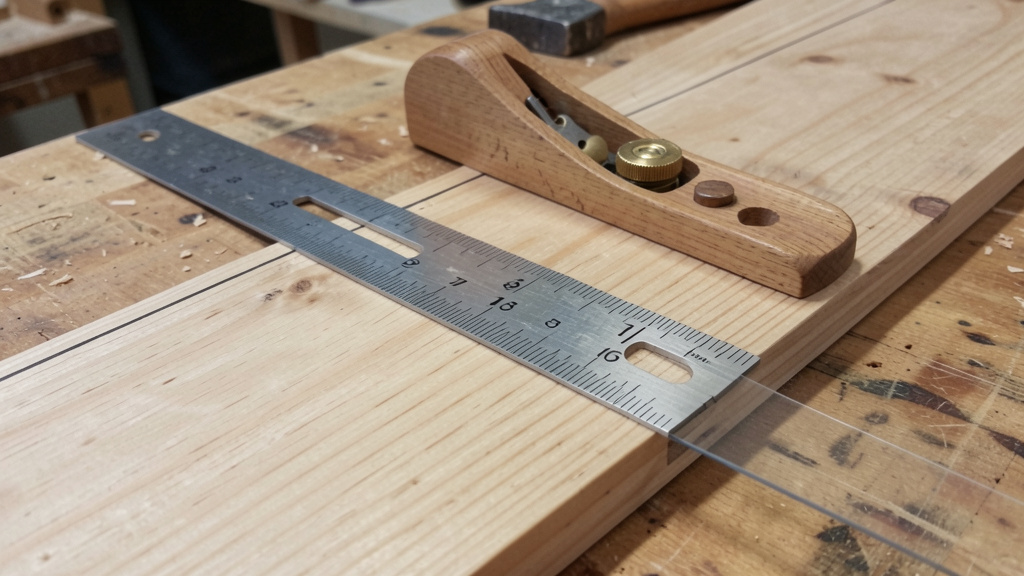
Move beyond the adage of measuring twice and cutting once—embrace measuring strategically and cutting with confidence. Discover a systematic approach to transferring designs directly onto your material, where thoughtful layout elevates your craftsmanship and reduces errors through intentional preparation.
Before the saw blade ever touches wood, metal, or plastic, the most critical work of any project unfolds in quiet moments with a pencil, square, and steady hand. This is the essential space of layout—the deliberate process of translating plans into physical markings that guide every cut, drill, and assembly. While beginners may rush this phase, experienced makers understand that layout forms the foundational bridge between intention and execution. A misplaced line can lead to misaligned components or material waste; conversely, thoughtful layout creates a self-correcting roadmap where each mark validates the next, building assurance with every stroke. This guide synthesizes enduring workshop principles with material-aware practices to deliver an adaptable system for planning directly on your workpiece—whether building a simple shelf or crafting detailed cabinetry. We move beyond fragmented tool tips to reveal the underlying logic that makes layout intuitive across materials, projects, and skill levels. By the end, you’ll possess a repeatable framework to reduce uncertainty, minimize rework, and achieve results where precision feels earned, not accidental.
Introduction: The Unseen Foundation of Every Great Project
Walk into any well-organized workshop, and you’ll observe a consistent ritual before cutting begins: fingers tracing grain patterns, squares pressed firmly against edges, pencils making deliberate arcs and lines. This isn’t hesitation—it’s intentionality. Layout represents the critical bridge between abstract design and tangible creation. Historically, apprentices spent considerable time mastering layout before advancing to cutting tools, learning that precision marked directly on the material provided the most reliable safeguard against irreversible errors. Today’s digital aids—CAD software, laser projectors—complement but never replace this hands-on translation. Why? Because materials have inherent characteristics. Wood responds to humidity. Metal expands with temperature shifts. Plywood edges may vary slightly from true. Only by engaging directly with the physical workpiece can you account for these realities. This guide honors that enduring truth while integrating contemporary insights from woodworking standards, fabrication handbooks, and ergonomic practice. We approach layout not as a collection of isolated tricks, but as a cohesive discipline where spatial reasoning, geometry, and material awareness converge. Whether your project involves framing a garden shed, crafting joinery, or installing a tile backsplash, the principles herein form a adaptable language of precision. As you read, remember: every skilled maker was once a beginner who decided that how they marked mattered as much as what they built.
The Precision Pathway Framework: Five Steps to Confident Execution
Forget fragmented advice about “using a sharp pencil” or “checking twice.” True layout reliability emerges from a repeatable system that builds accuracy incrementally. After reviewing common workshop workflows and error patterns, we’ve distilled the process into five interlocking steps. This framework works because it aligns with how spatial tasks are processed: establishing reliable anchors first, layering details progressively, and embedding verification at each stage. Skipping any step introduces vulnerability. Mastering all five creates compounding reliability. Let’s walk through the pathway where each action validates the previous one, transforming uncertainty into grounded confidence.
Step 1: Surface Preparation and Reference Selection—The Essential Starting Point
You cannot mark accurately on a surface you haven’t prepared. This step is frequently overlooked yet contributes significantly to layout inconsistencies, especially for those newer to hands-on work. Surface preparation isn’t about aesthetics—it’s about creating a reliable canvas where marks remain visible, measurements stay true, and tools glide without unintended deviation.
Why this step matters: Sawdust, oil residues, mill glaze (that compressed wood layer from factory planing), or oxidation create microscopic barriers. A combination square sliding over dusty plywood may shift subtly without visible resistance—enough to affect alignment. Similarly, selecting an unverified reference edge compounds deviations. Imagine building a bookshelf: if your chosen “reference edge” has even a slight bow, every subsequent mark inherits that variation. Precision is relational; it depends entirely on your verified starting point.
How to execute thoughtfully:
– For wood: Lightly sand the layout area with 120-grit sandpaper wrapped around a flat block. This removes mill glaze and raises wood fibers slightly, making pencil lines crisper. Wipe thoroughly with a tack cloth—never bare hands, which transfer oils. For critical joinery (dovetails, mortise-and-tenon), apply layout dye (aniline dye in denatured alcohol) to the area. This stains the wood surface faintly blue or red, causing pencil lines to appear dramatically sharper. The dye evaporates after cutting, leaving no trace.
– For metal: Degrease with acetone on a lint-free cloth. For steel, a light pass with fine steel wool removes surface rust that could deflect scribes. Aluminum benefits from a chalk-line snap (more on this later) since pencil smudges easily.
– For composites (plywood, MDF): Seal raw edges near your layout zone with diluted wood glue (1:1 with water) and let dry. This prevents fuzzy pencil lines caused by loose fibers. Mark on the better face—the side with fewer voids or veneer patches.
– Reference edge selection: Place the workpiece on a known-flat surface (your tablesaw top, a calibrated assembly table). Sight down each edge against a straightedge. Choose the straightest, squarest edge as your primary reference—the “mother edge.” Mark it discreetly with a pencil arrow labeled “REF.” Factory edges are not always perfectly square; verification is a standard practice in cabinetry workflows. Always confirm with a precision straightedge before proceeding.
Common considerations:
– The “close enough” edge: Using a visibly imperfect edge because “it’s nearly straight” introduces cumulative error. Remember: small deviations magnify across distance.
– Over-sanding: Aggressive sanding creates dips. Sand just enough to clean the surface—3-4 light passes.
– Grain awareness: On solid wood, orient your reference edge parallel to the grain. Cross-grain references can lead to tear-out during cutting and make square alignment less reliable.
The Guiding Insight: Your reference edge serves as the anchor for your entire layout. Verify it with physical evidence, not assumption. This single act establishes the foundation for all that follows.
Step 2: Establishing Primary Layout Lines—Creating Your Coordinate System
With a prepared surface and verified reference, you now establish the foundational grid upon which all details rest. Think of this as plotting latitude and longitude lines on a map before marking specific locations. Primary lines define critical boundaries: overall dimensions, centerlines, or key alignment planes. These lines must be geometrically sound because every secondary mark derives from them.
Why this step matters: Human eyes can struggle with absolute straightness. A line that appears straight may curve imperceptibly. Primary lines anchor your project to physical geometry—not perception alone. They also create immediate error-checking opportunities. If two intended “parallel” lines measure differently at each end, you’ve caught a discrepancy before investing time in details.
How to execute thoughtfully:
– The knife-edge technique for wood: Instead of pencil alone, use a sharp marking knife guided by a quality square. Press the knife firmly against the square’s blade and scribe a shallow groove along your reference edge. Why knife? Pencil lines have width; a knife line is virtually zero-width, giving your saw blade or chisel an exact path. The groove also catches saw teeth, reducing drift. For crosscuts, scribe across the grain; for rip cuts, scribe with the grain.
– Chalk lines for long spans: For lines over 24″ (deck framing, drywall, fencing), snap a chalk line. First, stretch the line taut exactly where the mark should fall. Hold firmly at both ends. Lift the line 4-6 inches at its midpoint and release sharply. The “snap” should be crisp. Use contrasting chalk: red on light wood, white on dark surfaces. For critical work, follow the chalk line with a pencil line inside the chalk dust for permanence.
– Finding center simply: Need the exact center of a board? Place two combination squares at opposite edges, extending their blades inward. Adjust until the blades meet precisely at the center point. Mark that point. Repeat 6-12 inches away. Connect the dots with a straightedge. No calculation required. For circles or irregular shapes, use the “three-tangent method”: place three points where a straightedge just touches the curve; the intersection of perpendicular bisectors marks the center.
– Verifying square: After striking a line perpendicular to your reference edge, measure diagonally from the reference corner to two points on the new line (e.g., 12″ and 24″ out). If distances match exactly, the line is square. This “3-4-5 triangle check” (measure 3 units on reference, 4 units on new line; diagonal should be 5 units) works at any scale.
Material-aware considerations:
– Hardwoods (oak, maple): Knife lines prevent tear-out. Pencil alone may smear on dense grain.
– Softwoods (pine, cedar): Pencil works well, but use a harder lead (2H) to avoid wide lines. Lightly score with a utility knife first for saw guidance.
– Sheet metal: Use a center punch to mark endpoints, then scribe between them with a hardened steel scriber. A drop of layout fluid (Dykem Blue) makes scribe lines highly visible.
– Plastic/acrylic: Masking tape along the intended cut line prevents chipping and provides a smooth surface for marking. Use a fine-tip permanent marker.
Common considerations:
– Viewing angle: Viewing your square from an angle can make lines appear square when they’re not. Position your eye directly above the intersection point.
– Tool stability: Clamp your square to the workpiece for long lines. Even slight movement affects accuracy.
– Kerf awareness: Your saw blade removes material (kerf). Decide before marking whether your line represents the cut’s left edge, right edge, or center. Consistently mark on the waste side of the line. Label critical lines: “CUT LEFT OF LINE.”
Step 3: Transferring Measurements and Patterns—Bridging Design to Reality
Now the design comes alive. This step moves beyond straight lines to replicate shapes, repeat patterns, or transfer measurements from plans. It’s where creativity meets precision—and where discrepancies between measured intent and physical mark often arise. The core challenge: human hands aren’t machines. We benefit from techniques that compensate for natural variation and perceptual limits.
Why this step matters: Measurements exist in two contexts: the theoretical (your plan indicates “12.5 inches”) and the physical (your tape measure interacts with the material). Transferring bridges this gap. Thoughtful transfer builds redundancy—multiple verification points ensuring the mark aligns with intent.
How to execute thoughtfully:
– The story stick method (timeless for repetition): Instead of measuring each shelf position individually on a bookcase, cut a scrap piece of wood to the stile length. Mark all shelf locations once on this “story stick” using your plan. Then, hold the stick against each stile and transfer marks directly. This eliminates cumulative measuring variations. Used for centuries in timber framing and shipbuilding. Modern application: Mark cabinet hinge locations on a story stick, then transfer to every door.
– Compass and trammel points for curves: Need a consistent arc? Set trammel points (or a beam compass) to your radius. Anchor the pivot point firmly (use a center punch dimple on metal). Rotate smoothly while maintaining consistent pressure. For large radii (arched doorways), use a nail, string, and pencil—but secure the nail deeply and keep string taut without stretching.
– Pattern tracing with care: Print or draw your pattern on paper. Spray the back lightly with repositionable adhesive. Align carefully and press down. Trace firmly with a ballpoint pen—the indent transfers to the material. For dark materials, place carbon paper between pattern and workpiece. Critical tip: After tracing, verify key dimensions on the workpiece with calipers. Paper can stretch; materials do not.
– Transferring irregular shapes (scribing): When fitting a shelf against a wavy wall, clamp the shelf in approximate position. Hold a compass with the pencil lead set to the gap width. Drag the metal point along the wall while the pencil marks the shelf. The resulting line mirrors the wall’s contour. Sand or saw to this line for a seamless fit. This “compass scribe” technique works for countertops against tile backsplashes too.
– Digital augmentation: Print life-size templates from CAD files on multiple sheets. Tape them together meticulously (use registration marks). Spray adhesive to attach to material. For metal, use a center punch through paper holes to mark drill points before removing paper.
Adaptable transfer approaches:
– Mirroring symmetrical parts: Mark one side carefully. Place a straightedge along the centerline. Flip your square or template against the straightedge to mark the mirror image. Verify symmetry by folding tracing paper over the centerline.
– Transferring angles without a protractor: Use the “rise over run” method. For a gentle slope, measure a horizontal distance (run), mark the corresponding vertical rise. Connect points. No angle calculation needed—just precise measurement.
– Marking for joinery: For dovetails, use a dedicated dovetail marker aligned with your saw kerf. For pocket holes, use the jig itself as a template—clamp it in position and mark screw exit points through the jig’s holes.
Common considerations:
– Tape measure hook behavior: The metal tab at the end of a tape moves slightly to account for its own thickness. When hooking on an edge, pull gently until snug. When butting against a stop block, push firmly. For critical work, use a fixed reference (like a story stick) to avoid tape hook variables.
– Pencil consistency: Pressing harder at the start of a line makes it wider. Practice consistent, light pressure. Rotate the pencil frequently to maintain a sharp point.
– Material stability: On wide boards (>12″), mark critical joinery lines after allowing the wood to acclimate to your workspace humidity. Wood moves; your layout timing matters.
Step 4: Verifying Accuracy Before Cutting—The Confidence Checkpoint
This is the step experienced makers consistently include but beginners often overlook. Verification isn’t distrust—it’s respect for the irreversible nature of cutting. It transforms layout from a hopeful gesture into a verified plan. Verification builds psychological safety: when you cut, you cut with grounded assurance.
Why this step matters: Cognitive habits can influence perception. After marking multiple points, your brain may “see” consistency even where slight variations exist. Verification interrupts autopilot. It also catches tool-induced shifts: a square bumped during marking, a pencil rolling off a curve. In precision fields, this is called “independent verification”—using a second method to confirm the first. You don’t need specialized equipment; you need thoughtful cross-checks.
How to execute thoughtfully:
– The diagonal measurement test: For any rectangular layout (cabinet sides, picture frames), measure corner-to-corner diagonally in both directions. If measurements match exactly, your layout is square. A small difference indicates corners aren’t 90 degrees. Adjust before cutting.
– Caliper spot-checks: For repeated features (dowel holes, shelf pins), measure between adjacent marks with digital calipers. Verify spacing matches your plan at multiple points. Don’t just check the first and last—check the middle too.
– Mirror verification: Hold a small mirror perpendicular to your layout line. View the reflection of your square or straightedge against the line. Any gap between tool and line becomes more visible in the reflection. This traditional woodworker’s trick helps detect minute deviations.
– String line validation: For long straight lines (fence rails, deck boards), stretch a taut string along your marked line. Sight down the string. Any deviation from the mark reveals curvature or waviness invisible to casual inspection.
– Template overlay: For complex shapes, cut a quick template from cardboard matching your intended shape. Place it over your marked lines. Does every curve align? This catches tracing discrepancies instantly.
– The “step away” reset: Step back from your workpiece for 60 seconds. Do something unrelated (sharpen a tool, check your workspace lighting). Return with fresh eyes. Discrepancies that were invisible before may now become apparent. This leverages cognitive reset—a recognized practice to improve observational accuracy.
Verification approaches by project type:
– Cabinetry: Verify all hinge cup locations are consistent across doors using a dedicated gauge block. Check reveal lines (where door meets frame) with feeler gauges.
– Framing: Confirm stud layout matches reference points at top and bottom plates. Measure from a fixed reference point (corner, window opening), not from the previous stud.
– Metal fabrication: Verify hole patterns with a go/no-go pin gauge set if available. For field work, use calipers to check critical spacings.
– Tile layout: Dry-lay tiles along your chalk lines before mortar application. Check grout line consistency with spacers. Adjust lines if needed—chalk is forgiving; mortar is not.
Common considerations:
– Verification consistency: “I checked the first three, the rest are fine” is a common trap. Always verify the last mark—it’s most vulnerable to cumulative variation.
– Tool diversity in verification: If you marked with a tape measure, verify spacing with calipers or a rigid rule. Different tools catch different types of discrepancies.
– Time allocation: Allocate 15-20% of your layout time to verification. It’s not wasted time—it’s insurance against rework.
Step 5: Marking for the Cut—Tool-Specific Guidance That Supports Accuracy
Your layout lines are set. But if your cutting tool doesn’t follow them precisely, prior effort is compromised. This final layout step tailors your marks to the specific tool doing the work. It acknowledges that saws, routers, and knives behave differently—and your marks should guide them accordingly. This is where theoretical layout meets practical execution.
Why this step matters: Every cutting tool has characteristics. A handsaw follows grain direction. A circular saw baseplate requires stability. A router bit experiences deflection. Tool-specific marking compensates for these behaviors before cutting begins. It turns your layout from a passive target into an active guide.
How to execute thoughtfully by tool:
– Handsaws (Western & Japanese): Mark your cut line with a knife groove on the waste side. For Western saws (cut on push stroke), position the line on the left of your intended cut if right-handed. For Japanese saws (cut on pull stroke), position it on the right. The saw kerf will consume the line. Add “witness lines”: tiny perpendicular ticks at start and end points. These remain visible even if the main line gets obscured by sawdust.
– Circular saws: Clamp a straightedge guide parallel to your cut line, offset by the exact distance from saw blade to edge of baseplate (measure this once and record it). Your saw rides the guide; the blade follows the offset. Mark the guide position clearly. For plunge cuts, drill a small starter hole at the line’s start point to reduce tear-out.
– Table saws: For rip cuts, rely on your fence setting rather than marking the cut line directly. For crosscuts, use a stop block clamped to the miter gauge. For non-through cuts (dadoes, grooves), mark the start and end points of the cut on the workpiece edge. Align these with the blade before lowering the guard.
– Jigsaws & scrollsaws: Drill starter holes inside waste areas for internal cutouts. Mark the hole location clearly. Use a fine-tooth blade and moderate speed. Draw the line with a marker slightly wider than the blade kerf—this creates a visual “lane” for the blade to follow.
– Routers: For edge profiling, mark the start and end points of the cut on the workpiece edge with a center punch (metal) or knife nick (wood). This prevents unexpected movement. For template routing, mark the template alignment pins clearly. Apply masking tape along the cut path on the workpiece—router bases slide smoother on tape, and marks stay visible.
– Angle grinders (metal): Score the cut line deeply with a hacksaw first (1/8″ deep). This “starter groove” guides the grinder wheel and reduces wandering. Mark the score line with layout fluid for high visibility.
Supportive enhancements:
– Kerf awareness: For critical fits (drawer sides in dados), cut a test piece first. Measure the actual kerf width. Adjust your layout line position accordingly. Mark this adjusted line distinctly.
– Lighting strategy: Position a swing-arm lamp to cast a shadow along your cut line. The shadow highlights deviations instantly. For dark materials, use a focused beam headlamp.
– Dust management: Blow sawdust away from the line immediately before cutting. Use a small artist’s brush for delicate work. On metal, wipe the line with a solvent-dampened cloth to remove oil that could affect the cut.
Common considerations:
– Hand placement: Avoid positioning your marking hand where the blade will travel. Mark adjacent reference points instead.
– Blade direction awareness: On circular saws, the blade rotates toward the front. Position your body so any unexpected movement moves away from you and critical layout areas.
– Visual clarity: Too many lines create confusion. Use color coding if helpful: blue for cut lines, red for drill points, green for assembly references. Erase obsolete lines after verification.
The Guiding Insight: Your layout should communicate clearly with your tool. A mark that guides a chisel may not serve a router. Adapt the mark to the method, and the method will follow the mark more reliably.
Material-Aware Layout Practices: Adapting Principles to Physical Realities
Wood, metal, plastic, and composites each respond differently to marking tools and environmental factors. Applying techniques without considering material properties leads to frustration. This section translates the Precision Pathway Framework into context-aware protocols, with practical comparisons to support informed choices.
Solid Wood: Working With the Material’s Nature
Wood responds to its environment. It expands, contracts, and reveals character through grain. Layout on wood benefits from honoring this organic nature.
Key considerations:
– Grain direction informs tool choice: Across grain? A knife helps prevent tear-out. With grain? A sharp pencil may suffice. On end grain (dovetail pins), knife lines provide clearer guidance—pencil can smear.
– Moisture awareness: Wood moves across the grain with humidity changes. For wide panels (>12″), mark joinery lines after the wood has acclimated to your workspace (typically several days). Use a moisture meter if available; stable indoor projects often target 6-8% moisture content. Marking on unacclimated wood may lead to misalignment after environmental adjustment.
– Natural features: Avoid placing critical layout lines directly over knots or cracks. Shift your design slightly if needed. Mark defect zones with colored tape before layout begins to work around them intentionally.
– Tool considerations:
– Pencils: Carpenter pencils (flat shape won’t roll) with 2H lead for fine lines. Keep a sharpener dedicated to layout work.
– Knives: Quality marking knives with comfortable handles.
– Squares: Precision-ground blades that lock firmly without play.
– Specialty: Marking gauges for consistent layout lines; center markers for hole locations.
Helpful technique: The Shadow Line
On highly figured wood (walnut burl, curly maple), pencil lines can disappear. Solution: Hold a straightedge at a low angle under raking light. The shadow cast by the straightedge becomes your visual guide. Scribe lightly along the shadow edge with a knife. The shadow provides contrast where pigment fails.
Sheet Goods (Plywood, MDF, Particleboard): Working With Manufactured Materials
Factory edges on sheet goods are not always perfectly square. Veneer patches, chipout, and internal voids require thoughtful layout. Yet these materials are essential for many modern projects.
Key considerations:
– Creating a true reference edge: Crosscut one end square on your tablesaw first. Use this new edge as your reference. Label it “TRUE EDGE” with a marker. This small step prevents compounding error.
– Reducing tear-out during marking and cutting: Apply blue painter’s tape along intended cut lines before marking. Mark directly on tape. The tape stabilizes fibers and lifts cleanly after. For router work, use low-tack tape to avoid adhesive residue.
– Veneer awareness: On plywood, mark on the show face (better veneer side). When cutting, position the show face down for circular saws (blade exits bottom) or up for tablesaws (blade exits top)—whichever minimizes tear-out on the visible side. Your layout marks must account for this orientation.
– Moisture sensitivity: MDF swells with moisture exposure. Avoid water-based layout dyes. Use dry-erase markers on taped surfaces for temporary marks.
Helpful technique: The Grid Transfer Method
For complex layouts on large sheets (kitchen cabinets), create a consistent grid (e.g., 6″x6″) on your plan. Lightly draw the same grid on the sheet good using a T-square. Transfer features square-by-square. This prevents distortion when scaling full-size templates. Verify grid squareness with diagonal measurements before proceeding.
Metal (Steel, Aluminum, Brass): Precision on Unforgiving Surfaces
Metal demands clear, permanent marks. Smudged lines or hesitant marks are difficult to correct. Yet the core principles remain universal—adapted for hardness and conductivity.
Key considerations:
– Surface preparation is essential: Degrease with acetone. For steel, remove light rust with fine abrasive pads. Aluminum benefits from light abrasion to help marks adhere.
– Layout fluids enhance visibility: Dykem Steel Blue or similar creates a matte surface where scribe lines appear bright. Apply thinly with a cloth; let dry briefly. Works on most metals.
– Scribing provides clarity: Pencil smudges; ink can bleed. A hardened steel scriber creates clean, narrow lines. Hold scriber at a slight angle to the surface.
– Center punching critical points: Every critical point (hole centers, intersections) benefits from a light center punch before drilling. The dimple helps prevent drill bit walking. Punch depth: just enough to feel with a fingernail.
– Thermal awareness: In environments with significant temperature swings, layout metal in the space where it will be used if possible. Metal expands and contracts with temperature changes.
Helpful technique: The Witness Edge
When layout requires multiple operations (cut, drill, bend), create a “witness edge”—a scribed line parallel to your primary reference edge. After each operation, verify the witness edge remains intact and aligned. If compromised, pause and re-reference. This helps prevent cumulative error in multi-step fabrication.
Plastics and Composites (Acrylic, PVC, Carbon Fiber): Addressing Smooth and Transparent Surfaces
Smooth, non-porous surfaces resist traditional marking. Transparency (acrylic) adds visual complexity. Heat sensitivity requires cool techniques.
Key considerations:
– Masking tape provides a marking surface: Apply high-quality painter’s tape (3M Blue) to the layout area. Mark on the tape. Removes cleanly without residue. For acrylic, use low-tack tape to reduce stress concerns.
– Fine-tip permanence: Use fine-point permanent markers (Staedtler Lumocolor). Test on scrap first—some plastics cause ink to bleed. For carbon fiber, white chalk pencil works well on dark surfaces.
– Avoid scoring: Unlike wood, scoring acrylic with a knife can create stress points. Mark only; use a fine-tooth blade with appropriate feed rate during cutting.
– Static management: Plastics attract dust. Wipe surface with an anti-static cloth before taping. Ground yourself before handling.
Helpful technique: The Backlight Verification
For transparent materials (acrylic shelves, polycarbonate guards), place the workpiece over a light source after marking. Viewed from below, your tape-marked lines appear with enhanced clarity. Verify alignment against a grid printed on paper beneath the material. This reduces parallax errors common with transparent surfaces.
Practical Reference Guide
| Material | Recommended Marking Approach | Surface Preparation | Key Consideration | Verification Tip |
|---|---|---|---|---|
| Solid Wood | Knife + 2H pencil | Light sanding + tack cloth | Work around knots/cracks | Mirror reflection check |
| Plywood/MDF | Pencil on blue tape | Seal edges if needed | Create your own true edge | Grid transfer method |
| Steel | Scriber + layout dye | Degrease + light abrasion | Center punch critical points | Witness edge after each step |
| Aluminum | Scriber + layout dye | Degrease + light abrasion | Use appropriate scriber tip | Caliper spot-checks |
| Acrylic | Fine marker on tape | Anti-static wipe | Avoid scoring before cutting | Backlight verification |
| Carbon Fiber | White chalk pencil | Isopropyl alcohol wipe | Avoid solvent-based markers | Template overlay on light table |
Navigating Complex Layout Scenarios: Practical Solutions for Real Projects
Real projects rarely involve perfect rectangles on flat surfaces. Walls have character, materials have variation, and designs demand curves. This section addresses high-friction scenarios where standard techniques need adaptation—and provides field-tested approaches.
Scribing to Irregular Surfaces: Achieving a Seamless Fit
Fitting a shelf against a stone fireplace, a countertop to a wavy wall, or a cabinet to an uneven floor. Scribing transfers the irregularity to your workpiece so the cut matches the surface.
Step-by-step scribing approach:
1. Position and secure: Place your workpiece (shelf, countertop) in final position. Shim underneath if needed for approximate level. Secure firmly at both ends.
2. Set the compass: Adjust a beam compass or trammel points to the widest gap between workpiece and surface. Test at multiple points. Add a small allowance (e.g., 1/16″) for final sanding.
3. The scribe motion: Hold compass vertically. Place the metal point firmly against the irregular surface. Maintain consistent pressure. Drag the compass smoothly along the entire length while the pencil marks the workpiece. Move deliberately—rushing causes skips.
4. Surface curvature adjustment: For concave surfaces (inward curves), scribe with the compass point on the workpiece and pencil on the wall. For convex surfaces (outward curves), reverse: point on wall, pencil on workpiece. This compensates for compass geometry.
5. Cutting the scribe line: Use a jigsaw with a fine blade for wood. Cut just outside the line (on the waste side). Sand gradually to the line using a sanding block shaped to the curve. Test-fit frequently. For stone/masonry applications, consult appropriate cutting methods for the material.
Refined approach: The Double-Scribe Method for Critical Fits
First scribe with a standard compass. Cut roughly to this line. Re-secure the piece. Scribe a second, finer line using a smaller compass setting (just the sanding allowance). This two-pass approach reduces the risk of overcutting on the first attempt. Used by cabinetmakers for fireplace mantels and built-ins where fit is highly visible.
Layout for Joinery: Dovetails, Mortise-and-Tenon, and Beyond
Joinery layout demands careful attention. Small variations can affect joint strength and appearance. These techniques support consistent results.
Dovetail layout considerations:
– Tail-first approach: Many find it helpful to layout tails before pins. Tails are often more visible; establishing them first sets the visual rhythm.
– Knife-wall technique: After marking tail slopes, use a sharp chisel to pare a shallow “wall” along the knife line on the waste side. This creates a physical guide for your saw and helps prevent tear-out into the tail.
– Spacing rhythm: For drawers, consider making corner tails slightly wider than interior tails. This can strengthen vulnerable corners. Mark spacing with dividers for organic, visually balanced spacing.
– Verification: Hold the tail board against a light source. Look through the gaps between tails. Are they parallel? Adjust before cutting.
Mortise-and-tenon considerations:
– Tenon shoulder lines: Scribe these around all four sides of the workpiece with a knife. This creates a continuous “shoulder line” helping ensure the tenon shoulders seat flat.
– Mortise location: Clamp the tenon piece to the mortise piece in final position. Transfer the tenon outline directly with a knife. This accounts for any minor thickness variations.
– Chisel guidance: Before cutting mortises, use a chisel to make a shallow “registration cut” at each corner of the mortise outline. This helps guide your chisel vertically during chopping.
Helpful approach: The Story Stick for Repeated Joinery
For projects with multiple identical joints (ladder shelves, chair rails), create a story stick with all critical dimensions: mortise centers, tenon lengths, shoulder widths. Transfer marks directly from the stick to each workpiece. This reduces measuring variations across components. Label the stick clearly: “MORTISE CENTER,” “TENON SHOULDER.”
Curved Cuts and Organic Shapes: Building Confidence with Curves
Cutting curves can feel uncertain because layout errors become visible. These methods build confidence through progressive refinement.
Template-driven curve layout:
1. Sketch the curve roughly on paper or cardboard.
2. Refine using French curves or flexible curves until visually pleasing.
3. Cut the template carefully with a sharp knife.
4. Trace onto workpiece with a sharp pencil held perpendicular to surface.
5. Critical: Add registration marks—small perpendicular ticks where the curve meets straight edges. These ensure template alignment during tracing.
Freehand curve refinement:
– Pivot-point method: For consistent arcs (arched doors), secure a small nail at the theoretical center point. Tie a string to it with a pencil at the radius length. Keep string taut while drawing. For compound curves, use multiple pivot points.
– Visual smoothing: After drawing a freehand curve, step back. Close one eye and sight along the line. Your peripheral vision can detect bumps and flat spots invisible up close. Redraw problem sections.
Cutting support for curves:
– Relief cuts: For tight inside curves, make perpendicular “relief cuts” from the waste side up to (but not through) the layout line. This reduces tear-out and blade strain during the final cut.
– Progressive sanding: After rough cutting, use sanding blocks wrapped with progressively finer grits. Sand to the line, checking frequently against your template. Avoid sanding past the line.
Multi-Part Assembly Layout: Ensuring Components Align
When multiple pieces must align (cabinet carcass, table base, modular shelving), layout must create interlocking relationships—not isolated marks.
The Assembly Map Technique:
1. Lay all parts flat on your assembly surface in their relative positions.
2. Use low-tack tape to temporarily hold them in place.
3. With a long straightedge, draw continuous alignment lines across multiple parts. Example: Draw a single horizontal line across all cabinet stiles indicating shelf pin rows. This helps guarantee alignment when assembled.
4. Label each part clearly on the non-show side: “LEFT STILE,” “TOP RAIL,” with arrows indicating orientation.
Part identification protocol:
– Use a consistent system: “A1, A2” for left/right pairs; “B1, B2, B3” for sequential parts.
– Mark numbers inside joinery areas (e.g., within mortise outlines) so they disappear after assembly.
– For symmetrical parts (chair legs), mark “FRONT,” “BACK,” “LEFT,” “RIGHT” with arrows. Grain direction can matter for strength and appearance.
Dry-fit verification:
Before final assembly, dry-fit all parts. Check that layout lines align at joints. If gaps appear, determine whether the variation is in layout or cutting. Never force parts together. Disassemble and address the root cause. This step prevents assembly difficulties later.
Troubleshooting Common Layout Challenges: Learning From Experience
Even experienced makers encounter layout variations. The difference lies in systematic diagnosis. This section identifies frequent challenges, their potential causes, and thoughtful corrections—turning observations into growth.
The “Drifting Line” Observation
Observation: Your straightedge or square seems aligned when marking, but the resulting line curves slightly.
Potential causes:
– Square baseplate not fully seated against reference edge
– Pencil rolling during marking (uneven pressure)
– Workpiece shifting under tool pressure
Thoughtful correction:
1. Clamp your square firmly to the workpiece before marking.
2. Use a pencil with a flat side (carpenter pencil) or wrap sandpaper around a standard pencil to prevent rolling.
3. Secure workpiece in a vise or with clamps.
4. For long lines, mark in shorter segments, repositioning the square each time. Connect segments smoothly.
Prevention: Practice “two-hand marking”: one hand stabilizes the square, the other marks. Develop muscle memory through deliberate repetition on scrap material.
The “Shifting Measurement” Observation
Observation: You measure carefully, mark the point, but subsequent verification shows inconsistency.
Potential causes:
– Tape measure hook not seated consistently
– Viewing angle affecting measurement reading
– Workpiece edge not straight, causing tape to bow
Thoughtful correction:
1. Use a rigid rule (6″ or 12″ steel rule) for critical short measurements.
2. Position your eye directly perpendicular to the measurement mark.
3. For long measurements, use a story stick instead of a tape measure.
4. Verify with a second method: calipers for small distances, diagonal checks for rectangles.
Prevention: Develop a personal measurement ritual: “Hook, pull snug, eye perpendicular, mark twice.” Consistency supports reliability.
The “Faded or Smudged Line” Observation
Observation: Layout lines become difficult to see due to handling, lighting, or material properties.
Potential causes:
– Using soft pencil lead on smooth surfaces
– Oily hands touching marked areas
– Inadequate lighting during marking
Thoughtful correction:
1. Immediately reinforce critical lines with a fine-tip permanent marker over the pencil line (test on scrap first).
2. For wood, lightly score the line with a knife where visibility is critical.
3. Apply clear packing tape over complex layouts before moving the workpiece.
Prevention: Adopt a “mark, verify, protect” workflow. After marking critical lines, verify accuracy, then apply protective tape or marker reinforcement before proceeding.
The “Misaligned Joint” Observation
Observation: Individual parts are cut accurately, but joints don’t align during assembly.
Potential causes:
– Layout referenced different edges on mating parts
– Material movement between layout and assembly (wood humidity change)
– Inconsistent kerf compensation
Thoughtful correction:
1. Disassemble immediately. Lay parts flat in assembly position.
2. Check if layout lines align before cutting. If lines align but cuts don’t, the variation may be in cutting technique. If lines don’t align, the variation may be in layout referencing.
3. For wood projects, allow all parts to acclimate together before layout.
4. Use the Assembly Map Technique to create cross-part alignment lines.
Prevention: Layout mating parts simultaneously while secured together. Transfer lines directly from one part to the other. Label reference edges clearly on all components.
The “Angle Variation” Observation
Observation: Angled cuts (miters, bevels) look correct individually but don’t form closed shapes (e.g., picture frames have gaps).
Potential causes:
– Assuming tool settings are perfect without verification
– Saw fence not perpendicular to table
– Inconsistent workpiece orientation during marking
Thoughtful correction:
1. Verify your square is accurate using the “flip test”: mark a line, flip square, mark again. If lines diverge, the square may need attention.
2. For miters, cut test pieces. Assemble. Adjust angle incrementally based on gap location.
3. Mark angles using a precision protractor or digital angle gauge, not just the saw’s scale.
Prevention: Always cut and assemble test pieces from scrap material matching your project stock. Verify the closed shape before marking final workpieces.
Knowing When to Pause and Reassess
Not every layout variation can be easily corrected. Recognizing when to pause preserves material and focus.
Consider pausing if:
– Critical reference edge is damaged or unverifiable
– Multiple verification steps show consistent discrepancies
– Material defect is discovered under the layout area
– Frustration is affecting judgment (“I’ll just force it”)
Thoughtful restart approach:
1. Set the workpiece aside. Do not cut.
2. Identify the root cause objectively (use the troubleshooting guides above).
3. Prepare a new workpiece or flip to the opposite face if material allows.
4. Document the observation and solution in a workshop journal.
5. Begin layout again with heightened focus on the challenging step.
Remember: Pausing isn’t failure—it’s thoughtful quality control. The time invested prevents more significant challenges downstream.
Your Questions, Answered
Q: What’s the single most important layout tool for a beginner to invest in?
A: A high-quality combination square (6″ or 12″ with a hardened steel blade). Unlike tape measures or pencils, a precise square creates reliable reference lines—the foundation of all layout. Look for brands where the blade locks firmly without play (Starrett, Bridge City, iGaging are examples). A wobbly square compromises every line it guides. Investing $40-$60 here supports accuracy across countless projects.
Q: How do I mark layout lines on dark-stained wood where pencil disappears?
A: Three practical methods: 1) Apply white layout chalk lightly over the area—marks appear gray against white. 2) Use a silver or white paint marker (Uni Paint Marker) with fine tip; test on scrap first. 3) The knife-edge technique: scribe lines with a marking knife. The shallow groove catches light, creating visible shadows even on dark surfaces. For critical cuts, combine methods: scribe first, then trace the groove lightly with white chalk.
Q: My tape measure seems inconsistent. How can I verify it?
A: Tape measures rarely need “calibration” but can suffer from hook damage or user technique. Verification steps: 1) Check the hook: it should move slightly to compensate for its thickness. Measure a known distance (like a machinist’s rule) at multiple points. 2) Perform the “fold test”: fold the tape back on itself at a whole-inch mark (e.g., 10″). The two edges should align. Misalignment may indicate hook damage. 3) For critical work, avoid tape hooks entirely: butt the tape against a fixed stop block clamped to your workpiece. Better yet, transfer measurements using a rigid rule or story stick.
Q: Should I mark measurements from the left or right side of my workpiece?
A: Always mark from your verified reference edge (established in Step 1 of the Precision Pathway). Consistency matters more than direction. Label your reference edge clearly with “REF” and an arrow. When multiple people work on a project, this prevents confusion. In many workshops, reference edges follow conventions: for vertical parts (stiles), the show face edge is reference; for horizontal parts (rails), the top edge is reference. Document your standard.
Q: How do I layout for pocket hole joinery without the jig slipping?
A: Pocket hole jigs require precise placement. Protocol: 1) Clamp the jig securely to the workpiece before marking. 2) Use the jig’s built-in drill guides to mark screw exit points on the adjacent piece with a fine awl. 3) For repeated holes (shelf standards), create a story stick with pocket hole locations marked. Clamp the stick to each workpiece and transfer marks through the jig’s holes. 4) Place a strip of masking tape on the jig’s baseplate where it contacts the workpiece—increases grip and prevents marring.
Q: What’s a reasonable tolerance for layout lines in woodworking?
A: Tolerance depends on the joint, material, and project. General guidance:
– Cabinet carcass: ±1/32″ (visible gaps are noticeable)
– Dovetail joints: ±1/64″ (affects both strength and appearance)
– Frame-and-panel doors: ±1/16″ on rail lengths (panels float; minor gaps are often hidden)
– Structural framing: ±1/8″ (typically covered by finishes)
Per Architectural Woodwork Institute (AWI) standards, layout lines for precision joinery should be within 0.5mm (≈1/64″) of intended dimension. Always verify tolerance requirements with your project plans.
Q: Can I use laser levels or projectors for layout instead of manual marking?
A: Digital tools excel for large-scale layout (room framing, tile patterns) but have limitations for fine work. Laser levels work well for establishing level lines on walls or long reference lines on floors. However: 1) Laser dots/lines have width, reducing precision for small parts. 2) Ambient light can wash out lasers. 3) Projectors require perfect surface flatness. Best practice: Use lasers for initial gross layout (finding room center), then verify and refine with manual tools (chalk line, square) for critical marks. Never rely solely on digital projection for joinery or fine cuts.
Q: How do I prevent my pencil lines from smudging when handling workpieces?
A: Smudge-reduction protocol: 1) Use harder pencil leads (2H, 4H) which deposit less graphite. 2) After marking critical lines, go over them lightly with a fine-tip permanent marker (test on scrap first). 3) Apply clear packing tape over complex layouts before moving the piece. 4) Handle workpieces by edges only; wear cotton gloves if oils are a concern. 5) For wood, the knife-edge technique creates smudge-resistant grooves. Remember: If a line is critical, it’s worth protecting.
Q: What’s the best way to layout repetitive holes (shelf pins, drawer slides)?
A: The story stick method is highly effective for repetition. Steps: 1) Cut a straight scrap piece matching the workpiece dimension. 2) Mark all hole locations once on the story stick using your plan. 3) Clamp the story stick to each workpiece. 4) Transfer marks through a center punch or drill guide block. For metal, a drill jig block with hardened bushings adds consistency. For wood, dedicated shelf pin jigs ensure consistent depth and angle. Always verify the first and last hole on each piece.
Q: How do humidity and temperature affect layout accuracy?
A: Significantly for materials that respond to environment (wood, paper). Wood expands across grain with humidity increases. A 12″ wide oak board can change dimension noticeably between dry and humid conditions. Protocol: 1) Allow wood to acclimate in your workspace before layout. 2) Use a moisture meter if available; stable indoor projects often target 6-8% moisture content. 3) Layout critical joinery close to when you plan to cut—avoid long delays if humidity fluctuates. 4) For metal in temperature-variable environments, be aware that thermal expansion occurs (steel expands approximately 0.0000065″ per °F per inch). Document workspace conditions if troubleshooting later.
Q: Should I erase layout lines after cutting?
A: Context determines the answer. Erase when: Lines are on visible surfaces (furniture show faces), lines interfere with finishing (stain absorption may differ on marked areas), or lines cause visual clutter during assembly. Preserve when: Lines serve as assembly references (mortise outlines), lines indicate grain direction for sanding, or lines document your process for learning. Use a soft vinyl eraser for pencil; for knife lines, light sanding removes them. For permanent marks (scriber on metal), they often remain as assembly guides and are generally acceptable.
Conclusion and Next Step
Layout is where intention meets material. It is the deliberate practice that supports moving from hopeful projects to consistently satisfying results. Throughout this guide, we’ve moved beyond fragmented tips to reveal layout as a cohesive system—the Precision Pathway Framework—where each step builds grounded confidence. You’ve explored how to prepare surfaces with purpose, establish geometric references through primary lines, transfer designs with redundancy, verify with independent methods, and tailor marks to your tools. You’ve gained material-aware protocols for wood, metal, plastic, and composites, and strategies for navigating complex scenarios like scribing to irregular surfaces or ensuring multi-part alignment. Most importantly, you now possess a troubleshooting mindset: when variations occur, you can diagnose potential causes and implement thoughtful corrections.
Three principles anchor this entire system:
1. Reference edges require verification. Confirm them physically before marking a single line.
2. Verification is integral to layout. Build cross-checks into every phase.
3. Adapt the mark to the material and tool. There is no universal “best” marking method—only the right method for this moment and material.
These principles transcend specific projects. Whether you’re building a garden planter or a bookshelf, they form a mental framework for precision that deepens with practice.
The 24-Hour Rule: Your Simple, Actionable Step
Knowledge becomes skill through deliberate application. Within the next 24 hours, complete this single action:
Take one scrap piece of your most commonly used material. Execute the full Precision Pathway Framework on it—from surface prep to tool-specific marking—for a simple rectangular cut. Verify every step. Then cut precisely on your marks. Measure the result.
Do not skip verification. Do not rush. Experience the entire cycle intentionally. This 15-minute exercise embeds the framework more deeply than hours of reading. Keep the scrap piece as a reference. Notice how the knife groove guided your saw. Feel the confidence of verified lines. This small action reinforces workshop habits more powerfully than theory alone.
The Broader Perspective: Layout as a Practice
Beyond technique, layout cultivates a maker’s mindset: patience over haste, verification over assumption, respect for materials over force. In a world of instant results, the deliberate act of marking—of pausing to ensure the next action is well-founded—becomes a form of mindful practice. It teaches that true efficiency comes not from rushing cuts, but from reducing errors before they occur. Those who refine their layout practice don’t just build better projects; they develop better judgment. They learn to see the invisible lines of alignment, intention, and care that define thoughtful work. Carry this perspective beyond the workshop. In planning a garden bed, arranging furniture, or organizing a workspace, the principles hold: establish reliable references, verify thoughtfully, adapt to realities. Precision in marking cultivates precision in thought.
Your journey with layout continues with every project. Return to this guide when facing new materials or complex challenges. Refine your techniques. Document your discoveries. Share insights with fellow makers. The path of craftsmanship is walked one deliberate mark at a time.
Explore Our Complete System:
Understanding Wood Grain: Direction, Tear-Out, and Strategic Cutting | Hand Tool Fundamentals: Sharpening, Setup, and Confident Use | Material Selection Guide: Wood, Metal, and Composites for DIY Projects | The Assembly Process: Dry-Fitting, Gluing, and Final Joinery | Workshop Safety and Ergonomics: Sustainable Practices for Makers | Finishing Foundations: Surface Prep, Product Selection, and Application Techniques